Astronomy
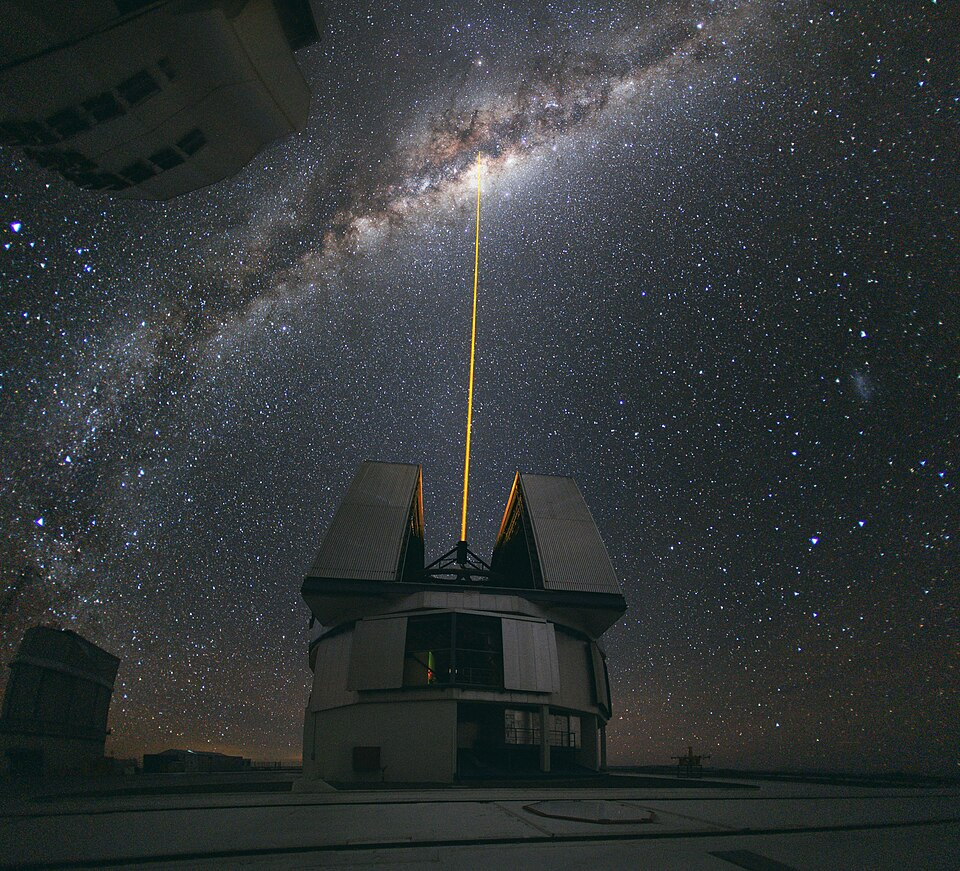
The Paranal Observatory of European Southern Observatory shooting a laser guide star to the Galactic Center
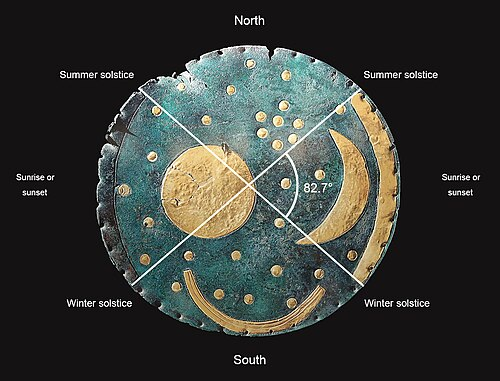
The Nebra sky disc (c. 1800–1600 BCE), found near a possibly astronomical complex, most likely depicting the Sun or full Moon, the Moon as a crescent, the Pleiades and the summer and winter solstices as strips of gold on the side of the disc,[9][10] with the top representing the horizon[11] and north.
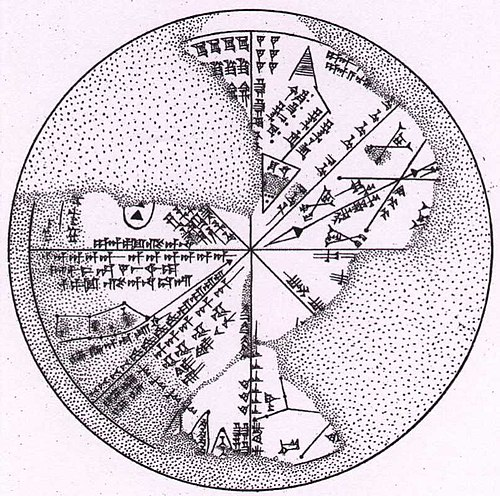
A Babylonian planisphere (7th century BCE). Babylonian astronomy was an early astronomical instrument. Its use of sexagesimals (e.g. 12, 24, 60, 360) is still being used today through having been broadly adopted for timekeeping and astrometry.[15]
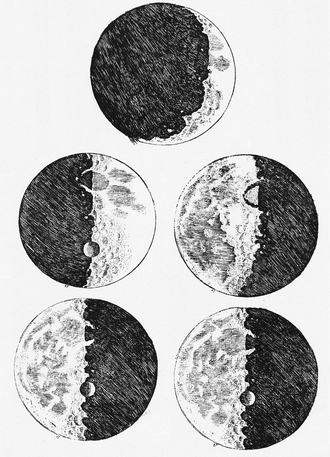
The first sketches of the Moon's topography, from Galileo's ground-breaking Sidereus Nuncius (1610)
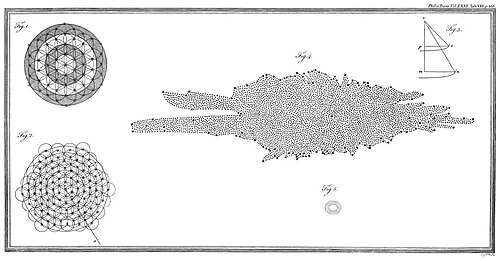
Diagram of the stars, from William Herschel's On the construction of the heavens.[58]
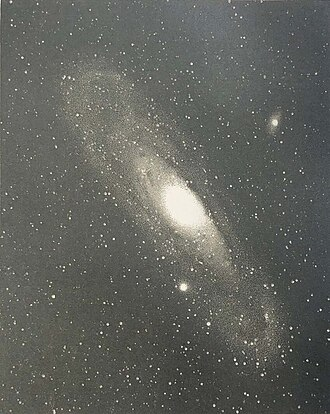
Photograph of the Great Andromeda "Nebula" by Isaac Roberts in 1888.[59][60]: 63
Wednesday, November 12, 2025 08:17AM