VERTICAL POWER
Power In a Box
Self-contained digital power distribution systems make for simplified installations and circuit health monitoring.
By
-
March 28, 2022
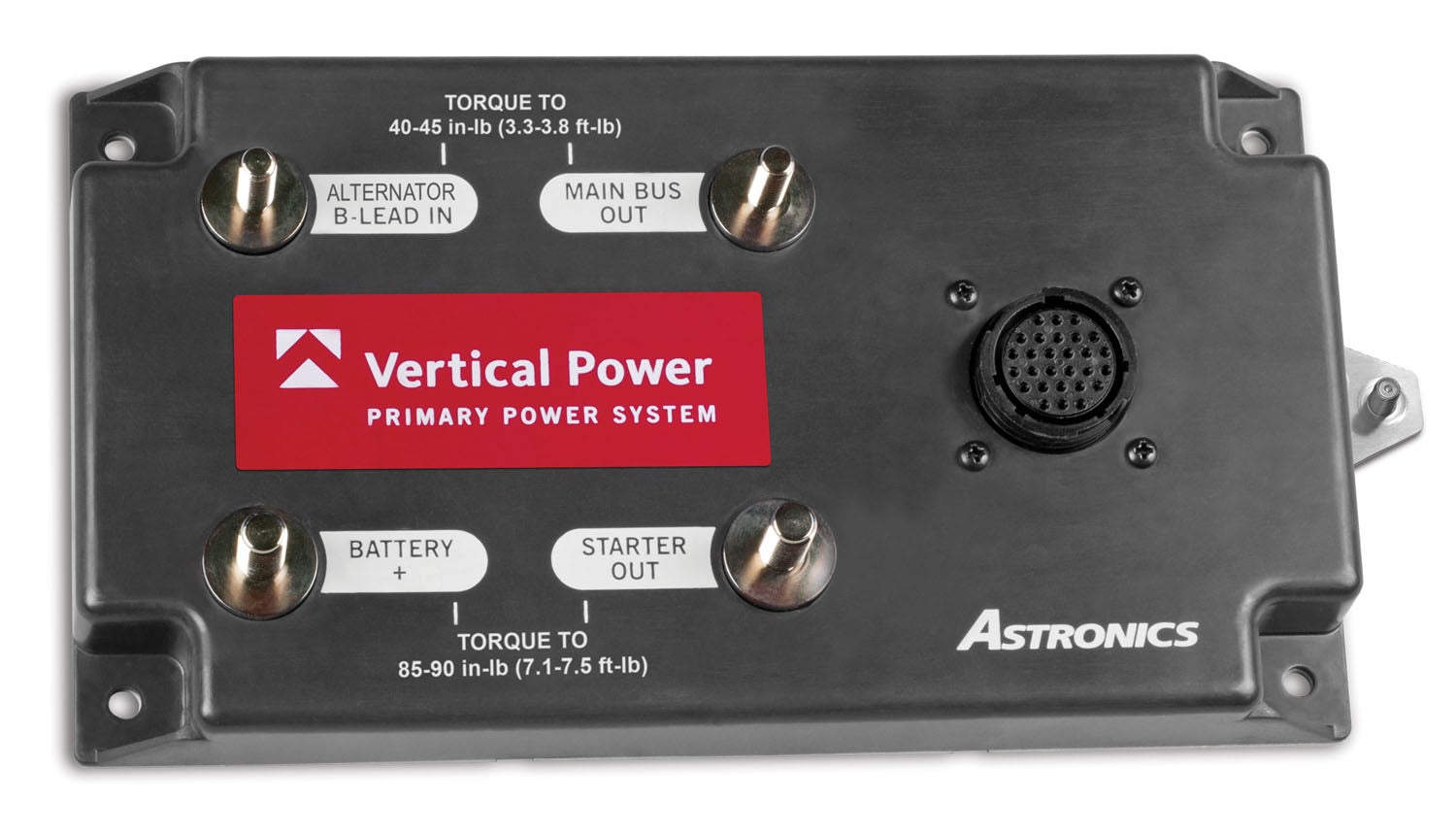 Vertical Power’s PPS controls power from the battery to the starter, has a main bus output and completes the B-lead connection to the alternator.
 The average builder might agonize over which avionics suite to install but may not spend nearly as much time planning a modern power distribution system to feed it and the rest of the aircraft’s electrics. Sure, you could go with the familiar arrangements of circuit breakers and fuses, bus bars and solenoids, but these days the high-tech trend has switched to self-contained digital smart buses with electronic circuit breakers. The future is here.
Two worthy systems—the Vertical Power VP-X/PPS and the Advanced Flight Systems ACM Advanced Control Module—take power distribution to a higher level and display real-time detailed bus data on a dedicated page on a wide variety of third-party EFIS screens. The Advanced product even serves double duty as an avionics wire hub, complete with prefab harnesses. Herewith is a technical dive into each, how they differ and how you might choose.
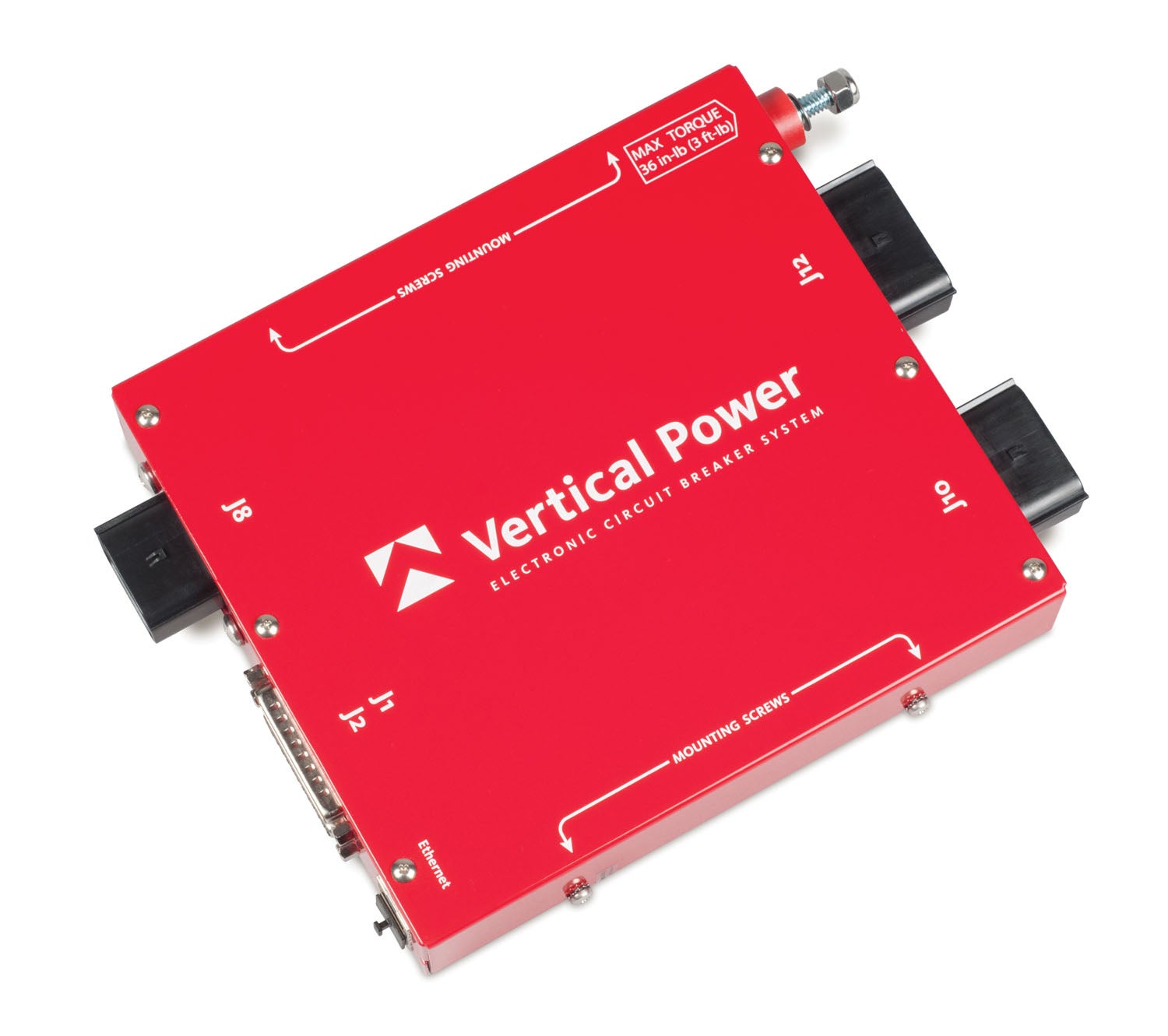 Say so long to mechanical circuit
breakers. Vertical Power’s VP-X is a digital avionics bus, with electronic breakers controlled on third-party EFIS displays.
Vertical Power
Kirkland, Washington-based Astronics acquired the assets of Vertical Power Electronic Circuit Breakers back in 2013, and the current Vertical Power products are sold through an established distributor network, including Aircraft Spruce, Gulf Coast Avionics, NexAir Avionics and SteinAir, to name a few. There are two main products in the Vertical Power line—the PPS and VP-X—and both work hand-in-hand or stand alone.
The $1695 PPS, for Primary Power System, came to market a couple of years ago and fills in the gap between the company’s VP-X electronic circuit breaker system and the aircraft battery. The PPS module measures 4.7×8.6 inches, weighs 1.6 pounds, and generally mounts to the aircraft firewall. The PPS works in 14- and 28-volt systems, has solid-state circuitry and controls power from the battery to the starter and the main bus. It also ties into the alternator B-lead(s) so that alternator power can both charge the battery and provide power to the main bus. There’s a single connector for the PPS.
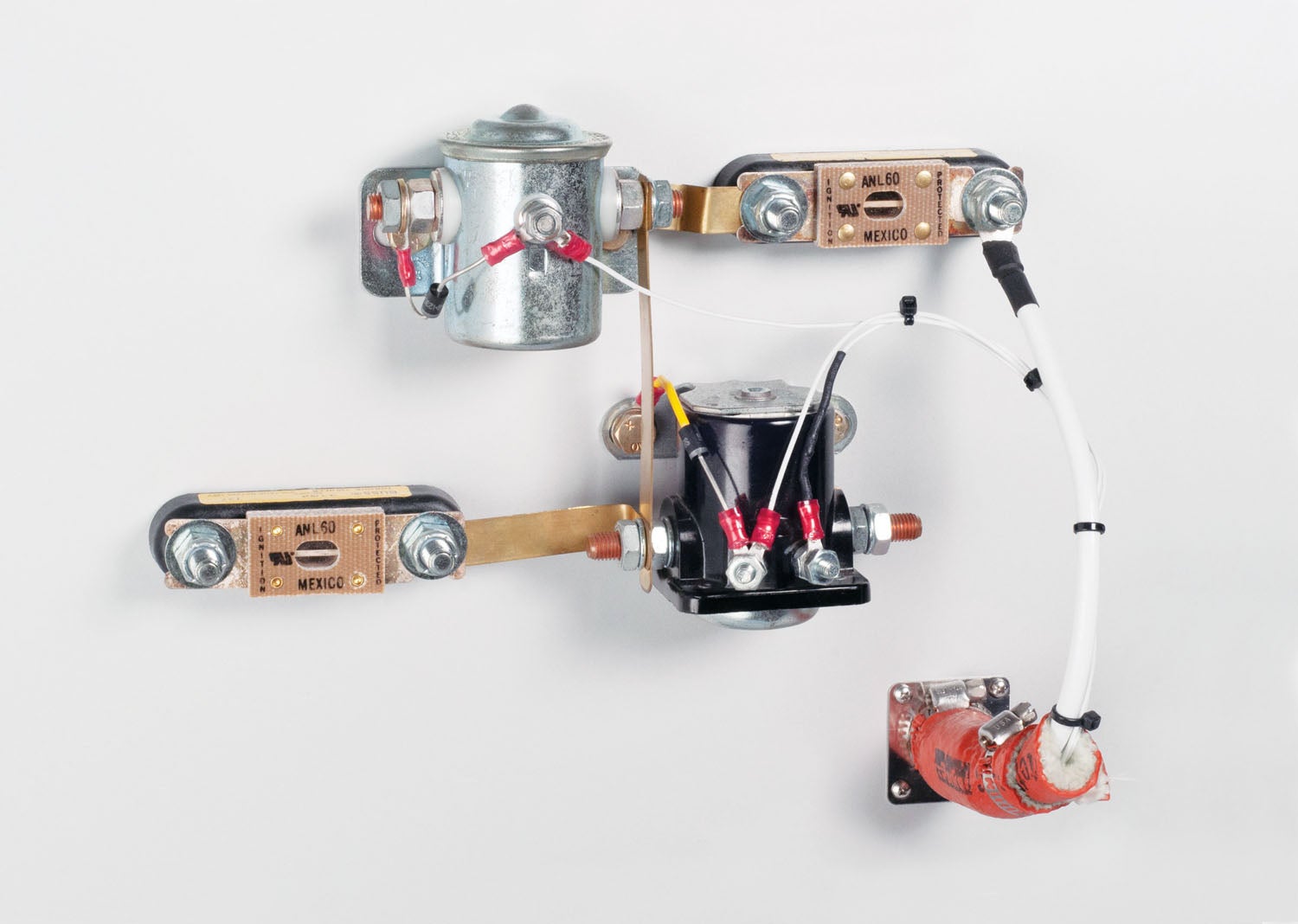 That’s the typical electrical system hardware that Vertical Power’s PPS Primary Power System replaces. We give the PPS an edge in perceived reliability.
The PPS functions as a single-bus architecture and supports a single battery and one or two alternators. You can also tie in small backup batteries (and electronic bus circuits) directly into the PPS via the battery terminal. It’s important to mention that a single PPS isn’t a true dual-bus system, although you can use dual PPS modules to create one. Perhaps what we like best is that the PPS has digital fault outputs to warn of an alternator failure.
The PPS comes with everything you need to install it, including a hardware kit for mounting the module and a wiring harness kit with the accessories needed to wire the J1 circular connector. The wiring includes terminals that are already crimped on one end. The PPS uses a dedicated external master switch (or switches if you want redundancy), which makes a connection to ground to turn the system on. The installation manual has good diagrams and offers two ways to wire the PPS with the company’s VP-X or with traditional electrical buses.
As a planning sidenote for very basic installs, consider if you want an ammeter on the main bus because the PPS provides the alternator current (shunt) output for showing the amount of current the alternator is providing to power the systems and charge the battery. If you have the VP-X system, the total current reading shows the total amount of current draw of the devices attached to the VP-X. For an EFIS interface, there’s a dedicated VP-X page that shows individual device current as well as total current through the VP-X. The EFIS also has an amps gauge that reads directly from the shunt.
The PPS has an 80-amp continuous main bus output, 80-amp continuous alternator input and a 300-amp max-continuous starter output—and you can use it with dual-alternators connected in parallel. But the PPS only scratches the surface of electronic power distribution. The interface is really expanded with the company’s VP-X Electronic Circuit Breaker system.
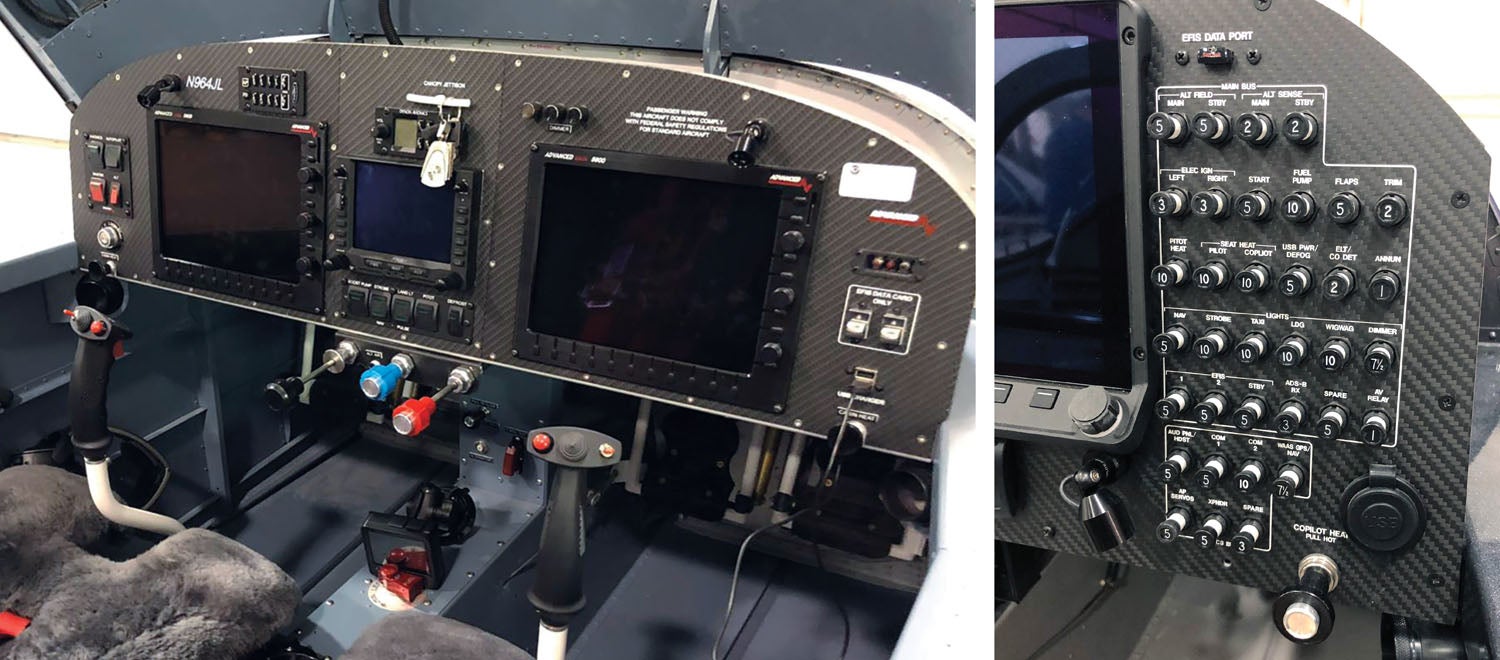 The circuit breaker bus in the panel (right) was eliminated in the RV panel (left) with the on-screen controlled Advanced Flight Systems ACM, for Advanced Control Module.