Section II.
Section II. FIELD-EXPEDIENT WEAPONS
To survive, the soldier in combat must be able to deal with any situation that develops. His ability to adapt any nearby object for use as a weapon in a win-or-die situation is limited only by his ingenuity and resourcefulness. Possible weapons, although not discussed herein, include ink pens or pencils; canteens tied to string to be swung; snap links at the end of sections of rope; kevlar helmets; sand, rocks, or liquids thrown into the enemy's eyes; or radio antennas. The following techniques demonstrate a few expedient weapons that are readily available to most soldiers for defense and counterattack against the bayonet and rifle with fixed bayonet.
7-6. ENTRENCHING TOOL
Almost all soldiers carry the entrenching tool. It is a versatile and formidable weapon when used by a soldier with some training. It can be used in its straight position-locked out and fully extended—or with its blade bent in a 90-degree configuration.
a. To use the entrenching tool against a rifle with fixed bayonet, the attacker lunges with a thrust to the stomach of the defender along a low No. 5 angle of attack (Figure 7-31, Step 1).
(1) The defender moves just outside to avoid the lunge and meets the attacker's arm with the blade of the fully extended entrenching tool (Figure 7-31, Step 2).
(2) The defender gashes all the way up the attacker's arm with the force of both body masses coming together. The hand gripping the entrenching tool is given natural protection from the shape of the handle. The defender continues pushing the blade of the entrenching tool up and into the throat of the attacker, driving him backward and downward (Figure 7-31, Step 3).
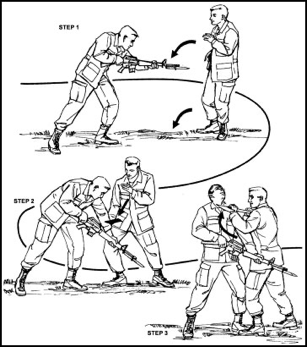
Figure 7-31. Entrenching tool against rifle with fixed bayonet.
b. An optional use of entrenching tool against a rifle with fixed bayonet is for the attacker to lunge to the stomach of the defender (Figure 7-32, Step 1).
(1) The defender steps to the outside of the line of attack at 45 degrees to avoid the weapon. He then turns his body and strikes downward onto the attacking arm (on the radial nerve) with the blade of the entrenching tool (Figure 7-32, Step 2).
(2) He drops his full body weight down with the strike, and the force causes the attacker to collapse forward. The defender then strikes the point of the entrenching tool into the jugular notch, driving it deeply into the attacker (Figure 7-32, Step 3).
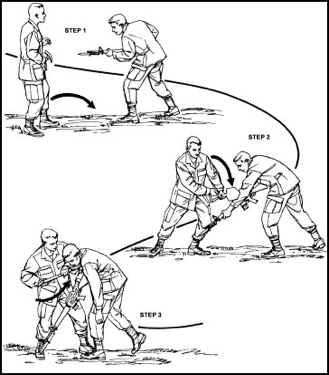
Figure 7-32. Optional use of the entrenching tool against rifle with fixed bayonet.
c. In the next two sequences, the entrenching tool is used in the bent configuration-that is, the blade is bent 90 degrees to the handle and locked into place.
(1) The attacker tries to stick the bayonet into the chest of the defender (Figure 7-33, Step 1).
(a) When the attack comes, the defender moves his body off the line of attack by stepping to the outside. He allows his weight to shift forward and uses the blade of the entrenching tool to drag along the length of the weapon, scraping the attacker's arm and hand (Figure 7-33, Step 2). The defender's hand is protected by the handle's natural design.
(b) He continues to move forward into the attacker, strikes the point of the blade into the jugular notch, and drives it downward (Figure 7-33, Step 3).
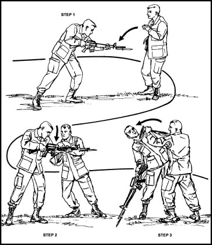
Figure 7-33. Entrenching tool in bent configuration.
(2) The attacker lunges with a fixed bayonet along the No. 5 angle of attack (Figure 7-34, Step 1). The defender then steps to the outside to move off the line of attack and turns; he strikes the point of the blade of the entrenching tool into the side of the attacker's throat (Figure 7-34, Step 2).

Figure 7-34. Optional use of entrenching tool in bent configuration.
7-7. THREE-FOOT STICK
Since a stick can be found almost anywhere, a soldier should know its uses as a field-expedient weapon. The stick is a versatile weapon; its capability ranges from simple prisoner control to lethal combat.
a. Use a stick about 3 feet long and grip it by placing it in the "vee" formed between the thumb and index finger, as in a handshake. It may also be grasped by two hands and used in an unlimited number of techniques. The stick is not held at the end, but at a comfortable distance from the butt end.
b. When striking with the stick, achieve maximum power by using the entire body weight behind each blow. The desired point of contact of the weapon is the last 2 inches at the tip of the stick. The primary targets for striking with the stick are the vital body points in Chapter 4. Effective striking points are usually the wrist, hand, knees, and other bony protuberances. Soft targets include the side of the neck, jugular notch, solar plexus, and various nerve motor points. Attack soft targets by striking or thrusting the tip of the stick into the area. Three basic methods of striking are—
(1) Thrusting. Grip the stick with both hands and thrust straight into a target with the full body mass behind it.
(2) Whipping. Hold the stick in one hand and whip it in a circular motion; use the whole body mass in motion to generate power.
(3) Snapping. Snap the stick in short, shocking blows, again with the body mass behind each strike.
(a) When the attacker thrusts with a knife to the stomach of the defender with a low No. 5 angle of attack, the defender moves off the line of attack to the outside and strikes vigorously downward onto the attacking wrist, hand, or arm (Figure 7-35, Step 1).
(b) The defender then moves forward, thrusts the tip of the stick into the jugular notch of the attacker (Figure 7-35, Step 2), and drives him to the ground with his body weight-not his upper body strength (Figure 7-35, Step 3).
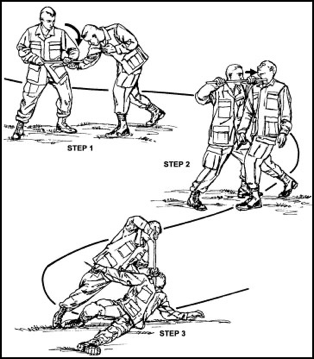
Figure 7-35. Three-foot stick against knife.
c. When using a three-foot stick against a rifle with fixed bayonet, the defender grasps the stick with two hands, one at each end, as the attacker thrusts forward to the chest (Figure 7-36, Step 1).
(1) He steps off the line of attack to the outside and redirects the weapon with the stick (Figure 7-36, Step 2).
(2) He then strikes forward with the forearm into the attacker's throat (Figure 7-36, Step 3). The force of the two body weights coming together is devastating. The attacker's neck is trapped in the notch formed by the stick and the defender's forearm.
(3) Using the free end of the stick as a lever, the defender steps back and uses his body weight to drive the attacker to the ground. The leverage provided by the stick against the neck creates a tremendous choke with the forearm, and the attacker loses control completely (Figure 7-36, Step 4).
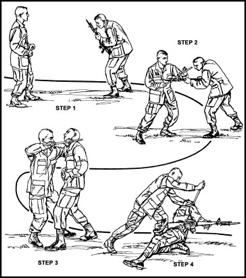
Figure 7-36. Three-foot stick against rifle with fixed bayonet.
7-8. SIX-FOOT POLE
Another field-expedient weapon that can mean the difference between life and death for a soldier in an unarmed conflict is a pole about 6 feet long. Examples of poles suitable for use are mop handles, pry bars, track tools, tent poles, and small trees or limbs cut to form a pole. A soldier skilled in the use of a pole as a weapon is a formidable opponent. The size and weight of the pole requires him to move his whole body to use it effectively. Its length gives the soldier an advantage of distance in most unarmed situations. There are two methods usually used in striking with a pole:
a. Swinging. Becoming effective in swinging the pole requires skilled body movement and practice. The greatest power is developed by striking with the last 2 inches of the pole.
b. Thrusting. The pole is thrust straight along its axis with the user's body mass firmly behind it.
(1) An attacker tries to thrust forward with a fixed bayonet (Figure 7-37, Step 1). The defender moves his body off the line of attack; he holds the tip of the pole so that the attacker runs into it from his own momentum. He then aims for the jugular notch and anchors his body firmly in place so that the full force of the attack is felt at the attacker's throat (Figure 7-37, Step 2).
(2) The defender then shifts his entire body weight forward over his lead foot and drives the attacker off his feet (Figure 7-37, Step 3).
Note: During high stress, small targets, such as the throat, may be difficult to hit. Good, large targets include the solar plexus and hip/thigh joint.
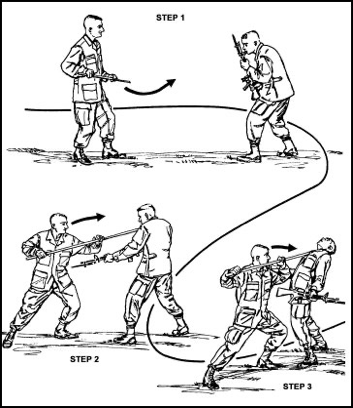
Figure 7-37. Thrusting with 6-foot pole.