Central Processing Unit (CPU)
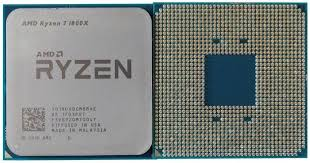
What is a CPU and where do you find it in a computer?
A CPU, or Central Processing Unit, is a vital component of any computer.
Think of it as the computer's brain. It ensures everything operates smoothly.
The CPU contains many small parts called transistors. These transistors control the flow of electricity, representing binary digits as 1 when on and 0 when off.
The CPU is located on the computer's motherboard, which connects all other computer components.
The CPU performs all the tasks and runs all the programs that make your computer function.
What are computer programs and where are they stored?
A computer program is a set of instructions for the CPU. It could be for browsing the web, typing a document, or using a calculator.
Programs are written in special languages that the computer translates into machine language or binary.
Binary consists of just two numbers: 0 and 1, matching the on/off state of the CPU's transistors.
Programs are stored in:
- Long-term storage on devices like HDDs or SSDs, which retain data when the computer is off.
- Short-term storage in RAM, holding data only while a program is active and erasing it when the computer is off.
What does a CPU do?
A CPU processes tasks and commands, handling millions each second but only one at a time.
Here’s the process:
1) Fetching - The CPU retrieves instructions from memory.
2) Decoding - It translates these instructions.
3) Executing - The CPU performs the instructions.
4) Storing - It saves the results back to memory.
This process, known as the fetch-execute cycle, repeats continuously.
The main parts of a CPU
Key components of a CPU include:
- CU (Control Unit): Manages operations and fetches instructions.
- ALU (Arithmetic Logic Unit): Performs calculations and logical operations.
- Registers: Temporary storage for data and instructions during processing.
What are CPU cores?
Originally, CPUs could only perform one task at a time. Now, CPUs have multiple cores, each capable of handling a separate task.
For instance, a dual-core CPU has two cores, a quad-core has four, and so on.
What is hyperthreading?
Hyperthreading allows a single core to act like multiple cores, making the operating system believe there are more cores than there actually are, thus improving performance.
This enables a CPU to handle more tasks simultaneously by using both real and virtual cores.