Parlatore Tim E S Q
===
APPT SPECIAL ADVISOR NO CET, SENATE CONFIRM
SECURITY CLEARANCE?
WORKED ON TRUMP CAMP
REPS OFFICERS FOR PROMOTION? FOREIGN CLIENTS?
1:26
1 minute, 26 seconds
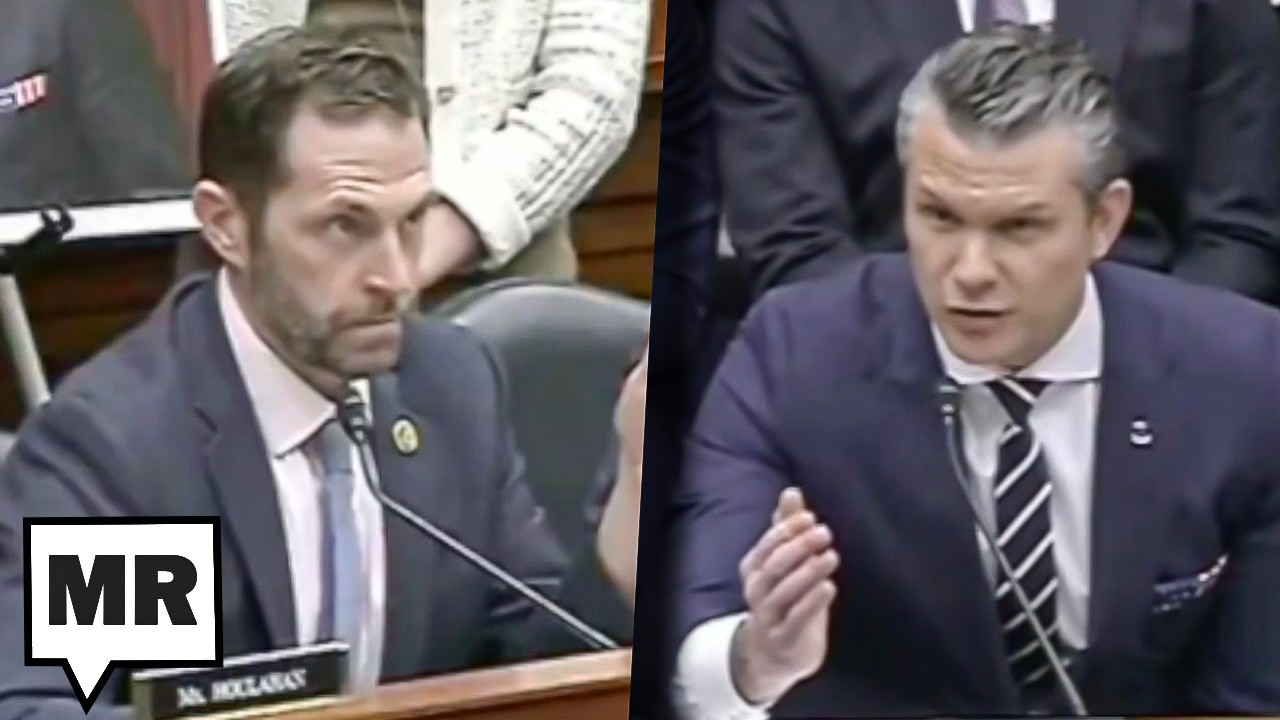
And Mr. Parli Parlatory also served as private attorney for President Trump's campaign. Correct.
1:33
1 minute, 33 seconds
I'm not privy to every professional uh position that he's held.
1:37
1 minute, 37 seconds
Well, I'll help you out. He did. And you appointed Mr. Parloratory as your senior adviser, correct?
1:45
1 minute, 45 seconds
Uh, he does reserve duty on behalf of the Navy. Uh,
1:48
1 minute, 48 seconds
his title is senior adviser. You gave him that title, correct?
1:51
1 minute, 51 seconds
And I would uh count him as very much an adviser of mine. Yep. He travels with you. Correct.
1:57
1 minute, 57 seconds
Uh Tim Parlorator has been a long-term friend. Uh he's a great patriot.
Military.com | By Thomas Novelly and Konstantin Toropin
Published February 24, 2025
Current military lawyers and legal experts told Military.com the administration's firings of the Air Force, Army and Navy's top judge advocates general politicizes and sets an alarming precedent for a crucial job in the military, all as President Donald Trump has mused about using the military in unorthodox and potentially illegal ways.
Trump and Defense Secretary Pete Hegseth announced late Friday evening the firings of the top legal officers for the military services -- those responsible for ensuring the Uniform Code of Military Justice is followed by commanders -- as well as the Joint Chiefs chairman, the Navy's top officer and Air Force vice chief.
As part of the judge advocates general purge, Air Force Lt. Gen. Charles Plummer and Army Lt. Gen. Joseph Berger were fired. Navy Rear Adm. Lia Reynolds remains in the position because she was already performing the duties of the top lawyer for the sea service following the resignation of Vice Adm. Christopher French late last year. French had been in the job as the Navy's top lawyer for just a few months.
Read Next:Military Parents Seek Help from Congress Amid Diversity Purge at Base Schools, Upcoming Mass Firings
Hegseth told reporters Monday that the removals were necessary because he didn't want them to pose any "roadblocks to orders that are given by a commander in chief."
Those senior judge advocates general, or JAGs, of the military branches play the important role of setting each service's legal priorities and interpreting military law for top leaders. Their roles have been historically viewed as apolitical, and they oversee everything from a wide variety of criminal cases involving the rank and file to making sure commanders are aware of international law in combat.
The defense secretary didn't elaborate on what specific orders the military's top lawyers could potentially try to block, but Trump has a history of saying he wants to use troops to enforce federal laws, especially in cities run by Democratic mayors.
"Ultimately, I want the best possible lawyers in each service to provide the best possible recommendations, no matter what, to lawful orders that are given, and we didn't think those particular positions were well suited, and so we're looking for the best," Hegseth said. HIRED HIS BRO
One Air Force JAG officer told Military.com the move harms those who wear the uniform by removing the institutional knowledge those top officers hold -- and could result in them being replaced with inexperienced lawyers.
"I think amongst the community, there's just a lot of concern about who's going to come next," the currently serving Air Force JAG officer told Military.com. "People are very scared."
Hegseth hinted to reporters Monday that, as with Trump's pick of Dan "Razin" Caine to be Joint Chiefs chairman, the military may make non-traditional choices for the JAG posts. Caine, who is retired, has no experience leading a combatant command and has never served as a service chief, and would need to be brought back into military service and promoted to serve in the role.
"We're opening it up to everybody to be able to be the top lawyer of those services," Hegseth said, without elaborating further.
But the Air Force JAG officer told Military.com that not just anyone should hold those top positions.
"You can't just pull a lawyer off the street and put him in that job, because there's decades of policy that you kind of have to understand -- the bigger picture of how we got to where we are – in order to steer the ship," the JAG officer added.
The officer also said there are worries that the military justice system could soon become politicized as a result of the moves and that it may throw many uniformed lawyers into an uncomfortable position when administrations eventually change over to a different political party.
"I think everybody now will have a fear of 'well, if I follow this Trump guidance, is the next administration going to fire me?'" the officer said. "We're trying to be apolitical."
Concerns over misuse of the military or bending of the law may be well-founded. Trump has a history of suggesting that he would use troops against U.S. citizens despite federal legal restrictions.
For example, during a March 2023 rally in Iowa, Trump suggested that he would use federal troops in cities like New York, Chicago, Los Angeles and San Francisco, which he argued have become crime dens.
"We cannot let it happen any longer. And one of the other things I'll do -- because you're supposed to not be involved in that, you just have to be asked by the governor or the mayor to come in -- the next time, I'm not waiting," Trump said.
The judge advocates general could be at the center of such historic and consequential legal decisions as they are being weighed by the administration and military.
Retired Maj. Gen. Charles Dunlap Jr., the former deputy judge advocate general of the Air Force and a professor at Duke University, told Military.com in an emailed statement that military lawyers "have earned an international reputation for expertise, integrity and straightforwardness."
"The U.S. public gives the military their sons and daughters. We owe it to them to provide those serving with the best possible legal advice from lawyers who not only know the law but live the military life," Dunlap said. "No one wants U.S. troops to even be accused of war crimes, and providing nonpartisan expert legal advice from military [lawyers] is key to achieving that goal."
The firing of the JAGs came alongside removals of top senior military officers late Friday evening, including Gen. Charles "CQ" Brown, who was serving as the chairman of the Joint Chiefs of Staff. Former Air Force Secretary Frank Kendall, who stepped down in January and knew Brown when he served as the Air Force chief, said in a New York Times op-ed on Monday morning that the widespread dismissals were concerning, but especially those of top legal officers.
"What frightens me even more is the removal of three judge advocates general, the most senior uniformed legal authorities in the Defense Department," Kendall wrote. "Their removal is one more element of this administration's attack on the rule of law, and an especially disturbing part."
Meanwhile, allies of the administration and Hegseth have argued that the move would actually help restore the reputation of at least the Navy's legal command.
Tim Parlatore, a former Navy officer who went on to become a lawyer and represented a number of high-profile military clients, including Hegseth and Trump, argued in a video posted to social media Sunday that the last four heads of the Navy's JAG office have had major issues with their leadership.
"One was found to have committed unlawful command influence by interfering in a court-martial for political purposes to keep an innocent man in jail," Parlatore said, referring to the case of Vice Adm. James Crawford, who was found to have unlawfully weighed in on a rape case by a military court of appeals in 2018.
Parlatore also alleged that French, the Navy's most recent judge advocate general, "rushed a retirement package two and a half months into the job, probably to avoid being prosecuted himself for misconduct."
Parlatore offered no evidence for the claim in his post.
But other experts such as Dunlap added that, due to the nonpartisan nature of the military's judge advocates general, they have often been a role model for other nations and have garnered great respect and even deference to U.S. perspectives on the law when working with allies and partners.
"I am not aware of any time in American history where the military's most senior legal officers were fired en masse," Dunlap told Military.com. "This can't help our relations with our allies."
*Related:Fired: Joint Chiefs Chairman, Top Navy Leader, Air Force Vice Chief, Service Judge Advocates General
Related Topics: Military Headlines Army Air Force Topics US Navy Topics Military Legal Politics Policy
---
---
In February, Secretary of Defense Pete Hegseth fired the Air Force’s and Army’s top judge advocates general (JAGs). Last month, he commissioned his personal lawyer as a Navy JAG. He is nowreportedly paving the way to make major changes within the JAG Corps—including how military lawyers advise on the law of war and prosecute those who violate it. These moves raise concerns that the JAG Corps could be compromised by partisan appointments and bad faith interpretations of the law, with wide-ranging consequences for how the U.S. military conducts operations and disciplines personnel.
Secretary Hegseth and the JAGs
On the evening of Feb. 21, President Trump fired the chairman of the Joint Chiefs of Staff, C.Q. Brown, the chief of Naval Operations, Adm. Lisa Franchetti, and the vice chief of staff of the Air Force, Gen. Jim Slife. On the same night, without any notification, Secretary Hegseth cut the top two uniformed lawyers of the Air Force and Army (referred to as “TJAGs”), Lt. Gen. Charles L. Plummer and LTG Gen. Joseph B. Berger III, respectively—the Navy position, previously filled by Vice Admiral Christopher French (retired as Rear Admiral), is currently filled by Acting Judge Advocate General Rear Admiral Reynolds. In what was described as the Defense Department’s “Friday night massacre,” many_ commentators_ were more alarmed by Hegseth’s removal of the TJAGs than the president’s firing of the chairman. The actions taken were also unprecedented—no secretary of defense in recent memory has targeted JAGs in this way.
As described by experts, judge advocates, like other servicemembers, fill non-partisan roles. The thousands of lawyers serving in the JAG Corps are tasked with providing independent, neutral, and fact-based legal advice on domestic and international law across the rank and file, up to the highest-level commanders. Under 10 U.S.C, no officer or Department of Defense employee—political or career—may interfere with the ability of JAGs to give independent legal advice.
In firing the TJAGs, Hegseth did not point to any misconduct to justify his decision. His only stated reasons were that he considered the TJAGs not “well-suited” for the job, and he wanted to avoid “roadblocks to orders that are given by a commander in chief.” While troubling for him to imply that only loyalists to the president should be in these positions, the secretary’s public statements prior to assuming his post made plain that he views military lawyers as obstructionists and the laws they advise on, including the Geneva Conventions, as outdated and too restrictive. To illustrate his opinion of military lawyers, in his book he recalled a time during his military service when he used a degrading te_rm_—“jagoffs”—to describe them.
Further changes are also reportedly afoot. On March 7, the secretary commissioned his personal lawyer of the last eight years, Timothy Parlatore, to be a Navy commander in the JAG Corps as a reservist. The New York Times reports that Parlatore is assigned to a unit serving the secretary of defense and will “focus on improving how the military’s uniformed lawyers are trained.” After the commissioning, the Guardian reported that once Hegseth replaces the TJAGs, he is planning a “sweeping overhaul” of the entire JAG Corps. Parlatore is picked to oversee this effort, reportedly aimed at ensuring more expansive legal interpretations to ensure greater latitude for battlefield tactics and more leniency toward service members who commit war crimes.
JAGs as Advisers and Prosecutors
Based on his statements, Hegseth appears to consider JAGs as problematic in two ways: (a) in their role as legal advisers to servicemembers in the field and secretaries of the military departments and (b) as prosecutors of servicemembers accused of violating the Uniform Code of Military Justice (UCMJ), a body of laws that govern the military justice system, particularly when it comes to law of war violations. His objection does not appear to be with any single individual, but rather, with the entire profession; in fulfilling these roles as advisers and prosecutors, he views JAGs as interfering with efficient war-fighting, or, as he describes it, a “warrior’s ethos.”
*JAGs as Advisers
Hegseth has questioned the JAG’s role in providing advice in the context of the battlefield. He has argued that applying “restrictive” rules of engagement makes it difficult to “defeat our enemies.” His ad hominem attack in his book occurred in the context of a presentation from a JAG on the rules of engagement when launching a rocket-propelled grenade. Hegseth claimed the protocols described were “going to get people killed.” With the February firings, the secretary also questioned the TJAGs’ role in advising the secretaries of the military departments, describing them as potential “roadblocks” to orders from the president.
There are a few separate issues to parse here.
First, it is important to clarify that JAGs generally do not play a decision-making role. JAGs act as advisers to commanders and civilian officials who make critical decisions for the U.S. military, such as the development of battlefield strategy and the military’s rules of engagement (which include layers of policy in addition to bare minimum legal requirements). Even though JAGs advise on questions about how the Geneva Conventions are interpreted, those questions are ultimately answered by civilian lawyers and policymakers.
Second, JAGs are only roadblocks insofar as their professional role is to stop illegality. For example, on the battlefield, JAGs fill an important role in advising on the laws that constrain militaries and combatants, such as mitigating harm to civilians, refraining from inflicting unnecessary suffering, and providing protections to prisoners of war. In the Pentagon, JAGs fill the critical role of providing legal advice on the domestic and legal implications of the actions of the Department. U.S. officials have long understood that compliance with the law, including the law of war, protects in many ways, e.g., from criminal prosecution and in maintaining legitimacy. The institutionalized legal advice across the Defense Department only acts as an obstacle to unlawful acts.
Third, the record shows that the U.S. military is perfectly capable of fighting wars with JAGs in place to support the military’s compliance with U.S. law and related policies. In the conflicts that followed the 9/11 attacks, the U.S. military has fought wars in Afghanistan, Iraq, Syria, Somalia, Libya, Yemen, and Pakistan; conducted annual security cooperation exercises and trainings with dozens of foreign forces around the globe; carried out secret missions with U.S. special forces; supported law enforcement on the southern border; and much more.
*JAGs as Prosecutors
Secretary Hegseth has also expressed disdain for JAGs who prosecute service members returning from tours in war zones. As a Fox News host, he publicly and privately lobbied President Trump during his first term to clear three service members accused of or prosecuted for war crimes in Iraq and Afghanistan. Trump pardoned_ _two of them and reversed a third’s demotion. One of those service members was Eddie Gallagher, a Navy Seal (represented by Hegseth’s current attorney, Timothy Parlatore) accused of executing civilians, including stabbing to death a teenaged ISIS prisoner (“Good story behind this. Got him with my hunting knife.” he texted a friend. He later claimed that the teenager was going to die and that his unit had planned to “do medical treatments on him until he’s gone”.) After an about-face on the stand from one of the key witnesses in his unit, Gallagher was acquitted of most charges, but found guilty of taking a photo with a corpse in violation of the UCMJ.
Based on statements from Hegseth, he considers these kinds of war crimes prosecutions to be “second guessing” servicemembers, an action equivalent to “throwing them under the bus” after they come home from war. He believes that “the benefit of the doubt should go to the guys pulling the trigger” and said that the Navy was “on a witch hunt against Eddie Gallagher” for not killing “ISIS in the way they want him to.”
This perspective, if extended across the board, would be a recipe for rampant impunity for U.S. troops who commit war crimes, encouraging further violations.
Potential Consequences of Hegseth’s Actions
The Friday night firing of the TJAGs and the reported preparation to overhaul the JAG Corps and review the Defense Department’s law of war interpretations could curtail legal review of military actions, with serious consequences.
First, if the secretary of defense is willing to fire the highest ranking JAGs to ensure Defense Department leadership receives legal advice that doesn’t interfere with his agenda, it could well have a chilling effect on the JAGs whose independent and principled legal advice might impede the administration’s policy preferences. If the firings, coupled with statements from the secretary about JAGs and the law, chill advice during military operations, it will almost surely lead to more law of war violations.
Second, Hegseth’s civilian general counsel is likely to channel the secretary’s impulses to loosen rules on civilian protection. JAGs have traditionally seen the law of war as protective of U.S. interests and therefore have resisted novel or watered-down interpretations. Losing the independent advice of JAGs means losing an important advocate for that perspective on the law of war.
Third, strong lawyers could be critically important during the coming period for precisely the reason that Hegseth has suggested they need to be removed: It could be a very precarious time in terms of the legality of the things the military is asked to do. These could include domestic actions that would seem to run afoul of the Posse Comitatus Act. Or they might involve international actions that the president has at various times entertained that the military would have to carry out—such as using force to take Greenland; taking military action against Iran; striking drug cartels in Mexico; or seizing control of the Panama Canal. Having credible JAGs in place may not have much impact on whether the military is ultimately used on these missions, but it at least can help ensure that commanders have sound legal advice when they make crucial decisions about missions.
Finally, and perhaps most troubling, if the secretary is firing JAGs now—before they offer legal advice on any issue of consequence—it sends a message that even the most principled TJAGs likely will not thwart this administration if it is determined to take illegal action.
A new administration has the right to effectuate its own lawful policies, which can include firing and hiring lawyers. But the manner in which this happened at the Department of Defense was unprecedented. And it raises concerns that what Secretary Hegseth wants is not good lawyering, but instead carte blanche. That would be detrimental for the soldiers who might have to carry out unlawful orders, the country they represent, and the innocent people who could, as a result, lose the few protections afforded them amid the brutality of war.
---
politico 12 24
PETE’S DRAGON — PETE HEGSETH’s week started on shaky ground, but it’s ending on firmer terrain.
This morning on NBC’s “Meet the Press,” President-elect DONALD TRUMPdefended his embattled pick to lead the Pentagon. Asked by moderator Kristen Welker whether he still has confidence in Hegseth, Trump said, “Yes I do. He’s a very smart guy. I’ve known him through Fox, but I’ve known him for a very long time. And he’s basically a military guy.” Trump added that he’s “had a lot of senators call me up saying he’s fantastic.” Asked if he is concerned about Hegseth’s drinking: “I’ve spoken to people who know him very well, and they say he does not have a drinking problem.” ***Video from “Meet the Press”***
That came on the heels of Sen. JONI ERNST(R-Iowa) posting on X Friday that she wants to give Hegseth a “fair hearing.” That may sound unremarkable, but it’s a reminder of something that is: No Republican — not even Ernst — is yet willing to publicly and explicitly oppose his nomination.
Now, a new pressure campaignaims to keep it that way.
MIKE DAVIS —the former top Senate GOP aide who is perhaps Trump’s fiercest legal defender — is something of an outside adviser on the transition. And he’s mobilizing his Article III Project to become the tip of the spear in building pressure from the base on Republican senators to confirm Hegseth.
In recent days, after a blitz of appearances on conservative media, Davis has driven tens of thousands of phone calls, emails and social posts targeting senators on not only Hegseth’s nomination, but also that of would-be FBI director KASH PATEL’s.In numbers shared first with POLITICO, as of last night, Davis marshalled 3,481 advocates for Hegseth (people who have seen his media appearances on conservative outlets and gone to Article III’s action page), driving what he says are 9,377 “connections” with senators. Meanwhile, for Patel, he generated 8,059 advocates and delivered 23,729 connections.
But that’s cornhole compared to what Davis is promising next.
The Iowan is amping up his rhetoric— and the stakes — around Trump’s cabinet picks to the point where he’s questioning whether senators operate with a moral double standard. Earlier this week, he posted to X: “Let’s get this straight: Pete Hegseth used to drink too much and couldn’t keep his dick in his pants. He’d make a great senator.”
In an interview with Playbook, Davis went further, threatening to hire private investigators to sift through the backgrounds of any potential Senate GOP holdouts.
“The Article III projectis very excited about this new standard that drinking and womanizing is disqualifying for public office,” Davis tells Playbook. “I’m very happy to hire investigators for senators and use that standard.”
HOW WE GOT HERE: However you feel about Davis’ tactics, it’s impossible not to see them as the outgrowth of Supreme Court Justice BRETT KAVANAUGH’s 2018 confirmation process.
In that battle, Republicans effectively “made it the rule” that the accuser must (a)come forward publicly and (b)bear the burden of proof, says Davis.
Now, Hegseth’s team is calling that same play.
On Thursday night, Hegseth’s attorney, TIM PARLATORE, practically dared his client’s accuser to share her story (he said she is not barred by an NDA after accusing Hegseth of rape in 2017, though also said if she publicly makes the accusation, he’ll sue her for defamation).
It’s a sign of a post-Kavanaugh standard.“In order to disqualify a qualified cabinet nominee, you have to come forward,” Davis tells Playbook. “The burden is on the accuser to come forward with clear and convincing evidence that they’re not fit for the current job based upon their prior misconduct. It has to be testimony and not innuendo. It has to be testimony, not anonymous sources.”
Adds Davis, ‘You make an allegation, and then Kavanaugh is guilty until he proves his innocence? I said, ‘Fuck that. We’re gonna do the American presumption of innocence.’”
Davis, interestingly, made no effort todefend Hegseth on the merits, particularly on the alleged rape that took place in 2017 — which Hegseth has denied. “We’re not solving crimes,” Davis says. “We’re not canonizing saints during this process. It’s, ‘Do they have the current character and fitness to serve?’”
Few GOP insiders are better equipped to force the argument for Hegseth. After being radicalized by the Kavanaugh confirmation fight, Davis launched the Article III Project, his brass knuckles advocacy group. And he is newly confident — predicting publicly and telling Trump in private — that Hegseth will get confirmed.
He’s not the only one thinking that way on account of the post-Kavanaugh standard and Davis’ new pressure tactics.
STEVE BANNON, speaking on his podcast “The War Room,” said that this technique is already working. “You saw with [withdrawn AG nominee MATT] GAETZ, I said, ‘Stick it out — by Christmas, he’d be drawing fire and they’d be freaking out. You wouldn’t hear Pete’s name. Kash would glide in.’ Fast-tracking works — flood the zone, overwhelm the system. It’s info warfare. … You’ve got to fight back.”
Davis is vowing to do exactly that. Trump, Davis told Playbook, “doesn’t need to fight this, because I’m going to do it for him.”
Is this just Davis’ trademark bluster? Will he actually follow through and hire private investigators to dig into GOP senators’ backgrounds? “Fuck yes I will,” he says.
Good Sunday morning.Thanks for reading Playbook. Drop me a line at awren@politico.com.