Landlord Apartment
see rent prop mgmt
===
badash an 9 24
With less than six weeks until Election Day and early voting already underway in four states, Donald Trump seems to have locked in on his closing message for what he acknowledges will be his final presidential campaign if he loses in November. It’s the same message that launched his political career nine years ago: attacking immigrants.
In a sign anti-immigrant sentiment is the highest it’s been in over two decades, Gallupreports as of June, 55% of Americans want to see immigration decreased. In October of 2001, following the September 11 terror attacks, 58% wanted immigration decreased.
Trump’s anti-immigrant attacks reached a crescendo two weeks ago during the presidential debate against his Democratic opponent, Vice President Kamala Harris. Seemingly out of nowhere, he dropped his “pet-eating” lie that would lead to dozens of bomb threats across more than 20 facilities in the small town of Springfield, Ohio.
“What they have done to our country by allowing these millions and millions of people to come into our country,” Trump said, attacking Vice President Harris and President Joe Biden. “And look at what’s happening to the towns all over the United States. And a lot of towns don’t want to talk — not going to be Aurora or Springfield. A lot of towns don’t want to talk about it because they’re so embarrassed by it. In Springfield, they’re eating the dogs. The people that came in. They’re eating the cats. They’re eating — they’re eating the pets of the people that live there. And this is what’s happening in our country. And it’s a shame.”
READ MORE: ‘Ain’t Taking Anybody’s Jobs’: Trump Blasted Over Haitian Lies, This Time in Pennsylvania
That lie was quickly debunked but Trump and his vice-presidential running mate, U.S. Senator JD Vance, continued to spread it.
This week Trump excised his pet-eating derangement, adding in another element: machine guns.
“We can’t have factories being built where you have criminals walking down the street with the worst weapons that you’ve ever seen, with machine guns and everything else,” Trump declared Tuesday at an event billed as a manufacturing policy speech in which he appeared to come out in favor of an assault weapons ban.
On Wednesday, the ex-president, a convicted felon who legally cannot own even a pistol, standing in front of banner that read “Jobs Jobs Jobs,” expanded his claims at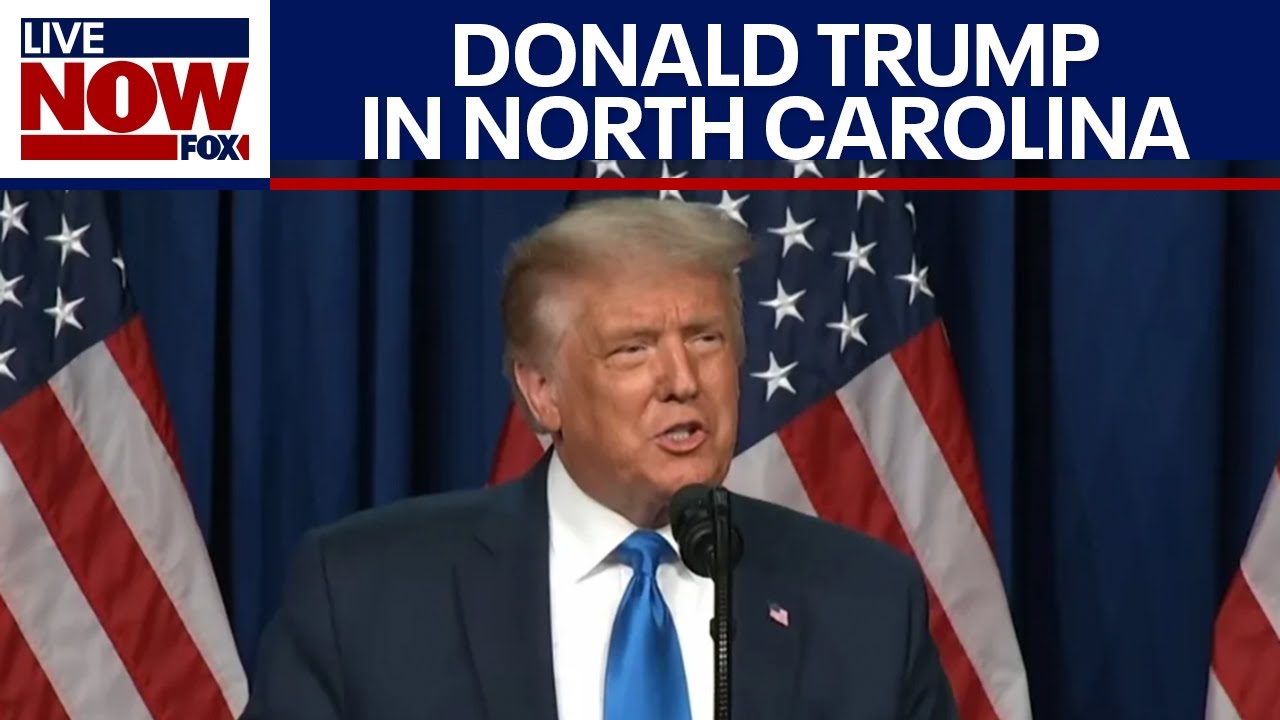 (video below).
“But Kamala should have closed the border years ago, and we wouldn’t have hostile takeovers of Springfield, Ohio, Aurora Colorado, where they’re actually going in with massive machine gun-type equipment. they’re going in with guns that are beyond even military scope, and they’re taking over apartment buildings, they’re taking over, real estate – they’re in the real estate development business. Congratulations,” Trump said sarcastically. “These are, in that case, people from Venezuela. Young street gang members that were sent here by the Venezuelan government.”
Mark Jacob, an author and former Chicago Tribune editor turned media critic, blastedTrump and the mainstream media: “Trump’s lies to foment hatred against immigrants keep getting more vivid and unhinged, and major media are DOING A TERRIBLE JOB of explaining how dangerous this is.”
Luis Moreno, a former U.S. Ambassador to Jamaica, remarked: “Besides eating cats, Haitian immigrants are now deploying crew served laser beam systems. We need to find out who is training these people!”
READ MORE: ‘Hellscape’: Women Increasingly Charged With Pregnancy-Related Crimes After Roe’s End
Trump had made similar, false claims during the debate, saying, “we have millions of people pouring into our country from prisons and jails, from mental institutions and insane asylums. And they’re coming in and they’re taking jobs that are occupied right now by African Americans and Hispanics and also unions. Unions are going to be affected very soon. And you see what’s happening. You see what’s happening with towns throughout the United States. You look at Springfield, Ohio. You look at Aurora in Colorado. They are taking over the towns. They’re taking over buildings. They’re going in violently. These are the people that she and Biden let into our country. And they’re destroying our country. They’re dangerous. They’re at the highest level of criminality. And we have to get them out. We have to get them out fast.”
The New York Times reported Trump’s claims of hostile takeovers by Venezuelan gangs appeared to originate from allegations made by a landlord.
“As far back as May 2023, Aurora officials had been trying to force an out-of-state landlord to fix up three blighted apartment complexes,” The Times reported earlier this month. “In July 2024, the landlord, CBZ Management, which says it is based in Colorado and Brooklyn, offered a new argument for why it couldn’t repair the buildings: Venezuelan gangs had taken over, and the property managers had been forced to flee.”
Those claims were quickly repeated, and later, a public relations agent hired by the landlord sent an even more elaborate story to a local Fox affiliate as a “tip.”
On Tuesday a nonprofit representing Haitian immigrants filed criminal charges against Trump and Vance, through its attorney, thanks to Ohio state law that allows private individuals to do so. They have asked a judge to issue an arrest warrant.
Watch Trump’s remarks from earlier Wednesday below or at this link.
===
AN 9 24
alternet-no lnx
Inside the billionaire's trick to keep people from voting
Thom Hartmann
September 23, 2024
Outside of Oprah Winfrey and Michael Jordan (and a hedge fund guy), just about all American billionaires are white. And while their white privilege helped most of them to become billionaires in the first place, for the politically active billionaires on the right, it’s their money that they care about the most.
Fred Koch, the founding patriarch of the Koch family, was an early supporter of the John Birch Society (JBS), which vigorously opposed any efforts to reduce the powers of the very wealthy white people or elevate the wealth or political power of poor or working-class people. Their most public positions in the 1950s and 1960s were against racial integration and communism— the ultimate method for leveling the fortunes of the rich. The JBS opposed virtually all “welfare” legislation, from Social Security to Medicare to unemployment insurance, calling it socialism and equating it with a softer version of communism. Around that same time, a Russian immigrant who’d fled the Soviet Union (her father had lost his pharmacy shop to the Bolshevik Revolution) came to America with dreams of becoming a great author or actress. Alisa Zinovyevna Rosenbaum chose the stage and pen name of Ayn Rand, and in the 1950s she wrote a rather simplistic novel celebrating inherited wealth.
In Atlas Shrugged, a young woman and her hapless brother inherit a railroad from their father and try to grow it strong over opposition from the unions, which want a safe workplace and reasonable pay. As George Monbiot wrote:
In a notorious passage, she argues that all the passengers in a train filled with poisoned fumes deserved their fate. One, for instance, was a teacher who taught children to be team players; one was a mother married to a civil servant, who cared for her children; one was a housewife “who believed that she had the right to elect politicians, of whom she knew nothing.”35
It means nothing, in other words, if average people are ground into the dirt. But when people who inherited wealth face challenges, particularly those from average working families, they should be able to utterly destroy them.
ALSO READ: Trump has a brand new front in the Haitian conspiracy push
In a subsequent novel, The Fountainhead, one of the “producers” of her mythology rapes a woman, but it’s all good because the woman decides that she enjoys it mid-rape. Monbiot boils it down simply: “Rand’s is the philosophy of the psychopath, a misanthropic fantasy of cruelty, revenge, and greed.”
While Fred Koch was helping the JBS in its fight against taxes and regulation, his sons were apparently reading Ayn Rand and taking her philosophy of radical selfishness to heart. They were also, by the 1970s, running the Koch oil operation and having constant struggles with regulators, particularly during the Carter administration.
Looking for political juice, David Koch joined and then largely took over the Libertarian Party in the late 1970s.
That political party had been created by the Foundation for Economic Education (FEE), a lobbying group formed in 1946 that represented the Big Three carmakers, the top three US oil companies, Monsanto, DuPont, GE, Merrill Lynch, Eli Lilly, and both US Steel and Republic Steel. Robert Welch, the founder of the John Birch Society, was on its board of directors, as were United Fruit president Herb Cornuelle; National Association of Manufacturers director and DuPont and GM board member Donaldson Brown; and Leonard Read, a longtime US Chamber of Commerce executive.
The mission of the new libertarian movement was straightforward: to lobby for the interests of big business and the uber-wealthy people that such business had created.
The same year that the FEE was created and they began the rollout of libertarianism, Congress busted an obscure University of Chicago economist named Milton Friedman for illegally shilling for the real estate industry.
As Mark Ames wrote:
The purpose of the FEE—and libertarianism, as it was originally created—was to supplement big business lobbying with a pseudo-intellectual, pseudo-economics rationale to back up its policy and legislative attacks on labor and government regulations.
This background is important in the Milton Friedman story because Friedman is a founder of libertarianism and neoliberalism, and because the corrupt lobbying deal he was busted playing a part in was arranged through the Foundation for Economic Education.36
Friedman was later implicated in the aftermath of the brutal and violent takedown of democracy in Chile, and his acolytes helped privatize the state-owned properties of the Soviet Union, creating the kleptocratic and oligarchic government that now runs Russia and many of the former Soviet states. Libertarianism, it turns out, has had real-world impacts, which include the deaths of hundreds of thousands.
No country has ever successfully established a libertarian form of economy or governance; it was, after all, a scam set up to front for the very rich, and the corporations that made them that way. But that hasn’t stopped libertarian and corporatist ideologues from trying.
While Chile and Russia are well-known examples, few Americans seem to remember how George W. Bush, Dick Cheney, and Donald Rumsfeld simply stood on the sidelines watching as the treasures of Iraq were looted after the United States took down their government.
It was to be a Grand Experiment: they’d finally prove that without government interference in a nation’s economy or social systems, an utopia would emerge. L. Paul Bremer was their front man, arriving in Iraq on May 2, 2003, to begin the process of “freeing” the country’s economy so that the world’s corporations would flood in and create a paradise.
As Naomi Klein wrote for Harper’s Magazine in an article titled “Baghdad Year Zero”:
The tone of Bremer’s tenure was set with his first major act on the job: he fired 500,000 state workers, most of them soldiers, but also doctors, nurses, teachers, publishers, and printers. Next, he flung open the country’s borders to absolutely unrestricted imports: no tariffs, no duties, no inspections, no taxes. Iraq, Bremer declared two weeks after he arrived, was “open for business.”
One month later, Bremer unveiled the centerpiece of his reforms. Before the invasion, Iraq’s non-oil-related economy had been dominated by 200 state-owned companies, which produced everything from cement to paper to washing machines. In June, Bremer flew to an economic summit in Jordan and announced that these firms would be privatized immediately. “Getting inefficient state enterprises into private hands,” he said, “is essential for Iraq’s economic recovery.” It would be the largest state liquidation sale since the collapse of the Soviet Union.37
Once again, Milton Friedman, the FEE’s heirs, and libertarianism made a few more billionaires and destroyed the lives of literally millions of people.
The source of the funds being channeled to Friedman back in 1949 was a man named Herbert Nelson, who was the chief lobbyist and executive vice president of the National Association of Real Estate Boards, which not only was opposed to rent control laws but also had one of the largest lobbying budgets in Washington, DC.
Congressional investigators found a letter he wrote in 1949 saying:
“I do not believe in democracy. I think it stinks. I don’t think anybody except direct taxpayers should be allowed to vote.
“I don’t believe women should be allowed to vote at all. Ever since they started, our public affairs have been in a worse mess than ever.”38
Although the details are still a bit fuzzy, it appears that libertarianism (and the creation of a political party using that name) was Nelson’s idea, or at least one he promoted vigorously. With a budget of over $60 million (in today’s dollars), Nelson hired the FEE to come up with a third party that would argue for the interests of the wealthy developers and landlords he represented. The FEE, in turn, hired Milton Friedman.
Reason Magazine, heavily funded by the Kochs, was the main voice of the libertarian movement in the 1970s, and in 1977 it published a fascinating article by Moshe Kroy that described how libertarians should market their free-market fundamentalism to skeptical Americans.
Noting that it was important not to lie to people outright, Kroy wrote:
“The point is that you can use tricks—and you’d better, if you really want libertarianism to have a fighting chance.”39
The tricks involved repackaging and reframing libertarian dogma and using “salesmanship.”
For example, Kroy asserted that the average person wouldn’t understand an abstraction like individual rights. So don’t even bother explaining how libertarianism would shrink government and empower corporations and the rich. “Instead,” Kroy wrote”
“[W]hat you can do is to explain to him that libertarianism is just against one thing: CRIME. By crime you mean just what he means: theft, robbery, kidnapping, enslavement. He will of course agree, because he thinks this is obvious. Then you just explain (at great length, and with many examples) that taxation is armed robbery, that inflation through deficit spending and money printing is theft—as well as forgery of money—that draft is basically kidnapping, etc.”40
This was something the average person could understand. The government that people thought would protect them from polluting corporations, would provide an efficient court and fiscal system to protect their jobs and bank accounts from corporate grifters, and would defend their lives in war if necessary—that government was, in fact, an evil thing.
If the billionaires could get the average American to look at government the way that oil, chemical, real estate, and banking industry billionaires did, and just elect politicians who were bought and paid for by those industries, then things would get very, very easy.
===