anton, michael
===
NEW RT
pt 2 
0:00
Welcome to the Court of History. I'm Sydney Blumenthal. I'm here with my
0:05
uh co-host Sean w alen of Princeton. We are here on Legal AF, subscribe to Legal
0:12
AF. We are um joined by Laura Field, the author of Furious Minds, the making of
the Maga New Right, discussing not simply the philosophical in um ideas
0:25
behind Trump and Trumpism and the infrastructure, but their real influences
bunch on ma missing in middle]
...5:12
tell from the Going back to something that Sydney just just mentioned about John Lock. I mean, how do these guys square what they're
25:18
talking about with the American founding with, you know, the framers, with the kind of government that actually they
25:24
were not only the kinds of people they were reading philosophically, but actually the institutions that they built? Um, it seems to me as if this is
25:30
an attempt to overthrow the American founding philosophically. But how do they try to square this?
25:36
So, if you if you look at Michael Anton, it's very interesting. and and before he did that flight 93 essay, he wrote this
25:43
he and a few of these other characters including Gladen Papen who's the uh
25:48
post-liberal guy, they had this this blog called the Journal of American
25:53
Greatness and and there and this is probably one of the most shocking things I found in my research. They because the
26:00
Claremont group is are the heirs of Harry Jaffa who loved nothing more than the Declaration of Independence and
Abraham Lincoln and the founding. I mean, he had his problems, but right um
26:11
and and would get into these epic arguments with other conservatives about this stuff. and Michael Anton in and and
26:19
I think Julius Crin and Gladen Papen, the others involved in that journal of American Greatness was pretty explicit
26:25
that that given I think especially immigration and the changing demographics of America, it was time to
to to level sort of um
it was time to let go of that pure um sort of declarationist way of thinking
26:45
and basically em embrace a certain kind of paleoconservatism which is much more nivist and he called himself a
26:52
paleouseian and he and they quoted Sam Francis constantly and I think that might have
26:59
been a bit tongue-in-cheek that was that I really do think for some of those writers it might have been but I don't think it was for Anton so I think there
27:06
was a who Sam Francis was just Sam Francis was a paleoconservative who
was close to Pat Buchanan and uh white supremacous IST racist. Racist.
27:17
Yeah. Yeah. He he got ousted from the mainstream conservative movement I think in the '9s and then just went fullon
27:23
white supremacist. Um uh but but a sort of smart guy and so
27:29
and so read wrote a lot of interesting things that were kind of precient for for the deeper you know things happening
27:35
in the country. Um but so I thought it was really shocking that someone like
27:40
Michael Anton would would basically turn his back on the declaration. so explicitly and tap into those other
27:47
traditions. Um, I think so. And and he he he you might you probably noticed
27:52
this, Sydney, when you read it cuz I know you I know about your work on Lincoln, but he he he quotes Lincoln in
28:00
that Journal of American Greatness about concerning the Declaration and Equality and he he basically lies about what
28:07
Lincoln says, you know, he says that Lincoln didn't believe that Lincoln even Lincoln admitted that that we weren't
28:13
equals. Um, and he sort of Yeah. Yeah.
28:18
intellectually dishonest. Lincoln denounced those leading into the Civil War among
28:25
um the southern um um secessionists. They became secessionist who denounced
28:31
the Declaration of Independence particularly the u phrase all men are created equal and he says you know
28:37
they're hawking said Lincoln at the Declaration. Lincoln spoke about this quite often and explicitly and uh anyone
28:46
who wants to read any of his um debates with Douglas in 1858 um uh he speaks
28:57
about that but also in the um uh Cooper Union uh speech of um February of 1860.
29:05
I urge everyone to read that. I've written an essay about that recently in the New Republic, but that is a um that
29:13
it that is a reflection of profound intellectual dishonesty. Yeah. I mean this is comes close to what
29:19
Lincoln was arguing against were those um southerners in particular but not just southerners who were claiming the
29:25
Declaration of Independence was merely a a pack of glittering generalities that it had no you know um actual meaning um
29:32
for our own time and it should not be um admired. Um it it was actually they
29:39
wanted to find out something completely different which was the Confederacy um
29:44
you know and and and and this is what Lincoln saw. So the idea that Lincoln was a person who saw the declaration as
29:50
a bunch of glittering generalities and this is beyond dishonest. This is just Can I um I totally agree. Can I read
29:56
this little section from the speech because because Lincoln gave this speech on the Dread Scott decision which dis
30:03
this notorious decision where they decided black people were not equal, right? And
30:08
Lincoln said, and this is the part that I think Matt Anton is quoting from badly. Um, and this is I just so I
30:15
wanted to make sure I got this in the book and I'm going to get it in the interview here too. Okay, so this is um
30:20
Lincoln uh was was expounding upon his understanding of the the declaration and
30:25
saying that it was not a statement of actual reality, right, of what was going on, of course, but it was a beacon of
30:31
hope, right, and and a kind of aspiration. And he says they meaning the founders meant simply to declare the
30:37
right so that the the right of equality that is so that the enforcement of it might follow as fast as circumstances
30:44
should permit. They meant to set up a standard maxim for free society which should be familiar to all. constantly
30:50
looked to, constantly labored for, and even though never perfectly attained, constantly approximated, and thereby con
30:58
thereby constantly spreading and deepening its influence and augmenting the happiness and value of life to all
31:04
people of all colors everywhere. So with that, Laura
31:13
from Abraham Lincoln, a reputation not only of Chief Justice Roger B. Tony in
31:20
the Dread Scott decision, but the MAGA apologist Michael Anton
31:27
um we are going to close um this episode,
31:33
but we are going to urge everybody to read your book further to explore these
31:39
questions in much greater detail because we're going to need to understand this as we go along. A Furious Minds: The
Making of the Maga New Wright, a new book by Laura Field. Um, thank you Laura
31:52
very much. Um, and on behalf of um Sean w and myself, subscribe to Legal AF,
===
AN 8 25
Back in the early 1980s, left-wing R&B singer Gil Scott-Heron (remembered for his incendiary "The Revolution Will Not Be Televised") was fond of saying that "the New Right is the same old wrong." The term "New Right," in those days, referred to President Ronald Reagan's fragile coalition — a mixture of neocon defense hawks, evangelical Christian fundamentalists, libertarian budget hawks and moderate Reagan Democrats. But in 2025, "New Right" has a radically different connotation and is synonymous with President Donald Trump's far-right MAGA movement.
Journalist Laura Field, author of the book "Furious Minds: The Making of the MAGA New Right," examines the elements of the 2025 "New Right" in an interview with Vox's Zack Beauchamp published in Q&A form on August 14.
Field describes today's New Right as a coalition, but one that is considerably different from the Reagan coalition of the 1980s.
READ MORE:'That's how this ends': George Conway reveals 'the only way' to stop Trump's 'gangsterism'
"I'm talking about the MAGA New Right, (in contrast) with the Reagan-Buckley right, or the establishment right, which is propped up by fiscal conservatism (free-market economics), social conservatism (conservative social values), and anti-communism," Field told Vox. "The New Right turns against a lot of that. Michael Anton, one of these Claremont Institute guys, says that Trumpism and the New Right is all about economic nationalism — turning against the free market orientation of the establishment — as well as closed, secure borders."
Field added, "So that's the anti-immigration strain and America First foreign policy. I think that there's also just a hardcore social conservatism at the core of a lot of this — at least spiritually."
The Clairemont Institute, a right-wing think tank, was founded in 1979 by the late Harry V. Jaffa, once a speechwriter for Sen. Barry Goldwater (R-Arizona). Claremont has changed dramatically since then, and its ultra-MAGA leanings are a major departure from the Goldwater and Reagan conservatism it once championed.
Describing the elements of the MAGA New Right, Field told Vox, "I have three main camps: the Claremonters, the post-liberals, and the national conservatives. Then, I talk also about the hard right, but the hard right travels alongside all three of them ideologically. The hard right is the hardcore, Manosphere-fascist types. Each of these groupings are different. The Claremonters are the West Coast Straussians that I was speaking about before. They are really committed, at least in theory, to the American founding. They have this very grandiose vision that's beyond even your ordinary patriotism. It's that this is the best regime of all time. They're also at the very cutting edge of the culture war…. And then, there's the national conservatives."
READ MORE:'Disgusting': MAGA erupts at Democratic governor over 'classless' remark about Trump 'bro'
Field continued, "They're a little more vanilla, with just nationalism as their core thing. But it turns into ethno-nationalism in some cases and certainly Christian nationalism. They're a big tent."
The journalist/author stressed that even though the New Right is full of "weirdos," that doesn't mean they haven't achieved power in the Republican Party.
"The knee-jerk reaction to think 'who cares' is a natural one, because a lot of these people are bizarre — weirdos," Field told Vox. "That's why it's alarming to see them wield so much power, to see (Vice President) JD Vance have that clout. I think they have dramatically reoriented the GOP."
READ MORE:'Severe pushback': House Republicans fear constituent revolt over divisive new proposal
:{---
---}:
an 2 25
You know you are in deep constitutional trouble when your president invokes an apocryphal quote attributed to Napoleon Bonaparte to justify his contempt for the rule of law. On Feb. 15, Donald Trump took to his Truth Social platform and his personal X account to post the quote, “He who saves his Country does not violate any Law.” Later the same day, the official White House X account sent out the same message.
People who imitate Napoleon have long fascinated psychiatrists. In their field, “Napoleonic delusions” are classified as a subtype of the wider emotional disorder known as grandiosity. But whether Trump actually suffers from a definable mental illness or is simply trolling the libs, there is ample reason to believe he thinks he is above the law; or perhaps more accurately, that he is the law.
All of this looks to be pointing directly to a full-blown constitutional crisis.
Since his inauguration on Jan. 20, Trump has undertaken a variety of sweeping Napoleonic actions aimed, among other targets, at rolling back birthright citizenship guaranteed by the 14th Amendment; impounding and freezingfederal funds appropriated by Congress; asserting direct presidential control over independent federal agencies like the Securities and Exchange Commission, Federal Trade Commission, Federal Communications Commission, National Labor Relations Board and U.S. Agency for International Development; pink-slipping thousands of federal workers; expunging all diversity, equity, inclusion and accessibility programs from all federal agencies; removing LGBTQ mandates in government; and creating the Department of Government Efficiency to give Elon Musk and his post-pubescent DOGE minions authority to access confidential Treasury Department, IRS and Social Security databases. Vice President JD Vance has also floated the idea of defying adverse court orders.
Trump has been aided in his power grab by supine Republican majorities that have rubber-stamped his appointment of cabinet members. And while lower-court judges have pushed back against some of Trump’s actions, many of his executive orders appear headed to a Supreme Court firmly in the hands of a six-member MAGA-friendly majority, including three justices nominated by Trump himself.
All of this looks to be pointing directly to a full-blown constitutional crisis.
Although there is no universally accepted definition of a constitutional crisis, experts generally agree the term applies to situations where the Constitution no longer works as designed. In a 2017 essay for LawFare, Princeton political scientist Keith Whittington subdivided constitutional crises into “operational” and “fidelity” categories. The operational type, according to Whittington, occurs “when important political disputes cannot be resolved within the existing constitutional framework.” Crises of constitutional fidelity occur when the Constitution’s meaning is clear, but one or more branches of government or a key political actor willfully defies the national charter’s clear meaning.
Law professors Jack Balkin of Yale and Sanford Levinson of the University of Texas at Austin have added a third type of crisis to the operational/fidelity taxonomy that occurs when a power struggle breaks out between political rivals who allege the other is violating the Constitution and neither is willing to budge.
The archetypal constitutional breakdown, embodying all three dimensions, was the secession crisis that led to the Civil War. By the late 1850s, the slave-based economy of the Southern states had become incompatible with the wage-based industries of the North. The Constitution effectively ceased to function as more territories sought admission to the union and the balance between slave and free states could no longer be maintained.
Some commentators point to lesser historical antecedents such as the disputed election of 1876 that resulted in the election of Rutherford B. Hayes and the end of Reconstruction; Franklin Delano Roosevelt’s conflict with the Supreme Court over the New Deal; and the Watergate scandal of Richard Nixon.
What all constitutional crises share is an attempt to impose a paradigm shift in the practice of governance. And while Trump is no intellectual powerhouse, his narcissism and obsession with revenge make him the perfect instrument for promoting transformative ideas masterminded by others. These include:
The unitary executive theory
Harkening back to Nixon’s infamous declaration that “when the president does it, that means it is not illegal,” the unitary theory was first articulated as an explicit doctrine during the Reagan administration. Among its early proponents were Reagan-era Attorney General Edwin Meese and Samuel Alito, then a deputy in the Office of Legal Counsel.
In a widely cited 2006 essay, professors Karl Manheim and Allan Ides of Loyola Law School in Los Angeles described the doctrine as a theory of presidential supremacy that undermines the constitutional scheme of checks and balances:
The theory of the unitary executive is anything but an innocuous or unremarkable description of the presidency. In its stronger versions, it embraces and promotes a notion of consolidated presidential power that essentially isolates the Executive Branch from any type of Congressional or judicial oversight.
The theory was also championed by Bill Barr during his time as an OLC deputy in the George H.W. Bush administration. In 2018, Barr, then in private practice, restated his views in an unsolicited memorandum he sent to the Justice Department, criticizing the work of Special Counsel Robert Mueller, writing:
The Constitution itself places no limit on the President’s authority to act on matters which concern him or his own conduct. … He alone is the Executive branch [and] the sole repository of all Executive powers.
In February 2019, Trump made Barr his attorney general. The following July, Trump gave a speech, asserting that under Article II of the Constitution [which sets forth the powers of the presidency], “I have the power to do whatever I want.” Barr remained in office, operating in effect as Trump’s personal consigliere until December 2020, when he resigned under duress after failing to find widespread fraud in the 2020 election.
The radical constitutionalism of Russell Vought
A more aggressive version of the unitary theory animated by religious zealotry has been crafted by Russell Vought, recently confirmed for a second stretch as head of the Office of Management and Budget.
Vought is a graduate of the Georgetown University Law Center, a self-described Christian Nationalist, and a founder of the Center for Renewing America, a right-wing think tank dedicated to “forging a consensus of America as a nation under God.” Most importantly, he was one of the prime architects of Project 2025, the Heritage Foundation-sponsored blueprint for Trump’s second term.
There is no question that Vought’s ideas have caught Trump’s attention.
In a 2022 article written for the Claremont Institute, Vought urgently called for the restoration of presidential power as originally envisioned by the founders and for the defeat of progressive “living constitutionalism,” the jurisprudential model that holds the meaning of the Constitution should evolve over time. What is needed, Vought contends, is a form of “radical constitutionalism” committed to bolstering presidential power and curbing the power of the courts to bring the separation of powers back into balance and harmony.
There is no question that Vought’s ideas have caught Trump’s attention, as shown by his second nomination to head OMB and by Trump’s persistent pandering to the religious right.
Common-good constitutionalism
Dissatisfied with both originalism and living constitutionalism, Harvard Law professor Adrian Vermeule has come up with an alternative known as “common good constitutionalism.” Rather than pursue the fruitless quest of trying to discern the original intent of the founders or undertaking an endless quest to expand individual rights, Vermeule argues that judges should promote the “common good.”
Vermeule distilled his theory in the April 2000 issue of the Atlantic, writing that the goal of common good constitutionalism
is not is not to maximize individual autonomy or to minimize the abuse of power (an incoherent goal in any event), but instead to ensure that the ruler has the power needed to rule well … to promote substantive moral principles that conduce to the common good, [such as] respect for the authority of rule and of rulers; respect for the hierarchies needed for society to function … [and] a candid willingness to “legislate morality.”
Analytically, Vermeule fails to adequately define the common good, and to the extent he does in the article and elsewhere, his formulations are infused with the principles of “integralism,” an ideology that calls for subordinating the state to the values of the Catholic Church. Like proponents of the unitary executive theory, Vermeule calls for a strong president who pursues the common-good through “reasoned morality” for the benefit of all. Rather than rebelling, Vermeule suggests:
Subjects will come to thank the ruler whose legal strictures, possibly experienced at first as coercive, encourage subjects to form more authentic desires for the individual and common goods, better habits, and beliefs that better track and promote communal well-being.
Politically, Vermeule has been linked to fellow integralist Vance. In a recent post on X, he praised Vance’s incendiary address on free speech and religious freedom delivered at the Munich Security Conference this month.
The Dark Enlightenment
Still operating on the fringes of mainstream discourse but growing in potency is the Dark Enlightenment, also known as “the neo-reactionary movement,” an informal futuristic community of political theorists, academics, internet bloggers and Silicon Valley investors who believe that democracy has run its course and is no longer compatible with individual liberty.
Most Americans will be loath to hand over their rights and freedoms to a new Napoleon.
The movement emerged in the 2000s, inspired by the work of British philosopher Nick Land and American software engineer Curtis Yarvin. Convinced that democracy inevitably leads to social decline, decadence and deep-state totalitarianism, proponents call for democracy to be supplanted by a technocracy run by a powerful CEO-style monarch. The movement reportedly has influenced the thinking not only of Vance, but also of Musk (note the dark MAGA hats sported of late), tech titan Peter Thiel and Michael Anton, a former speech writer for Rupert Murdoch, Rudy Giuliani and Condoleezza Rice. In January, Trump appointed Anton to serve as director of policy planning in the State Department.
The most important question, of course, is whether the new paradigms and the constitutional crisis they have helped spawn will succeed in ending democracy. Despite the wreckage produced by Trump’s early actions, there is cause for hope. Current polling shows Trump’s approval ratings are tanking. According to the most recent Gallup survey, Trump is the least popular president in more than 70 years.
It will take time for an effective opposition to form. But in the long run, most Americans will be loath to hand over their rights and freedoms to a new Napoleon. The worst thing we can do now is surrender.
---
---
an 12 24
Trump's first priority since defeating Vice President Kamala Harris last month has been to fill his Cabinet with controversial nominees.
In a report published Monday, the Atlantic staff writer Jonathan Chait laid out three recent "disturbing" moves the MAGA leader made to further solidify his far-right agenda.
First, over the weekend, "The New York Timesreported that the Trump transition team is asking applicants for high-level positions in the Defense Department and intelligence agencies three questions: which candidate they supported in the last three elections, what they thought about January 6, and whether they believed the 2020 election was stolen," The Atlantic writer notes.
:{READ MORE:'Soap opera': Trump administration threatens to devolve into a battle of egos
On Sunday, December 8, Chait continues, "in aninterview with NBC, Trump reiterated his promise to free the January 6 insurrectionists.
Later on that day, The Atlantic staff writer adds, "Trump announced that he will appoint Michael Anton as director of policy planning at the State Department. This announcement attracted little attention, and given that Anton already served the first Trump term (in a communications role), it hardly moves the needle. But Anton’s appointment does highlight the banal ubiquity of authoritarian thinking in the Trumpified Republican party."
Additionally, Chait notes that the Trump pick "called 'The Flight 93 Election,'" in which "heargued that conservatives should support Trump, despite their serious reservations about his character, because another Democratic term in office would amount to the final death of the republic."
:{:{READ MORE:Trump ally who was reportedly inside Capitol on Jan. 6 now working with transition team}:
---
https://sethabramson.substack.com/p/new-two-men-very-close-to-ginni-thomasone
In early September of 2020, during the same several-week period that Ginni Thomas friend and Donald Trump lawyer Cleta Mitchell was successfully recruiting Ginni Thomas friend and former Clarence Thomas law clerk John Eastman to also become a Trump lawyer, Eastman was the head of the far-right Claremont Institute Center …...
no lnx
July 17
Proof, Investigative Commentary:Two Men Very Close to Ginni Thomas—One of Them One Step Removed From Trump’s Coup Plot—Come seth abramson graphicUnder New Scrutiny, Seth Abramson, left, July 16-17, 2022. New evidence strongly suggests that it’s more imperative than ever that the House January 6 Committee get sworn testimony from the wife of Supreme Court Justice Clarence Thomas—and do so quickly.
Introduction: In early September of 2020, during the same several-week period that Ginni Thomas friend and Donald Trump lawyer Cleta Mitchell was successfully recruiting Ginni Thomas friend and former Clarence Thomas law clerk John Eastman to also become a Trump lawyer, Eastman was the head of the far-right Claremont Institute Center for Constitutional Jurisprudence.
Around this time—September 9—a member of Trump’s National Security Council, Michael Anton, authored a truly stunning article entitled “The Coming Coup?” The document is profoundly unsettling in retrospect, given Anton’s high position within Trumpworld’s intelligence apparatus.
In “The Coming Coup?”, Anton imagined the following scenario:
Violence around the time of the 2020 election propagated by left-wing groups; requiring the invocation of the Insurrection Act by then-President Trump....
Note that this very same sequence of events could equally be triggered if Trump and his political team were to stage a televised act of violence and chaos and then blame it on left-wing agitators in a premeditated way—which, in the event, is exactly what Trump used the Rudy Giuliani-Steve Bannon-John Eastman “war room” at the Willard Hotel in Washington to do during Insurrection Week. [flynn called for matial law, seize machines, rerun election under mil?]
Despite no evidence whatsoever that either Black Lives Matter activists or participants in the loose antifa movement had been present at the United States Capitol on that dark day, Trumpist partisans insisted that they had been—and immediately after the Capitol was cleared began pushing Trump to invoke the Insurrection Act on these (fraudulent) grounds.
[B]y September of 2020 it was Trump’s longtime friend, attorney, confidant, and fixer Michael Cohen who had told Congress and all America under oath that he knew for a fact that Donald Trump was not going to concede the 2020 presidential election no matter what happened in it.
Just days ago, a Mother Jones investigative report confirmed Cohen’s revelation with secretly recorded pre-election audio of Bannon—of Trump’s Insurrection Week Willard Hotel war room, which he shared with the Claremont Institute’s Eastman—confirming that in fact it was Trump who’d all along planned to execute the plot Anton wrote of for Eastman’s Claremont Institute back in September, just after Eastman came aboard Trump’s legal team at Ginni Thomas friend Cleta Mitchell’s invitation.
So Michael Cohen was right. And if you’re of the camp that believes—on significant evidence—that every accusation by Trumpworld is fact a confession, you can see in the coup plot outlined above by Trump adviser Anton precisely the sequence of events that would quite nearly be carried out by Bannon, Giulian, Eastman, Sidney Powell, Michael Lindell, Patrick Byrne, and Michael Flynn.
Within 90 days of Anton’s essay, Eastman would be working on making the seditious vision of Trump’s intel guru (which the Claremont Institute had eagerly published) a reality—though for Donald Trump, of course, rather than Joe Biden. Indeed, once Ginni Thomas friend Eastman joined Trump presidential adviser Ginni Thomas and the aforementioned Ginni Thomas friend and presidential adviser Cleta Mitchell as a Trump adviser, he appears to mostly have focused on executing Anton’s hypothetical.
Seth Abramson, shown above and at right, is founder of Proof and is a former criminal defense attorney and criminal investigator who teaches digital journalism, seth abramson resized4 proof of collusionlegal advocacy, and cultural theory at the University of New Hampshire. A regular political and legal analyst on CNN and the BBC during the Trump presidency, he is a best-selling author who has published eight books and edited five anthologies.
---
---
an 9 22
Never Trumper Jonathan V. Last does plenty of mocking in a column published by The Bulwark on September 29, but he also has a dead-serious warning where MAGA is concerned: With authoritarian movements of the far left or far right, the “soft bois” are often followed by the “hard men.” And history, according to Last, shows that the “hard men” aren’t the least bit shy about resorting to violent, brutal methods.
Last opens the column by mocking some examples of “soft bois” in the far-right MAGA movement.
“Michael Anton is out there calling for just asking questions about having a violent revolution in America,” Last explains. “Anton is a former private-equity guy turned speechwriter whose dream is to be a chef. Per the New York Times, Anton is ‘a classically trained chef who favors French cuisine.’ He is also something of a dandy. Then there’s Roger Stone, out there calling for violence — when the voting stops the shooting starts, I guess?”
READ MORE: Doug Mastriano consultant boasts of running 'Christian nationalist' candidates
Last continues, “He once posted, and then deleted, a picture of the judge hearing his case with a crosshairs next to her head. So tough. But Stone makes Anton look like a biker. He’s a dandy’s dandy, a heavily made-up old man with a penchant for complicated glasses. is the internet troll who wants to get rid of democracy and replace it with monarchy and who thinks that mass killings by right-wingers are wrong mostly because they’re bad for the brand. Yarvin is more or less what you’d order from central casting if you were looking for ‘middle-age, basement-dwelling coder on the spectrum’…. The point I’m trying to make is that none of the outcasts and weirdos who are talking about overthrowing the liberal order in the name of the Great Common Man would be at home in a Budweiser commercial.”
But Last warns that “outcasts and weirdos” who preach violence while sitting behind a desk are often followed by the “hard men” who are willing to do the actual dirty work.And he uses the history of the Soviet Union to make his point, along with some footage of the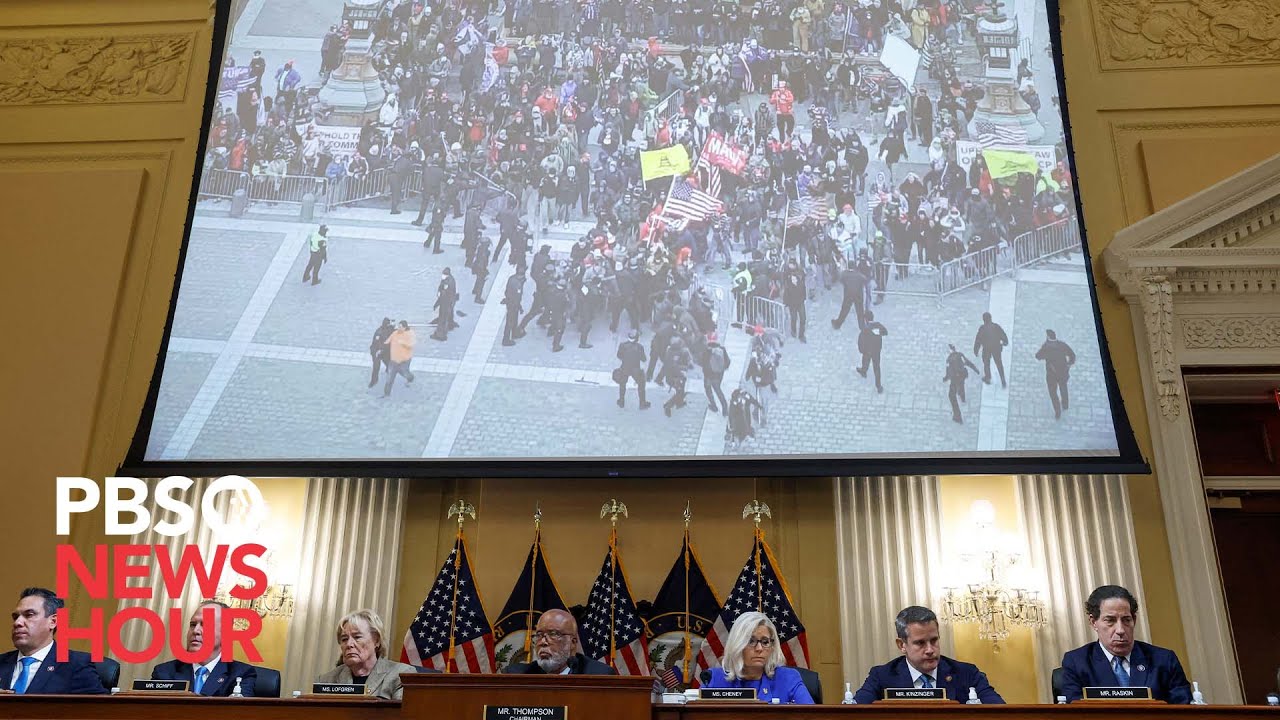 on the U.S. Capitol Building.
“I don’t know that Trotsky and Lenin were all that butch, either,” Last argues. “In hindsight, they look like third-rate intellectuals thirsting for power. But Koba was not. He was a brutalist. And he was more than happy to take over for them.”
Last continues, “The problem is that the soft bois eventually give way to hard men, who understand and are eager to use power. What starts out as fops and dandies posing and talking tough about how super-duper double-bad they want to overthrow liberalism can eventually lead to actual men with actual weapons deciding to try it for themselves.”
READ MORE:**New video captures Roger Stone’s latest attempt to incite violence**
AN
...Michael Anton, one of Trump's senior national security advisers, is the author of the infamous "Flight 93 Election" manifesto, which explicitly argued that immigration from nonwhite countries and "multiculturalism" are a threat to the West and American values and culture. Anton channels his white nationalist ideology -- as do Miller and Bannon -- under the cover of such Trumpian labels as "populism" and "economic nationalism."
In addition to the heretofore little-known Darren Beattie, there are other people in around the Trump White House, including Carl Higbie, Jamie Johnson and William Bradford, who appear to hold white nationalist and overtly racist views.
...
==
https://theweek.com/politics/1003035/the-far-right-contemplates-an-american-caesar
no lnx some
OPINION
The intellectual right contemplates an 'American Caesar'
Jan. 6 was a badly planned rehearsal for the real deal
Damon Linker
JULY 28, 2021
How does ideological change happen? Why do certain political ideas and possibilities that appear outrageous and even unthinkable at one moment in history come to be considered options worth taking seriously? What causes the Overton window to shift dramatically in one direction or another?
The answer has something to do with the dynamics of partisan coalitions. To cite a fairly anodyne example, Ronald Reagan took over the Republican Party in 1980 by expanding the GOP's appeal to the right as well as to the center-left. Those who supported Gerald Ford in 1976 were joined by conservative activists who had passionately favored Barry Goldwater in 1964, right-wing populists in the South and Midwest who had cast ballots for George Wallace in 1968, and the more moderate voters across the country who came to be called "Reagan Democrats." The result was broad-based support for deep tax cuts, sharply increased defense spending, and amped up confrontation with the Soviet Union — a synthesis of positions that seemed to be a non-starter just a few years earlier but which, thanks to Reagan's political skills and their intersection with contingent changes in political culture, became a stable ideological and electoral configuration of the GOP for the next 36 years.
The GOP has shed a lot of voters (as a share of the electorate) since its high-water mark in 1984. But with the rise of Donald Trump, the shape of the party's coalition also began to change. Some of the shift has been class-based, with white and Latino voters lacking a college degree flocking to the Republican Party and highly educated urban and suburban voters fleeing it.
But Trump also actively courted the right-wing fringe — the militia movement, quasi-paramilitary groups like the Proud Boys, neo-Nazis, overt racists, and outright xenophobes. These voters are a tiny portion of the party, but they punch above their weight, as we learned on Jan. 6, when a small handful of these extremists took the lead in initiating the mayhem and violence on Capitol Hill that afternoon while most of the intruders simply followed along rather cluelessly. (This point, along with much else in this column, is elaborated with depth and insight in the "Aftermath of January 6th" episode of the consistently excellent Know Your Enemy podcast.)
With most Republican officeholders and media personalities refusing to condemn the actions of the insurrectionary mob that invaded the Capitol to stop congressional certification of the 2020 election results — or Trump's decisive role in inciting that mob — and some of them instead endorsing an evidence-free conspiracy involving the "deep state" and the FBI, the GOP has verified that the Overton window has shifted sharply to the right. What would have until quite recently been considered unacceptable forms of political dissent have been legitimized. That's how the once unthinkable becomes a new normal.
A parallel process of line-shifting has been unfolding among conservative intellectuals, most of whom responded to the launch of Trump's presidential campaign six years ago with a mixture of disgust and incredulity. The dismissal didn't last. While many shifted to the center and refused to endorse Trump's hostile takeover of the party, plenty of others went along with it, adjusting their prior positions to bring them into alignment with the nominee on policy and attitude. No commentator did so with more enthusiasm or popular impact than Michael Anton.
A former director of communications for New York Mayor Rudy Giuliani (where he was briefly my boss) and former speechwriter for Secretary of State Condoleezza Rice, Anton penned the most notorious and rhetorically scalding case for supporting Trump. Published in early September 2016 in the Claremont Review of Books online, "The Flight 93 Election" portrayed Trump as a final, last-ditch opportunity for conservatives to wrest control of the country back from those (like Hillary Clinton) who aimed at nothing less than its thoroughgoing destruction.Rush Limbaugh paid tribute to the power of the argument (and amplified it for a vastly larger audience) by reading the essay aloud, paragraph by paragraph, on his radio show. In doing so, Anton, with Limbaugh's help, gave legions of Trump-skeptical conservatives permission to vote, even to express outright enthusiasm, for the untested right-wing populist.
After Trump's victory, Anton went on to serve the new president on the National Security Council. That lasted a little more than a year. Once he had left the White House, Anton returned to writing and speaking publicly in defense of Trump and in favor of his re-election. Two months before the 2020 vote, he predicted an attempted "coup" from the left if Democrat Joe Biden didn't prevail.When events unfolded in precisely the opposite way — with Trump losing the vote, refusing to accept the result, and attempting a hapless coup of his own to stay in power — Anton said nothing to acknowledge either the irony or the error. Quite the opposite, in fact. In the months since Trump left office, Anton has been doing his best to throw open the doors of the conservative intellectual world to ideas once considered far too extreme for American politics.
How extreme? So extreme that in late May, Anton set aside nearly two hours on his Claremont Institute podcast ("The Stakes") for an erudite, wide-ranging discussion withself-described monarchist Curtis Yarvin about why the United States needs an "American Caesar" to seize control of the federal government, and precisely how such a would-be dictator could accomplish the task.
With this conversation, Anton seems eager to shift the Overton window far beyond anything resembling liberal democracy. In its place, he would substitute an elaborate, historically and philosophically sophisticated justification for tyranny.
It's important right at the outset to make a few things clear about the Anton-Yarvin conversation. First, Anton doesn't explicitly endorseYarvin's most outlandish ideas, which blend a far-right love of unlimited executive power with the techno-utopianism of Silicon Valley. (Yarvin created the Urbit digital platform and co-founded the tech company Tion, while also gaining considerable notoriety with the alt-right blog "Unqualified Reservations," written under the pen name Mencius Moldbug.)
In fact, at several points Anton goes out of his way to declare in a tone of mock seriousness that as someone affiliated with the Claremont Institute, which has long advocated for a return to the principles of the American founding (including the Declaration of Independence's denunciations of monarchical tyranny), he can't stand behind Yarvin's sympathy for dictatorship.Yet it's also true that at no point does Anton offer a substantive critique of Yarvin's arguments and assertions. He merely expresses pragmatic or tactical objections, as if the primary fault in Yarvin's ideas is that they are unrealistic.
Then there's the matter of terminology. I have described Anton's conversation with Yarvin as helping to shift the Overton window away from liberal democracy and toward a defense of tyranny. Yet this isn't how either man understands the American present. Rather, they agree early on in the podcast (around minute 24) that the current American "regime" is most accurately described as a "theocratic oligarchy" in which an elite class of progressive "priests" ensconced in the bureaucracies of the administrative state, and at Harvard, The New York Times, and other leading institutions of civil society, promulgate and enforce their own version of "reality."
Anton and Yarvin treat this assertion as given and then proceed to talk through how this theocratic oligarchy might be overturned. (One of their substantive disagreements concerns how long this regime might last if it's not directly challenged. Anton is hopeful it will collapse of its own incompetence and corruption, while Yarvin thinks the current "clown world" could continue onward for decades or even a century, with the United States slowly decaying into something resembling a Third World country.)
Once the conversation really gets going (around minute 45), Yarvin makes clear that he has a highly idiosyncratic take on American history. In his view, roughly every 75 years, a "Caesar" seizes dictatorial powers and institutes "substantive regime changes." George Washington did this in 1789. Abraham Lincoln did it again in 1861. And FDR did it last in 1933, speaking in the closing passages of his First Inaugural Address about the national emergency of the Great Depression and the need to wield unprecedented government power to combat it, which he did with the New Deal.The U.S. today is overdue for its next political transformation — one that would settle the country's "cold civil war" from above.
Yarvin's top choice to become the next American Caesar is Elon Musk, though both men acknowledge that he's constitutionally ineligible for the role because he was born in South Africa. This provides an occasion for them both to joke about how great it would be for him to run, win, and demand to be made president anyway, in defiance of the Constitution. (Anton makes sure to clarify that their jovial chit-chat about flagrantly disregarding the letter of the Constitution is "not an endorsement" of actually doing so. Later on, they likewise joke about how great it would have been for Trump to declare himself the personal embodiment of the "living Constitution.")
But what exactly is Yarvin proposing and Anton entertaining here? Is it nothing more ominous than a New Deal from the right? As the conversation unfolds further, beginning around an hour and twenty minutes into the podcast, it becomes clear that Yarvin has something much more radical in mind (even if his peculiar constellation of assumptions prevent him from recognizing just how extreme it is).
The trick, for Yarvin, is for the would-be American Caesar to exercise emergency powers from day one. How? Caesar should run for president promising to do precisely this, and then announce the national emergency in his inaugural address, encouraging every state government to do the same. Taking advantages of "ambiguities" in the Constitution, he will immediately act to federalize the national guard around the country and welcome backup from sympathetic members of the police (who will wear armbands to signal their support for Caesar).
When federal agencies refuse to go along, Yarvin suggests, Caesar (whom he now begins referring to as "Trump") will use a "Trump app" to communicate directly with his 80 million supporters on their smart phones, using notifications to tell them that "this agency isn't following my instructions," which will prompt them to rally at the proper building, with the crowd "steered around by a joystick by Trump himself," forming a "human barricade around every federal building, supporting Trump's lawful authority." Where maybe 20,000 people stormed the Capitol on Jan. 6, millions responding to the Trump app would be much more effective — a modern-day version of the paramilitary groups that ensured Lincoln's safety during the hard-fought, dangerous 1860 campaign for president that preceded the Civil War (and the president's subsequent suspension of habeas corpus and shuttering of hundreds of newspapers).
When Anton asks how Trump-Caesar should respond to Harvard, The New York Times, and the rest of the theocratic oligarchy blaring air-raid sirens about the imposition of dictatorship, Yarvin indicates that it would be essential to "smash it" with one blow.To suggest that Caesar should be required to deal with "someone else's department of reality is manifestly absurd." Going on, Yarvin explains that "when Caesar crosses the Rubicon, he doesn't sit around getting his feet wet, fishing. He marches straight across the Rubicon" and uses "all force available." Once that happens, the whole world can be "remade."
The podcast concludes with Anton quoting another Claremont writer (Angelo Codevilla) on how Trump dropped "the leadership of the deplorables," which is waiting to be picked up by someone "who will make Trump seem moderate." Yarvin responds approvingly with a quote by Serbian dictator and indicted genocidal war criminal Slobodan Milošević, who said the goal should be that "no one will dare to beat you anymore."
Defenders of Anton, Yarvin, and the Claremont Institute will say that this thoroughly appalling discussion was just that — some casual talk, idle musings, a fantasy disconnected from reality. Yet fantasies are outgrowths of our imaginations and hopes, and they help set our expectations, including our conception of what is possible and desirable in politics.
The indisputable fact is that a leading and longstanding conservative institute in the United States hosts a podcast by someone who served as a senior official in the presidential administration of a man who may run again for the nation's highest office in a few years. And on an episode of that podcast, this former official and his invited guest genially rehearsed arguments about why a future president would be justified in turning himself into a tyrant, and how he could set about accomplishing this task.
Which means that on the starboard side of American politics, the Overton window has now shifted far beyond the boundaries of democratic self-government to a place broadly coterminous with fascism.
ref
https://www.salon.com/**2017/02**/12/a-white-nationalist-fantasy-donald-trumps-america-is-not-made-for-you-and-me/
...Trump was the featured guest at the annual National Prayer Breakfast in Washington. where he outlined a vision of Christian nationalism. A twice-divorced man, repeat adulterer, professed sexual predator who has said he grabs women by their genitals, liar and fraud, guest star in a pornographic video and a person who is neither pious nor modest speaking on matters of God and faith might be seen as comedy gold. Likewise, Trump's promises to tear down the boundaries between church and state could also be mocked as boilerplate right-wing talking points that only resonate with the ignorant or the politically unhinged.
In this historical moment, these matters are too serious to be greeted with laughter, however. Trump's comments at the prayer breakfast are part of a much larger and very dangerous pattern.
Donald Trump used overt white racism as well as white racial resentment to secure his victory over Hillary Clinton. The narrative of "economic anxiety" among working-class whites is largely incorrect. White identity politics and ginning up fear about "white oppression" won Trump the White House.
Two of Donald Trump's most senior and trusted advisers are Stephen Bannon and Stephen Miller, long associated with white nationalist causes and publications.
Donald Trump has attempted to ban Muslims from entering the United States. (To this point, the federal courts have stopped him.)
Donald Trump has ordered that federal resources be diverted away from tracking white supremacist organizations.
Donald Trump has said that "illegal immigrants" from Mexico come to America in order to rape and kill white people. He has promised to build a wall to protect the country from these foreign "invaders." Trump has also said that a Mexican-American judge was inherently incapable of treating him fairly because of the judge's ancestry. As House Speaker Paul Ryan observed at the time, it was the definition of a racist comment.
Donald Trump's administration does not view protecting the civil rights of non-whites as a priority. He has threatened to unleash the police and military on black and brown people who live in cities such as Chicago. Trump's personal behavior is replete with examples of bigotry and racism.
This is a vision of America as a Herrenvolk society where democracy, freedom and opportunity are centered around the principle that white people are the in-group to be privileged and protected, while nonwhites are to be treated as second-class citizens. This vision of America also embraces what white supremacists and white nationalists have referred to as "ethno-nationalism": the idea that the modern nation-state should be defined by "ethnicity," and that there are certain core values that must be protected at all costs against "outsiders."
But "ethno-nationalism" is no more than racist doublespeak. It is a somewhat more acceptable reframing of the white supremacist belief that America and Europe should be "white" by law, habit and tradition. By implication, people of color (and those who are not Christian -- especially Muslims) are pollutants to be expunged, by whatever means necessary, from the white body politic.
Last week, Donald Trump doubled down on his embrace of these racist Herrenvolk and ethno-nationalist values when it was announced that former George W. Bush speechwriterMichael Anton would be joining his administration. Working under the pen name of Publius Decius Mus, or "Decius" -- apparently a reference to a Roman general who sacrificed himself for the empire -- Anton is best known for writing a pro-Trump authoritarian manifesto called "The Flight 93 Election," whose title alludes to the plane brought down by its passengers during the 9/11 attacks.
Writing for the New Yorker, Jonathan Chait elaborates:
Anton describes the government (pre-Trump) as “the junta.” This cannot be dismissed as mere rhetorical exaggeration. To Anton, the rising share of the nonwhite population is a foreign invasion: “The ceaseless importation of Third World foreigners with no tradition of, taste for, or experience in liberty means that the electorate grows more left, more Democratic, less Republican, less republican, and less traditionally American with every cycle,” he writes. He describes the children of immigrants as “ringers to form a permanent electoral majority.” The racial and political implications of this argument are both clear and extreme: Anton believes the white Republican base is the only legitimate governing coalition. Democratic governments are inherently illegitimate by dint of their racial cast.
Race is integral to Anton’s sense of his own persecution. He sees the enthusiasm for Trump among avowed white supremacists as more reason to support Trump: “The Left was calling us Nazis long before any pro-Trumpers tweeted Holocaust denial memes,” he argues. “And how does one deal with a Nazi — that is, with an enemy one is convinced intends your destruction? You don’t compromise with him or leave him alone. You crush him.” It is a fascinating line of reasoning: There are Nazis supporting his chosen candidate, therefore the left will crush conservatives like Nazis, therefore his chosen candidate’s triumph is all the more necessary.
If there is a single passage of the essay that most succinctly summarizes its case, it is this: “I want my party to live. I want my country to live. I want my people to live.” Anton equates all these things — his party, his country, and his people, insisting that four more years of a Democratic presidency will extinguish all three. This is a textbook example of the kind of reasoning, the conviction that a single election defeat will usher in permanent destruction, that liberal theorists see as inimical to democratic government.
Predictably, "The Flight 93 Election" manifesto is popular among white supremacists who have praised it online and elsewhere.
Anton apparently now occupies a central advisory role in the White House and will be helping shape American foreign policy.
Many Americans still feel a sense of shock over how the United States could so suddenly go from the more cosmopolitan and inclusive presidency of Barack Obama to the naked bigotry and racism of Trump. Unfortunately, American history is deeply marked by the enduring power of white supremacy and white nationalism. As troubling as this fact may be (especially for those born after the Civil Rights movement and who cast their first presidential votes for a black man), those repugnant values are not deviations from the country's trajectory.
Through discriminatory immigration policies; government subsidies that created the white middle class and were denied to black Americans and other people of color; de jure and de facto white supremacy; racial discrimination in housing, banking, and the labor market; white racist pogroms and ethnic cleansing; racist terror inflicted by the police, other law enforcement and paramilitary groups such as the Ku Klux Klan; eliminationist policies and land theft toward First Nations people; and a founding document that dictated that black people were human property, America has been a white republic for most of its history.
In his role as the white nationalist in chief of the United States, Donald Trump wants to make clear that America is a white man's country and that everyone else permitted to live here is just a guest, permanently "on notice." This is revanchism of the worst kind, and a desperate effort to turn back the clock to the wrong side of history.
Donald Trump and his minions will soon discover that black and brown people built America. Indeed, many of them were in the United States long before "white" Europeans arrived and tried to claim it exclusively as their own. The United States is a mulatto society, not a white nation. In many ways, black and brown people are the quintessential Americans. Whatever Trump may say or do, they are not going anywhere.
CHAUNCEY DEVEGA
Chauncey DeVega is a politics staff writer for Salon. His essays can also be found at Chaunceydevega.com. He also hosts a weekly podcast, The Chauncey DeVega Show. Chauncey can be followed on Twitter and Facebook.
MORE FROM CHAUNCEY DEVEGA
==
https://www.alternet.org/news-amp-politics/heres-dark-plan-bigoted-trump-ally-pushing-change-meaning-american-citizenship
...He notes that the 14th Amendment defines citizenship: “All persons born or naturalized in the United States, and subject to the jurisdiction thereof, are citizens of the United States and of the state wherein they reside.”
The plain text seems to support the birthright citizenship practice. If you’re born under the United States an under its laws, then you’re a citizen.
But Anton argues, citing legislative debates by the drafters of 14th Amendment, that the phrase “subject to the jurisdiction thereof” is actually supposed to mean “not owing allegiance to anyone else."
It’s hard to make sense of the argument, though. As others have pointed out, it rests on dubious historical arguments and at least one misquote.
It also just strains common sense. The plain reading of “subject to the jurisdiction thereof” means “under the government’s laws.” That applies to nearly everyone in the country, perhaps with the exception of some diplomats. Arcane debates by dead legislators are hardly good grounds for undermining the plain reading of the text, especially when these debates refer to clauses that were intentionally left out of the text of the law. (They could have used the phrase "not owing allegiance to anyone else" in the law, had they wanted to.
...
==
AN cdv
...Trump rode this wave of white rage and fear to the White House. He had many criers on that damnable highway. Extreme right-wing opinion columnist and occasional Republican presidential primary candidate Pat Buchanan was and is one of the loudest and most panicked. Writing in Monday's New York Times, Charles Blow observed how:
Last week Pat Buchanan was on “The Laura Ingraham Show” to discuss the humanitarian crisis Donald Trump has created at the border by ripping children away from their parents.
He was not particularly sympathetic to these families’ plights, instead choosing to focus on the demographic danger facing whiteness: “This is the great issue of our time. And, the real question is whether Europe has the will and the capacity, and America has the capacity to halt the invasion of the countries until they change the character — political, social, racial, ethnic — character of the country entirely.”
A few days earlier on his blog, he expanded on this point: “The existential question, however, thus remains: How does the West, America included, stop the flood tide of migrants before it alters forever the political and demographic character of our nations and our civilization?” He continued: “You cannot stop these sentiments of people who want to live together with their own and they want their borders protected.” Make no mistake here, Buchanan is talking about protecting white dominance, white culture, white majorities and white power.
In describing Western liberals’ aversions to instituting racist, xenophobic immigration policies, he wrote: “We are truly dealing here with an ideology of Western suicide.” He ended with this: “Trump may be on the wrong side politically and emotionally of this issue of separating migrant kids from their parents. But on the mega-issue — the Third World invasion of the West — he is riding the great wave of the future, if the West is to have a future.”
Blow continued:
Strip all the other rationales away from this draconian immigration policy. This is at the core: White extinction anxiety, white displacement anxiety, white minority anxiety. This is the fear and anxiety Trump is playing to.
Much of this echoes an observation I made in 2015 where I explained how:
Pat Buchanan possesses gifted insight into powerful appeal of Donald Trump for the Republican base. Both men are nativist, xenophobic, right-wing populists who understand the allure of white alienation and racial resentment in the post civil rights era. Pat Buchanan is more of a “culture warrior” than Donald Trump. But like George Wallace in the 1960s, the Know-Nothings in the 19th century and the Black Legion in the 1930s, Buchanan and Trump are recent iterations in a long history of right-wing demagoguery and false populism in American politics.
Stephen Miller, a driving force behind the current zero-tolerance border crossing policy and one of Trump's closest advisers, also shares Buchanan's worries and anger about a White America "under siege" by waves of "inassimilable" nonwhites.
And in an appearance on Fox News last Friday, Michael Anton (who is one of Donald Trump's other white supremacist advisers) made the Trump administration's de facto crusade of "blood and soil" old fashioned white racism even more clear when he said:
The United States has a huge heart. We’ve welcomed millions of people, including my ancestors, but we’ve got to have limits or we don’t have a country.
Anton was in the "safe space" provided by Fox News where he would feel comfortable enough to make such a vile racist comment without being properly challenged.
This echoes Anton's infamous white supremacist "The Flight 93 Election" screed from 2016 where he argued that:
“The ceaseless importation of Third World foreigners with no tradition of, taste for, or experience in liberty means that the electorate grows more left, more Democratic, less Republican, less republican, and less traditionally American with every cycle.”
Anton's comments on Sunday are just a reflection of how Fox News and its hosts, such as Tucker Carlson and other members of the right-wing commentariat, trade in white supremacist talking points on a near-daily basis.
Of course, these claims and worries that whiteness (and white people) in America will be eclipsed or annihilated are ahistorical, lack proper social and political context in the present, and in total are nightmares of shadow and fog without any real substance.
Throughout American history the boundaries of who is considered "white" have changed to include new groups of people in response to the demands and needs of white elites to maintain power.
The Irish, Italians, the Polish, Jews, Russians, and other Europeans have, over the centuries and decades, completed this journey from the periphery of whiteness to being fully considered white.
If American history is any guide, a good number of Hispanics and Latinos (as well as Pacific Islanders and other East Asians) will likely complete some version of that journey from honorary to full whiteness as well.
White Americans will not be a "minority" in America. They will still be the single largest group.
Moreover, this hysteria about a unified black and brown horde that will act in lockstep to pursue shared interests against white Americans is based on a fiction. Blacks, Hispanics and Latinos, Asians, Native Americans, and other nonwhite groups and individuals do not share a hive mind; they are not the Borg from "Star Trek"; their interests and goals are not always the same.
Most importantly, white Americans, regardless of demographic change, will still control every major social, political, economic and cultural institution in the United States.
Population numbers may fluctuate, but this deep institutional control of power in America has historically and will continue to remain in the hands of White America.
The concept of "race" does not reflect empirical reality as it actually exists.
Racism and white supremacy are based on a concept which is a "true lie" that dominant society makes real, both for those who benefit from racial inequality as well as those who suffer under it.
In all, Charles Blow's sharp observation that, "This is at the core: White extinction anxiety, white displacement anxiety, white minority anxiety. This is the fear and anxiety Trump is playing to" actually rests up something deeper, more existential, and in many ways more sinister both because of the collective psychology involved and what such a conclusion then mandates as a necessary and reasonable response to an existential threat.
It is not just white anxiety about changing demographics which drives Trumpism and the Republican Party's white identity politics. It is actually a fear that black people specifically, and nonwhites more generally, will seek revenge against white people once the former are the numerically larger group. This conclusion is based on a very narrow and distorted understanding of power as a type of zero sum game where it is considered "human nature" for one group to dominate another by any means necessary.
Here white racial paranoia — as a function of the absurd race concept — is based on contradictions and hypocrisy that nonetheless somehow cohere together.
Social science research, public polling, and other data consistently shows a deep divide in America between how whites and nonwhites understand the impact of racism, both in their personal lives and across society as a whole. Many of these differences are truly ridiculous and bizarre.
Before the Civil War and through to Reconstruction and afterwards, white Americans were afraid of "negro domination" if black slaves and then free people were given access to the vote and other civil rights. During the legal white supremacy of American Apartheid and Jim and Jane Crow, white Americans, by large and consistent margins, told pollsters that black Americans had an equal opportunity to succeed in America.
These divides continue into the present with white Americans — despite mountains of empirical research and increasingly also near instantaneous real-time video evidence — are largely still in denial about the impact of racism on nonwhites more generally, and of how cultural institutions such as the police, education, banking, finance, real estate, and the political system through gerrymandering and other voter suppression techniques, discriminate against nonwhites.
Against all facts and evidence, matters have become so absurd in the age of Donald Trump that almost half of white Americans actually believe that they are more likely to be victims of racism than are black and brown people. Moreover, Donald Trump and the Republican Party's voters are so drunk on white victimology that they think that it is white people and not nonwhites who are the "real victims" of racial discrimination in America.
All of these delusions revolve around a basic contradiction: many white Americans have convinced themselves that black and brown people exaggerate, are too sensitive, and outright lie about their experiences as victims of racism and white privilege. Yet, this racism — which according to the white gaze does not really exist except in extreme forms such as the Ku Klux Klan and neo-Nazis — somehow does exist, but manifests itself in the form of so-called "reverse racism" against white people.
Furthermore, if black and brown people have been exaggerating, lying about, and misrepresenting the realities of racism and white supremacy in America, then why would white folks have anything at all to fear from racism themselves, not to mention "revenge" for sins and crimes and transgressions which actually never took place?
It all boggles the mind. This does not make the cocktail of white privilege and white supremacy any less potent a social and political drug.
What does history actually teach us?
In the United States black Americans and other people of color have only wanted full and equal rights with white Americans. For example, from the Civil War to the great experiment in democracy that was Reconstruction, black Americans worked very hard to expand opportunities for all people, including poor and working class whites. This dynamic continues into the present where public opinion polls show that black and brown American consistently support policies which would expand the social safety net, civil rights and economic justice and opportunity for the average American — on both sides of the color line. Black and brown people are also on the frontlines of saving American democracy from the fascism and authoritarianism of Donald Trump and the Republican Party.
Black (and brown) Americans, as a group, have never sought to retaliate against white Americans — even when such an act and desire would have been perfectly reasonable, just, and yes, moral. But there are millions of white Americans in Trump's camp and also outside of it who are terrified that with increasing racial and ethnic diversity they will be victims of racially-motivated revenge and violence. This makes these millions of white voters easily manipulated by racist demagogues who use political sadism to stab at the worst parts of human nature. In response, it will take require a united front of black and brown and white folks to save the United States from Donald Trump and the Republican Party's fascist and authoritarian campaign against democracy. Unfortunately, too many white Americans would rather live under an authoritarian regime that supposedly empowers white people like them than a real democracy which provides equal opportunities for all people.
==
http://www.salon.com/2017/02/14/donald-trumps-white-nationalist-genius-bar-steve-bannon-stephen-miller-michael-decius-anton-and-beyond/
Trump’s administration is built around a brain trust of white nationalists. To deny that fact is to ignore a crucial element of this national crisis: America’s “greatest generation” defeated Nazism during World War II, and 70 or so years later one of the country’s two leading political parties has injected a more polite version of that poison into its veins and rode to power in Washington on a wave of bigotry and racism. Among the men who have President Trump’s ear, we find White House strategist Steve Bannon, senior adviser Stephen Miller, deputy assistant to the president Sebastian Gorka and newly installed Attorney General Jeff Sessions. Until recently Bannon ran the right-wing website Breitbart News, which has a well-known white nationalist tilt and loves to publish stories about “black crime” and “Muslim hordes” beating down the gates of “Western civilization.” As Bannon has said, Breitbart functions as a mouthpiece for the “alt-right,” which largely serves as a rebranding label for various white nationalists and white supremacists.
Miller, who made headlines over the weekend defending Trump’s false claims of “voter fraud,” is a fierce advocate of “ethno-nationalism,” meaning the racist belief that Europe and America must protect their culture and civilization (which are white by default) from outsiders who do not share their “Judeo-Christian values.” Miller echoed those talking points on Sunday talk shows, claiming that “millions” of “illegal aliens” voted against Donald Trump in the 2016 presidential election. Donald Trump's white nationalist "genius bar": Steve Bannon, Stephen Miller, Michael "Decius" Anton and beyond ... ;has said that the NAACP is an “un-American” organization, is said to have insulted a black attorney calling him “boy,” has backed laws that make it more difficult for African-Americans to vote, and once joked that he thought the Ku Klux Klan was “all right” until he learned that some of its members smoked pot. Sessions’ racial views are so extreme that he was earlier denied a federal judgeship by his fellow Republicans in 1986.
In his role as the attorney general and leading law enforcement official of the United States, Sessions will now be tasked with defending the civil rights of racial minorities and other vulnerable populations. History is not always a story of progress. The office of the attorney general was instrumental in fighting the Ku Klux Klan and its threat to African-Americans during Reconstruction, under President Ulysses S. Grant. Under Trump, the attorney general is a man who apparently does not view protecting civil rights as a priority.
When the Trump administration recently refused to acknowledge how Jews were the primary and specific targets of the Holocaust, it was White House deputy assistant Gorka who called the controversy over that decision as “asinine.” Perhaps it is no coincidence then that Gorka — who was born in London to Hungarian émigré parents — has repeatedly been photographed wearing a medal associated with the Order of Vitéz, an overtly anti-Semitic chivalric organization that collaborated with the Nazi regime during World War II.
Writing for Policy Mic, Tom McKay offered some additional context on the order’s founder, Miklós Horthy:
Horthy, the Hungarian regent that [the order] supported, held a profound animus for the Jews of Hungary. “Concerning the Jewish question, for all my life, I have been an anti-Semite,” Horthy once wrote. His government allied with Adolf Hitler’s Nazi Germany, enacted anti-Semitic laws, brutally cleansed Hungarian Jews, enslaved others in work details and collaborated with German authorities to deport them to death camps.
“Many supporters of the Horthy regime were enamored by the Nazis and Hitler, and the ‘knights’ were especially so,” Balogh told LobeLog. “After 1948, one wouldn’t have bragged about his father being a ‘vitéz.’ Lately, however, especially since 2010, it has become fashionable again to boast about such ‘illustrious’ ancestors.”
==
http://www.claremont.org/crb/basicpage/the-flight-93-election/
The Flight 93 Election
By: Publius Decius Mus
September 5, 2016
2016 is the Flight 93 election: charge the cockpit or you die. You may die anyway. You—or the leader of your party—may make it into the cockpit and not know how to fly or land the plane. There are no guarantees.
Except one: if you don’t try, death is certain. To compound the metaphor: a Hillary Clinton presidency is Russian Roulette with a semi-auto. With Trump, at least you can spin the cylinder and take your chances.
To ordinary conservative ears, this sounds histrionic. The stakes can’t be that high because they are never that high—except perhaps in the pages of Gibbon. Conservative intellectuals will insist that there has been no “end of history” and that all human outcomes are still possible. They will even—as Charles Kesler does—admit that America is in “crisis.” But how great is the crisis? Can things really be so bad if eight years of Obama can be followed by eight more of Hillary, and yet Constitutionalist conservatives can still reasonably hope for a restoration of our cherished ideals? Cruz in 2024!
Not to pick (too much) on Kesler, who is less unwarrantedly optimistic than most conservatives. And who, at least, poses the right question: Trump or Hillary? Though his answer—“even if [Trump] had chosen his policies at random, they would be sounder than Hillary’s”—is unwarrantedly ungenerous. The truth is that Trump articulated, if incompletely and inconsistently, the right stances on the right issues—immigration, trade, and war—right from the beginning....
==
==
When my colleague David Brooks — [no fan](http://p.nytimes.com/email/re?location=pMJKdIFVI6pghfX2HXfSzxRpdoyDWYNWiMRW5BAFc1ZXgceKHub9L0c6YVQMSSeGavYcmhOGq9kR2caHOBKzCm6w5SvA27eFj71Q1ZKbCpBBAmD9xjQba3dysvCYSrgZtI4CABTyM/3jPX2KOvKbFA&campaign_id=69&instance_id=91461&segment_id=102851&user_id=f81cfdb1ec3d5806d8c08739f2dfbfd9®i_id=41602665) of Donald Trump — was choosing his [Sidney Award winners](http://p.nytimes.com/email/re?location=pMJKdIFVI6pghfX2HXfSzxRpdoyDWYNW7CajGXxk48fdR5IPMYsJ7cGuLZmkb77zfcI9ccOOSczqsMubHWiL/kEj479CiMgrvLvjpha+4bXFcS8Tr/jnxfekD+8j4PJ1qUfHpcjIqCgofumKVUbCXJuZlhaCdORO0ClwdUSAD4Y=&campaign_id=69&instance_id=91461&segment_id=102851&user_id=f81cfdb1ec3d5806d8c08739f2dfbfd9®i_id=41602665) for last year’s best essays, he included a pro-Trump entry “to give the winning side its due.” Brooks chose “[The Flight 93 Election](http://p.nytimes.com/email/re?location=4z5Q7LhI+KXrhCHS71YiTWYpLFJmVjhKBdSU07hRwwBtkZDMkiShVk0irZh9tgdTZfqj1eOdrxz+1HlqP4MmBQ&campaign_id=69&instance_id=91461&segment_id=102851&user_id=f81cfdb1ec3d5806d8c08739f2dfbfd9®i_id=41602665),” an anonymously published piece arguing that the election of Hillary Clinton would be the equivalent of a catastrophic plane crash for both conservatism and America. Clinton would crush conservatives, the author wrote, through “vindictive persecution against resistance and dissent.” And rising immigration would doom the country in the long term: “the ceaseless importation of Third World foreigners with no tradition of, taste for, or experience in liberty means that the electorate grows more left, more Democratic, less Republican, less republican, and less traditionally American with every cycle.”
These racially tinged apocalyptical fears led the author to argue for Trump as the man who could potentially halt the decline. Trump’s willingness to tear down the status quo was the one hope for “my party,” “my country” and “my people,” the author wrote.On Thursday, Michael Warren of The Weekly Standard [unmasked](http://p.nytimes.com/email/re?location=4z5Q7LhI+KXfKFD9tDH57S9jvBPep7qP6fKGWrwyY0gegisQXu9sa1UMLoM6+7ex1hIu5W0Kclas1PrkdA1LVzYLO3dAFdeuVGxdWLee3N6etoZSPGrvYYjcitLzTpq5v6WkFlLLi4JZOHHlieRvKg==&campaign_id=69&instance_id=91461&segment_id=102851&user_id=f81cfdb1ec3d5806d8c08739f2dfbfd9®i_id=41602665) the previously anonymous writer as a “fast-talking 47-year-old intellectual” named Michael Anton.
Anton previously worked as an aide to Rudy Giuliani and George W. Bush; in the Bush administration, he pushed for the Iraq war, which he has since disavowed. In the last 12 years,Anton was a speechwriter for Rupert Murdoch, Citigroup’s director of communications and a managing director at BlackRock, the investment firm. Care to guess where he works now? The White House. Anton is a senior national-security official in the Trump administration.
No matter how odious you find them — and, to be clear, I find them deeply so — Anton’s arguments are important to understanding the ideology with which Trump (along with Steve Bannon) is governing the country. There are clear strains of Anton’s dark anti-otherness in Trump’s immigration ban, the talk of a border wall and the [appeals to evangelical Christians](http://p.nytimes.com/email/re?location=pMJKdIFVI6pghfX2HXfSzxRpdoyDWYNWTiojIldV5/25D3shdnOSrB7lcuL8LDLd7VCNbA43nVDwGkwoHMW+M4ZfD2YDnvKuhk9fHS/7OaJbnhryJihb+2hvik6/8U2AskVr8l2NxrAip0oQECuRHTwE8Ab/D2zi&campaign_id=69&instance_id=91461&segment_id=102851&user_id=f81cfdb1ec3d5806d8c08739f2dfbfd9®i_id=41602665).
As Kelefa Sanneh [wrote in](http://p.nytimes.com/email/re?location=4z5Q7LhI+KVY9JId7aeEQ7gMpappEcLjham4JlD8ymiOGejRbgwk3rFXiEShq8U6jezYiLExOt4OqQZ2wQcr4tWamFIdycLt+8cVL4LXI/Cap+i+aAQkNw&campaign_id=69&instance_id=91461&segment_id=102851&user_id=f81cfdb1ec3d5806d8c08739f2dfbfd9®i_id=41602665) The New Yorker last month, Anton’s essay was “the most cogent argument for electing Donald Trump.” [Ross Douthat](http://p.nytimes.com/email/re?location=pMJKdIFVI6pehkIEQ5/wRmTW/VLbNDaTVI1MPQz6ZYAA6p2Gac6K1rxzvy2BS0siNKQEONJKOek=&campaign_id=69&instance_id=91461&segment_id=102851&user_id=f81cfdb1ec3d5806d8c08739f2dfbfd9®i_id=41602665), [Michael Gerson](http://p.nytimes.com/email/re?location=pMJKdIFVI6rkgsAPBvYIYG3uv2BuPN+mWdKyvDzeLu1wS0qNEpQ3/cGZgZvb0Vvu0u1tlTBVzQHolVIJuxhK8mtmi+QY/o/Xc1Pf9Hv81CJSjTFFUNs52UK5irBwiPPPq+daqZIqLD+XYKwuSn0AQjYCXAwh4XXsYURqeB+P8HTBDmAdx55/eFTKGJFCARn+ayO0S+0k1/0LJezl7rI8OX2lPilmeqQiGRNJqMA+7zo=&campaign_id=69&instance_id=91461&segment_id=102851&user_id=f81cfdb1ec3d5806d8c08739f2dfbfd9®i_id=41602665) and [Jonathan Chait](http://p.nytimes.com/email/re?location=InCMR7g4BCL9F5LiuM65NYKpt6CMUVs8fM1qv1crT0OIhHQFIItH8g33LP937bzn6DeSqtRgUfsLacSTbsF2+gwNQpNoWDGTbMMk0Uo6A5+cqrCeVyYATr6nPWTilBjuzVvkgPFWv/IZE0mowD7vOg&campaign_id=69&instance_id=91461&segment_id=102851&user_id=f81cfdb1ec3d5806d8c08739f2dfbfd9®i_id=41602665) have also offered critiques. A central question for liberals is why Anton’s and Trump’s ideas have appealed more successfully to the white working class than the Democrats’ arguments — and what liberals might do to change the situation.
To that end, be sure to read Thomas Edsall’s [latest Op-Ed](http://p.nytimes.com/email/re?location=pMJKdIFVI6pghfX2HXfSzxRpdoyDWYNWTiojIldV5/3DO3+v5W6IXwbz+Jd1GAfPsJZyPSQ57tLVGvRhrynPiDX23tTh79P92b/KCQnAeeRusOUrwNu3hY+9UNWSmwqQQQJg/cY0G2t3crLwmEq4GbSOAgAU8jP94z19ijrymxQ=&campaign_id=69&instance_id=91461&segment_id=102851&user_id=f81cfdb1ec3d5806d8c08739f2dfbfd9®i_id=41602665), on populism vs. left-leaning post-materialism. I also recommend the [second episode](http://p.nytimes.com/email/re?location=pMJKdIFVI6pghfX2HXfSzxRpdoyDWYNWTiojIldV5/3wpQKNFy6nTVLAWRsIZFdVQunHu3bu0ebrNeZJ4rA3LJAx09TBOloPaXRu6KM6D/xN/H5mmRHd2Ti4VfcvHfYgYeyKvnoK8cRrHmbozfsmoSiBA42dOMf3kaZjaWII+sqpVvtA7M9g5dMqiBC8cxFk&campaign_id=69&instance_id=91461&segment_id=102851&user_id=f81cfdb1ec3d5806d8c08739f2dfbfd9®i_id=41602665) of The Times’s new podcast, The Daily, to hear recordings of Bannon talking about Islam. The full Opinion report from The Times follows, including [Angelina Jolie](http://p.nytimes.com/email/re?location=pMJKdIFVI6pghfX2HXfSzxRpdoyDWYNWTiojIldV5/3DO3+v5W6IX78dbdvv8dYk46EkWlcOwZ3dsxyzvjSt9NzKvfscwrq77xZjP5ObF35FcTxQwTNRYvcAiKXAARr3mNtTHCUjHeZVepGDcGHLC2Hsir56CvHEax5m6M37JqEogQONnTjH95GmY2liCPrKqVb7QOzPYOXTKogQvHMRZA==&campaign_id=69&instance_id=91461&segment_id=102851&user_id=f81cfdb1ec3d5806d8c08739f2dfbfd9®i_id=41602665) on refugees, [Senator Jeff Merkley](http://p.nytimes.com/email/re?location=pMJKdIFVI6pghfX2HXfSzxRpdoyDWYNWTiojIldV5/1osH06a6thlMqCOqbkaeYJ60DSKlaxZq00SSMNBw0eE4APxOT58g59VXqRg3Bhywth7Iq+egrxxGseZujN+yahKIEDjZ04x/eRpmNpYgj6yqlW+0Dsz2Dl0yqIELxzEWQ=&campaign_id=69&instance_id=91461&segment_id=102851&user_id=f81cfdb1ec3d5806d8c08739f2dfbfd9®i_id=41602665) on Neil Gorsuch and [Alec MacGillis](http://p.nytimes.com/email/re?location=pMJKdIFVI6pghfX2HXfSzxRpdoyDWYNWTiojIldV5/1osH06a6thlB3uxSBZhFxxyBNMDn//fW/fRP3h/hhs66C2cL/serN/B0+Fdau/llgXzT6XkWql4bauPcU6k8TThk9fHS/7OaJbnhryJihb+2hvik6/8U2AskVr8l2NxrAip0oQECuRHTwE8Ab/D2zi&campaign_id=69&instance_id=91461&segment_id=102851&user_id=f81cfdb1ec3d5806d8c08739f2dfbfd9®i_id=41602665) on Mitch McConnell.
David Leonhardt
Op-Ed Columnist
Donald Trump's white nationalist “genius bar”: Steve Bannon, Stephen ...
www.salon.com/.../donald-trumps-white-nationalist-genius-bar-steve-bannon-stephen-...
1.
Bannon isn't the only shadowy far-right figure in the White House - Mic
https://mic.com/articles/167607/**michael**-**anton**-donald-trump
1.
It looks like Trump's national security advisor Michael Flynn is already ...
https://newrepublic.com/.../looks-like-trumps-national-security-advisor-michael-flynn...
1.
America's Leading Authoritarian Intellectual Works for Trump
nymag.com/daily/.../americas-leading-authoritarian-intellectual-works-for-trump.html
1.
Machiavelli in the White House: Is This the Most Powerful Man in ...
www.vanityfair.com/news/2017/02/michael-anton-white-house-machiavelli
1.
Michael Anton Is Donald Trump's Ben Rhodes – But Is He Going Too ...
foreignpolicy.com/.../michael-anton-donald-trump-foreign-policy-democracy-liberali...
1.
Meet Trump Adviser Michael Anton: The Bannon 2.0 Of The White ...
www.carbonated.tv/.../far-right-conservative-michael-anton-senior-national-security-o...
1.
Two Cheers For Trump Advisor Mike Anton—He Has The Right Enemies
www.theoccidentalobserver.net/.../two-cheers-for-trump-advisor-mike-anton-he-has-t...
1.
Senior Trump adviser compared to renowned Nazi by editor of 'neo ...
www.independent.co.uk › News › World › Americas
1.
Michael Anton Pushes a New Brand of Conservatism in Trump White ...
www.wnyc.org/story/michael-anton-and-new-conservatism/
1.
:{**Chris Buskirk** is the publisher and editor of American Greatness. He is also the co-host of The Seth & Chris Show on 960 KKNT. He was a Publius Fellow at the Claremont Institute:(style="background-color:#ffff66;"):}: and received a fellowship from the Earhart Foundation. Chris is a serial entrepreneur who has built and sold businesses in financial services and digital marketing. Chris has written for The Washington Post, The Hill, and other publications. He is a frequent contributor to NPR’s Morning Edition, the PBS Newshour, and Hardball with Chris Matthews and regularly appears on CNN. Along with Seth Leibsohn he is the author of the book*American Greatness: How Conservatism, Inc. Missed the 2016 Election & What the Establishment Needs to Learn*. Chris received his B.A. from Claremont-McKenna College. Connect with Chris on Twitter at @TheChrisBuskirk. He can be reached via email at chris@amgreatness.com.
Publius Decius Mus, or “Decius,” is the pen name of Michael Anton. He was a senior contributing editor of American Greatness from July 2016 until January 2017. He currently serves as deputy assistant to the president for strategic communications on the National Security Council.
Ben Boychuk is managing editor of American Greatness. He is a regular columnist with the Sacramento Bee, a weekly syndicated columnist with Tribune Media, and a veteran of several publications, including Investor’s Business Daily and the Claremont Review of Books. He lives in California. Connect with Ben on Twitter at @benboychuk.
Seth Leibsohn is a contributing editor to American Greatness and also hosts The Seth & Chris Show on 960 KKNT. He is the former vice president of Empower America, one of the nation’s premier think tanks and has counseled, written speeches for, and collaborated with candidates for national office and several former cabinet officials. He has also collaborated in the writing of prominent op-eds, speeches, and several national best-selling books. Along with Chris Buskirk he is the author of the book *American Greatness: How Conservatism, Inc. Missed the 2016 Election & What the Establishment Needs to Learn*. He is a senior fellow with The Claremont Institute, chairman of the board of Not-My-Kid and Co-Director of Americans for Responsible Drug Policy. Seth co-authored The Fight of our Lives with former U.S. Education Secretary William J. Bennett. Leibsohn was the producer, co-host, and guest host for the nationally syndicated radio show, “Bill Bennett’s Morning in America,” helping bring it from its debut on 60 stations to more than 250 stations nationwide and making it the 7th largest national radio show in the country with over 3.75 million listeners. Born and raised in Phoenix, he holds a graduate degree in political theory from the Claremont Graduate School and a law degree from Northeastern University in Boston.
Julie Ponzi is Senior Editor of American Greatness. She holds an M.A. in political philosophy and American politics from the Claremont Graduate University. She was an Earhart Fellow and a Bradley Foundation Fellow while studying at Claremont and also earned a Publius Fellowship from The Claremont Institute. Formerly the Director of Academic Programs at the Claremont Institute, she also taught American politics at Azusa Pacific University. Her writing has appeared in the Claremont Review of Books, The Online Library of Law and Liberty, The Columbus Dispatch, The Atlanta Journal-Constitution, and The Washington Times. She was also a regular and long-time contributor to the Ashbrook Center’s blog, No Left Turns. She lives in California. You can follow her on Twitter at @JuliePonzi