butler, richard g aryan
-=-=
splc
pratt?
-=-=
DICK AI 8 26
Search Assist
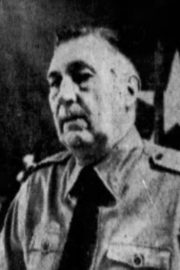
Steve Pike / Public domain
Richard Girnt Butler was the founder of the Aryan Nations, a neo-Nazi organization based in Idaho that promoted white supremacy and Christian Identity ideology. He was a prominent figure in the American white supremacist movement until his death in 2004.
 Wikipedia

Overview of Richard Girnt Butler
Richard Girnt Butler was the founder of the Aryan Nations, a neo-Nazi organization that emerged in the 1970s. He was a significant figure in the American white supremacist movement until his death in 2004.
Early Life and Background
- Birth: February 23, 1918, in Bennett, Colorado.
- Education: Studied aeronautical engineering at Los Angeles City College.
- Military Service: Served in the U.S. Army Air Corps during World War II, where he developed an admiration for Adolf Hitler.
Aryan Nations Formation
- Establishment: Butler founded the Aryan Nations in the early 1970s after moving to northern Idaho.
- Ideology: The organization combined elements of Christian Identity with white nationalism, promoting the belief that people of Northern European descent are the true descendants of the ancient Israelites.
- Activities: Butler organized annual gatherings known as the Aryan World Congress, attracting hundreds of white supremacists.
Legal Challenges and Decline
- Criminal Incidents: Butler faced various legal issues, including arrests related to confrontations with law enforcement and trespassing.
- Civil Lawsuit: In 2000, a civil lawsuit found the Aryan Nations negligent after members assaulted a local Native American woman and her son, leading to a $6.3 million judgment against the organization.
- Bankruptcy: Following the lawsuit, Butler declared bankruptcy, and the Aryan Nations compound was lost.
Legacy
- Impact: Butler's leadership significantly influenced the networking of various racist groups under the Christian Identity ideology.
- Dissolution: The Aryan Nations has since disbanded, but its legacy continues to affect perceptions of northern Idaho as a haven for hate groups.
Richard Butler's life and actions have left a lasting mark on the history of American white supremacy.
-=-=
8 26
richard Girnt Butler (February 23, 1918 – September 8, 2004) was an American engineer, pastor, and neo-Nazi activist. After dedicating himself to the Christian Identity movement, a racist offshoot of British Israelism, Butler founded the National Socialist Aryan Nations and became the "spiritual godfather"[1] to the white separatist movement, in which he was a leading figure.[2] He has been described as a "notorious racist".[1]
Biography
Butler was born in Bennett, Colorado, the only child to Winifred Girnt and Clarence Butler. His father was of English ancestry, while his mother was of German-English ancestry.[1] He was raised in Los Angeles, California beginning in 1931, and after graduating from high school in 1938, he became an aeronautical engineering major at Los Angeles City College. He was a co-inventor of the rapid repair of tubeless tires.[1]
Butler was a member of the Silver Shirts, an American fascist organization modeled on the Nazi Brownshirts, which was active until its suppression following the Japanese attack on Pearl Harbor.[3]
While he was a member of a Presbyterian church, he married Betty Litch in 1941, with whom he fathered two daughters.[2] Litch died on December 1, 1995. After Pearl Harbor, Butler enlisted in the Army Air Corps where he served stateside for the duration of World War II. During this time, he said he developed an admiration for Hitler.[4]
In 1946, Butler organized and operated a machine plant for the production and precision machining of automotive parts and engine assemblies for commercial and military aircraft in the United States, Africa, and India.[2] Butler was a marketing analyst for new inventions from 1964 to 1973. He later became a senior manufacturing engineer for Lockheed Martin in Palmdale, California.[2]
In the 1960s, Butler lived in Whittier, California. He collaborated with William Potter Gale and Wesley Swift in the California Committee to Combat Communism. The three men later founded the Christian Defense League in 1964. Butler served as the organization's executive director and ran the organization out of his Whittier home. Both organizations promoted white supremacy and antisemitism under the guise of preserving American heritage and opposing communism.[5] He also lived in Montebello, California.[6]
In the early 1970s, he moved with his family from Palmdale, California, to North Idaho, where he founded the Aryan Nations, a wing of the Church of Jesus Christ–Christian, whose ideology is a mixture of Christian Identity and Nazism. The organization operated from a 20-acre (81,000 m2) compound in Hayden Lake, Idaho,[7][8] a suburb of the tourist town Coeur d'Alene, Idaho, which became the center of a Neo-Nazi network with worldwide links. Beginning in the 1980s, Butler was implicated in plots to overthrow the United States government, and he had ties to the neo-Nazi group known as The Order. His group often blanketed the community with fliers and mass mailings, and held an annual parade in downtown Coeur d'Alene; however, the group was condemned by the town of Coeur d'Alene, and locals responded almost immediately by forming the Kootenai County Task Force on Human Relations, with legal battles often overshadowing the parades.
Starting in 1981, Butler organized yearly gatherings of white supremacists at his compound in Idaho which he termed the "Aryan Nations World Congress." At their height in 1984–86, several hundred people would attend including most of the well known leaders of the American far right, such as Klansman Louis Beam, White Aryan Resistance leader Tom Metzger, Gordon "Jack" Mohr, Robert E. Miles, Posse Comitatus leader James Wickstrom, Thomas Robb, Grand Wizard Don Black, and John Trochmann, the leader of the Militia of Montana.[9] At his first conference, Butler called for the division of the United States into racial mini-states, including a white ethnostate in the Pacific Northwest. He said that he had a black ally in the plan, Louis Farrakhan, leader of the Nation of Islam.[5]
In 1987, Butler was among fourteen far right activists indicted for seditious conspiracy by the U.S. Department of Justice as part of the Fort Smith sedition trial. Their trial was held at a federal court in Arkansas.[10] However, "prosecutors failed to convince an Arkansas jury that Butler and several other prominent racists had conspired to start a race war."[11] Butler's wife died in 1995; Harold von Braunhut, an Aryan Nations member who had helped raise funds for Butler during his trial, presided over the funeral.[12][13]
In 2000, Victoria and Jason Keenan, a Native American mother and son who were harassed at gunpoint by Aryan Nations' members, successfully sued Butler.[14]
Represented by local attorney Norm Gissel and Morris Dees's Montgomery, Alabama-based Southern Poverty Law Center, they won a combined civil judgment of $6.3 million from Butler and the Aryan Nations members who attacked them.[15] The couple also received his compound, which they later donated to North Idaho College, who turned it into "Peace Park". In September 2000, fellow Sandpoint, Idaho millionaire Vincent Bertollini provided Butler with a new house in Hayden, Idaho. The house was troublesome for neighbors; police were forced to respond to at least one domestic disturbance call, in which two Aryan Nations members were engaged in an altercation on his lawn.
Butler's 2002 World Congress drew fewer than 100 people, and when he ran for mayor of Hayden against incumbent Ron McIntire, he lost by 2,100 votes to 50.[2]
Butler died in his home on September 8, 2004. A spokesman for Aryan Nations stated that he died in his sleep from congestive heart failure. At the time of his death, Aryan Nations had 200 members.[2]
References
-=-=
DUCK 8 26
Wikipedia
https://en.wikipedia.org › wiki › Richard_Girnt_Butler
Richard Girnt Butler - Wikipedia
Richard Girnt Butler (February 23, 1918 - September 8, 2004) was an American engineer, pastor, and neo-Nazi activist. After dedicating himself to the Christian Identity movement, a racist offshoot of British Israelism, Butler founded the National Socialist Aryan Nations and became the "spiritual godfather" [1] to the white separatist movement ...
Wikipedia
https://en.wikipedia.org › wiki › Aryan_Nations
Aryan Nations - Wikipedia
Aryan Nations was a North American neo-Nazi [2] organization that was originally based in Kootenai County, Idaho, about 23⁄4 miles (4.4 km) north of the city of Hayden Lake. Richard Girnt Butler founded Aryan Nations in the 1970s. It adhered to Christian Identity doctrine, a white supremacist interpretation of Christianity. The group had several state chapters, but was very decentralized ...
Southern Poverty Law Center
https://www.splcenter.org › resources › extremist-files › richard-butler
Richard Butler - Southern Poverty Law Center
Longing for a "whites-only" homeland in the Pacific Northwest, aerospace engineer Richard Butler left California in the early 1970s and purchased land in northern Idaho. That land became home to one of the most notorious American hate groups, the Church of Jesus Christ Christian/Aryan Nations.
- Southern Poverty Law Center
- https://www.splcenter.org › resources › extremist-files › aryan-nations
Aryan Nations - Southern Poverty Law Center
- Richard Butler founded Aryan Nations, but William Potter Gale and Wesley Swift were its inspirations. Butler was living in Southern California after World War II when he met Gale, a retired Army colonel who had been on the staff of Gen. Douglas MacArthur.
- Intermountain Histories
- https://www.intermountainhistories.org › items › show › 706
Aryan Nations Compound - Intermountain Histories
- Aryan Nations was a community founded in 1973 by White nationalist, Richard Butler, to serve as the nucleus of an Aryan (White) homeland in northern Idaho. It closed in 2000 due to a court judgment after members assaulted two local Native American people.
- The Spokesman-Review
- https://www.spokesman.com › stories › 2004 › sep › 09 › richard-butler-founder-of-aryan-nations-dies-at-86
Richard Butler, founder of Aryan Nations, dies at 86
- Richard Girnt Butler, one of the most notorious racists in the United States, who built and ultimately lost a North Idaho compound dedicated to bigotry, was found dead Wednesday at 86. The ...
- The Spokesman-Review
- https://www.spokesman.com › stories › 2024 › mar › 27 › north-idaho-and-spokane-have-been-a-historical-hot
North Idaho and Spokane have been a historical hotbed for violent white ...
- 1973 - Richard Butler moves to Hayden Lake in North Idaho. He establishes the Aryan Nations, which eventually draws more than 100 white supremacists to the region.
- EBSCO
- https://www.ebsco.com › research-starters › religion-and-philosophy › aryan-nations
Aryan Nations | Religion and Philosophy | Research Starters - EBSCO
- The Aryan Nations was a White supremacist and White separatist organization founded in the 1970s by Richard Girnt Butler in Hayden Lake, Idaho. The group emerged from the Christian Identity movement, promoting the belief that White people are the chosen people of God and advocating for an all-White homeland free from non-White ethnic groups. During its peak in the 1980s, Aryan Nations gained ...
- Los Angeles Times
- https://www.latimes.com › archives › la-xpm-2004-sep-09-me-butler9-story.html
Richard Butler, 86; Supremacist Founded the Aryan Nations
- Sep 9, 2004Richard Butler, the rural Idaho pastor who was called "the elder statesman of hate" for the racist campaigns he led as the founder of the Aryan Nations, has died at the age of 86, authorities said ...
- New York Times
- https://www.nytimes.com › 2004 › 09 › 09 › us › richard-g-butler-86-founder-of-the-aryan-nations-dies.html
Richard G. Butler, 86, Founder of the Aryan Nations, Dies
- Sep 9, 2004Richard G. Butler, the founder of the Aryan Nations and a leading figure in the white supremacist movement who preached that Jews descend from Satan and black people are subhuman, died yesterday ...
-=-=
AN TC 8 26 SEE DOJ 3 FOR COLOR
In April 2026, a federal grand jury returned indictments charging the Southern Poverty Law Center with wire fraud, bank fraud and conspiracy to commit money laundering.
The indictment alleges the SPLC, a nonprofit legal advocacy group, secretly funneled more than US$3 million in donated funds to people associated with violent extremist groups, including the Ku Klux Klan and Aryan Nations.
Prosecutors allege that the SPLC secretly paid members of those groups to act as confidential informants without telling donors. Eight informants received the money between 2014 and 2023, according to U.S. Attorney General Todd Blanche.
The SPLC has denied the charges and seeks their dismissal, with lawyers for the group adding that the charges constitute “vindictive prosecution.” The SPLC’s interim president, Bryan Fair, has stated that the informant program “saved lives” and reflected decades of dangerous civil rights work.
Critics of the prosecution at Lawfare, a media site focused on the U.S. legal system, argued that the indictment is among “the most cynical criminal cases ever brought by the Department of Justice.” They noted that the SPLC had no legal duty to disclose the confidential nature of its informant program to donors.
Within hours of the Justice Department’s indictment, I found that white supremacist influencers on Telegram, Gab and other social platforms were celebrating the arraignment. They portrayed the charges as proof that journalists and civil rights groups documenting extremist movements could no longer be trusted.
The indictment became a rallying point to discredit not only the SPLC but the wider body of research on hate groups and political extremism. I believe that these narratives will be used to help justify increasingly radical and, in some cases, violent responses.
Ideological ammunition
Some conservative advocacy groups and right-wing media outlets – including Moms for Liberty and the Daily Signal – immediately stripped the indictment of its legal context. In online posts, they recast it as established proof that the SPLC had been deliberately creating extremist activity rather than investigating it.
A Telegram search I conducted on May 6 identified 22 posts mentioning the SPLC across at least six white nationalist channels. Most appeared within 72 hours of the indictment. The posts did not engage in sustained discussion. They repeated a small set of claims.
The Super Sincere Alpha GOONMAXXING Aryan Sigma Patriot channel wrote: “The SPLC is a hate group.”
Other channels cited the indictment as proof that the SPLC had been paying sources to manufacture the very extremism it claimed to fight. In the White Lives Matter Official Telegram channel, users were urged to “become an activist for your race” while referencing the SPLC as an opposing force.
The similarity across channels and social media is notable. The same framing appeared repeatedly within a short time window. This suggests rapid circulation of a shared narrative across networks rather than independent commentary.
The neo-Nazi, neo-fascist layer
Comments on the Southern Poverty Law Center indictment by members of the Commander George Lincoln Rockwell channel – named for the founder of the American Nazi Party – demonstrate how antisemitic conspiracy theories work, not as explicit rhetoric but as a broader narrative.
Internet discussions portrayed the SPLC as a politically motivated or illegitimate actor. Posts in Patriot Front Updates, for example, circulated allegations of fraud and money laundering while criticizing the SPLC and its efforts to identify and challenge white nationalist activity.
I found that this criticism of the SPLC also became connected to a broader antisemitic conspiracy narrative – one that portrays the organization as operating on behalf of purported Jewish interests rather than simply as an advocacy organization with political and ideological commitments.
These narratives circulated alongside the “great replacement theory,” which falsely claims that shadowy elites are encouraging immigration and demographic change to replace the white population and diminish its political and cultural influence. It’s a conspiracy theory that the SPLC and others have documented as central to contemporary white nationalism.
In this logic, the indictment is not an isolated fraud case – it is evidence that a coordinated network of institutions has been systematically suppressing white identity.
Victimhood as recruitment
Scholars of white nationalism have long identified victimhood narratives as central to that movement’s appeal. By portraying white people as under attack or unfairly displaced, these narratives transform social change into a story of persecution and provide a powerful justification for political mobilization.
My research on white nationalism shows how contemporary extremist movements rely less on formal membership and more on decentralized digital spaces. It is there that narratives, grievances and identities are continuously reinforced.
In these environments, major news events like the SPLC indictment become opportunities.
Why this pattern repeats
Extremist movements have long used mainstream controversies as recruitment opportunities.
Participants often interpret external events through narratives of threat, injustice and persecution. In doing so, they transform moments of controversy into evidence that their worldview is correct.
In the 1990s, for instance, the deadly standoffs between federal officers and the Branch Davidians religious sect near Waco, Texas, and survivalist Randy Weaver in Ruby Ridge, Idaho, became foundational persecution narratives for militia and Christian Identity movements. These groups saw the sieges as proof that the federal government was hunting gun owners and religious dissenters.
In online extremist communities, these events can become powerful tools for reinforcing group identity and attracting individuals who are searching for explanations or belonging.
With a real-world legal event like the SPLC indictment, extremists can point to government action as evidence that their worldview is being validated. The result is a narrative that appears responsive to current events, even when the connection is shallow or distorted.
Redirected domestic terrorism policy
Legal scholars have noted that the Justice Department indictment fits within the Trump administration’s broader pattern of redirecting domestic terrorism policy away from white supremacist groups.
The Trump White House’s 2026 Counterterrorism Strategy does not mention violent far-right groups as a domestic terrorism threat at all.
That context matters for understanding how the SPLC case landed in extremist spaces: not as an isolated fraud allegation but as institutional permission. The indictment has become a symbol before the evidence has been weighed.
In today’s fragmented digital media environment, symbols travel faster than facts, especially when they confirm what a radicalized audience already wants to believe. I believe the real danger is not that white supremacists believe the SPLC is guilty. It is that the controversy, whatever its legal outcome, has already done its work.
Art Jipson, Associate Professor of Sociology, University of Dayton
This article is republished from The Conversation under a Creative Commons license. Read the original article.
-=-=
-=-=
https://www.yahoo.com/news/lawsuit-over-charlottesville-unite-rally-080025307.html
no lnx pix
lawsuit over Charlottesville 'Unite the Right' rally has crippled white supremacist groups, leaders
White nationalist Richard Spencer (center) and his supporters clash with Virginia State Police in Emancipation Park after the "Unite the Right" rally was declared an unlawful gathering Aug. 12, 2017 in Charlottesville, Virginia. Hundreds of white nationalists, neo-Nazis and members of the "alt-right" clashed with anti-fascist protesters and police as they attempted to hold a rally in Emancipation Park, where a statue of Confederate General Robert E. Lee was slated to be removed.
A white supremacist with a Nazi tattoo leaves Emancipation Park in Charlottesville, Va., Aug. 12, 2017.
Flowers and notes are left in memory of Heather Heyer, who died after she was struck when a car plowed into a crowd protesting the 'Unite the Right' rally on Aug. 12, 2017, in Charlottesville, Va.]
Firefighters from northern Idaho and eastern Washington participate in fire training on July 11, 2001, climaxing with the destruction of the church structure at the former Aryan Nations compound in Hayden, Idaho. The only other structure then remaining at the compound was the former residence of Aryan Nations leader Richard Butler, which also was to be used for firefighter training.
Supporters of US President Donald Trump protest inside the US Capitol on January 6, 2021, in Washington, DC. - Demonstrators breeched security and entered the Capitol as Congress debated the a 2020 presidential election Electoral Vote Certification. ]
Civil trial over deadly 'Unite the Right' extremist rally to begin in Charlottesville
White nationalist Richard Spencer (center) and his supporters clash with Virginia State Police in Emancipation Park after the "Unite the Right" rally was declared an unlawful gathering Aug. 12, 2017 in Charlottesville, Virginia. Hundreds of white nationalists, neo-Nazis and members of the "alt-right" clashed with anti-fascist protesters and police as they attempted to hold a rally in Emancipation Park, where a statue of Confederate General Robert E. Lee was slated to be removed.
Will Carless
October 17, 2021
In this article:
Richard B. Spencer
American white supremacist, conspiracy theorist, and neo-Nazi
Donald Trump
45th President of the United States
A federal lawsuit against the organizers of the deadly 2017 Unite the Right rally in Charlottesville, Virginia, which has rattled hate groups and white supremacist leaders, goes to trial this month.
The suit already has helped to dismantle some of America's most well-known white supremacist groups, and it has financially crippled one leader of the so-called "alt-right," the white supremacist and nationalist movement that came to prominence under President Donald Trump.
"It's very stressful, and very costly," said Richard Spencer, one of the defendants in the lawsuit and the former de facto leader of the "alt-right," in an interview. "This level of pressure is definitely scary."
Oath Keepers: Hack exposes law enforcement officers who signed up to join anti-government Oath Keepers
White supremacist recruiting: How podcasts have become the backbone for white supremacist recruiting
Video: 'White supremacy is terrorism': Biden condemns terrorism in address]
Lawsuits have long been used to dismantle or bankrupt the engines of hate in the U.S., including the Ku Klux Klan, the Aryan Nations and the neo-Nazi website The Daily Stormer.
"We know that civil lawsuits work in holding accountable extremists by going after their finances and their operations," said Amy Spitalnick, executive director of the nonprofit civil rights group Integrity First for America, which is backing the lawsuit. "That has been true for decades."
But even when those groups have been crippled, white supremacists have adapted, going underground and surfacing with new organizations and leaders.
An alleged conspiracy to Unite the Right
The Unite the Right rally, held on Aug. 11 and 12, 2017, was a watershed moment for the white supremacist movement in the United States.
Coming the summer after the election of a president who kickstarted his political career by pushing a racist conspiracy theory, the event put American hatred on full display.
Clean-cut white men marched across the University of Virginia campus carrying tiki torches and chanting, "Jews will not replace us." Neo-Nazis and white supremacists, brandishing shields emblazoned with Nazi symbols, chanted racist and antisemitic slogans as they fought the removal of a Confederate monument.
Fights between white supremacists and counter-protesters broke out. Neo-Nazi James Fields drove his car into a crowd, killing Heather Heyer. Fields was convicted of murder and sentenced to life in prison.[19 hurt some badly?]
Heather Heyer attack: Neo-Nazi James Fields gets life plus 419 years for murder in Charlottesville
Integrity First's wide-ranging lawsuit alleges that the leaders of the white supremacist movement engaged in a conspiracy to commit racially motivated violence against nonwhite and Jewish people during the Unite The Right rally.
"The violence in Charlottesville was no accident," the lawsuit states. "Defendants spent months carefully coordinating their efforts, on the internet and in person. They exhorted each other: 'If you want to defend the South and Western Civilization from the Jew and his dark-skinned allies, be at Charlottesville on 12 August' and 'Next stop: Charlottesville, VA. Final stop: Auschwitz.'"
The lawsuit seeks compensatory and punitive damages for the plaintiffs, with the amount to be decided by a jury.
The defendants are a "who's who" of the extremist right: Jason Kessler, a key organizer of the event; neo-Nazi podcaster Christopher Cantwell; Nathan Damigo, a white supremacist who founded the group Identity Evropa; Spencer; and a host of other extremist leaders and groups.
Richard Spencer: Suit has been 'crippling'
Despite briefly rising to prominence at the outset of the Trump presidency, the last four years have proven brutal for the "alt-right," a political movement that mixes racism, white nationalism, antisemitism and populism. That's thanks in part to the pressure of the case, filed in October 2017.
Spencer has no illusions about the state of the movement he helped create. "The 'alt-right' is dead,"he said in an interview last month.
Last week, Spencer acknowledged that the Integrity First lawsuit has taken a toll.
Along with the constant stress, the lawsuit has cost thousands of dollars to defend, Spencer said. In June 2020, he told the court that the case has been "financially crippling." Now he's representing himself in court.
White nationalist Richard Spencer (center) and his supporters clash with Virginia State Police in Emancipation Park after the
The plaintiffs – a minister, students and other Charlottesville residents – have won default judgments against seven[1 did not show b/c dropped phone in toilet] of the 24 defendants, with the penalties to be decided by the jury. The court has issued five-figure fines against three other defendants for failing to produce evidence or show up for court hearings or depositions, court files show.
Meanwhile, several of the groups named in the suit have fallen apart.
Vanguard America, the neo-Nazi group that Fields marched with, fragmented after the rally. So did the Traditionalist Workers Party, a white supremacist group. Cantwell is in prison after being convicted of extortion. Identity Evropa rebranded, and in May 2020 defendants Matthew Heimbach and Elliott Kline each were ordered to pay fines of more than $12,000.
At least two defendants are in hiding: Andrew Anglin, who founded the neo-Nazi website The Daily Stormer and has another multi-million dollar judgment against him from another lawsuit, and his webmaster Robert Ray, who goes by "Azzmador" and disappeared from view last year after the suit was filed.
"This case is about ensuring that these folks are effectively bankrupted and dismantled," Spitalnick said. "The fact that so many of these defendants have already been marginalized in the movement is a testament to how accountability can work."
In that respect, the Charlottesville case follows a long history of using lawsuits to disrupt hate groups.
A compound razed and movements flattened
An extraordinary series of photographs from 2001 shows the demolition of the Aryan Nations compound outside Boise, Idaho. In one, a yellow digger chews into a massive swastika painted on a roof. In another, a guard tower is flattened by the same machine.
The compound was razed after the Aryan Nations was bankrupted in 2000 by a lawsuit brought by an Idaho attorney and the Southern Poverty Law Center.
That case was one of almost a dozen such lawsuits filed by the SPLC against various groups over the last 20 years.
Firefighters from northern Idaho and eastern Washington participate in fire training on July 11, 2001, climaxing with the destruction of the church structure at the former Aryan Nations compound in Hayden, Idaho. The only other structure then remaining at the compound was the former residence of Aryan Nations leader Richard Butler, which also was to be used for firefighter training.
]
More
"Every one of our cases led to the dissolution of a group," said Heidi Beirich, who once led the SPLC's Intelligence Project. Now she's co-founder of the Global Project Against Hate and Extremism. "It's a very effective tactic."
The land that once housed the group is now a public park.
In the 1980s and 90s, the SPLC filed lawsuits against several chapters of the KKK on behalf of plaintiffs who had been intimidated or threatened. The lawsuits caused those chapters to file for bankruptcy or shut down.
Beirich said she applauds Integrity First for bringing such a broad lawsuit against so many defendants. The SPLC cases typically tackled one organization or chapter at a time, she said.
Like the SPLC lawsuits, the Charlottesville case is based on more than the mere speech of hate groups, which is protected, Beirich said. It alleges the defendants engaged in illegal actions, including harassment and assault.
Ku Klux Klan Act invoked in lawsuit over insurrection
The suit against the Unite the Right organizers appears to have opened new legal fronts in the fight against extremism.
In late August, seven officers from the U.S. Capitol Police sued Trump, his longtime adviser Roger Stone and members of far-right extremist groups, alleging they conspired to use violence on Jan. 6 to attempt to prevent Congress from certifying the results of the 2020 presidential election
That lawsuit relies on the same statute used in the Charlottesville case – the federal Ku Klux Klan Act of 1871, a Reconstruction-era statute that allows individuals to sue when they are injured by conspiracies.
"Unfortunately, the KKK Act is experiencing something of a renaissance," said Karen Dunn, co-lead counsel on the Charlottesville lawsuitwith Roberta Kaplan. "But we are glad it exists because this is exactly the kind of conduct it is meant to address."
This article originally appeared on USA TODAY: Lawsuit over Charlottesville 'Unite the Right' rally goes to trial
blk female student thugswarmed when elected to student gov't? at ivy league now in boden admin? civil KKK suit ~ charlottesville indiv and groups 10 21 trms
https://www.msnbc.com/transcripts/transcript-rachel-maddow-show-10-25-21-n1282354
-=-=
-=-=