Leon Louw so afr
---
a white guy who promotes mining
---
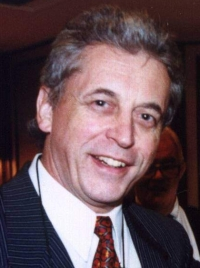
leon Marais Louw
Credentials
- Bachelor of Law. [1]
Background
Leon Louw is the executive director and co-founder of theFree Market Foundation. He is also a member of the advisory board to the Committee for a Constructive Tomorrow and listed as a “global warming expert” by theHeartland Institute.
Louw is also the executive director of the Free Market Foundation’s “Law Review Project” (PDF) which describes itself as a “an independent legal research organisation founded to promote the removal of unnecessary, burdensome and unduly-restrictive laws with the aim of promoting economic development.” [2], [3]
Stance on Climate Change
“Climate change is probable. It may even be inevitable… . the best thing to do about it is to grow, to be prosperous, to be rich. Then you have all the wealth by which to deal with it.” [4]
Key Quotes
“Climate change hype has grave real world consequences. It gets rich countries to adopt silly policies and to impose devastating eco-imperialism on poor countries. The world’s rich millions can afford environmental extremism; its poor billions can’t. Climate change pseudo-science about human causality has been exposed repeatedly. What’s less appreciated is that there aren’t more natural disasters in need of an explanation.” [5]
Referring to new anti-smoking bylaws: “’It’s a kind of hysteria, a peculiar semi-religious fundamentalist puritanism’ said Leon Louw, director of the Free Market Foundation, which is pushing for an open society free of arbitrary regulations.
Louw believes the regulations are a ‘vicious assault” on peoples’ choices and lifestyles, saying passing the regulations could constitute a breach of freedom and result in job losses.
‘The anti-tobacco fanatics … the nicotine nazis will not stop until there is full prohibition,’ he said.”[6]
Key Deeds
December 7, 2011
Leon Louw was a speaker at a press conference arranged by CFACT that featured talks by Senator James Inhofe and Lord Christopher Monckton discussing “Climategate 2.0.” [7]
The conference was designed to coeinside with the UN Climate Summit in Durban, South Africa.
March 2008
Louw was a speaker at the Heartland Institute‘s First International Conference on Climate Change (ICCC1) where he gave a speech titled “The Negative Impacts of Climate Change Legislation of Africa’s Most Impoverished People” [4]
Affiliations
- The Heartland Institute— “Expert.” [8]
- Free Market Foundation — Executive Directorsince 1978. Director of “Law Review Project.” [9]
- Committee for a Constructive Tomorrow (CFACT)— Member, Board of Advisors. [10]
Publications
Co-author of the books South Africa: The Solution and Let the People Govern. According to a search of Google Scholar, Leon Louw has not published any articles in peer-reviewed journals on any subject.
Social Media
- @leonmlouwon Twitter
Resources
- “Leon Louw,” Who’sWho Southern Africa.
- “Free Market Foundation, South Africa,” eldis.org. Accessed August 2, 2012.
- “COMMENT to the DEPARTMENT OF RURAL DEVELOPMENT AND LAND REFORM about the GREEN PAPER ON LAND REFORM, 2011” (PDF), The Law Review Project, November 29, 2011. Retrieved from the Free Market Foundation website.
- “First International Conference on Climate Change, Program,” (PDF) Heartland Institute. Archived Feb 8, 2018, Archive.is URL: https://archive.li/p3f7V
- Leon Louw. “Good News: Natural Disasters are Natural,” Stratek Business Strategy Consultants. Accessed August 2, 2012.
- Susan Njanji. “Smokers in a puff over law,” TimesLive, June 24, 2012.
- “Media Advisory: CFACT press conference to feature U.S. Senator Inhofe,” Climate Depot, December 6, 2011.
- “Experts,” The Heartland Institute. Accessed August 2, 2012.
- “Office Bearers,” Free Market Foundation. Accessed September 6, 2011.
- “CFACT Board of Advisors,” Committee for a Constructive Tomorrow, July 8, 2009.
- “Leon Louw,” Wikipedia.
- “Leon Louw,” SourceWatch.
- ExxonSecrets Factsheet: Leon Louw.
- “BIOGRAPHICAL NOTES: LEON MARAIS LOUW” (PDF), Africanheritage.com. Accessed August 2, 2012.
- “The Economic Impact of Tobacco in Africa,” CNBC Africa,February 6, 2013. Accessed January 19, 2017.
Other Resources
FOR IMMEDIATE RELEASE: November 16, 2011
CONTACT: Audrey Mullen, +1 (703) 548-1160
_CFACT to debunk climate propaganda and provide_
_balanced perspective at UN’s COP17 in Durban, South Africa_
_Lord Monckton, Marc Morano, Dr. Kelvin Kemm, Dr. Leon Louw, Craig Rucker_
_Available for all media_
Ready to rise above personal attacks, innuendo and unbalanced repetition of extreme global warming pronouncements?
Journalists seeking to improve upon the annual one-sided climate conference propaganda fest, kindly take notice:
CFACT, the Committee For A Constructive Tomorrow (an international NGO and veteran of numerous UN conferences) is your go-to source to include balanced, open-minded perspective in your reporting.
CFACT will lead a learned, witty, well-informed, but unabashedly skeptical delegation to COP17, the UN Conference on Climate Change, November 28 to December 9 in Durban, South Africa. CFACT’s delegation will be available for interviews and media appearances before, during and after COP17.
“Every December campaigners, bureaucrats and those seeking to cash in on climate, fly to a resort where the media parrots every dire or vitriolic pronouncement no matter how baseless or extreme,” said CFACT’s Craig Rucker who will lead the delegation. “Polls show the public is tired of the hype and wants more. CFACT is ready to clear the air once and for all. Will the media rise to the occasion?”
Marc Morano, who publishes CFACT’s “Climate Depot” will feature his report “From A-Z” which details a full gamut of failures in the argument for global warming.
Lord Monckton and Marc Morano both make extremely articulate, informed and interesting guests on television and radio and offer valuable balance for print and online journalism. Kelvin Kemm and Leon Louw will offer unique South African perspectives. Craig Rucker co-founded CFACT well over two decades ago and offers a wealth of public policy experience.
Global warming science and policy is anything but settled. CFACT looks forward to engaging in a balanced, civil, informed and genuine dialogue in Durban.
More details as well as contact information in Durban will be forthcoming at www.CFACT.tv. Comment and news also at www.CFACT.org, www.CLIMATEDEPOT.com & www.CFACT.eu.
---

Founder of WhyAfrica. Specialist in the sustainable utilisation of natural resources in Africa, current affairs, mining in Africa and Africa's political economy. Editor of the WhyAfrica magazine.
187 articlesFollow
September 30, 2018
*The question is no longer whether to invest in Africa, but where to invest, writes Leon Louw.``
We have gone from: Africa: the hopeless continent (The Economist May 2000) to Africa Rising (The Economist December 2011) and back to the Aspiring Africa (The Economist March 2013) in a little more than 13 years. When Africa made it onto the front cover of the Economist way back in 2000, it was a momentous occasion. That the continent was “rising” 11 years later might have been earth shattering for some, but for many doing business on the continent, it was mere confirmation of a significantly improved business environment. And that has not changed, despite the back to “aspiring” cover two years later, in 2013. Since then Africa has not made it onto the front-cover of one of the most coveted magazines in the world.
The “forgotten continent” has, nevertheless, defied all odds since that dreadful cover in 2000, and has proven analysts, theorists, and futurists wrong time and time again, and it continues to do so. Africa remains an enigma. Thus, to predict the continents future, is like sticking your head into an ant’s nest in the middle of the Congo rain forest on a hot summer’s day. However, as the editor of a magazine called African Mining, and as someone who holds postgraduate qualifications in African Studies and African Politics, and punts himself as a specialist in African affairs, I feel obligated to share my thoughts about which African countries (I think) are rising, those that are aspiring, and red-flag one or two that could be regarded as hopeless.
From being seen as a “breadbasket”, then a “basket case”, and now a country “open for business” Zimbabwe epitomises what international investors fear most: uncertainty, inconsistency and instability. Although Zimbabwe seems to be back on the high road again, it will take many years before business confidence returns after Robert Mugabe’s misrule. Nonetheless, mining or mineral exploration companies are keeping their ears close to the ground. Zimbabwe has moved from “hopeless” to “aspiring” to “rising” in a very short space of time, but that can change again, so for me, the jury is still out.
Ditto for South Africa, where President Cyril Ramaphosa’s renewed focus on the economy is reaping rewards, but there are still remnants of the old guard in the ANC that might put a spoke in the “New Dawn” wheel. However, Angola is rising, and is my pick for southern Africa.
President João Lourenço has rung the changes and seems to be hell-bent on eradicating corruption. It appears that the government has, furthermore, made an ideological u-turn, and they are, apparently, welcoming private investors with open arms. Geologist love Angola, and mining companies will follow.
Botswana and Namibia are stable, but, sadly, Zambia and Mozambique have lost the plot. Although both these countries have a lot of potential and huge deposits of copper, coal and gas, hiding debt levels is not the way to solve fiscal problems, and all indications are that Zambia is heading for an economic disaster. Mozambique has survived the worst, but it will have to claw its way out of a big hole. Both these countries, for me, are close to being “hopeless” cases, but, again, that can change very quickly, especially in Mozambique, where its gas and coal deposits holds the key.
Personally, and certainly for mining companies and exploration outfits, the most exciting region is West Africa. Not only because of the fabulous deposits, but because democracy is tightening its grip on a region once ravaged by civil wars, coup d'états’ and dictatorships.
Ghana remains stable, and with oil production imminent, and democracy entrenched, it continues rising as is its neighbor Nigeria. Not many people would agree, but Nigeria is a huge market, has great mineral deposits (in addition to its oil deposits), and the government is working hard at diversifying the country’s economy. It does appear that Boko Haram has become, at least for now, more subdued. However, Nigeria has many challenges, and it will always be a gamble investing in this vast and varied country (as MTN would attest).
The brightest star in West Africa is Côte d'Ivoire. The country has recovered from its recent political turmoil, it has brilliant mineral deposits, and the government is pulling all the strings to lure investors, and it’s working. Mining companies love Côte d'Ivoire, and so they should. On the other hand, once troubled countries like Sierra Leone, Liberia, Guinea and Mali are ticking over, but can best be described as aspiring.
Once its rising star, many now describe Tanzania as the “basketcase” of East Africa. The country’s president, John Magufuli, continues beating the nationalisation drum, which is enough, on its own, without slapping on crippling tax penalties or meddling in private affairs. Magufuli might just prove us wrong, but at current rates, Tanzania is on a runaway train to “hopelessness”, and it won’t be easy coming back.
On the contrary, Kenya, Rwanda and Ethiopia are soaring. If I was a betting man, Ethiopia is where my money would go. Ethiopia is growing at a frightening speed, and although it is still a closed economy (and there are security concerns), that might change very soon. Its recent peace pact with Eritrea bodes well for the country’s future.
North Africa is, in a way, still recovering after the Arab Spring but Morocco, Tunisia and Egypt are all on track. So, what is the most disappointing country? This is where I’ll pass the buck and keep my head in that ant nest, as it might be safer in there. The jungle has become a tad too risky, even if you have a big appetite for risk.
*Leon Louw specialises in African affairs and mining. For more about doing business in Africa, following mining projects on the continent and the political and economic risks of doing business in Africa, subscribe to African Mining, or follow Leon on Linkedin and Twitter.
END
---