Forestry Mitigation Potentials

A QUICK REVIEW OF FORESTRY MITIGATION POTENTIALS v 1.0
A Climate Change Toolbox Mini-Course
Click here to access the most current version in the Toolbox itself
Note: Like all Toolbox Mini-Courses and Courses, this Mini-Course will continue to evolve over time. When that happens, we’ll change the version number, and add an “updated on” date to let you know.
As you can see in the attached Bibliography, the literature surrounding the use of forestry as a climate change mitigation option dates back almost 50 years, and continues to evolve. The July, 2024 publication of Busch_Cost-Effectiveness of Natural Forest Regeneration and Plantations for Climate Mitigation, for example, makes the somewhat provocative suggestion that “reforestation offers 10.3 time more abatement below US$20 per tCO2, and 2.8 times more abatement below US$50 per tCO2, than the most recent IPCC estimate.” As the source of the IPCC’s first estimates of forestry mitigation potentials, the Climatographers thought it would be useful to add this Mini-Course on interpreting forestry mitigation potentials to Your Climate Change Toolbox. .
Establishing the Context
The first person to assess forestry’s potential as a climate change mitigation strategy was Freeman Dyson in 1977, who concluded that planting trees on an area roughly equivalent to half of Australia would stabilize atmospheric concentrations of CO2.
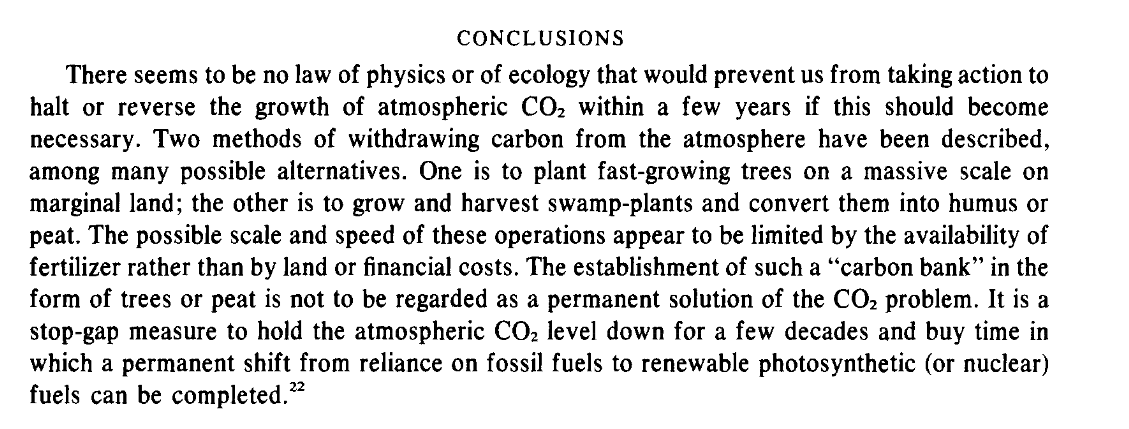
1977 Dyson_Can we control the carbon dioxide in the atmosphere
This was followed in 1988 by Greg Marland’s paper, The Prospect of Solving the CO2 Problem Through Global Reforestation, which concluded that:
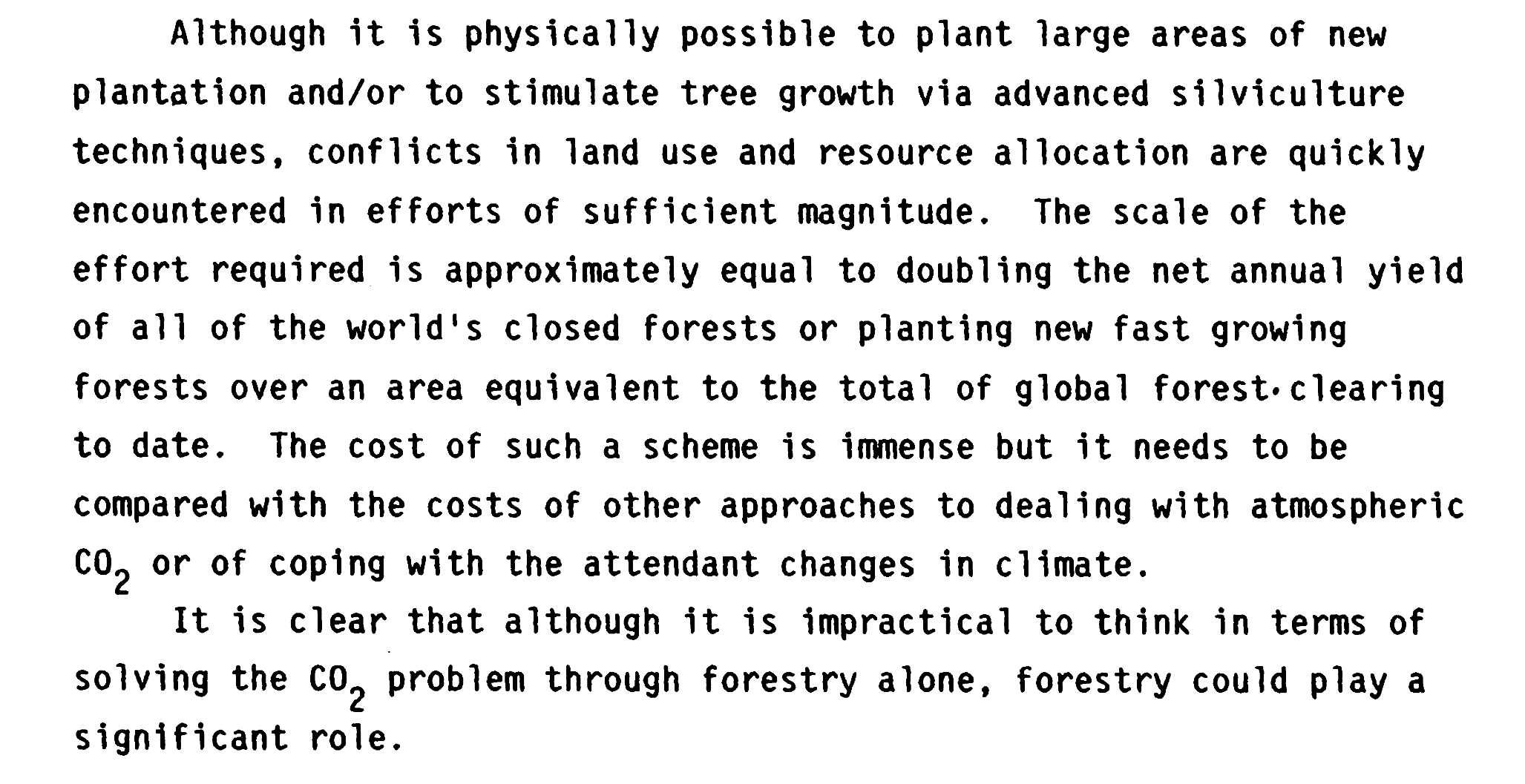
1988 Marland_The Prospect of Solving the CO2 Problem Through Global Reforestation
Which was followed relatively quickly by two World Resources Institute Reports, the 1990 Minding the Carbon Store: Weighing U.S. Forestry Strategies to Slow Global Warming, and the 1994 Keeping It Green: Tropical Forestry Opportunities for Mitigation Climate Change, both authored by the Climatographers’ Dr. Mark C. Trexler.
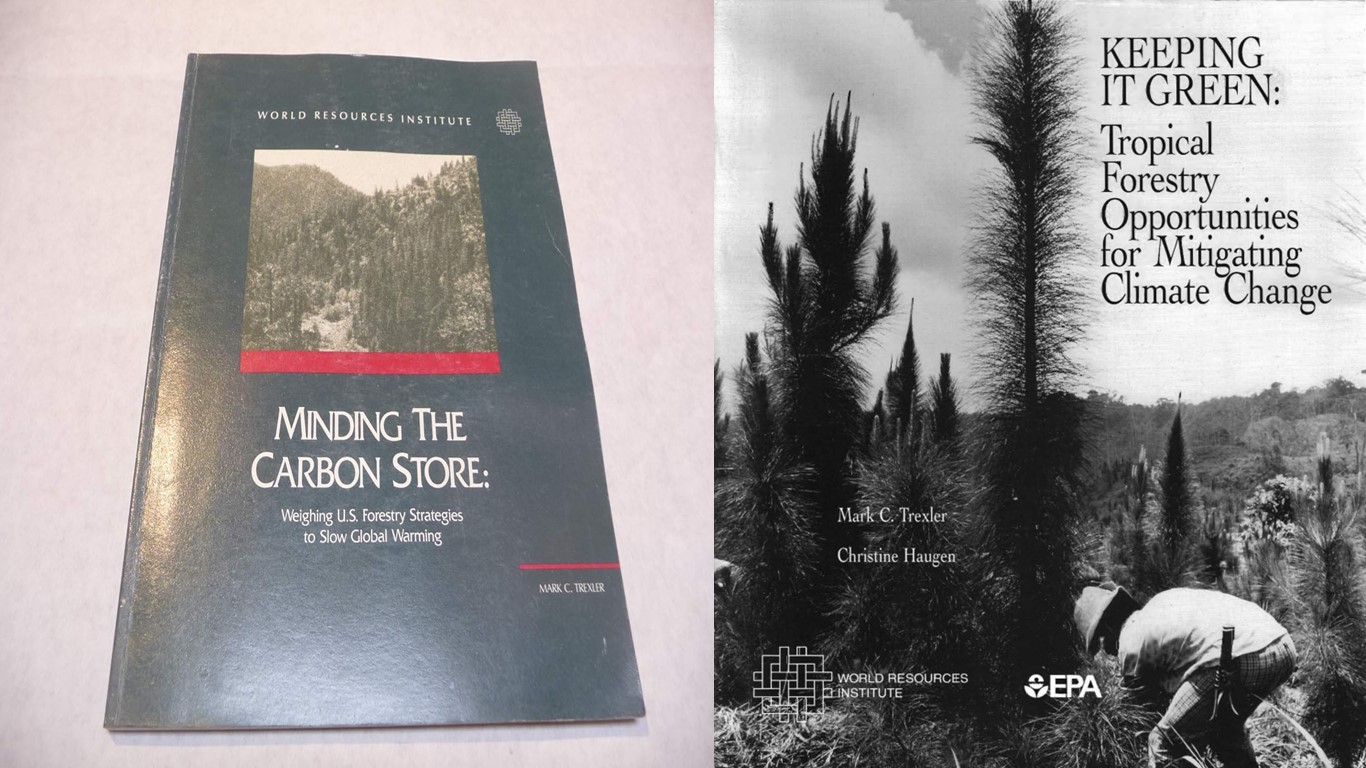
Keeping It Green formed the basis for the IPCC’s first look at forestry mitigation potentials in its Second Assessment Report. What was unique about Keeping It Green was that it used a Delphi approach to survey forestry experts in tropical countries across the world about what they saw as plausibly achievable with regard to a range of forestry options including avoided deforestation, plantations, agroforestry, and natural regeneration.