FUNERARY
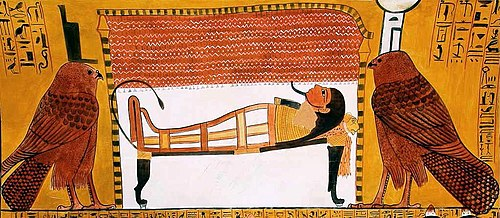
In many spells in the Pyramid Texts, Isis and Nephthys help the deceased king reach the afterlife. In the Coffin Texts from the Middle Kingdom, Isis appears still more frequently, though in these texts Osiris is credited with reviving the dead more often than she is. New Kingdom sources such as the Book of the Dead describe Isis as protecting deceased souls as they face the dangers in the Duat. They also describe Isis as a member of the divine councils that judge souls' moral righteousness before admitting them into the afterlife, and she appears in vignettes standing beside Osiris as he presides over this tribunal.[117]
Isis and Nephthys took part in funeral ceremonies, where two wailing women, much like those in the festival at Abydos, mourned the deceased as the two goddesses mourned Osiris.[118] Isis was frequently shown or alluded to in funerary equipment: on sarcophagi and canopic chests as one of the four goddesses who protected the Four Sons of Horus, in tomb art offering her enlivening milk to the dead, and in the tyet amulets that were often placed on mummies to ensure that Isis's power would shield them from harm.[119] Late funerary texts prominently featured her mourning for Osiris, and one such text, one of the Books of Breathing, was said to have been written by her for Osiris's benefit.[120] In Nubian funerary religion, Isis was regarded as more significant than her husband, because she was the active partner while he only passively received the offerings she made to sustain him in the afterlife.[121]
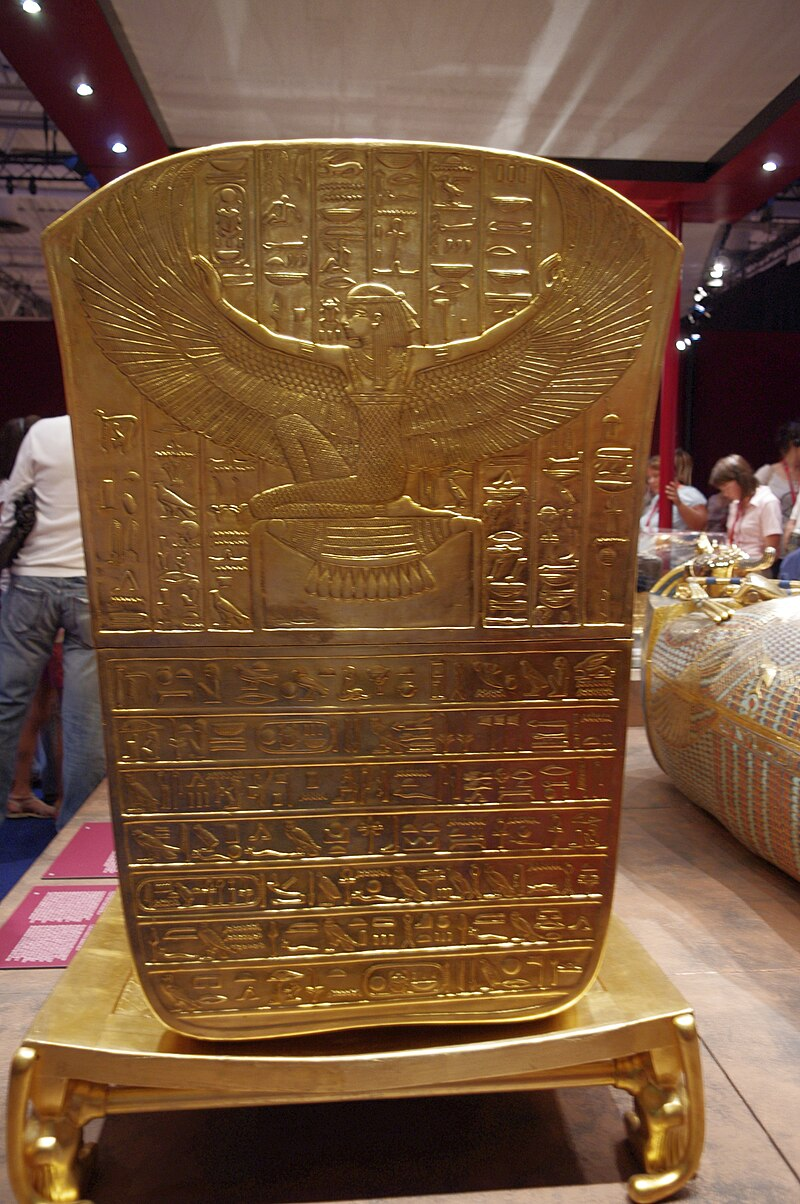
Treasure of Tutankhamun, exposition in Paris 2012. Outer coffin on the footend Isis with wings spread.