Expected Change vs. Risk
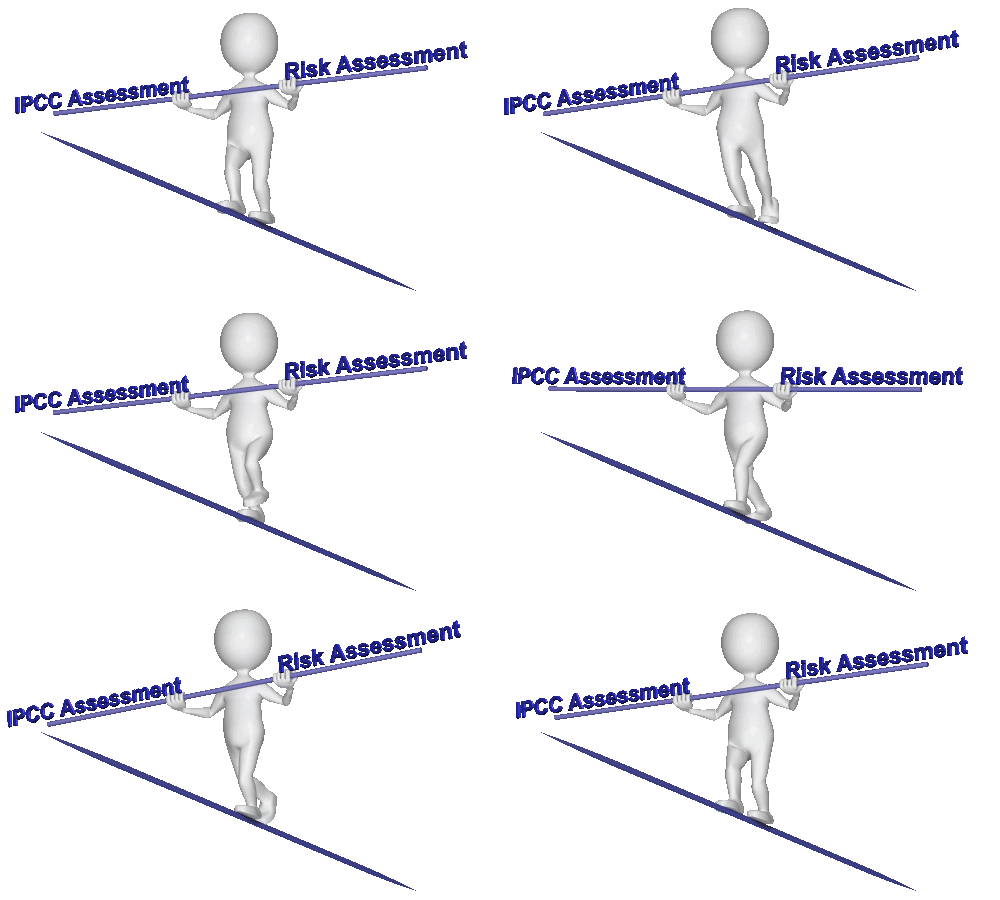
Even though the business community now recognizes climate change as potentially material, assessing the business risks of climate change is not easy. You might be surprised to learn that relatively little of the climate literature you may see takes a risk-based approach to climate change.
Most climate forecasts focus on "expected" or "most likely" climate change outcomes, as opposed to the inevitable uncertainties surrounding those outcomes. In fact, the most widely relied upon source of climate information, the Intergovernmental Panel on Climate Change (IPCC), doesn’t really employ a risk-based framework. Established as an advisory body for the world’s governments, the IPCC periodically assembles and communicates the scientific community’s highest confidence findings regarding future climate change. Not only is the IPCC generally several years behind cutting-edge climate science, as suggested by risk expert George Backus in the slide below, the IPCC’s approach is contrary to that of a risk assessment.
Risk = Consequence x Probability
Given the definition of risk, any business due diligence relying on IPCC findings will substantially under-estimate business uncertainty and risk. Indeed, a lot of business risk will be missed altogether.

As the probability of potential outcomes goes down, the consequences of those outcomes can rise very quickly, even exponentially. That means that much of the total risk is hiding in the "fat tail" of the probability distribution.
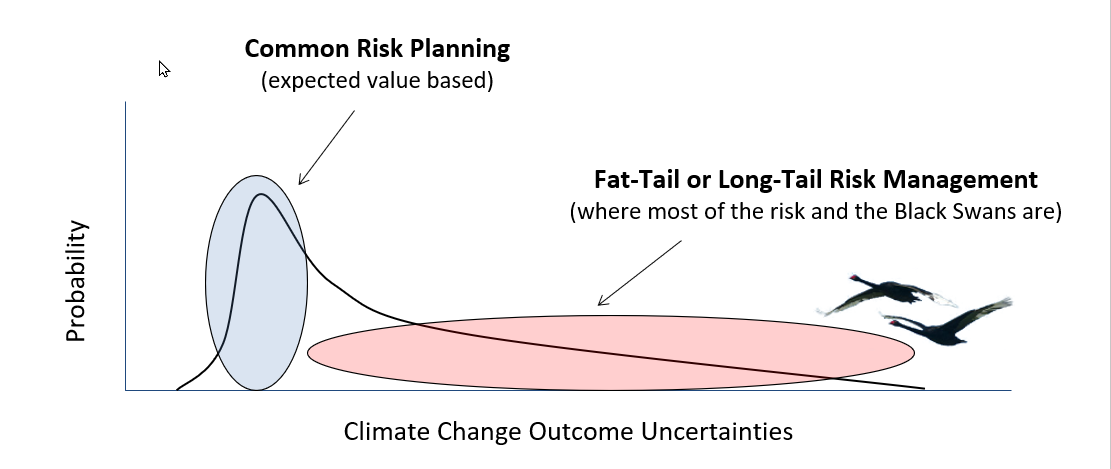
Relatively few studies explicitly focus on the long-trail of the climate outcomes distribution where most climate risk lies. An important exception, published in 2015, is Sir David King's Climate Change - A Risk Assessment. 2015 King_Climate Change a Risk Assessment
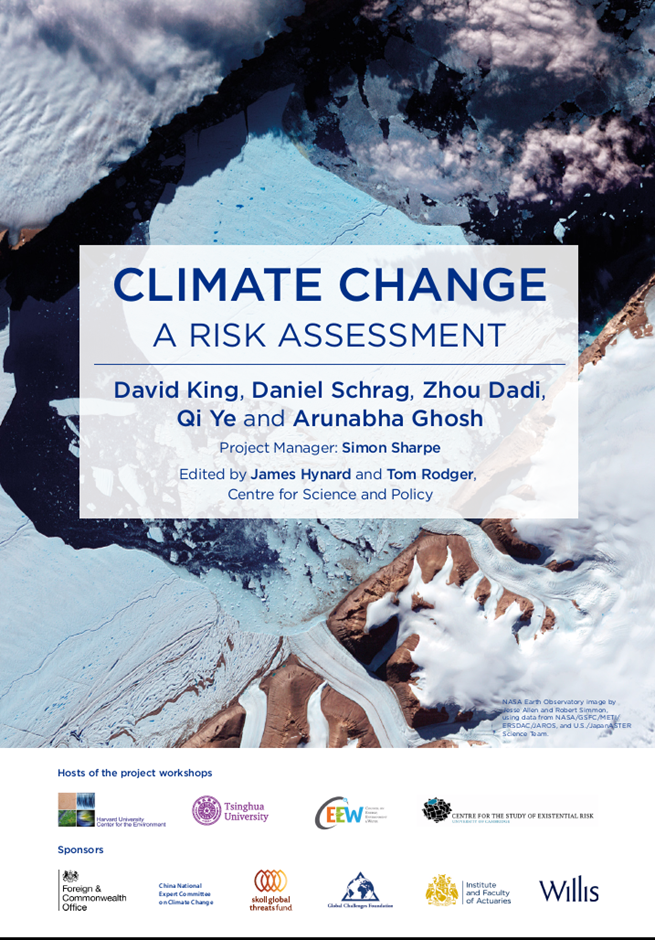
The report introduces the topic of climate risk much more effectively that most reports, and then presents graphical information covering a long list of potential risks, usually looking at the risks from different perspectives and through different geographic lenses. It points to a lot of impacts you probably haven’t thought much about.
NOTE: The goal of this Climate Web Insights Page is to make thinking and analysis on this topic readily available. The page is not written technically, nor does it point you to a lot of underlying information and citations, even though all of that is available to you in the Climate Web. To learn more about the structure and scope of the Climate Web as a starting point for digging deeper, we’d recommend this Climate Site
.