MODULE 2: UNDERSTANDING CARBON OFFSETS
A carbon offset (more accurately a greenhouse gas or GHG offset) allows a purchaser to claim credit for avoiding a ton of CO2e emissions, or removing a ton of CO2e, anywhere in the world, and then utilizing that credit as an offset against emissions somewhere else. That offset could be used against a regulatory emissions cap, allowing the emitter to effectively emit more than they are allowed to, or for corporate social responsibility or branding purposes. Purchase enough offsets and an individual or company can claim to be “climate neutral” or to have reached “net zero.”
So what turns a ton of avoided emission or removals into a carbon offset? Several criteria have been core to the carbon offset conversation since its genesis:
- The climate benefit has to be “additional”
- The climate benefit can’t “leak”
- The climate benefit should be “permanent”
- The climate benefit should be “quantifiable and verifiable”
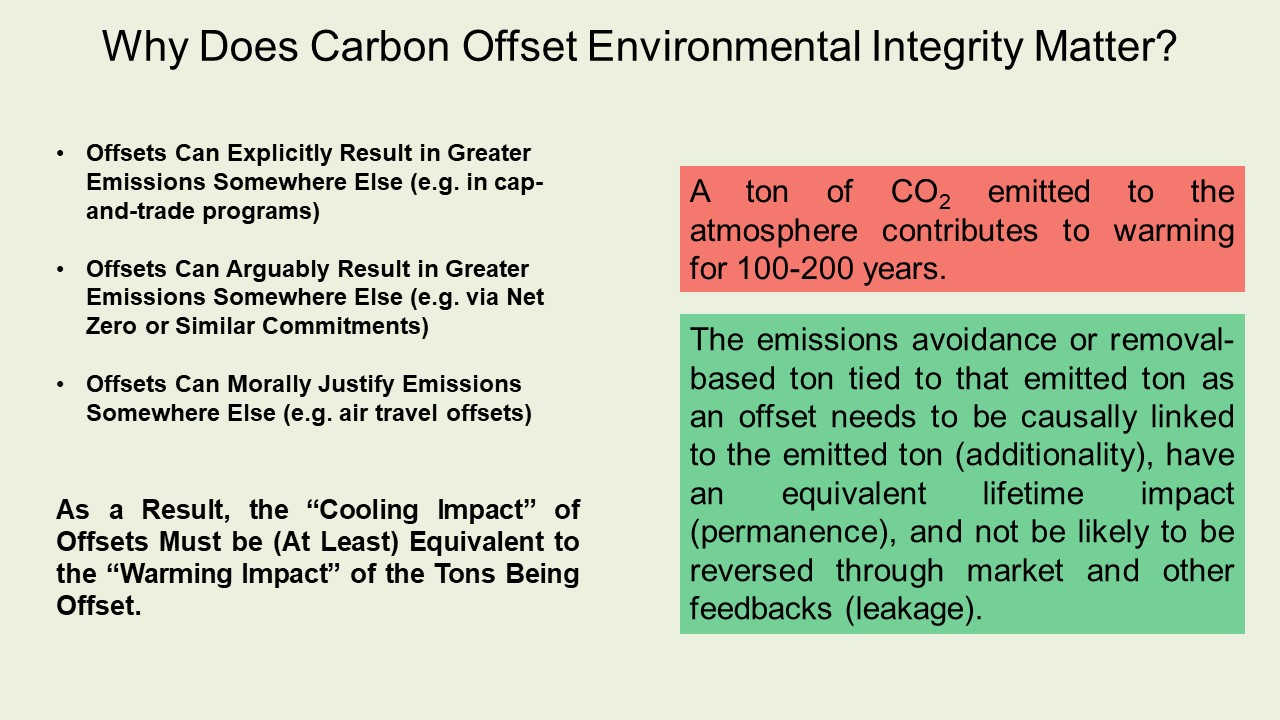
The slide below summarizes why these variables matter:
You might see many other criteria mentioned in the context of carbon offsets, but they’re not all created equal. As shown below, some are critical to the ability of tons of emissions reductions or removals to serve as offsets, some should be taken for granted, some are desirable, and some may be important to buyers but aren’t inherently important to the environmental legitimacy of an offset.
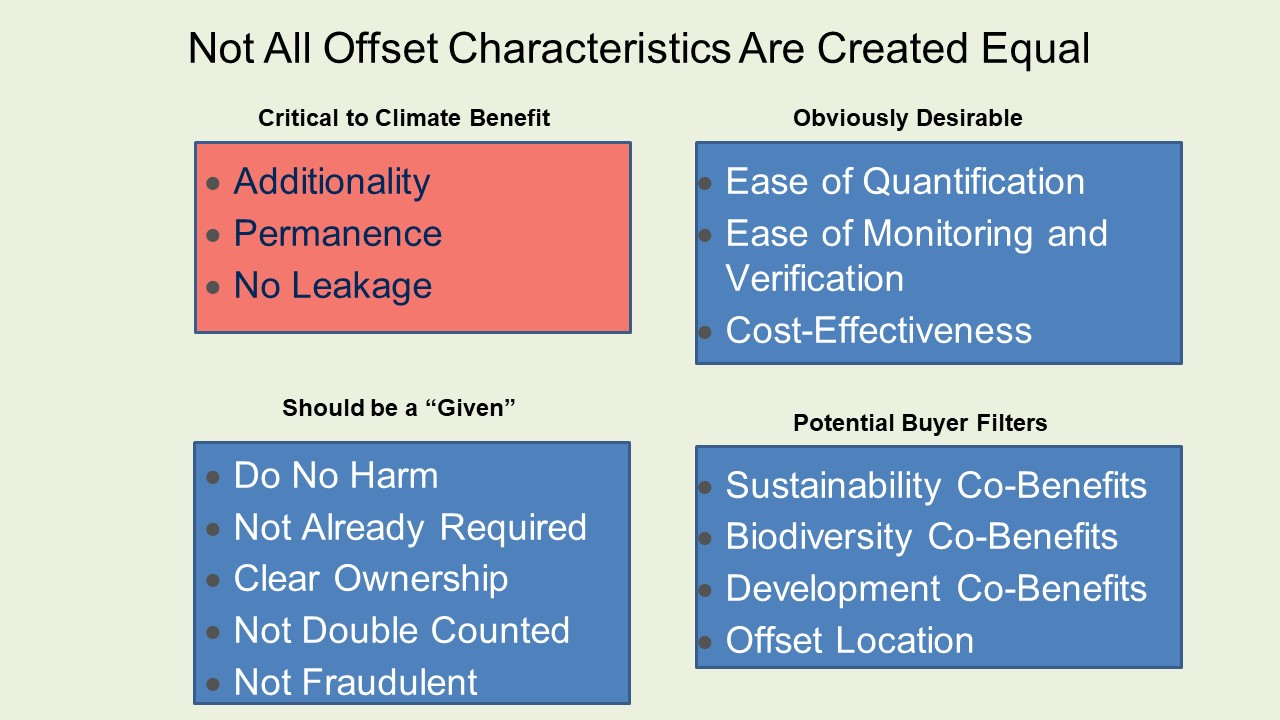
We’ll focus below on the three “critical” offset characteristics.
Carbon Offset Additionality
Additionality is the single most challenging carbon offset criterion. You can see why that’s the case in this slide:
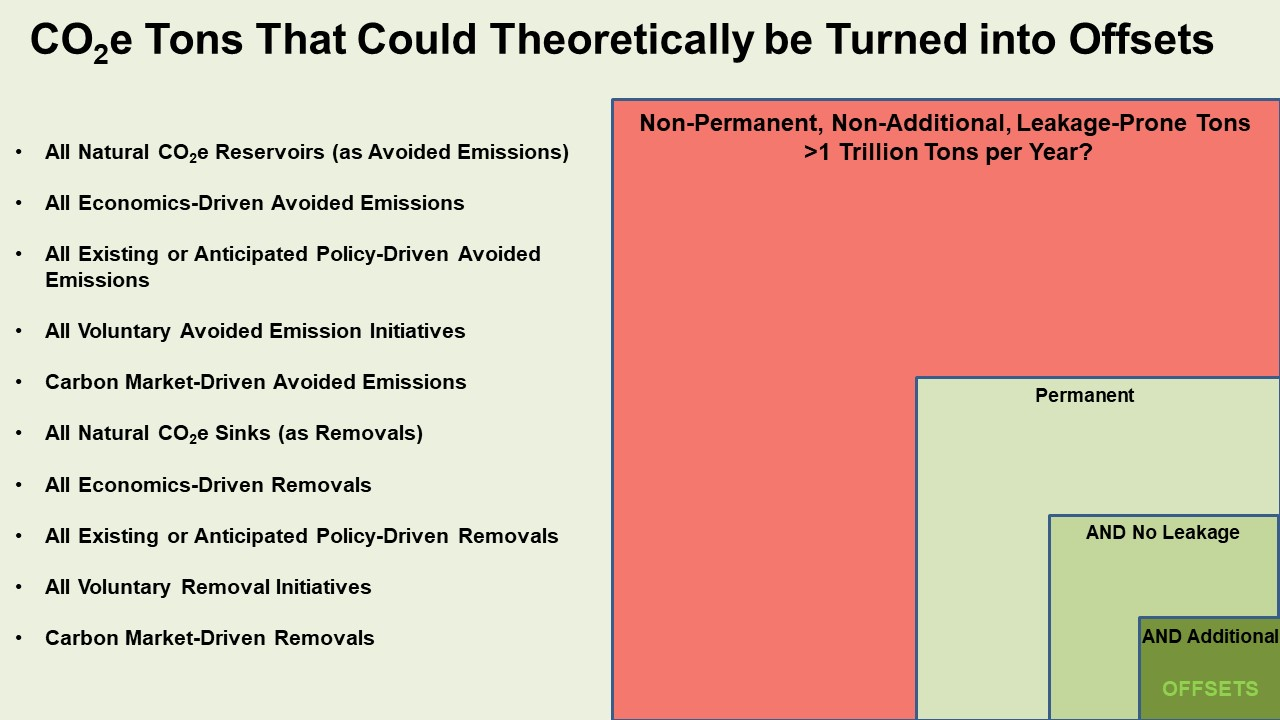
There are many billions of tons of avoided emissions or removals that someone might want to turn into an offset. If all natural forests could be counted as a source of offsets because you're not cutting them down, for example. Or, all policy induced emissions reductions could be counted, or all natural sinks, or whatever. You would have the huge red square in the graphic, arguably adding up to more than a trillion tons a year. It's a very large number in part because hundreds of billions of tons of carbon moving between the atmosphere and the oceans and forests and soils every year, and there's lots of emissions reductions through all kinds of policies and measures that are already out there.
Then we can start asking, how many of those tons are permanent? How many of them don’t leak? And ultimately, how many of them are also additional and can be attributed back to the carbon market? That is a much, much smaller square, and it represents the only tons that should qualify as offsets.
Offset additionality has been a topic of study for a long time. The 2003 graphic below represents one of the first attempts to assess the implications of alternative additionality screens for carbon offset supply, with the “loose” additionality curve suggesting 5 times as many potential offsets as the “extreme” additionality curve.
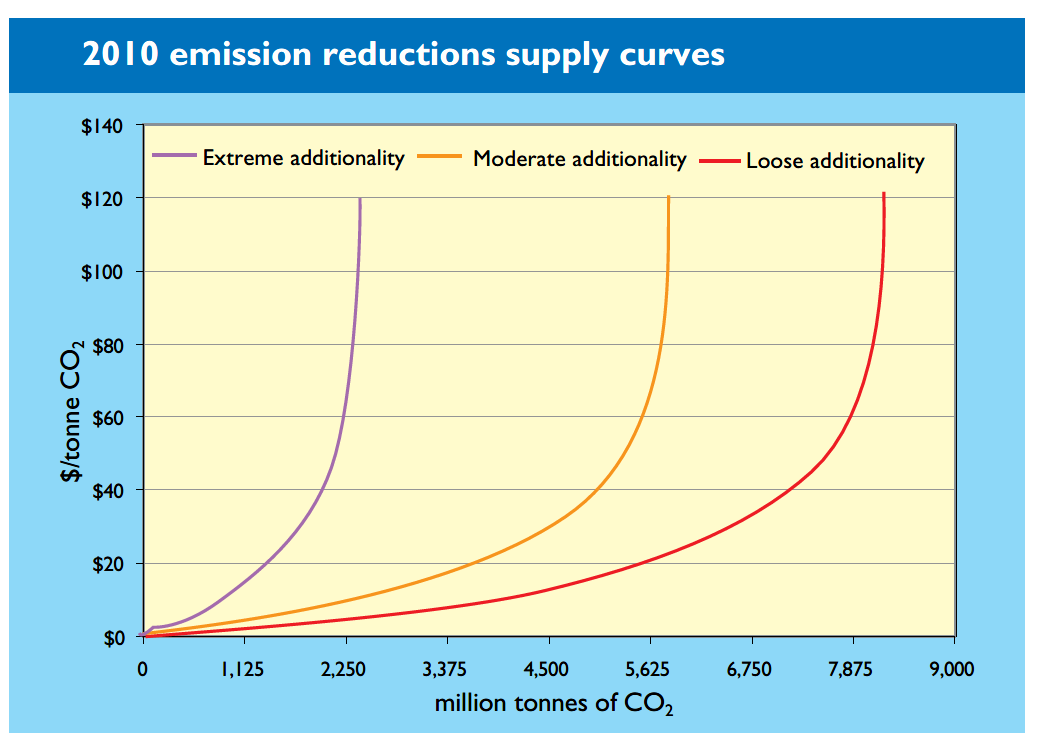
2003 Broekhoff_How Additionality Could Drive the Market
Perhaps not surprisingly, additionality has been the biggest source of carbon offset critiques.
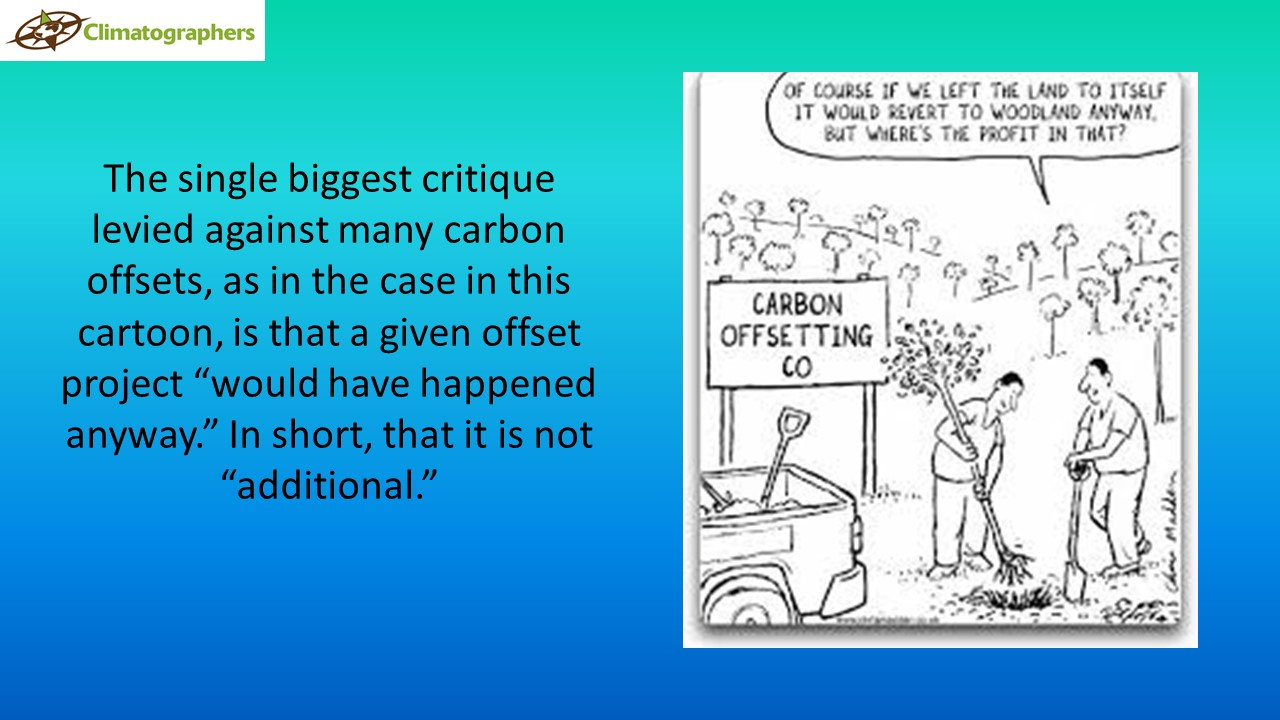
Given how much offsets have been criticized on the basis of “inadequate additionality,” it’s important to understand what additionality really means.
It sounds simple, but there is no way to objectively “test” for additionality, which complicates the situation.
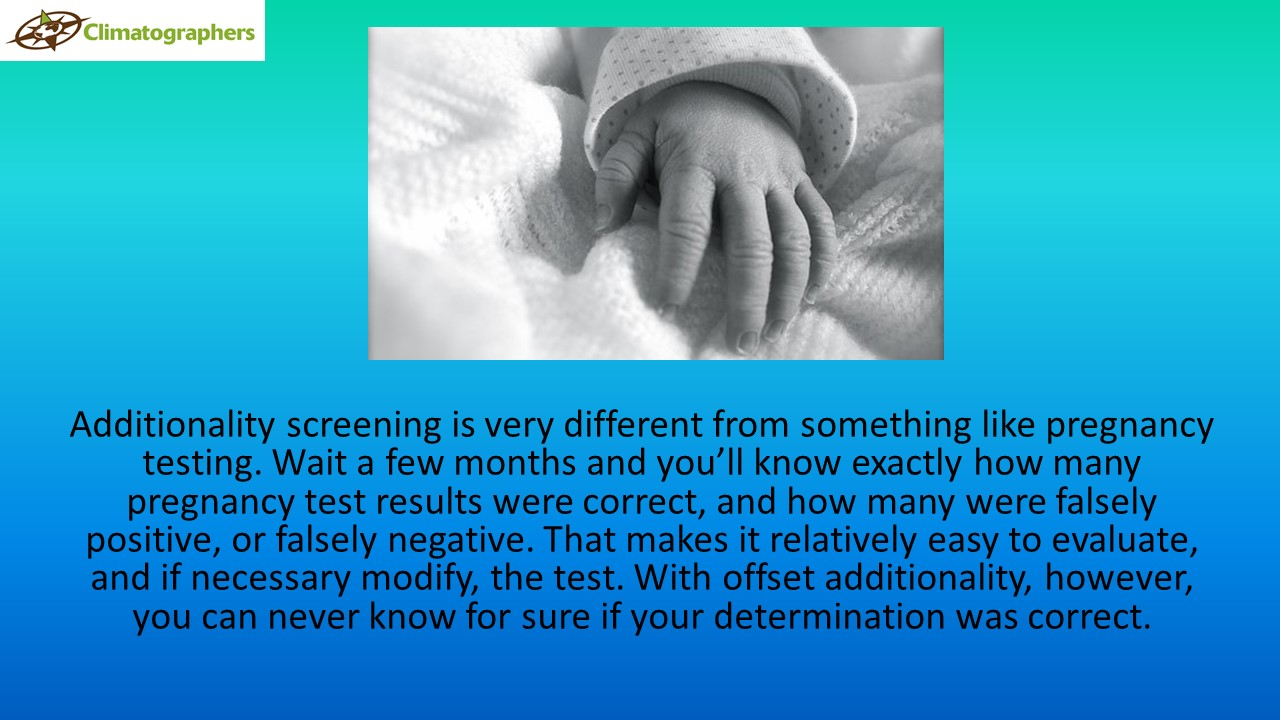
Since there is no way to “test” for additionality, the door is open to considerable “gaming” when it comes to getting offsets approved.
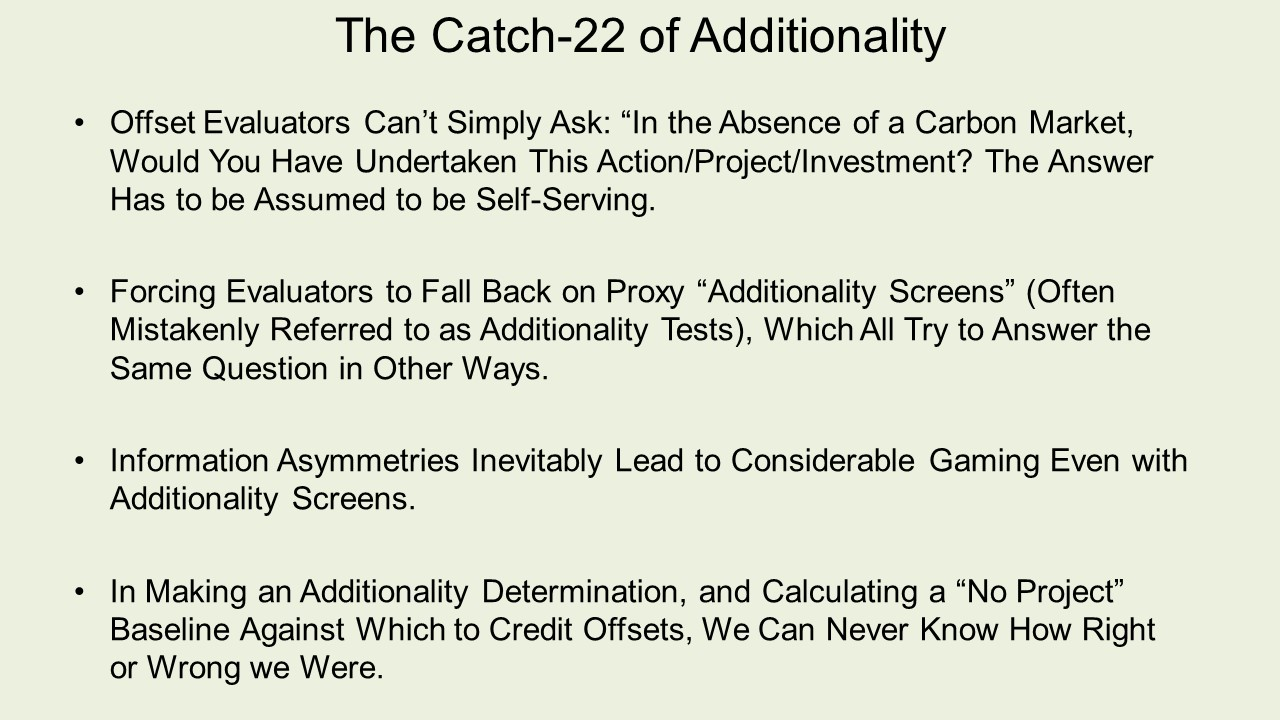
Offset additionality, while the single most important offset criterion, is also the criterion that many people are most frustrated with. Some offset providers have stopped worrying about additionality altogether, arguing that better offset quantification is more important.
But the reality is that without adequate additionality screening, the offset pool will end up full of fake offsets.
Carbon Offset Permanence
“Permanence” is another of the core criteria for an emissions reduction or carbon sequestration initiative to qualify as a carbon offset. Carbon offset permanence involves both policy and technical questions that include:
- How long is long enough when it comes to permanence? While the idea that permanent = permanent, that doesn’t really answer the question. Relatively few categories of potential offsets are truly permanent.
- Is there monetizable value to temporary carbon sequestration?
- How does the rigor applied to defining permanence influence offset economics?
- Should potentially reversible (non-permanent) offsets be treated as a separate commodity from the “permanent” offset market?
There are no clear answers to these questions.
Carbon Offset Leakage
Like permanence, lack of “leakage” is another of the core criteria for an emissions reduction or carbon sequestration initiative to qualify as a carbon offset.
The key question when it comes to leakage is whether the project or the activity creating the carbon offset trigger feedbacks beyond the project boundary that ultimately counteract in whole or in part those GHG benefits.
For example, let’s assume for a moment that it might make economic sense to shut down your factory in return for the ability to sell carbon offsets. What would the net effect of that shutdown be for climate change? Probably not much. Unless the demand for the product being produced at the factory is declining as part of the offset initiative, someone else is likely to step in to satisfy the demand for that product by building a new factory. It might even be you if you’ve simply moved the factory from one country to another. That’s leakage, since the global atmosphere sees no net difference in GHG emissions, even though closing the factors obviously resulted in a reduction of its emissions.
You’ve been introduced to the basics of carbon offset qualification on this page. You can jump directly to Module 3, or dig deeper into this topic through the additional pages attached to this one.