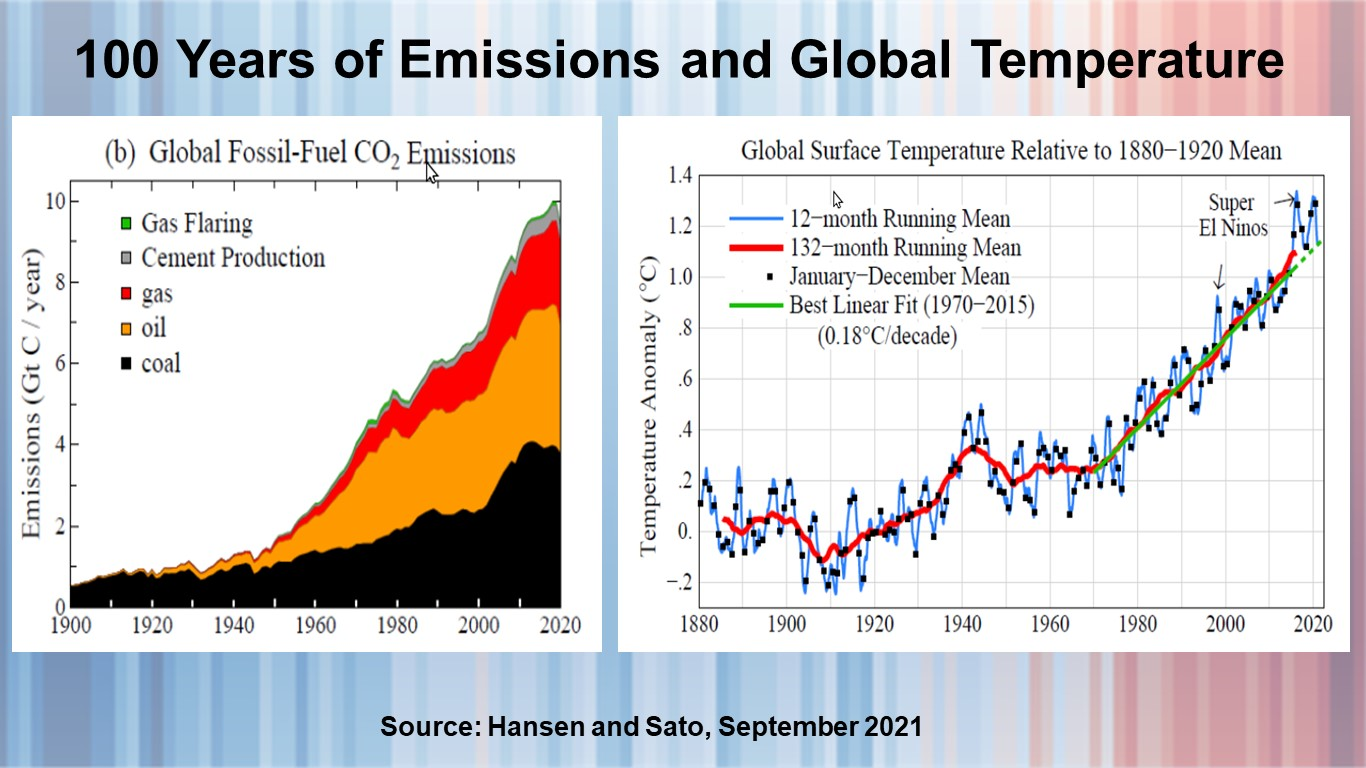
CO2 emissions, and average global temperature, have been rising for decades.
As a wicked problem, tackling climate change was never going to be easy.
But why such an abject failure? And where do we go from here?
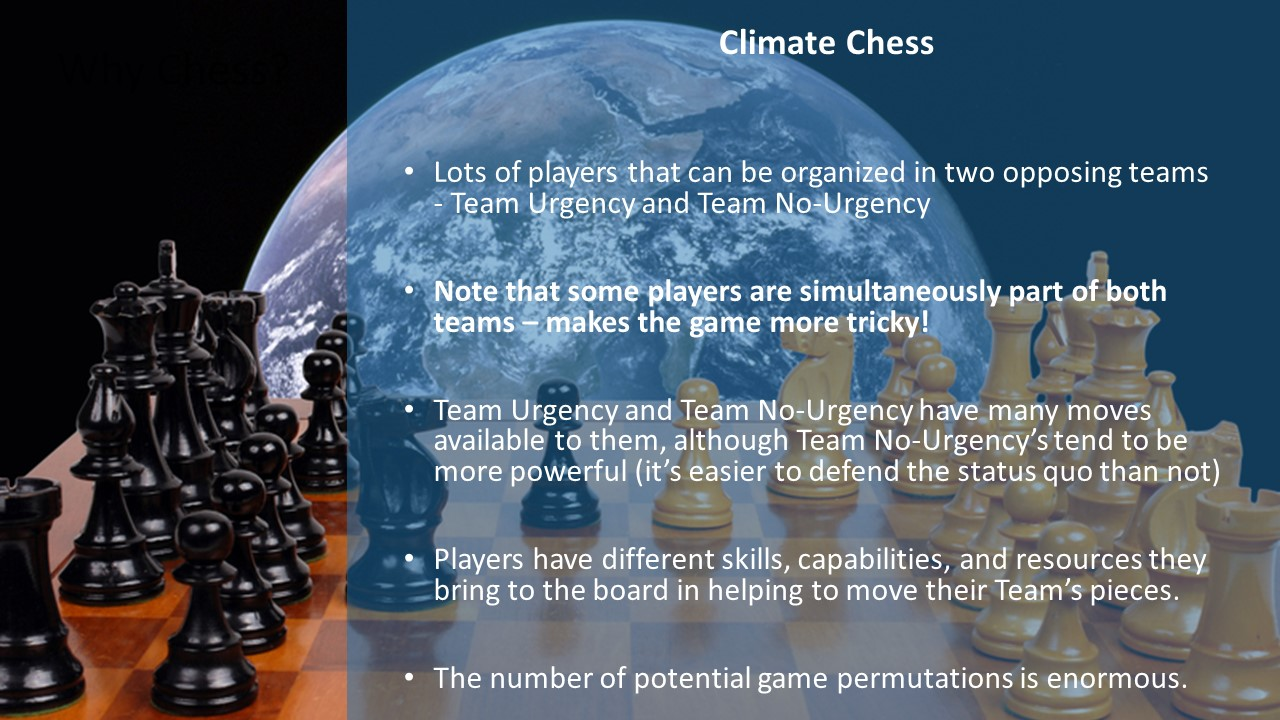
We think that the metaphor of Climate Chess, in which Team Urgency and Team No-Urgency are pitted against each other, is a useful way to understand the lack of progress on climate change.
Team No-Urgency has been winning the game for decades.
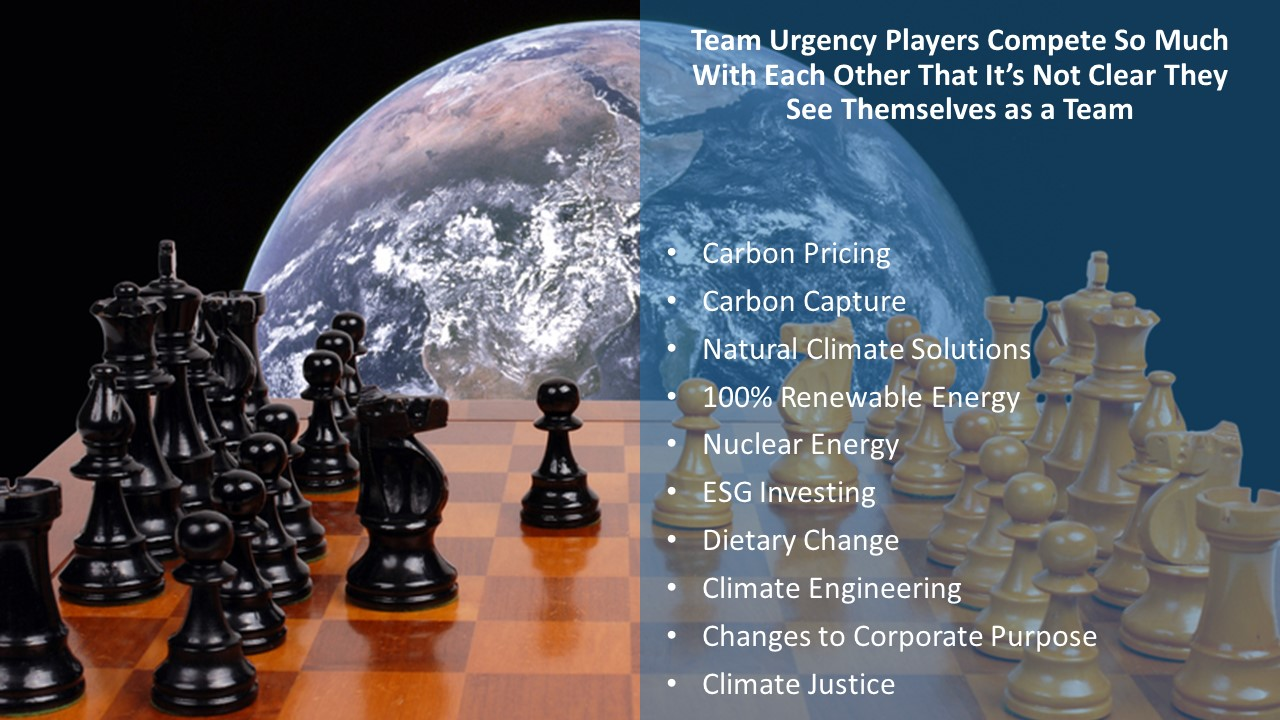
If Team Urgency Were Playing Better Climate Chess, It Would Find Ways to Empower the 100 Million People Alarmed or Concerned about Climate Change in the U.S. Alone, But Who Have No Idea What To Do. Telling Them to Drive Less is Not Empowering Them to Help Team Urgency.
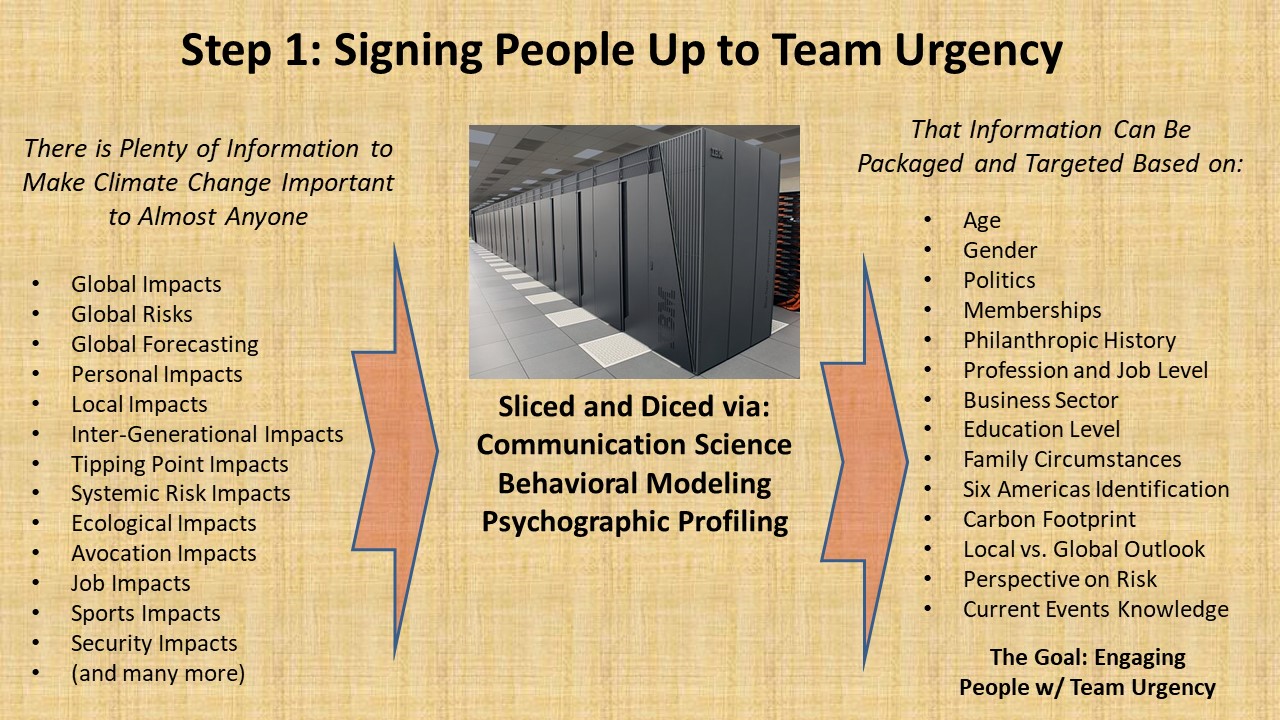
The three slides below organize the key steps that could successfully transition Team Urgency to a winning strategy based on enabling concerned American, and delivering the information they need to want to be and stay involved.
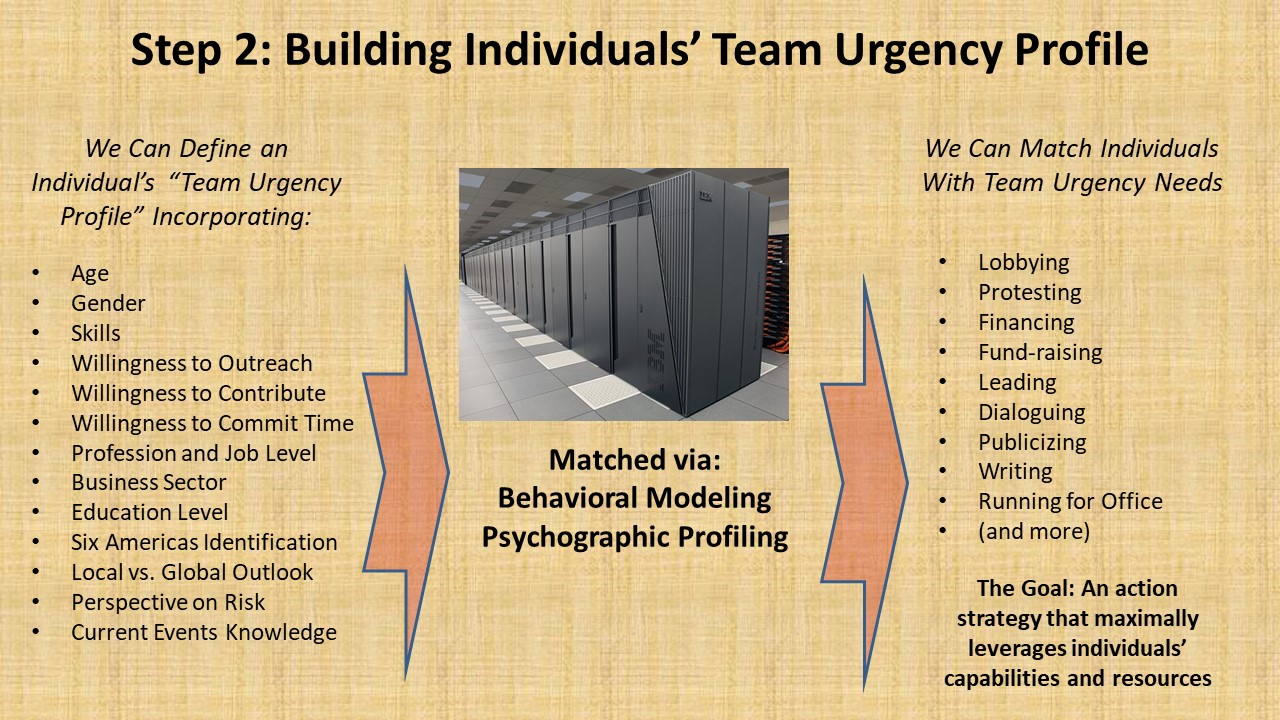
The second involves assessing how individuals can best contribute to Team Urgency based on their interests, training, and resources:
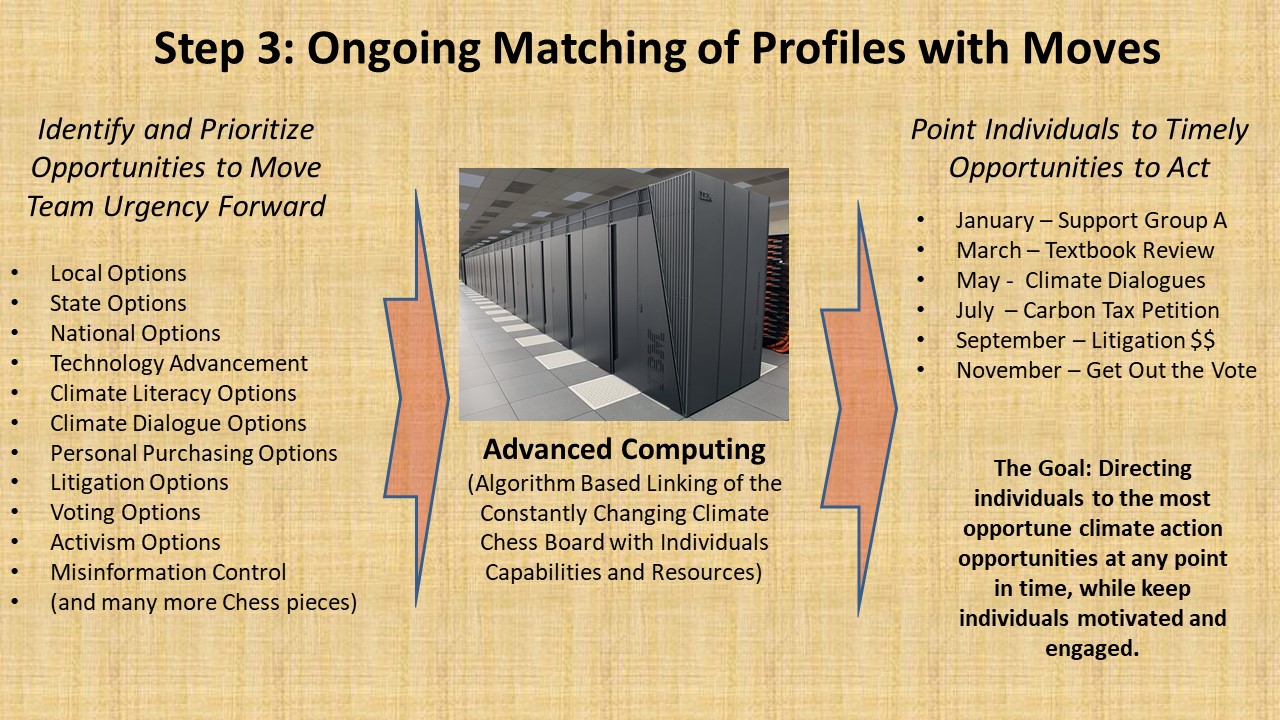
The third matches individuals on an ongoing basis with the Climate Chess moves where they can make the biggest difference at any given point in time.
The Climate Web can help Team Urgency play better Climate Chess at All Three Stages
Unfortunately, it’s not clear that Team Urgency even exists today, whereas Team No-Urgency definitely does. There is certainly no organization coordinating Team Urgency’s ability to win the game. The needed tools exist, and are used by political parties to get candidates elected, but have not been leveraged by climate activists and philanthropies to make climate progress.