11.4 Electrify Everything - Solutions.mp4

This electrify everything as climate solution video is a bit different from the video that follows, which is asking the question of how fast can we achieve a 100% renewable electricity system? But it does explore some of the interesting issues around the topic of electrifying everything.
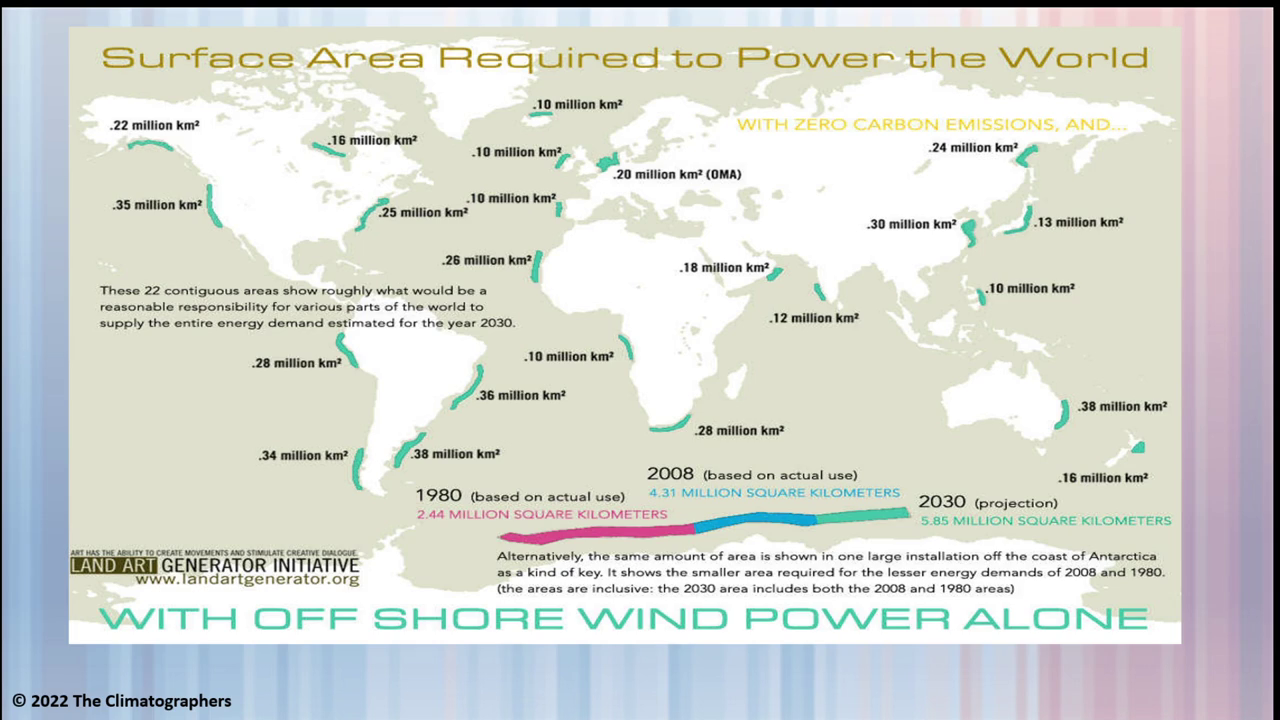
You've probably seen images like this that take a look at, in the case here of offshore wind energy, where could you put offshore wind energy to produce all the energy needed by the world in 2030? And they've identified 22 different spots totaling about 6 million square kilometers.
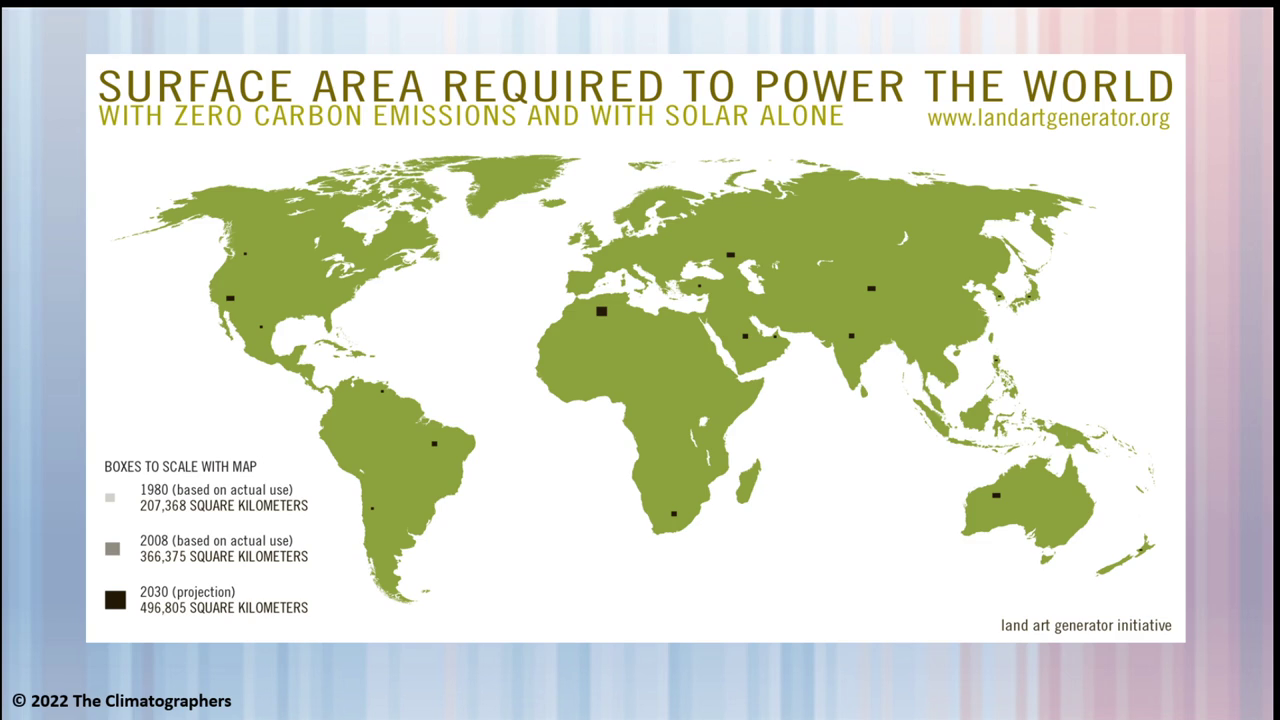
A similar graphic for solar energy showing the 10 or 12 places around the world where solar energy could be used to basically generate enough energy for the entire world, in this case by 2030, talking about almost 500,000 square kilometers. But that doesn't mean that it would be just solar panels. You could conceivably integrate it with other land uses.
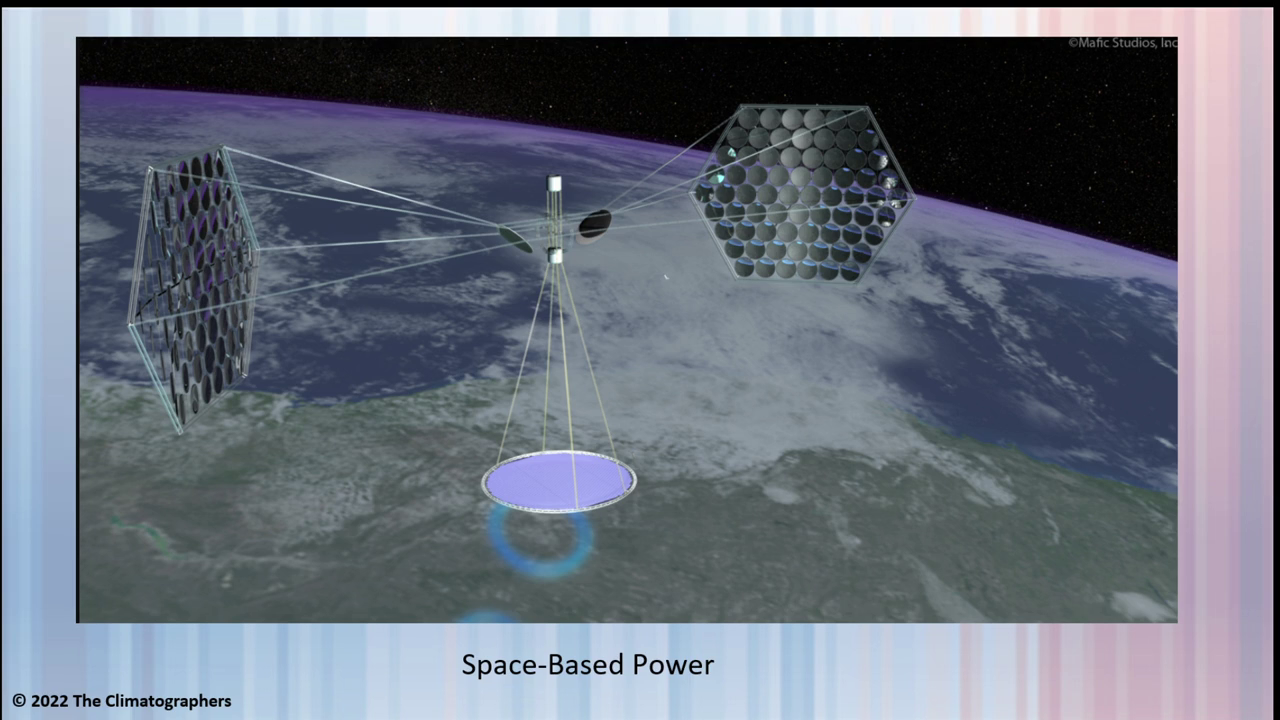
You may not be familiar with it, but there has been work done around the idea of space-based power, solar panels in outer space, and then microwaving the energy back down to the planet. And that too could pretty much electrify everything at adequate scale.
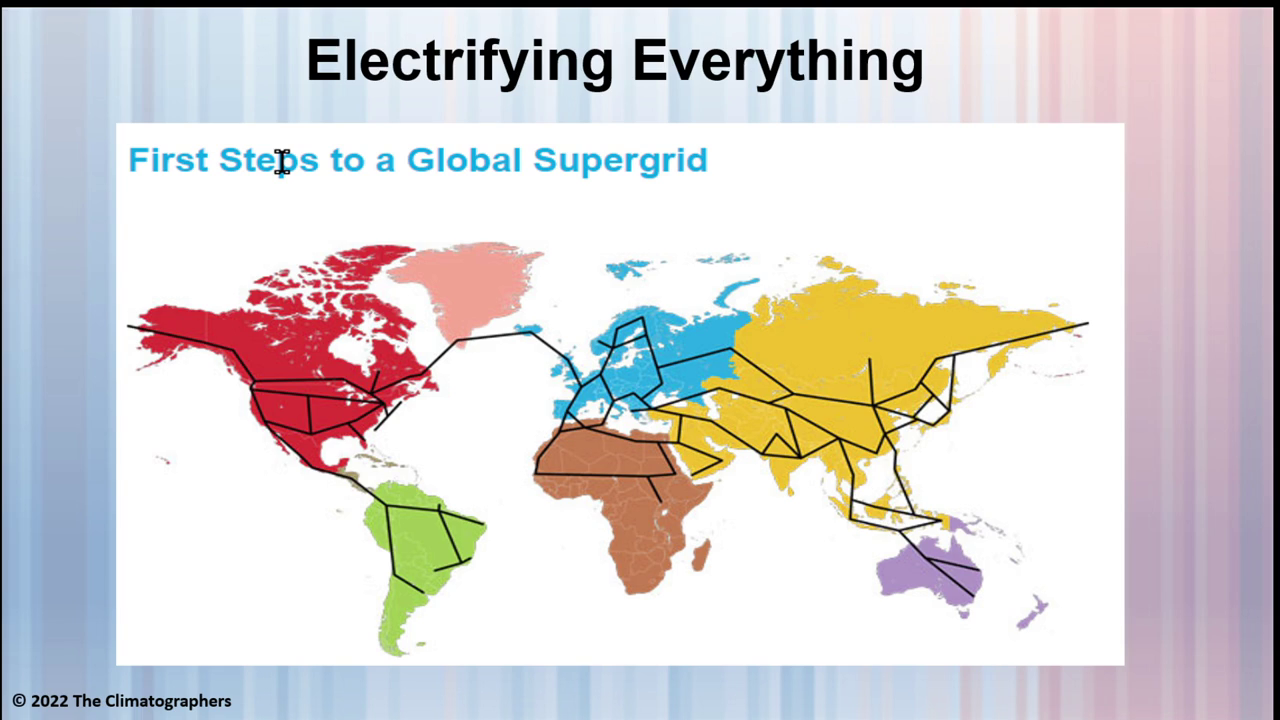
One of the important components once you start to talk about electrifying everything is the need to really tie together a global grid so that power from any part of the world could get to any other part of the world at pretty much any time of day or night. And the way you would do that is with a global super grid, high voltage, direct current lines that would, in some cases cross oceans, go from Africa to Europe and tie together the world's grid in a way that is not remotely the way it works today.
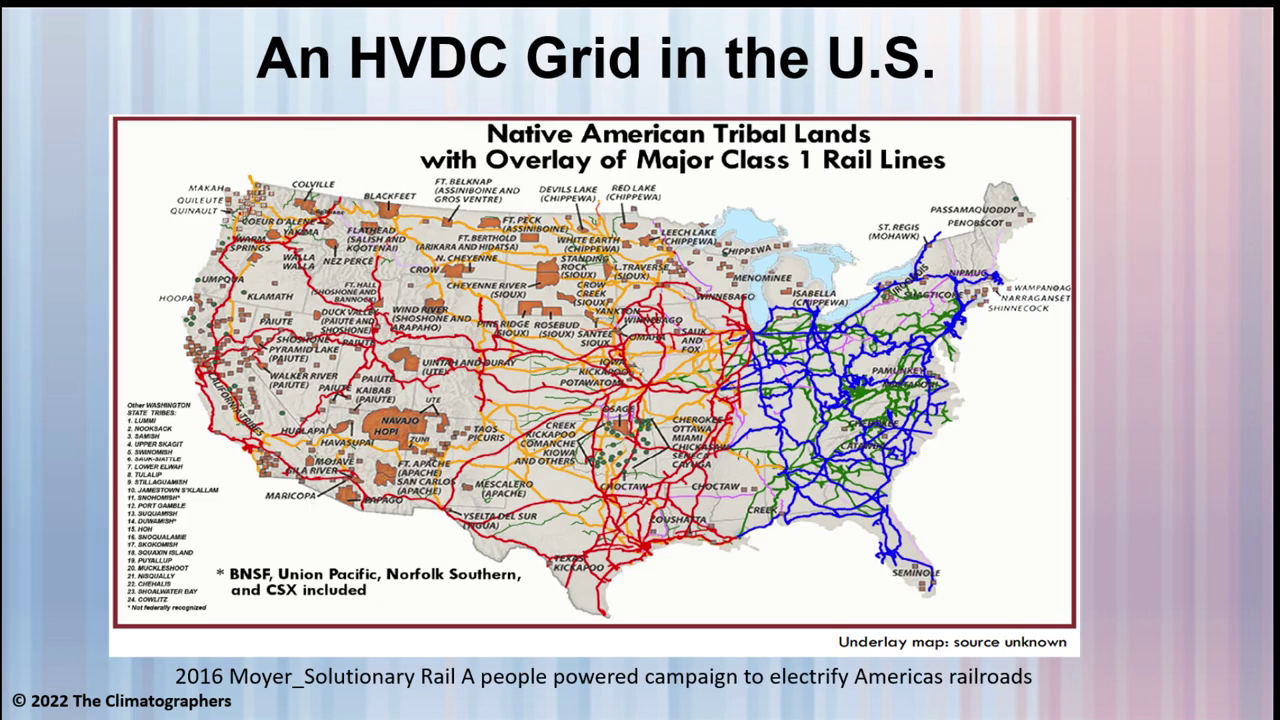
And there's been interesting work done in the US on how you would put together a high voltage direct current grid in the US and how you could do an awful lot of that work using railway lines and tribal land, allowing you to electrify the railroads, allowing economic development on tribal lands, and presumably a much easier process of getting the whole thing permitted and approved than trying to create new transmission lines across thousands of miles of private property.
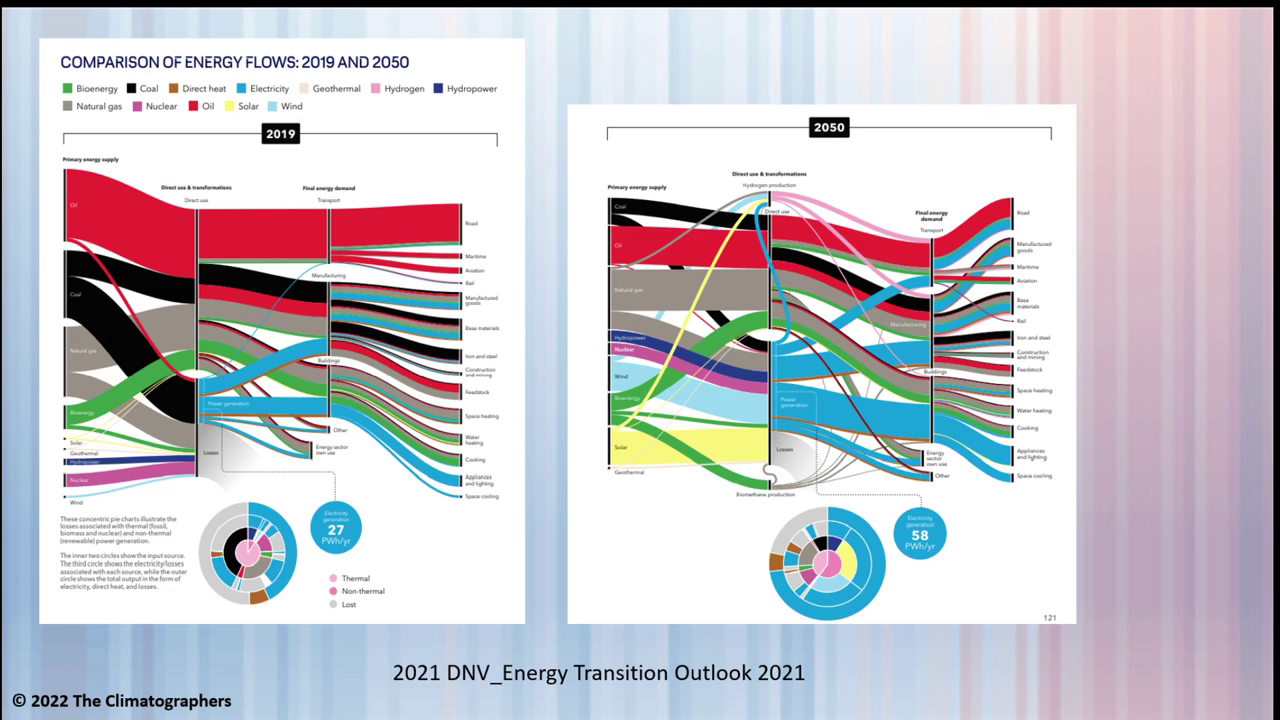
Of course, it's not going to be easy to electrify everything. This is a chart from dvs Energy transition Outlook 2021. And what it's basically comparing is energy flows in 2019, on the left, 2050 on the right, electricity is in blue. And so you
Can see that the amount of electricity has grown dramatically. It's grown from 27 PWH to 58 PWH, but there is still a lot of non electricity in the system, even in 2050. So it's not simple.
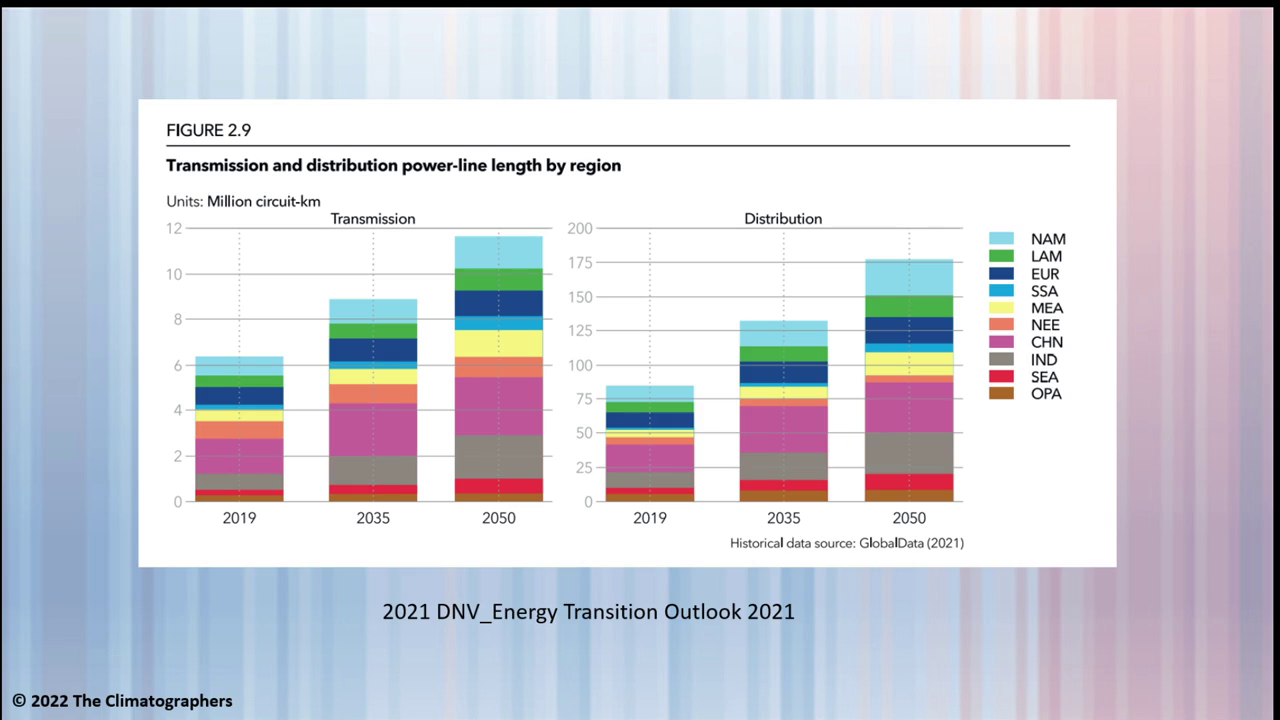
And to give you a sense of some of the infrastructure requirements here, again, also from the 2021 DNV report for transmission lines, which might be underwater, underground, et cetera. But it involves going from about 6 million circuit kilometers today to almost 12 million circuit kilometers in 2050. And for the distribution lines coming off the transmission lines going from about 80 million circuit kilometers today to more than doubling to 175 million circuit kilometers in 2050. And on the right hand side and in the graphics, you can see where around the world this is actually occurring with the blue bar at the top, being North America.
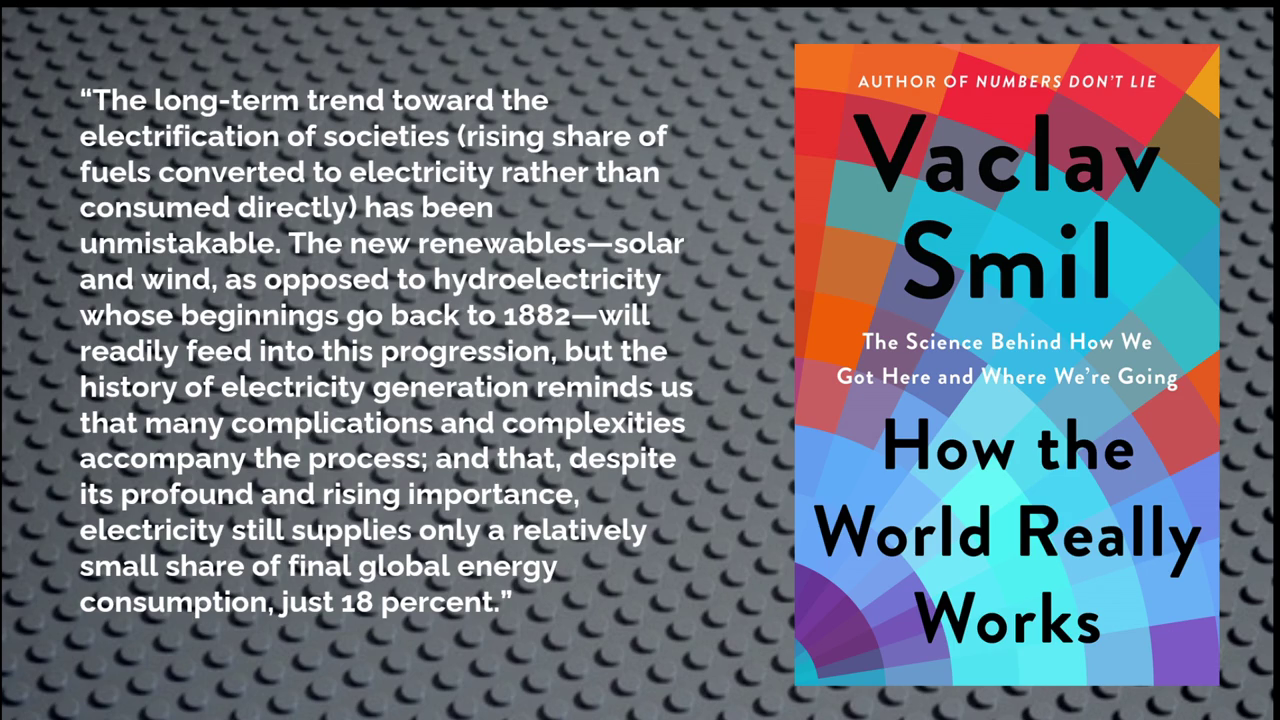
And as we think about the idea of electrifying everything, VLA smell, who, whom I've mentioned before, has a bit of a cautionary note.
He points out that new renewables will certainly help feed the progression towards electrification, which has been going on for a long time. But you have to remember that notwithstanding decades and decades of uh, electrification, electricity is still just a relatively small percentage of final global energy demand and consumption. Right now, it's just 18%. So we're using a huge amount of other energy sources, including, for example, oil. What smell is noting is that even as we substantially increase the amount of wind and solar that is out there, the total fraction of energy demand that is met by electricity rises relatively slowly, in part because global energy demand overall is rising relatively rapidly at the same time.
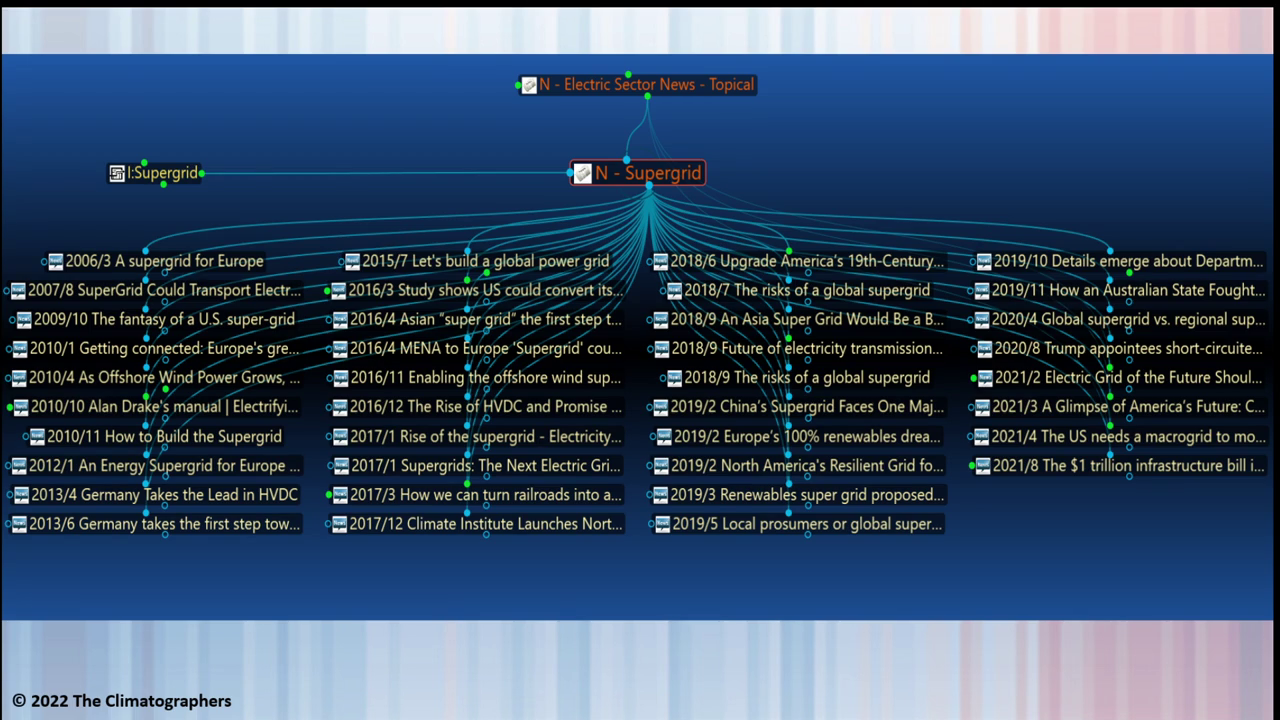
So the topic of an electricity super grid is a really interesting one, and it's the kind of thing that we really ought to be trying to accomplish. And if you want to dig into it further in the climate web, here is a collection of news and opinion pieces that will help you trace the evolution of that conversation over more than a decade.

Next, we'll jump to the very contentious discussion around can we get to a hundred percent renewable energy? And by when I.