11.7 Technology Innovation - Solutions.mp4

We've already discussed that in some circles there is a lot of optimism and perhaps even optimism bias around the role of technology in tackling climate change. And like the solutions conversation generally, there's no way that we can address all of the different technologies that are potentially in play around climate change mitigation. But we can give an overview of the topic and that's what I'll do in this video.
A key challenge here, and I think you may have seen this slide already, is as futurist Paul SFO notes change is never linear. Our expectations are linear and we always tend to assume that the recent past is a good prediction of the future, which is always a mistake. But new technologies come in as curves. So we routinely overestimate short-term change and underestimate long-term change.
So some key technology, innovation, insight and questions. First of all, we're clearly going to see a lot of technology innovation and as I've said before, I think we are very likely to transition to a low carbon economy over time.
The stone age did not end because we ran out of stones and the current oil-based or fossil fuel age is not going to end because we run out of fossil fuels. We keep finding a lot more fossil fuels everywhere we look. But it did take more than 2000 years to transition from the stone age to the Iron Age. And so that ought to give us a bit of pause in terms of transitioning from fossil fuels to a totally new system as we've talked about in a couple of videos. So while there's no question that technology innovation is critical to successfully tackling climate change, can rapid technology innovation actually happen fast enough to avoid potentially catastrophic climate change? And that is a big question. There's a lot of techno optimism. I already had pointed you to a book, A Newer World by William Hewitt in 2013, but how quickly can we actually complete a technology transition as opposed to as VLA Mill has questioned the use of computers to come up with scenarios that don't necessarily reflect any practical reality.
So how quickly can we actually do a low carbon transition? And just as importantly, can it happen without public policies that price carbon or incentivize technology in a big way or mandate reductions that would tend to drive technology innovation? Can it happen endogenously through the process of technology innovation? That is a huge question because if you don't price carbon, if you don't have mandates, technology innovation is inevitably going to move more slowly than it would in an alternative universe. It is true that if endogenous technology change can solve climate change, then we should clearly focus on technology innovation, stop worrying about the fact that we can't get public policy into place and put it on the back burner. But the general consensus of people who study technology innovation, at least that I've seen, is that it's very unlikely to be able to happen that way and that transitioning to a low carbon future through technology innovation is unavoidably tied to public policy.
But there are technology optimists. Kla is probably one of them. And this statement from 2011 where he talks about that if we pursue enough different technologies and enough innovation, it's unlikely that any single shot works in terms of a silver bullet. But even 10 Google-like disruptions out of 10,000 shots will completely upend conventional wisdom, econometric forecast, and most importantly our energy future. One question being will we see the 10,000 shots without public policy measures?

And it's not to say that we're not seeing a huge amount of innovation. We are, the food sector is changing relatively rapidly and could disrupt rapidly is is argued in that rethink report that we previously saw, but there's all kinds of synthetic meats and plant-based proteins being produced and perhaps they will explode in consumption.
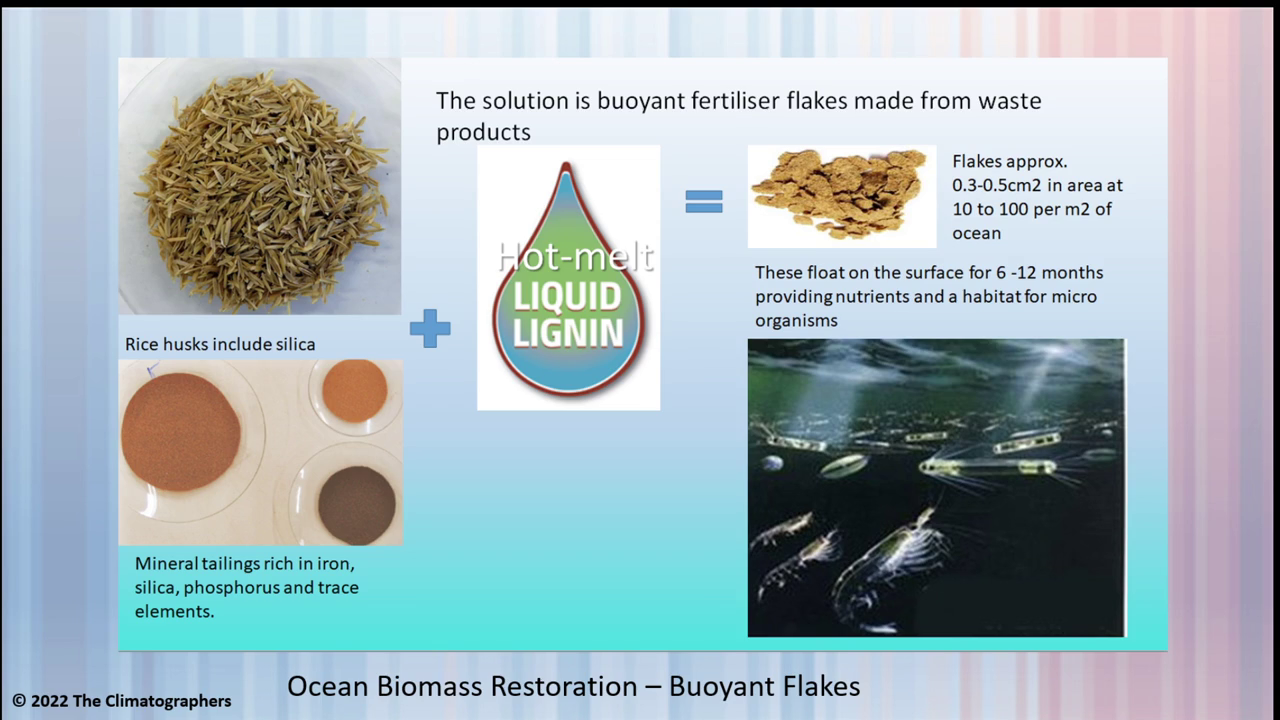
There's all sorts of interesting work being done on ocean biomass restoration and buoyant flakes that fish will eat and then fish will poop and that will take carbon out of the atmosphere and take it down to the bottom of the ocean.
And perhaps we restore the oceans to levels of biomass that they've had historically, which seem to have been considerably larger.
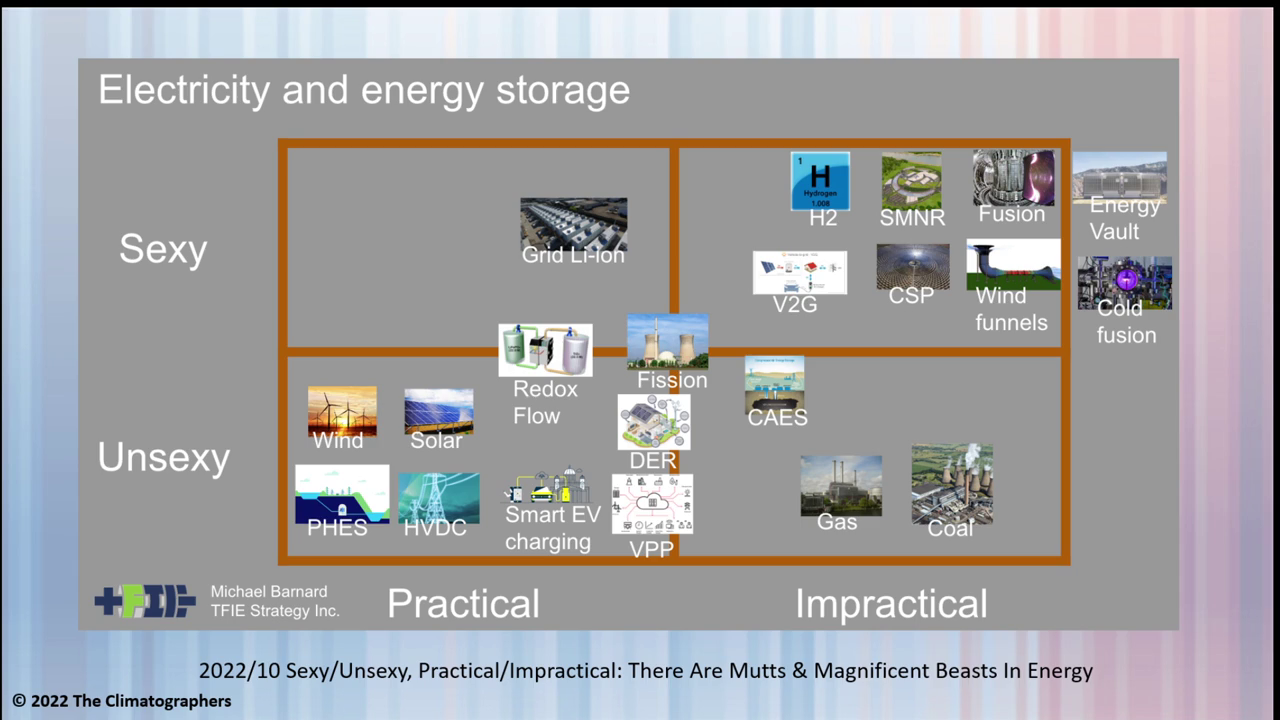
Very recently. Michael Barnard, who is certainly one of my go-to people for climate technologies, put together a series of interesting graphics just laying out in the standard four square grid with unsexy and sexy, practical and impractical for several different categories of technology innovation. And I'm not gonna go through them in detail and I'm not gonna start debating or arguing with them. You will find throughout that Mike Barnard is not a huge fan of hydrogen in terms of it being able to compete with electricity. But you can see here some of his picks in terms of what's practical and there's actually one at least sexy, practical and then some things that he considers very impractical, like cold fusion
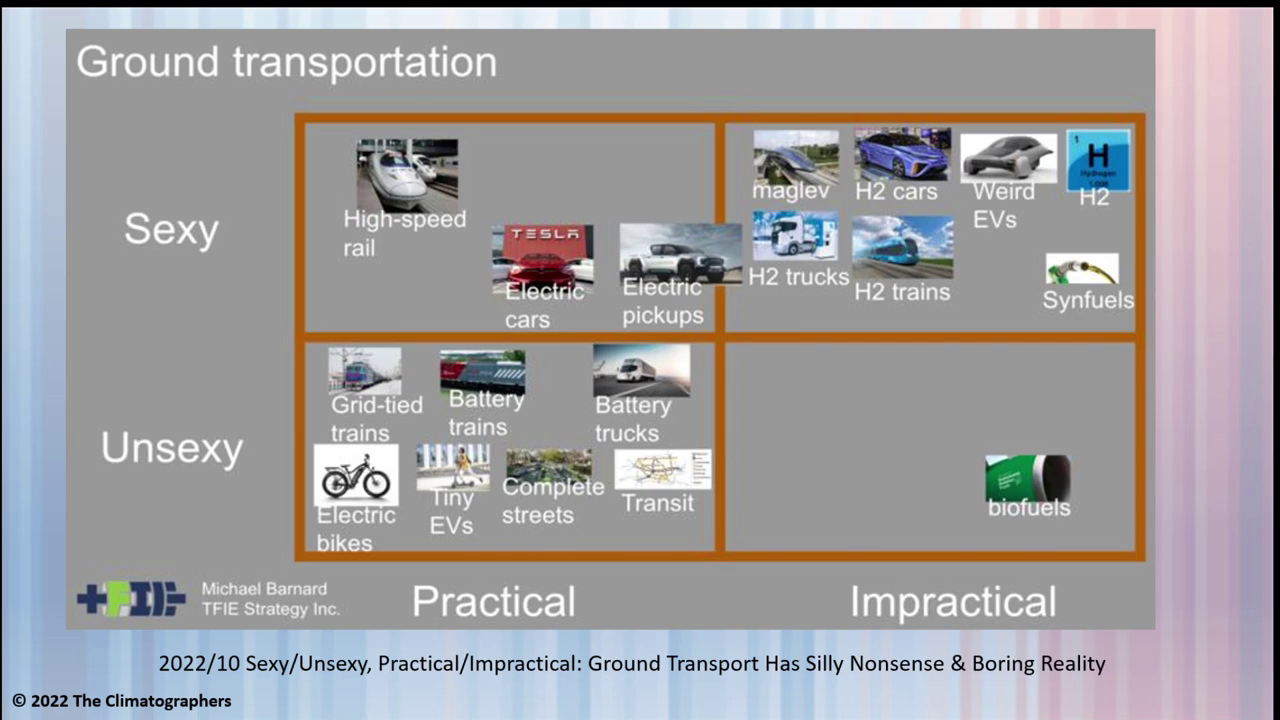
for ground transportation. He's done the same thing and has some sexy picks in terms of high speed rail, electric cars, electric pickups,
A lot of unsexy stuff, unsexy and impractical biofuels and then sexy but impractical. A lot of what's being discussed in the hydrogen space,
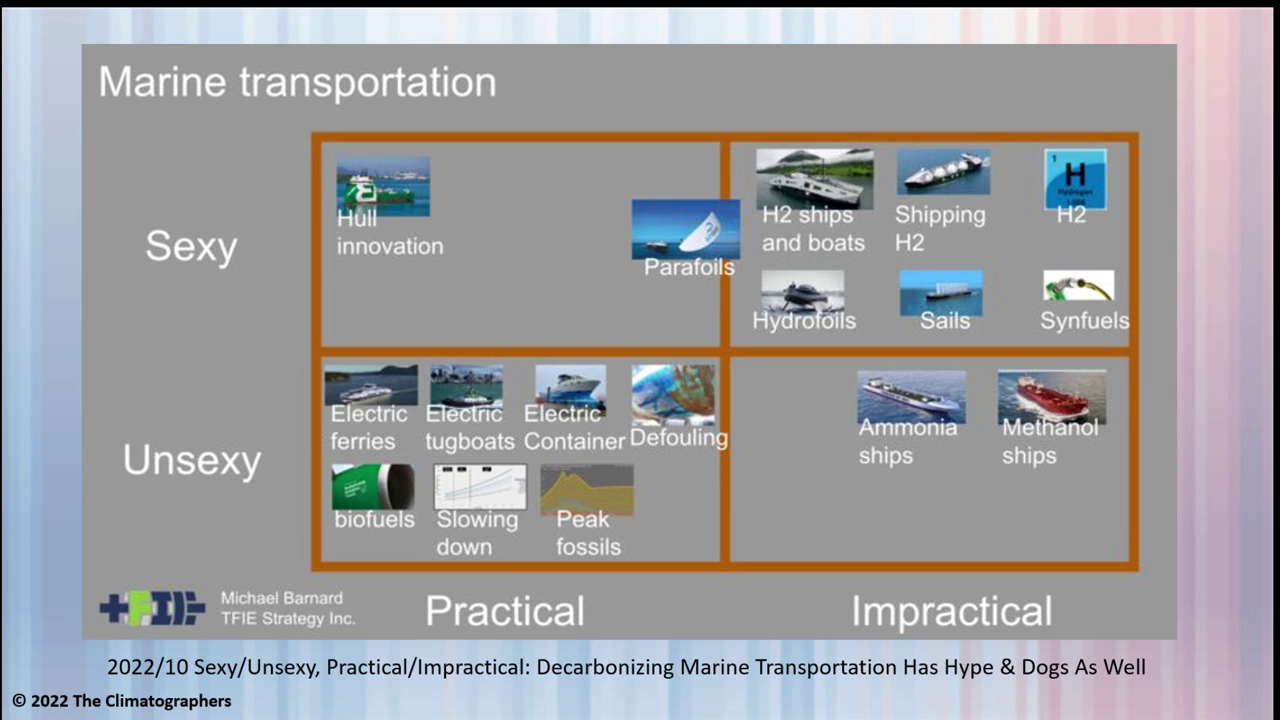
marine transportation is quite similar. It's not a fan of sail on ships or hydrogen based shipping, but is a big fan of things like HU innovation, perf oils, electric ferries, and the electrification of maritime
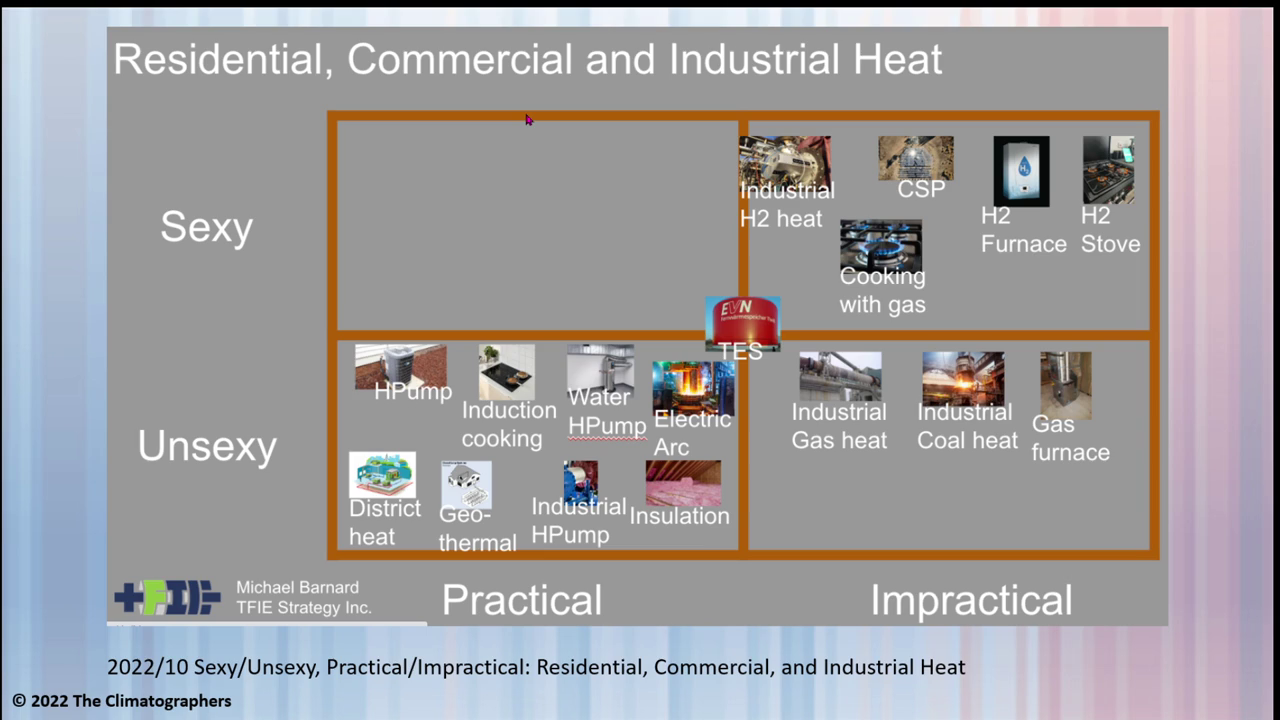
when it comes to residential, commercial and industrial heat. Again, not big on hydrogen, not big on gas or coal, but a lot of very practical technologies. Insulation, geothermal, district heating, heat pumps, induction cooking, et cetera.
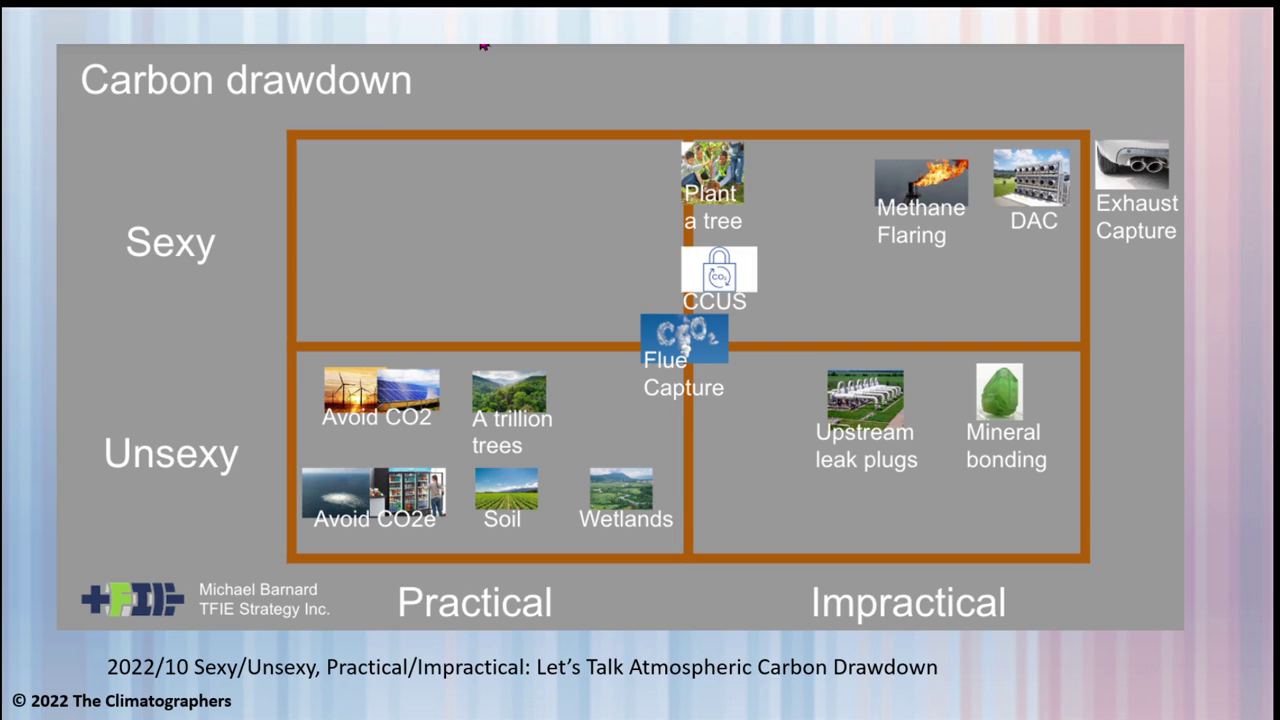
And for carbon drawdown plant, a tree is sexy, a little bit impractical, whereas a trillion trees unsexy and practical methane flaring. And this isn't methane flaring at gas fields, this is going to be flaring methane that is in that is already in the atmosphere at very low concentrations. And it's the facing the same problem as direct air capture in terms of trying to take very dilute methane out of the atmosphere is very challenging, tends to be very energy intensive, doesn't think much of accelerated weathering and mineral bonding, but does see practical potential in wetlands and soils.
And generally speaking, avoiding CO2 and avoiding CO2 E emission. So this one isn't as specific perhaps as his other choices, but you can access all of these in the climate web and through the link shown under each image.

Not surprisingly, there are literatures in the climate web specific to a lot of these issues. And this, for example, is the negative emissions literature that you can take advantage of if you want to dig deeper into a number of the different technology conversations that are underway.
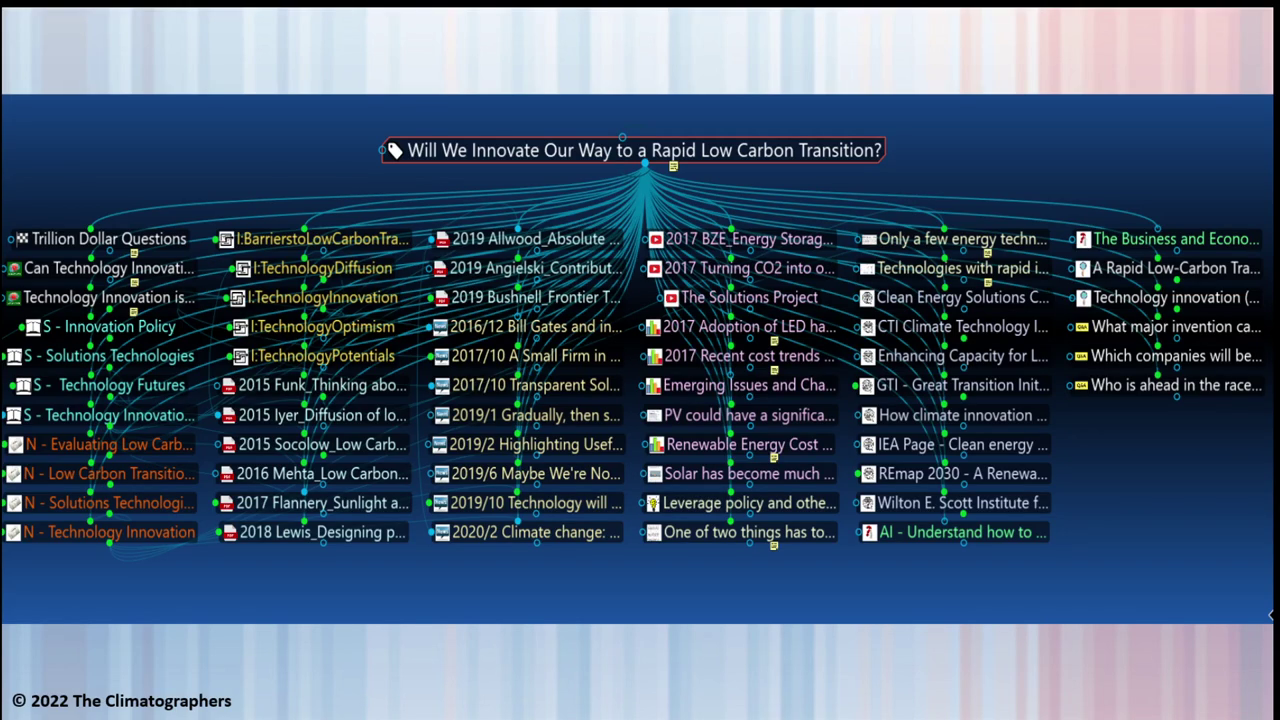
And we do have a dashboard that pulls together a bunch of material specific to the question of will we innovate our way to a rapid low carbon transition? And getting at this question of can we do that without policy, for example? Oh, do you have to assume there will be policy, some very big questions in terms of thinking about what does the future hold?

Next we'll shift to quite a different topic. Climate change adaptation.