11.9 Climate Engineering - Solutions.mp4

Climate engineering has been a big and contentious topic in the context of thinking about climate futures and managing climate risks, sometimes called geoengineering, increasingly being called climate intervention and repair. It includes a whole series of potential technologies that in some ways could overlap with nature-based solutions. But I think it's useful to try and keep most nature-based solutions outside the scope of the climate engineering discussion.
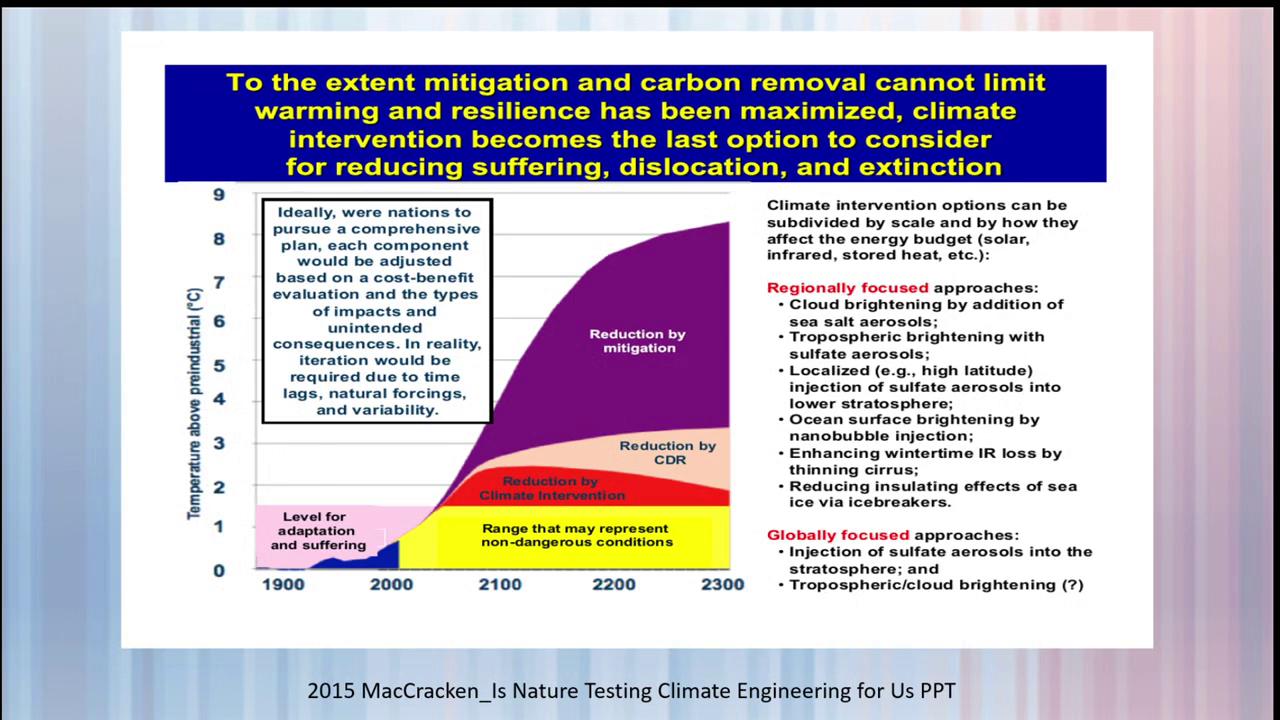
At its most basic, as characterized in this 2015 slide from scientists, Mike McCracken, to the extent mitigation and carbon removal cannot limit warming and resilience has been maximized, climate intervention becomes the last option to consider for reducing suffering, dislocation and extinction. And you can see that here in terms of this red heart of the overall picture, which includes reductions by mitigation, reductions by carbon dioxide removal to get you down to the threshold of non-dangerous climate change.
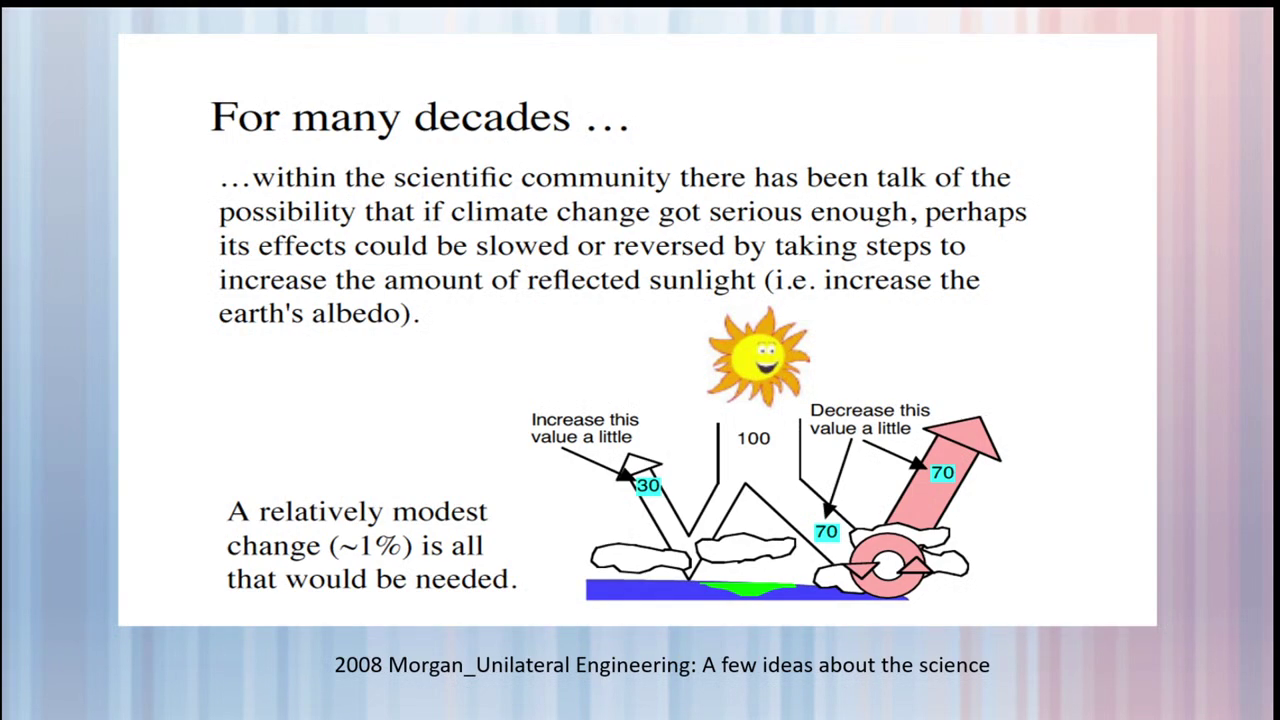
What's interesting about a lot of this conversation is that it seems seemingly doable because the amount of change that you would have to do, for example, in terms of the amount of sunlight reaching the planet can be pretty small.
So in this 2008 Granger Morgan PowerPoint, it notes that there's been lots of discussion for a long time about slowing or reversing the effects of climate change by increasing the amount of reflected sunlight, increasing albedo or doing other things. And a relatively modest change. JCO 1% is all that would be needed.
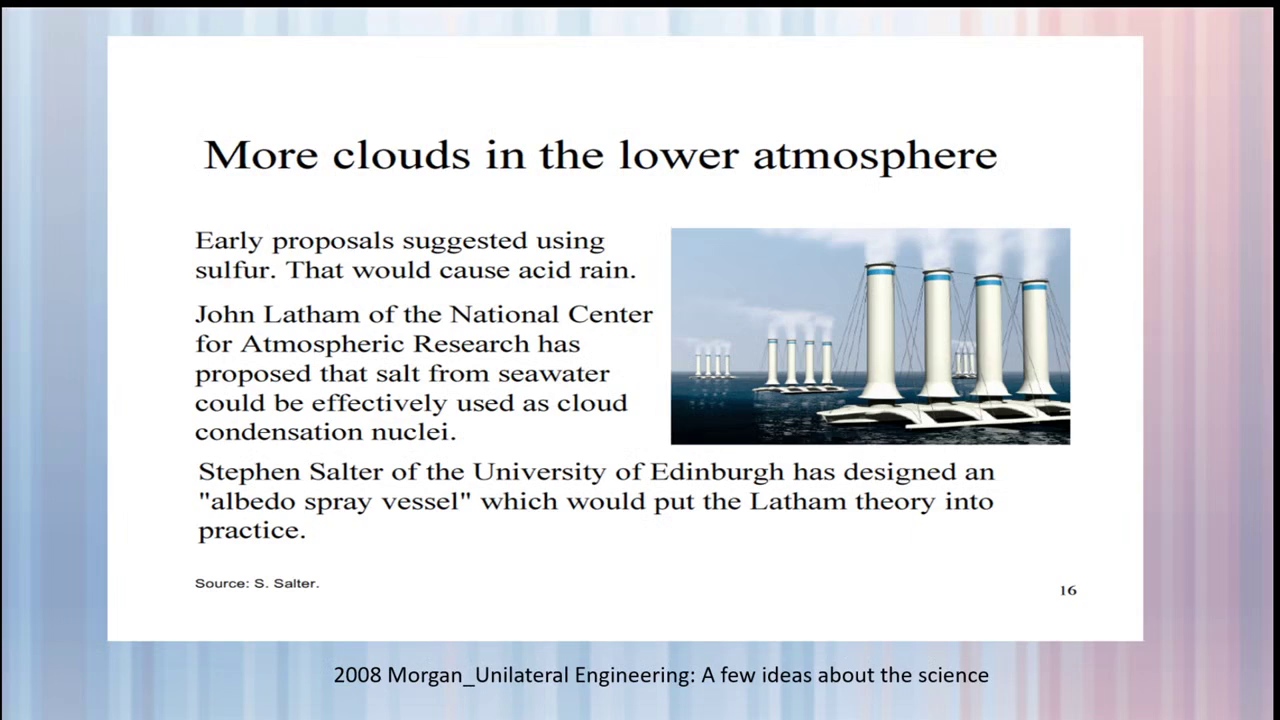
Now, you could do that with solar radiation management and putting more aerosols into the upper atmosphere. There are some issues with that. And one of the alternatives that people have talked about is a whole fleet of ocean going ships that would be creating the nuclei for cloud formation. And that would ideally reflect more sunlight back into space before it has a chance to hit the planet and turn into infrared energy.
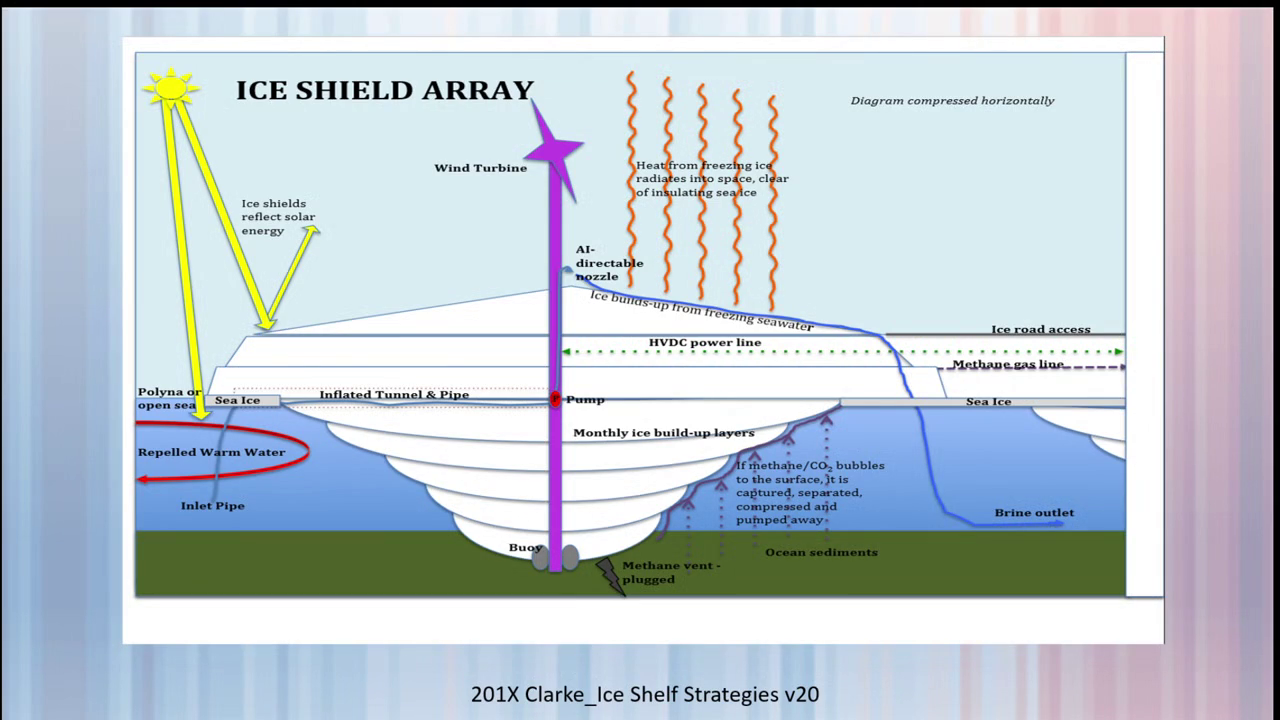
But there are plenty of other ideas, including refreezing, the Arctic, and different approaches to rebuilding ice in the Arctic.
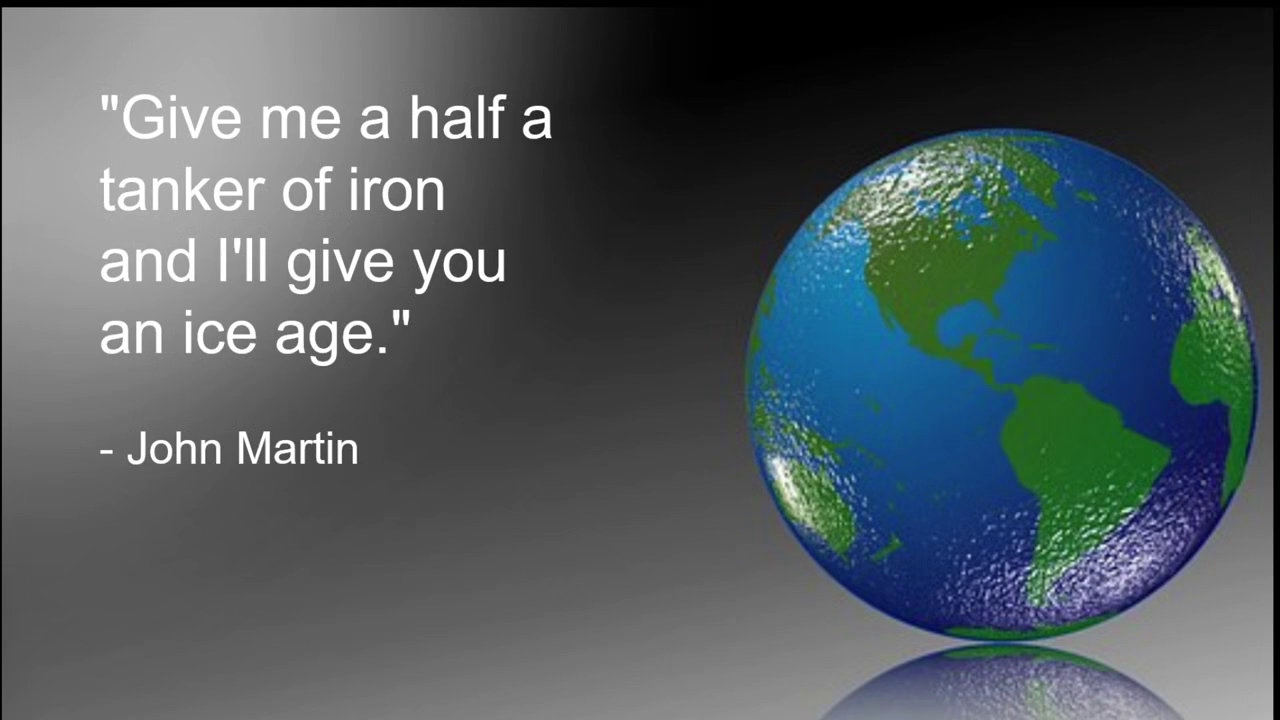
And ocean fertilization has been around as an idea for a long time based on this quote from John Martin, give me half a tanker, give me half a tanker of iron, and I'll give you an ice age. And the idea there is that certain oceans in around the world, particularly down towards the Antarctic, are iron constrained. And if you provided some iron for the plankton, you would get large
Plankton plumes, they would sink to the bottom of the ocean and that carbon would be removed from the carbon cycle for a very long period of time.
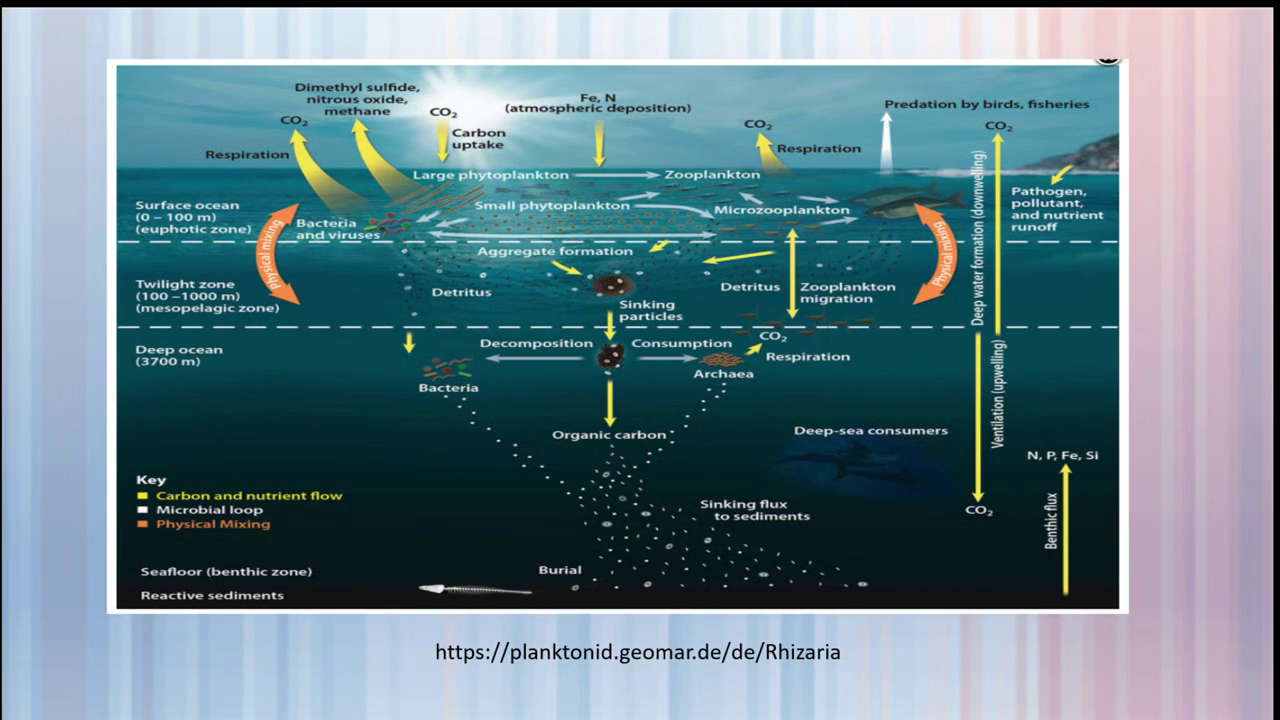
It turns out that when you look into this option in more detail, it does get tricky because you need to make sure that in adding all of this organic carbon to the ocean, you're not causing a situation in which it goes anaerobic and potentially comes back out as methane. That would be a lose proposition. And so there is always been quite a bit of concern about could one do this. And interestingly, the biggest issues are often governance issues. It's not necessarily the science of the issue, it's the question of how would you control everyone and their mother dumping iron into oceans around the world? How would you manage that whole process? And that's also been the biggest issue in many respects for other climate engineering proposals like solar radiation management.
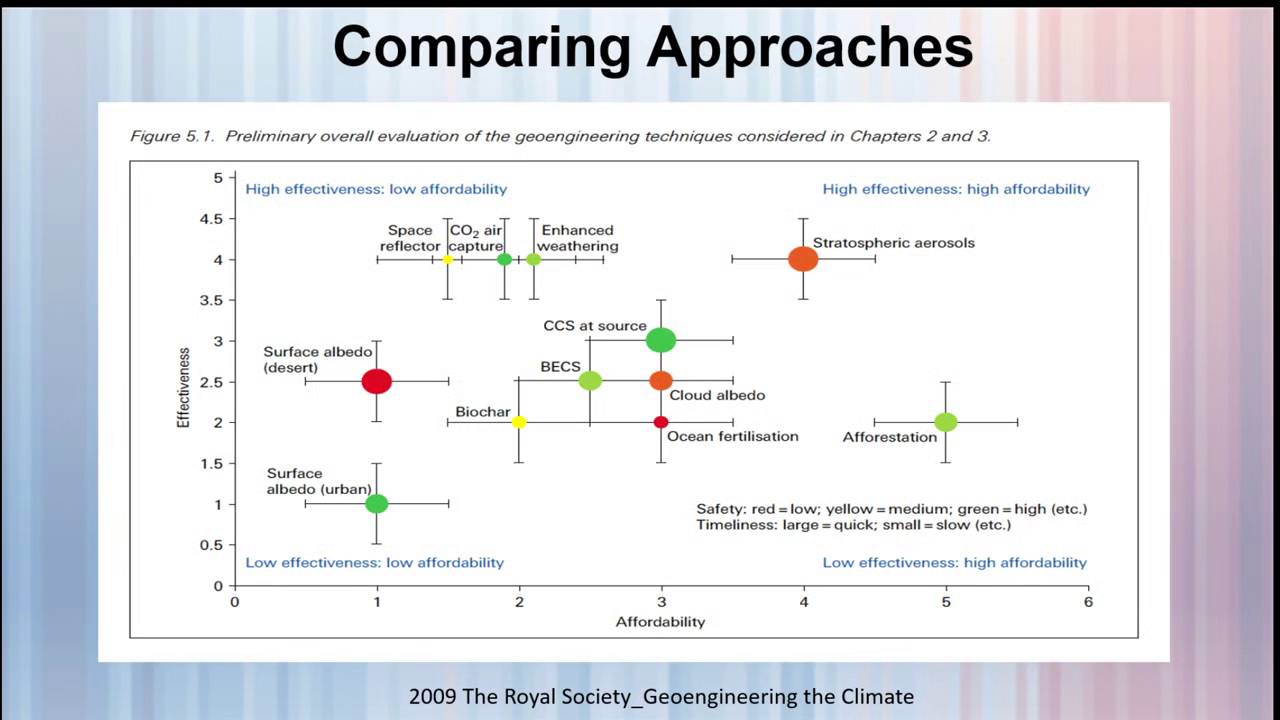
Now, one can compare a lot of different options. This was from a 2009 Royal Society Report and Effectiveness versus Affordability and Surface Albedo in the desert space. Reflectors CO2 air capture, lots of different ideas. And this is an example of where I wouldn't think of afforestation as a geoengineering technology, even though large scale afforestation would in effect be engineering the climate. But I think it makes sense to try and maintain sort of mitigation options from climate engineering options for whatever it might be worth.
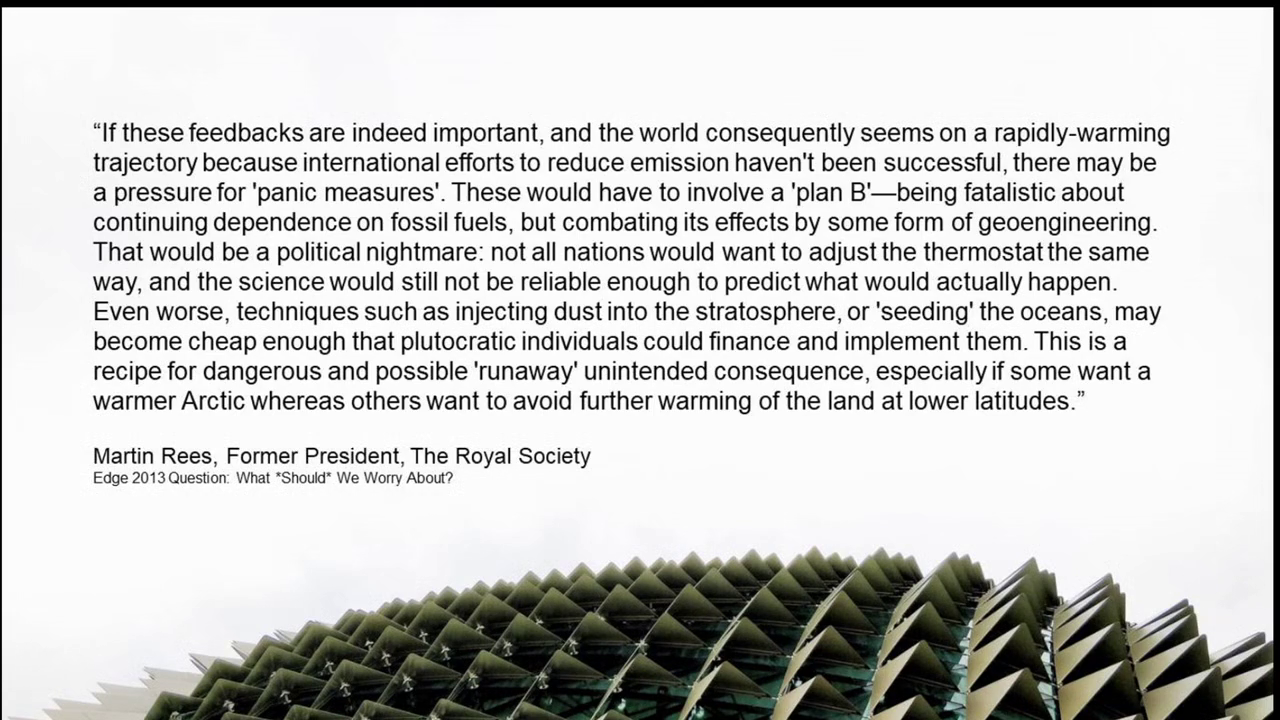
And here's, as I've mentioned, one of the big sources of concern from a former president of the Royal Society in the 2013 book. What should we worry about that you've seen reference to before in prior videos? But what he is talking about is that geoengineering from a governance standpoint would be a political nightmare. Not all nations would want to adjust the thermostat the same way, and the science would not be reliable to predict reliable enough to predict what would actually happen.
So techniques such as injecting dust into the stratosphere or seeding the oceans with iron may become cheap enough that plutocratic individuals could finance and implement them on their own. This is a recipe for dangerous and possibly runaway intended consequences, especially if some want to warmer arctic, whereas others want to avoid further warming of the land at lower latitudes. So a very large governance issue characterizing a number of these options.
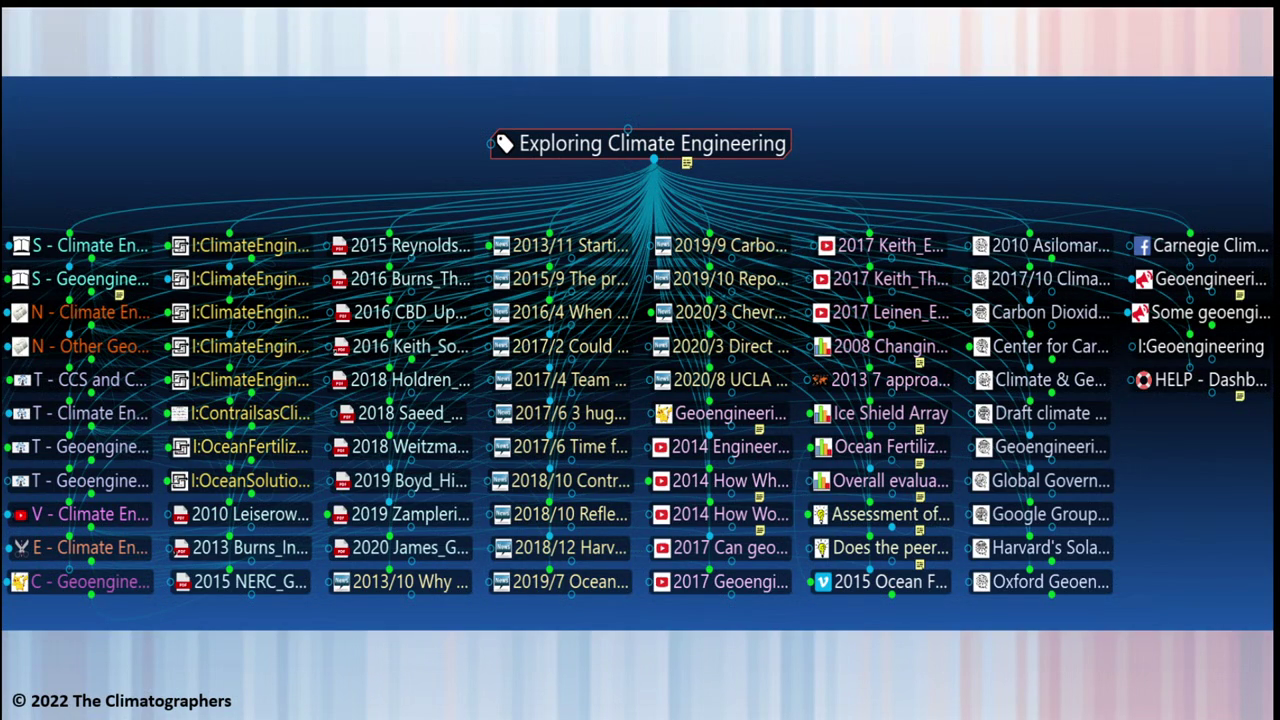
You can dig into many of these options and the larger literature around climate engineering through this dashboard, which pulls together some of the most relevant materials in the climate web, but you can
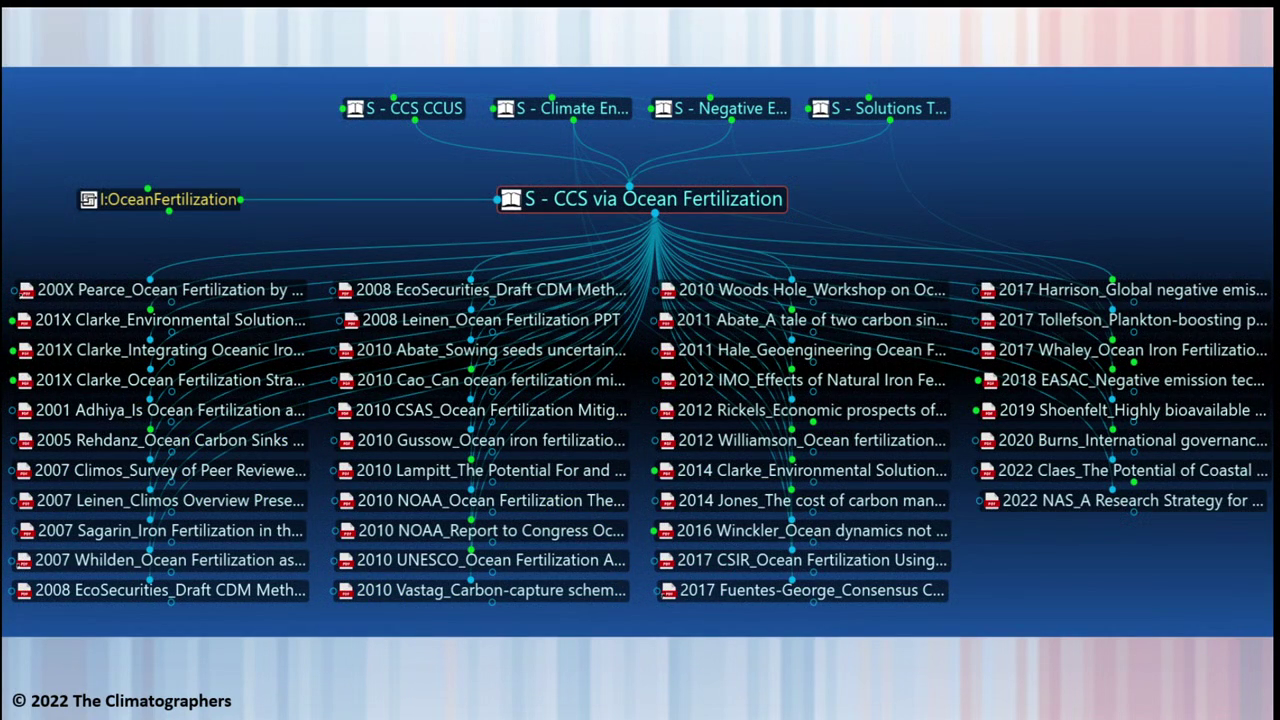
also dig much more deeply into individual technologies. In this
Case, carbon capture and storage via ocean fertilization. And that's
much of the literature around that topic, but just one of many climate engineering literature that you can access in the climate wind.

Next, we'll take a look at an interesting conversation around of all of the different ideas out there for solving climate change. What would really matter.