TCFD Scenario Planning
TCFD Scenario Planning
The Task Force on Climate Related Financial Disclosures (TCFD) has become a powerful proponent of corporate scenario planning for climate change. It began publishing a scenario planning methodology in 2017; a good deal of guidance has been issued since then. We cover it in this chapter because it is the best developed climate scenario planning methodology that we have found.
Most of the information in this Guidebook will be relevant to anyone undertaking the TCFD scenario planning methodology. However, the TCFD methodology has its own rules, guidance, and supporting materials. The TCFD scenario planning process leaves many of the specifics of corporate climate scenario development and assessment up to companies. Generally speaking, though, the TCFD process has a specific goal and is quite quantitative in its approach to scenario planning.
TCFD scenario planning is primarily structured around the idea of understanding and assessing the business risks and opportunities associated with a societal transition to a 2oC-conforming world. There is a fundamental risk management issue associated with the choice of a 2oC transition as the only or primary scenario used by companies in anticipating climate risks and opportunities. Right now, for example, most experts consider 3-5oC scenarios as more likely than a 2oC scenario. There also is increasing discussion around more draconian 1.5oC scenarios. So from a risk assessment and risk management perspective, historically the primary driver of scenario planning, the focus on a 2oC transition is notable.
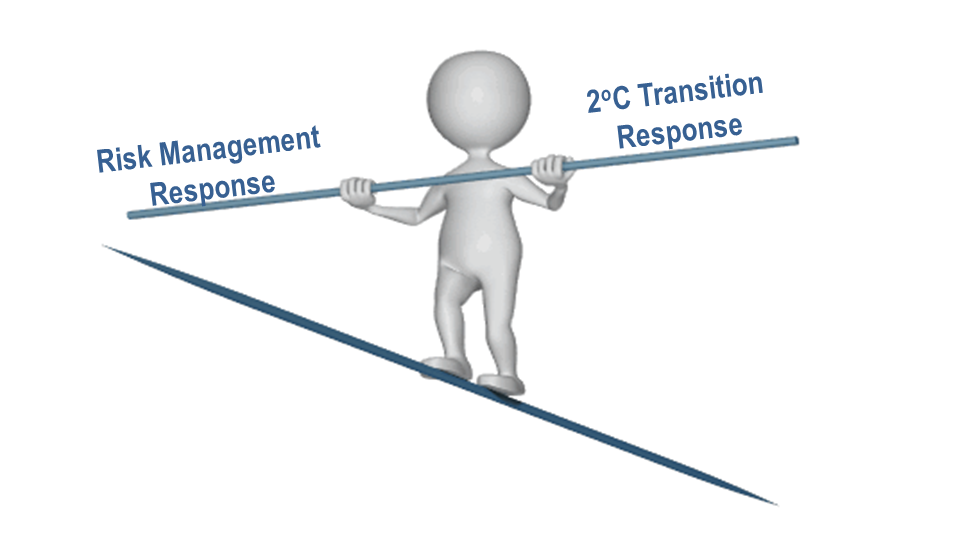
A key idea behind the 2oC scenario focused on by the TCFD methodology is to make the results of scenario planning comparable for investors to rely upon them in making climate risk-conscious investment decisions. This is a laudable but extremely challenging objective for any scenario planning exercise, for reasons that include:
- During the TCFD scenario planning process companies have to make a lot of decisions relevant to the specification of the scenarios themselves. Companies approaching scenario planning using different time frames, discount rates, and carbon prices, for examples, could arrive at entirely different conclusions regarding their level of climate risk and opportunity.
- While TCFD scenario planning encourages companies to arrive at assessments of how a 2oC global transition would influence corporate profitability and rates of return, among other variables, will the inevitable uncertainty surrounding such estimates justify specific corporate or investor decisions. There are so many variables and uncertainties that will determine future business outcomes, including the particularly challenging variable of climate change systemic risk, such estimates have to be seen as very uncertain, no matter how quantitative the analysis used to arrive at them.
Companies are under pressure by investors to adopt the TCFD methodology, and more and more companies are doing so. We'll learn much more over time regarding how companies implement the TCFD methodology, how they use the conclusions arrived at, and whether the results advance the competitiveness and resilience of those companies in the face of climate change outcomes, both physical and regulatory.
To support companies choosing the TCFD path, this Guidebook walk you through the TCFD scenario planning methodology and the growing library of materials and guidance specific to the TCFD methodology.
As you can see at left two thoughts branch off from this page. The first takes you right into the six-step TCFD process, the other organizes TCFD background materials that may be useful to you as you work through the process. As with the rest of the Guidebook, only subscribers to the advanced content of the Guidebook will see all of the information referred to in the pages below.