C4
The C4 model (Context, Container, Component, Code) is a lightweight, pragmatic approach to describing and communicating software architecture. It was created by Simon Brown to bridge the gap between high-level “boxes and lines” sketches and low-level implementation details.
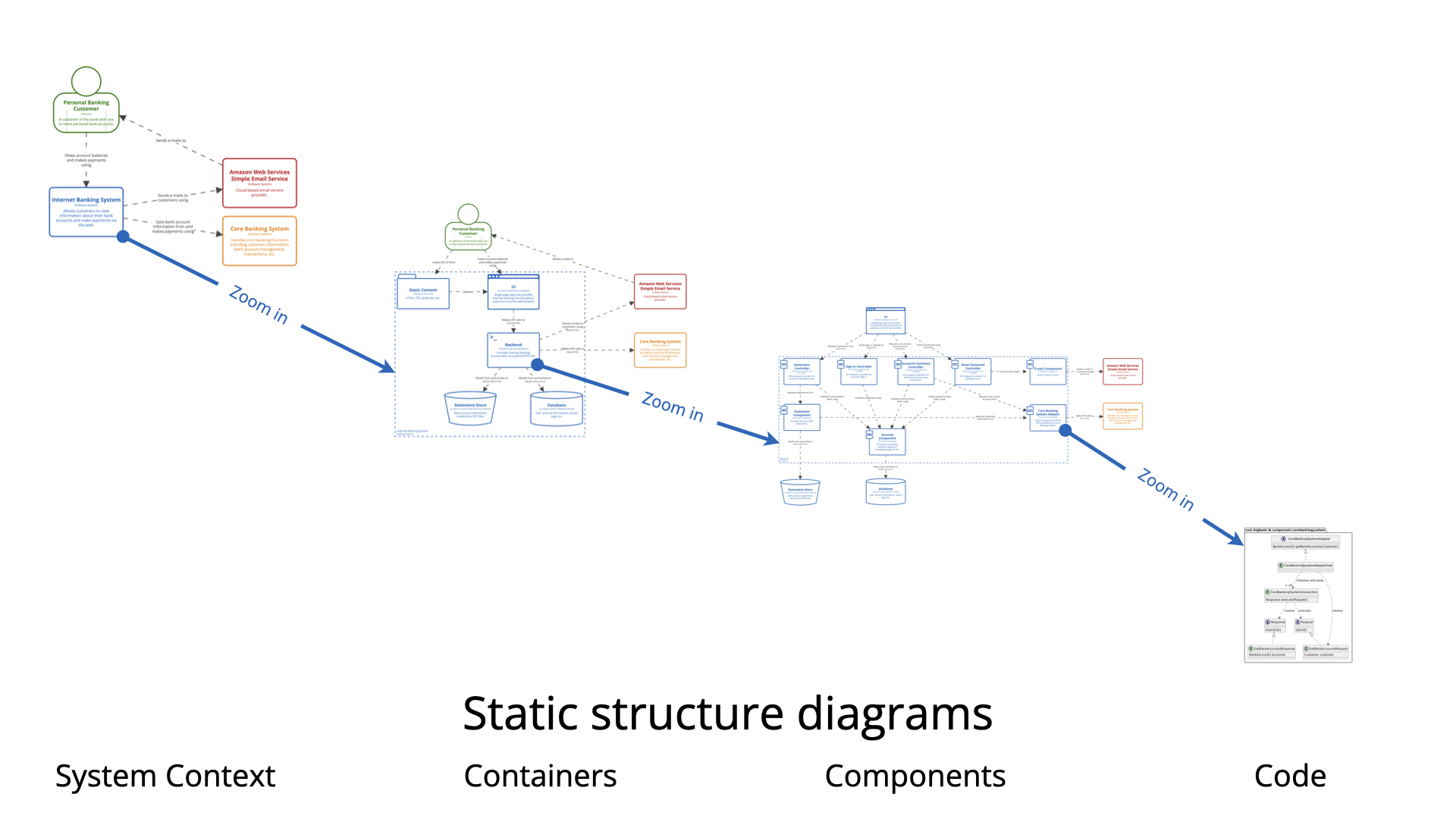
 |  |  |  |
|---|---|---|---|
| 1. System context diagram | 2. Container diagram | 3. Component diagram | 4. Code diagram |
Purpose
- Provide a shared vocabulary for diagrams
- Help teams reason about structure, boundaries, and responsibilities
- Enable incremental detail: start with big picture, then zoom in only where needed
- Support living documentation that matches the actual system
Core ideas
- Use 4 hierarchical views:
- System Context: how the system fits into its environment (users, external systems)
- Container: high-level technology building blocks (apps, services, databases, message buses, etc.) and how they communicate
- Component: main logical components inside a container and their interactions
- Code: lowest level, often UML or auto-generated diagrams at class/interface level when necessary
- Maintain consistency of abstractions across diagrams (same names, same responsibilities)
- Focus on people and use cases: show how software supports users and other systems
- Encourage text + diagrams: short descriptions, responsibilities, and tech choices next to each element
Benefits
- Makes architecture understandable in minutes for newcomers
- Works well with modern distributed systems and microservices
- Tool-agnostic: can be drawn on whiteboards or with diagramming tools
- Scales from conceptual overviews to detailed technical views without changing notation
- Provides essentially pre-defined starting points for models, improving standardization