2. 7 Cooperative Principles
Rochdale Pioneers came up with this after a failed attempt at Cooperation before.
From Lancaster, England
7 Cooperative Principles
- open membership
- democratic member control
- member economic participation
- autonomy & independence
- education, training, & information
- cooperation between cooperatives
- concern for the community
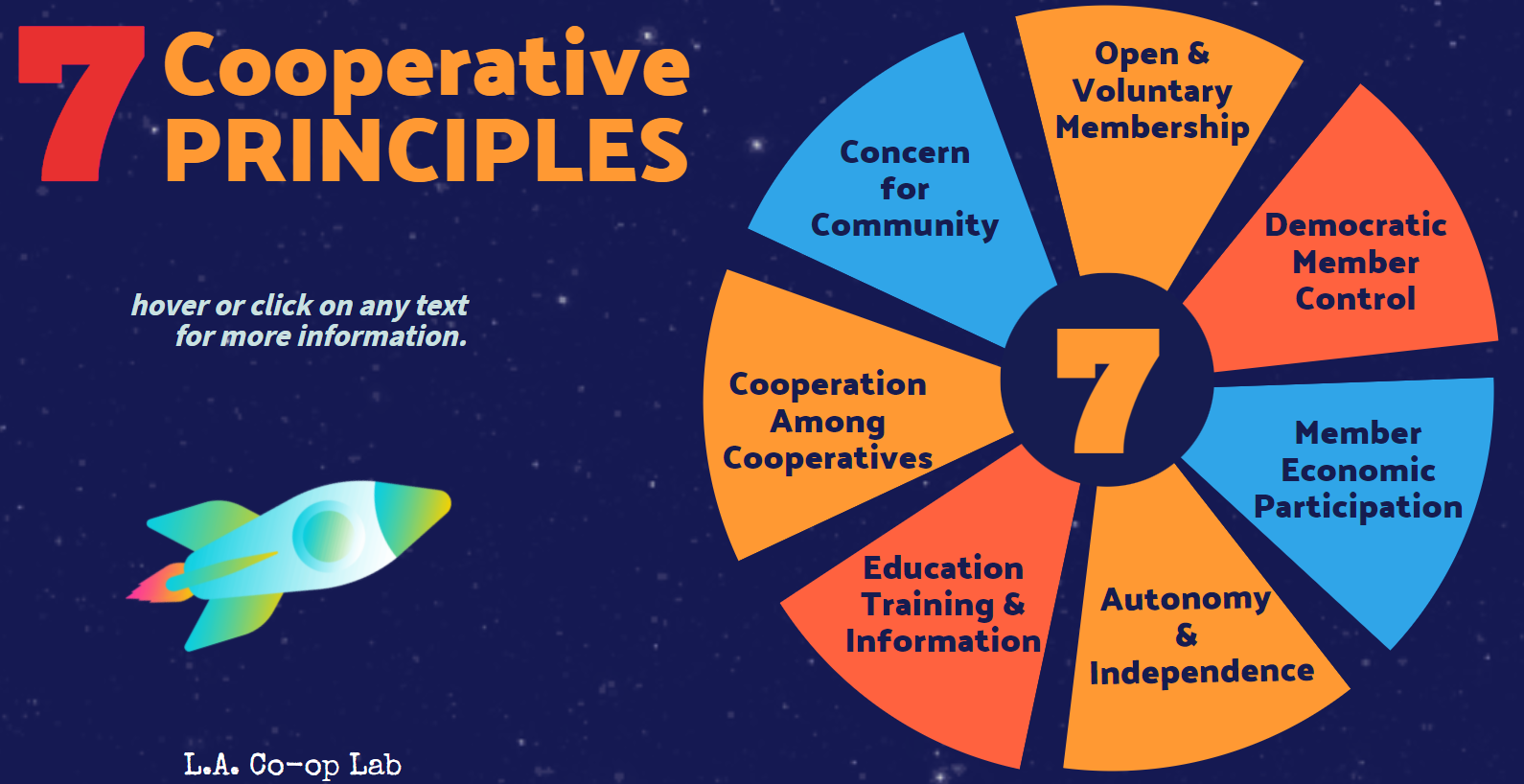
7 Cooperative Principles
Created to advance economic survival through mutual aid over 175 years ago, these 7 core principles continue to guide all kinds of cooperatives around the world today.
- Open and Voluntary Membership
Cooperatives are voluntary and open to anyone who is able to use their services and is willing to accept the responsibilities of membership, without gender, social, racial political, or religious discrimination.
- Democratic Member Control
Cooperatives are democratic organizations controlled by their members who actively participate in setting policies and making decisions on the basis of one member, one vote.
- Member Economic Participation
Cooperative members contribute equitably to the capital of their cooperative, which they democratically control. At least part of that capital is usually the common property of the cooperative.
- Autonomy & Independence
Cooperatives are autonomous, self-help organizations controlled by their members and ensure that agreements and relationships with other groups ensure democratic control by the co-op members and maintain co-op autonomy.
- Education, Training, & Information
Cooperatives provide education and training for their members and associates so that they can contribute meaningfully to the development of their cooperatives, and also inform the general public about cooperation.
- Cooperation Among Cooperatives
Cooperatives serve their members most effectively and strengthen the cooperative movement by working together and supporting each other through local, national, and international organization.
- Concern for Community
By focusing on the needs of their members, cooperatives also work for the sustainable development of their communities.