Sanctuary city
Whether or not the U.S. Constitution affords local governments with jurisdiction to detain illegal immigrants for deportation, is a longstanding dispute, vigorously debated since the Alien Act of 1798.[65]
A sanctuary city is a municipality that limits or denies its cooperation with the national government in enforcing immigration law.
Proponents of sanctuary cities cite motives such as reducing the fear of persons who illegally immigrated from deportation, separation of immigrant families, reporting crimes, using health and social services, and enrolling their children into a school.
Opponents of sanctuary cities argue that they undermine the rule of law by not cooperating with federal immigration authorities. They also highlight concerns about public safety, pointing to cases where a person involved in violent crimes was released instead of being handed over to proper authorities. Critics claim that sanctuary cities act as magnets for illegal immigration, attracting more people to enter unlawfully. They also argue that these cities place a strain on local resources, as persons which have illegally immigrated may access public services like healthcare, housing, and education.
Some studies on the relationship between sanctuary status and crime have found that sanctuary policies either have no effect on crime or that sanctuary cities have lower crime rates and stronger economies than comparable non-sanctuary cities. In 2016 The Washington Post reported that in the United States "decades of research actually shows that immigrants – whether legal or illegal – tend to have lower crime rates".[1][2] Similarly, a 2017 report by the Center for American Progress concluded that "statistical analysis illustrates that across a range of social and economic indicators, sanctuary counties perform better than comparable nonsanctuary counties."[3] A 2017 review in Sociology Compass concluded that "[t]he few empirical studies that exist illustrate a 'null' or negative relationship between these policies and crime."[4]
Sanctuary city policies substantially reduce deportations of illegal immigrants who do not have criminal records, but have no impact on those who have violent criminal records.[5] Opponents of sanctuary cities argue that cities should assist the national government in enforcing immigration law. Supporters of sanctuary cities argue that enforcement of federal law is not the duty of localities, and that law enforcement resources can be prioritized towards better purposes.[6]
European cities have drawn inspiration from the sanctuary movement in American cities. However, the term "sanctuary city" in Europe generally refers to cities committed to supporting legal refugees and asylum seekers, not illegal immigration.[7][8] Over 80 towns and cities across the United Kingdom adopt policies aimed at fostering community connections, raising awareness, and building cultural ties to support these groups. Glasgow and Swansea have become noted sanctuary cities.[9][10][11]
United States
See also: Illegal immigration to the United States

Sanctuary cities in the United States*[needs ^update]
State has legislation in place that establishes a statewide sanctuary for illegal immigration.
County or county equivalent either contains a municipality that is a sanctuary for illegal immigration, or is one itself
All county jails in the state do not honor ICE detainers
Alongside statewide legislation or policies establishing sanctuary for illegal immigration, the county contains a municipality that has policy or has taken action to further provide sanctuary to illegal immigration.
*Map is based on data published by ICE in a February 2017 report outlining jurisdictions that have declined ICE detainers.
In the United States, municipal policies include prohibiting police or city employees from questioning people about their immigration status and refusing requests by national immigration authorities to detain people beyond their release date, if they were jailed for breaking local law.[12] Such policies can be set expressly in law (de jure) or observed in practice (de facto), but the designation "sanctuary city" does not have a precise legal definition.[13][14][15]
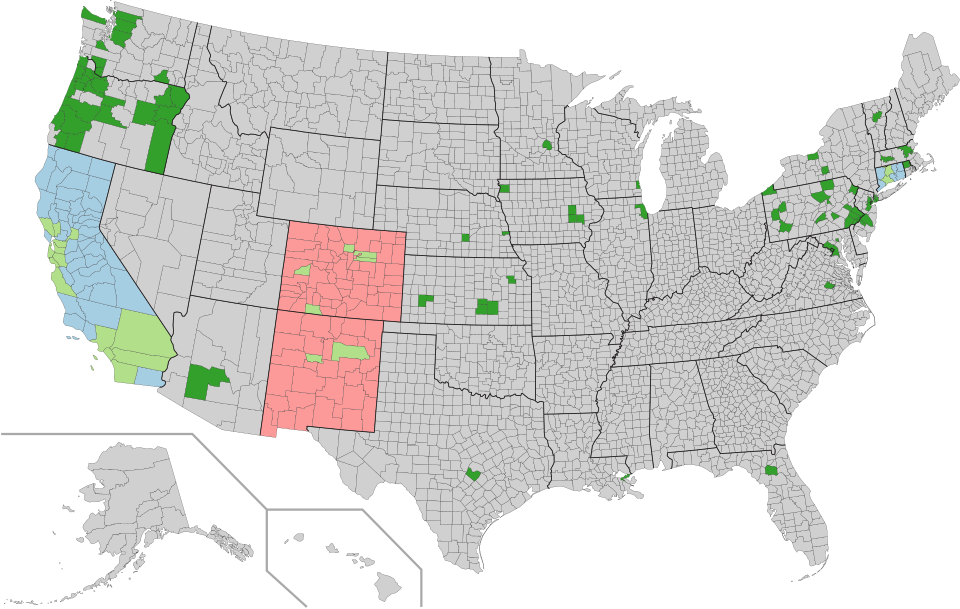
Sanctuary cities in the United States*[needs ^update]
State has legislation in place that establishes a statewide sanctuary for illegal immigration.
County or county equivalent either contains a municipality that is a sanctuary for illegal immigration, or is one itself
All county jails in the state do not honor ICE detainers
Alongside statewide legislation or policies establishing sanctuary for illegal immigration, the county contains a municipality that has policy or has taken action to further provide sanctuary to illegal immigration.
*Map is based on data published by ICE in a February 2017 report outlining jurisdictions that have declined ICE detainers.
Monday, January 19, 2026 05:04PM
See PDF for complete article and key to map.
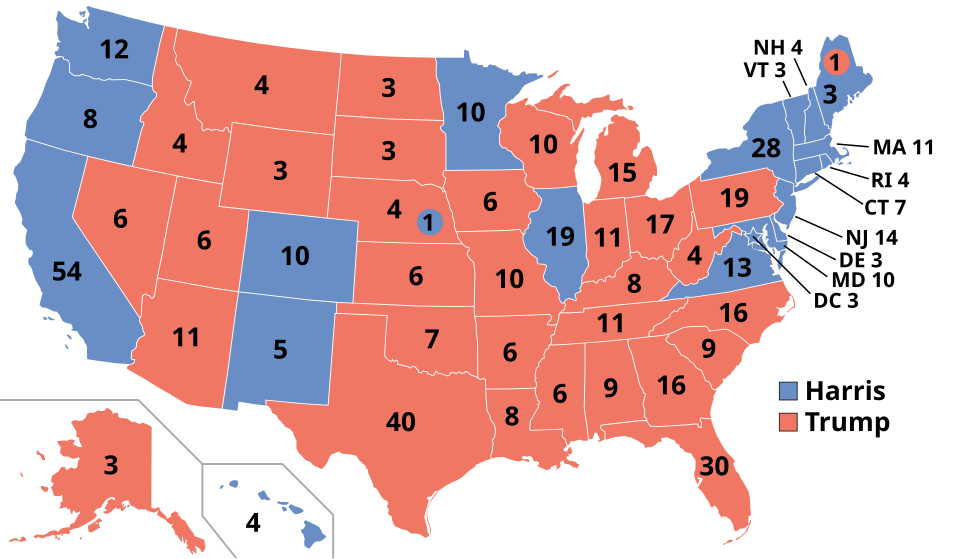
Pro-sanctuary states largely voted Democratic in the 2024 United States presidential election
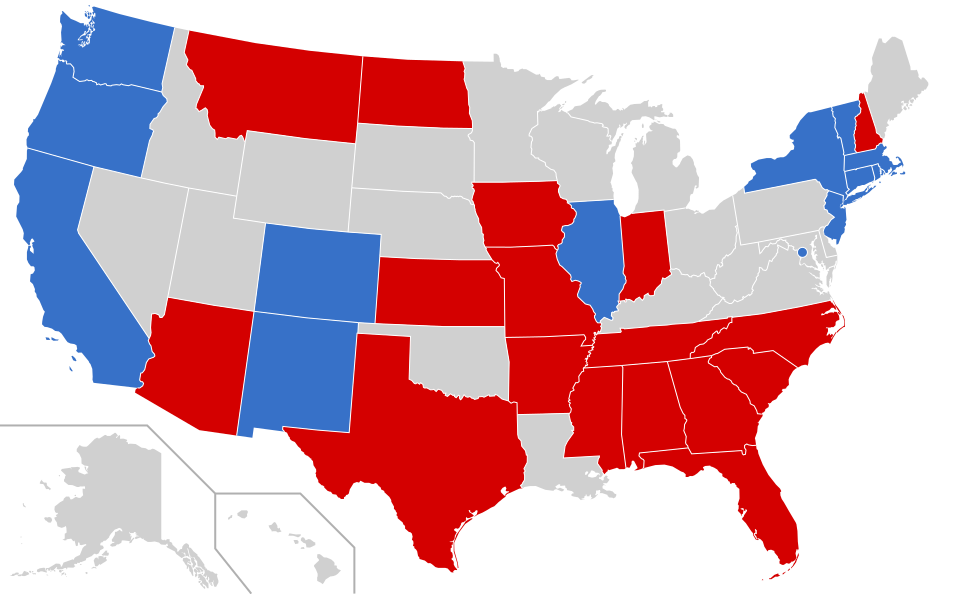
Pro-sanctuary states are in blue, states which have banned sanctuary cities are in red, and states in gray have no official policy.(Not True, they just don't want you to know!)rk.
Monday, January 19, 2026 05:19PM