Ur
Ur was a city in the region of Sumer, southern Mesopotamia, and its ruins lie in what is modern-day Tell el-Muqayyar, Iraq. According to biblical tradition, the city is named after the man who founded the first settlement there, Ur, though this has been challenged. The city is famous for its biblical associations and as an ancient trade center.
The city's other biblical link is to the patriarch Abraham who left Ur to settle in the land of Canaan. This claim has also been contested by scholars who believe that Abraham's home was further north in Mesopotamia in a place called Ura, near the city of Harran, and that the writers of the biblical narrative in the Book of Genesis confused the two.
Whatever its biblical connections may have been, Ur was a significant port city on the Persian Gulf which began, most likely, as a small village in the Ubaid Period of Mesopotamian history (5000-4100 BCE) and was an established city by 3800 BCE continually inhabited until 450 BCE. Ur's biblical associations have made it famous in the modern-day but it was a significant urban center long before the biblical narratives were written and highly respected in its time.
The Early Period & Excavation
The site became famous in 1922 when Sir Leonard Wooley excavated the ruins and discovered what he called The Great Death Pit (an elaborate grave complex), the Royal Tombs, and, more significantly to him, claimed to have found evidence of the Great Flood described in the Book of Genesis (this claim was later discredited but continues to find supporters). In its time, Ur was a city of enormous size, scope, and opulence which drew its vast wealth from its position on the Persian Gulf and the trade this allowed with countries as far away as India. The present site of the ruins of Ur are much further inland than they were at the time when the city flourished owing to silting of the Tigris and Euphrates rivers.
From the beginning, Ur was an important trade center owing to its location at a pivotal point where the Tigris and Euphrates run into the Persian Gulf.
From the beginning, Ur was an important trade center owing to its location at a pivotal point where the Tigris and Euphrates run into the Persian Gulf. Archaeological excavations have substantiated that, early on, Ur possessed great wealth and the citizens enjoyed a level of comfort unknown in other Mesopotamian cities.
As with other great urban complexes in the region, the city began as a small village which was most likely led by a priest or priest-king. The king of the First Dynasty, Mesannepadda, is only known through the Sumerian King List and from inscriptions on artifacts found in the graves of Ur.
Advertisement
The Second Dynasty is known to have had four kings but about them, their accomplishments, or the history during this time, nothing is known. The early Mesopotamian writers did not consider it worthwhile to record the deeds of mortals and preferred to link human achievements to the work and will of the gods. Ancient hero-kings such as Gilgamesh of Uruk or those who performed amazing feats such as Etana were worthy of record but mortal kings were not afforded that same level of concern regarding the details of their reigns.
The Hero-Kings of Akkad
This changed with the rise of Sargon of Akkad (r. 2334-2279 BCE) and his Akkadian Empire which ruled over the diverse regions of Mesopotamia between 2334-2083 BCE. Sargon the Great claimed to have been born of a priestess and a god, floated down the river in a basket of bulrushes to be found by the servant of the king of the city of Lagash, and rose from obscurity – through the will of the goddess Inanna – to rule all of Mesopotamia. The inscriptions he left dare those who follow him to do the deeds he did if they hope to call themselves a king and his life was worthy of the efforts of the scribes of the region for centuries after his death.
[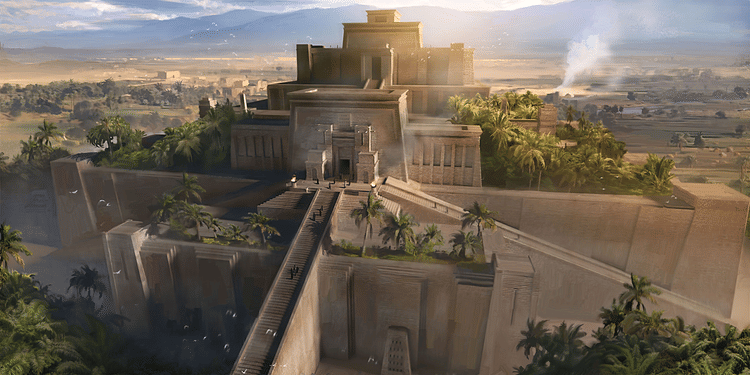
Ziggurat of Ur (Artist's Impression)
Mohawk Games (Copyright)](https://www.worldhistory.org/image/12890/ziggurat-of-ur-artists-impression/ "Ziggurat of Ur (Artist's Impression)")His grandson, Naram-Sin (r. 2261-2224 BCE), learning well the lessons of the importance of personal propaganda, claimed he had gone further than his grandfather and had himself deified during his reign. In doing so, he provided a model for those kings who would follow him. Sargon the Great and Naram-Sin were the most powerful rulers of the Akkadian Empire and, once it fell, their names became legend and their deeds worth emulating.
At Ur, the heroes of Akkad were most closely emulated by the rulers of the Third Dynasty. This period in the history of Sumer is known as the Ur III Period (2047-1750 BCE) and was the age in which the city of Ur reached its height. The great ziggurat of Ur, which can still be visited in modern times, dates from this period as do most of the ruins of the city and the cuneiform tablets discovered there.
Advertisement
Two of the greatest kings of the Third Dynasty were Ur-Nammu (r. 2047-2030 BCE) and his son Shulgi of Ur (r. 2029-1982 BCE) who created an urban community devoted to cultural progress and excellence and, in doing so, gave birth to what is known as the Sumerian Renaissance.
[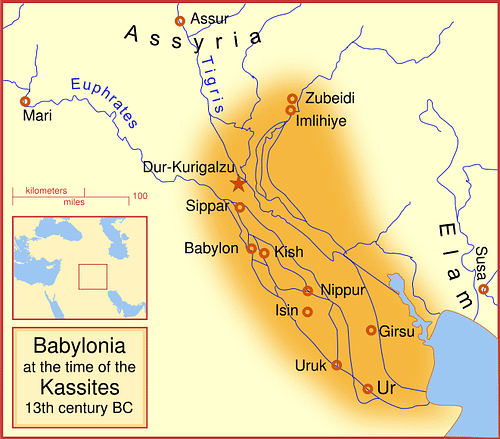
Babylon at the time of the Kassites
MapMaster (CC BY-SA)](https://www.worldhistory.org/image/75/babylon-at-the-time-of-the-kassites/ "Babylon at the time of the Kassites")
Ur-Nammu & Shulgi: The Sumerian Renaissance
Ur-Nammu wrote down the first codified law system of the land, the Code of Ur-Nammu, some three hundred years before Hammurabi of Babylon would write his, and governed his realm in accordance with a patriarchal hierarchy in which he was the father guiding his children to prosperity and continued health. Under Ur-Nammu the great ziggurat was built and trade flourished. The arts and technology for which the Sumerians are most famous were all encouraged in Ur during this time.
The scholar Paul Kriwaczek observes that, in order for such a patriarchal system of government to succeed, the people must believe that their ruler is greater, more powerful, than they are in the same way that children regard their father. To this end, it seems, Ur-Nammu presented himself to his subjects in line with the hero-kings Sargon and Naram-Sin in order to encourage the populace to follow him in the pursuit of excellence. He was killed in battle with the Gutians and immortalized in the poem The Death of Ur-Nammu which imagines him in the underworld realm of Ereshkigal, Queen of the Dead.