Cognitive Complexity Era
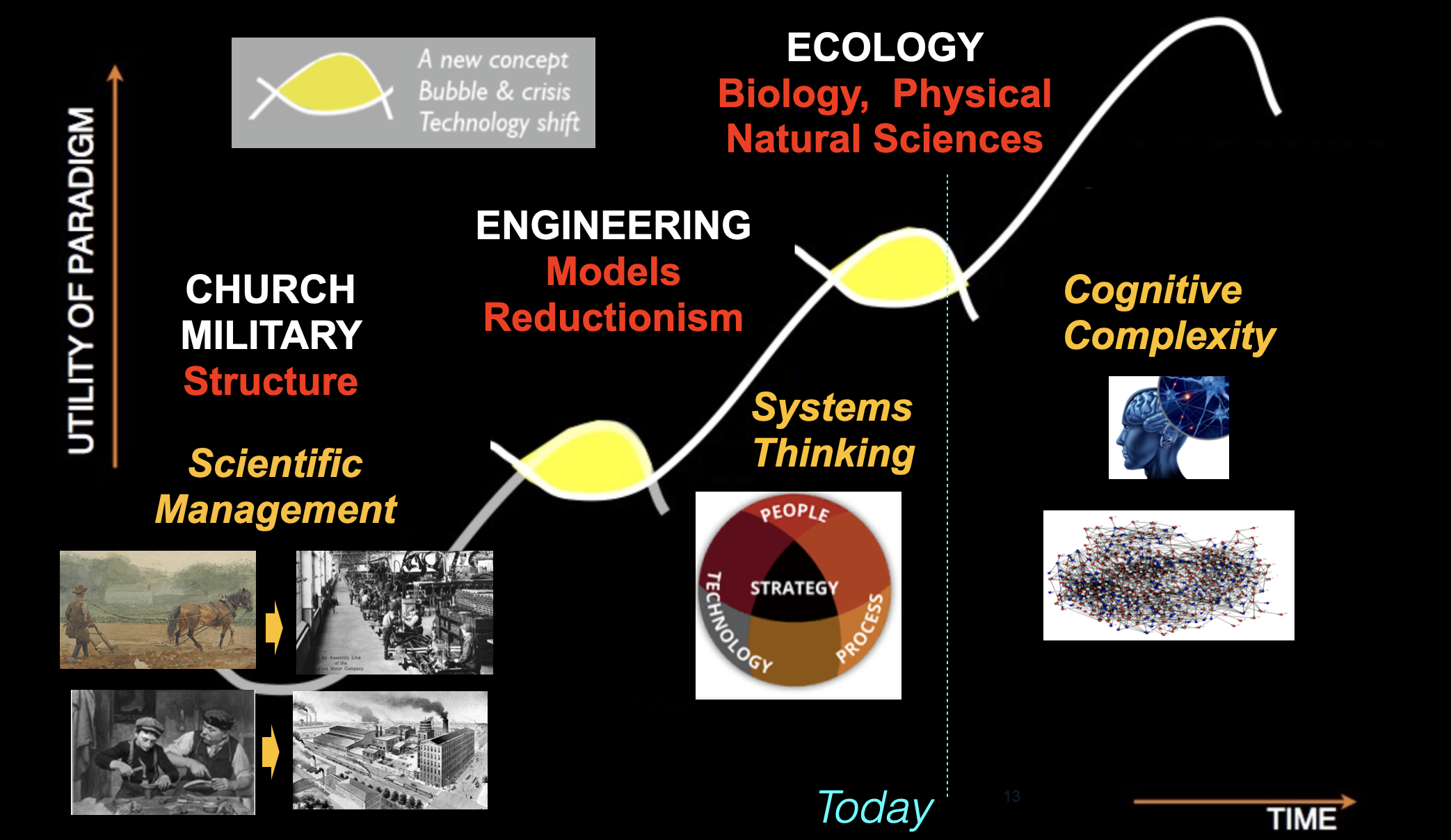
- At the beginning of the 21st century, we have reached another Yellow Bubble
- An Engineering paradigm struggles to remain relevant in an era of increasing complexity
- Systems Thinking and Reductionism are unable to solve current complex problems
- The coronavirus pandemic demonstrates “faster, better, cheaper”global supply chains are fabulous during normal times
- They are brittle and fail disastrously under unexpected stress
Cognitive complexity is often associated with critical thinking, problem-solving skills, adaptability, and open-mindedness. Individuals with high cognitive complexity can better handle ambiguity, uncertainty, and change, as they are more capable of processing complex and conflicting information.
Cognitive complexity encompasses several aspects:
- Differentiation: It refers to an individual's ability to distinguish and recognize multiple dimensions or perspectives within a situation or problem. People with high cognitive complexity can see nuance, subtle differences, and shades of gray in various situations, rather than relying on simple categorizations or black-and-white thinking.
- Integration: It involves the capacity to synthesize and integrate information from various sources and perspectives into a coherent whole. Individuals with high cognitive complexity can combine different viewpoints and consider multiple factors when making decisions or solving problems.
- Abstraction: It refers to the ability to think in abstract terms and concepts. People with high cognitive complexity can reason and generalize beyond concrete examples, allowing them to apply knowledge and insights to different contexts.