Gartner Research Hype Cycle
The Gartner Hype Cycle is a graphical representation and methodology used by the research and advisory firm Gartner to track the adoption and maturity of emerging technologies, concepts, and trends over time. It was first introduced by Gartner in the mid-1990s and has since become a widely recognized tool in the technology and business sectors.
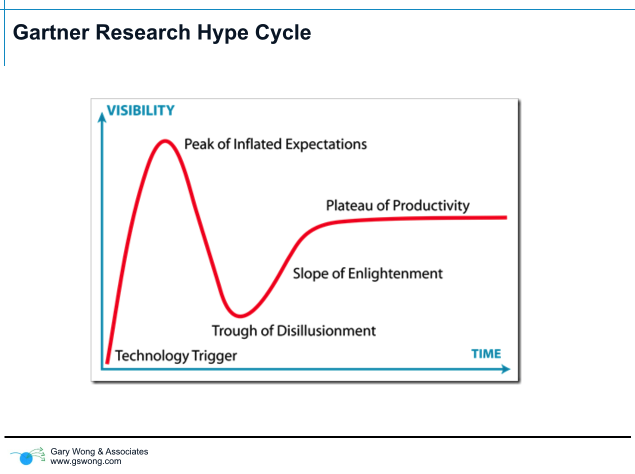
The Gartner Hype Cycle consists of five phases that represent the typical evolution of a technology or trend:
- Innovation Trigger: This is the starting point of the Hype Cycle, where a new technology or concept is introduced to the market. It may be in the early stages of development and may have limited practical applications. There is often a lot of excitement and buzz surrounding the innovation.
- Peak of Inflated Expectations: In this phase, expectations and enthusiasm for the technology reach their peak. There is a tendency to overestimate the potential benefits and underestimate the challenges and limitations of the innovation. Hype and unrealistic expectations are common during this stage.
- Trough of Disillusionment: As the limitations and challenges of the technology become more apparent, it enters the "Trough of Disillusionment." This phase is marked by disappointment and a decline in interest as some early adopters encounter difficulties or failures. Many technologies fail to live up to the initial hype during this stage.
- Slope of Enlightenment: After passing through the trough, technologies and trends begin to mature, and a better understanding of their practical applications and limitations emerges. During this phase, more realistic expectations are established, and successful use cases are identified.
- Plateau of Productivity: Finally, technologies that survive and thrive reach the "Plateau of Productivity." They become widely adopted, integrated into business processes, and generate significant value. The technology becomes part of the mainstream and contributes to tangible benefits for organizations.