Where is Torun?
AI GENERATED RESPONSE FROM BRAVE SEARCH ENGINE:
Toruń is a historic city located in north-central Poland, situated on the Vistula River within the Kuyavian-Pomeranian Voivodeship. It serves as one of the two capitals of the region, alongside Bydgoszcz, with which it forms a twin-city metropolitan area. Geographically, it lies approximately 30 miles southeast of Bydgoszcz and is positioned roughly halfway between the Polish capital, Warsaw, and the major port city of Gdańsk.
Key location details include:
- Coordinates: 53.013790° N, 18.598444° E.
- Administrative Status: Seat of the Kuyavian–Pomeranian Voivodeship since 1999.
- Historical Context: Founded in the 8th century and expanded by the Teutonic Knights in the 13th century, its well-preserved medieval center is a UNESCO World Heritage Site.
AI-generated answer. Please verify critical facts.
Friday, April 24, 2026 04:34PM
WHERE IS torun? - Brave Search
What is the history of Toruń's gingerbread?
The History of Toruń's Gingerbread
The history of Toruń's gingerbread, known as pierniki toruńskie, is deeply intertwined with the city's identity and stretches back to the Middle Ages. Its development was fueled by Toruń's strategic location on the Hanseatic trade route, which provided access to rare and expensive spices like cinnamon, ginger, and cloves, essential ingredients for the confection.
Origins and Early Development
- The earliest written mention of Toruń's gingerbread dates back to 1380, referencing a baker named Niclos Czan.
- The craft likely began in the 13th century, brought by German settlers. The city's access to high-quality wheat, local honey, and imported spices created the perfect conditions for its development.
- For centuries, the recipes were closely guarded secrets. The first known printed recipe, from 1725, was actually found in a medical manual, Compendium medicum auctum, as gingerbread was also valued for its digestive properties.
Golden Age and Artistic Craftsmanship
- The 17th and 18th centuries marked the golden age of Toruń's gingerbread. It evolved from a simple treat into an artistic luxury item.
- Elaborate, hand-carved wooden molds (many from the 17th and 18th centuries are preserved in museums) were used to create figural gingerbreads depicting kings, saints, and historical scenes.
- These ornate gingerbreads were often gilded and hand-painted, making them prized gifts for royalty and dignitaries. The city famously gifted a massive gingerbread, measuring about 2 meters long, to Empress Catherine the Great in 1778.
Industrialization and Modern Legacy
- The first modern factory for mass-producing gingerbread was established by Jan Weese in 1763. This factory's legacy continues today as the "Kopernik" SA, the world's oldest gingerbread factory still in operation.
- By the 19th century, Toruń had become the largest center for industrial gingerbread production in Polish lands, with factories like Weese's and Hermann Thomas's.
- Today, gingerbread remains a powerful symbol of the city. Museums like the Living Museum of Gingerbread and the District Museum's Gingerbread Museum allow visitors to learn the history and even bake their own. The most famous variety, the "katarzynka," is named after St. Catherine and is a beloved souvenir.

Which famous scientists were born in Toruń?
The most famous scientist born in Toruń is Nicolaus Copernicus (Mikołaj Kopernik). Born on February 19, 1473, he was a Renaissance astronomer and mathematician who formulated the heliocentric model of the universe, which placed the Sun, rather than the Earth, at the center of the solar system. This revolutionary theory fundamentally changed our understanding of astronomy and is considered a pivotal moment in the history of science.
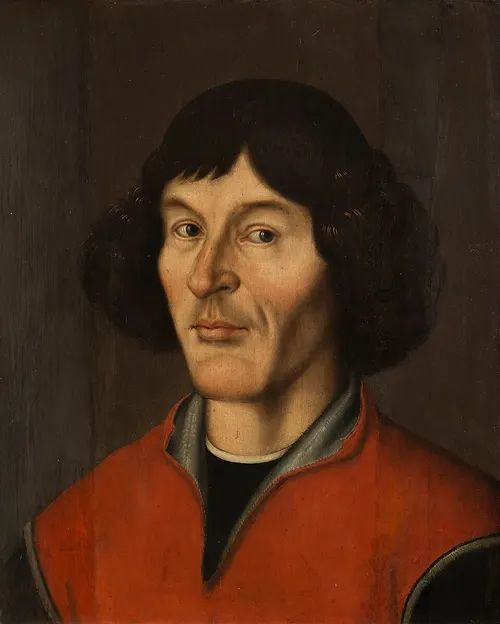
Nicolaus Copernicus (19 February 1473 – 24 May 1543)
Which famous scientists were born in Toruń? - Ask Brave
Friday, April 24, 2026 04:39PM