INAUGURATION SPEECH
Sunday, November 16, 2025 07:30PM
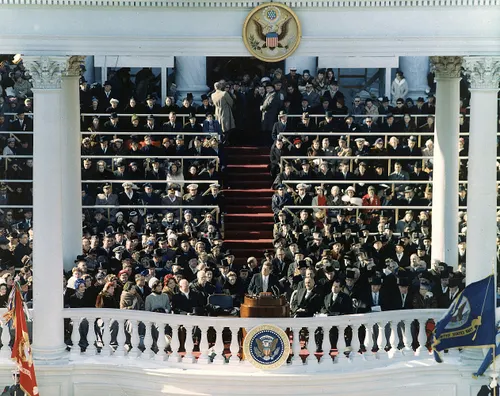
JANUARY 20, 1961
AI GENERATED:
On January 20, 1961, John F. Kennedy was sworn in as the thirty-fifth President of the United States, delivering a fourteen-minute inaugural address that has since become one of the most iconic speeches in American history. The ceremony took place on the steps of the U.S. Capitol before a large crowd, with Kennedy delivering his speech in freezing temperatures without a hat or overcoat. He began by stating, "We observe today not a victory of party but a celebration of freedom—symbolizing an end as well as a beginning—signifying renewal as well as change".
Kennedy emphasized a generational shift, declaring that "the torch has been passed to a new generation of Americans—born in this century, tempered by war, disciplined by a hard and bitter peace, proud of our ancient heritage—and unwilling to witness or permit the slow undoing of those human rights to which this nation has always been committed, and to which we are committed today at home and around the world". He announced a global commitment to liberty, stating, "Let every nation know, whether it wishes us well or ill, that we shall pay any price, bear any burden, meet any hardship, support any friend, oppose any foe to assure the survival and the success of liberty".
The speech is most famously remembered for the line, "My fellow Americans: ask not what your country can do for you—ask what you can do for your country," which called on citizens to embrace public service and civic duty. This sentiment was part of a broader vision that framed the United States as a leader in a "long twilight struggle" against the common enemies of man: tyranny, poverty, disease, and war itself. Kennedy also urged cooperation with allies, pledged support for newly independent nations, and called for peace with adversaries, advocating for negotiations based on strength and sincerity.
Less than six weeks after his inauguration, on March 1, 1961, Kennedy issued an executive order establishing the Peace Corps as a pilot program within the Department of State, fulfilling a vision of American volunteers aiding developing nations. The speech's themes of responsibility, sacrifice, and global leadership resonated deeply, and its legacy endures as a defining moment in Cold War rhetoric and American civic ideals.