Tuberculosis and Death
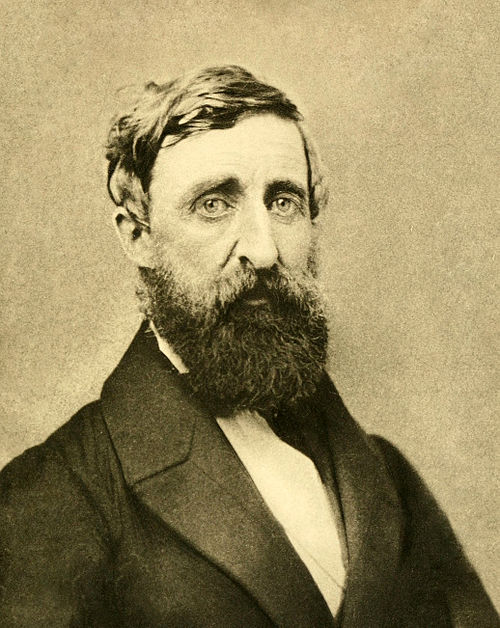
Thoreau in his second and final photographic sitting, August 1861.
Thoreau contracted tuberculosis in 1835 and suffered from it sporadically afterwards. In 1860, following a late-night excursion to count the rings of tree stumps during a rainstorm, he became ill with bronchitis.[74][75][76] His health declined, with brief periods of remission, and he eventually became bedridden. Recognizing the terminal nature of his disease, Thoreau spent his last years revising and editing his unpublished works, particularly The Maine Woods and Excursions, and petitioning publishers to print revised editions of A Week and Walden. He wrote letters and journal entries until he became too weak to continue. His friends were alarmed at his diminished appearance and were fascinated by his tranquil acceptance of death. When he was asked him in his last weeks if he had made his peace with God, Thoreau responded, "I did not know we had ever quarreled."[77]
 Grave of Thoreau at Sleepy Hollow Cemetery in Concord
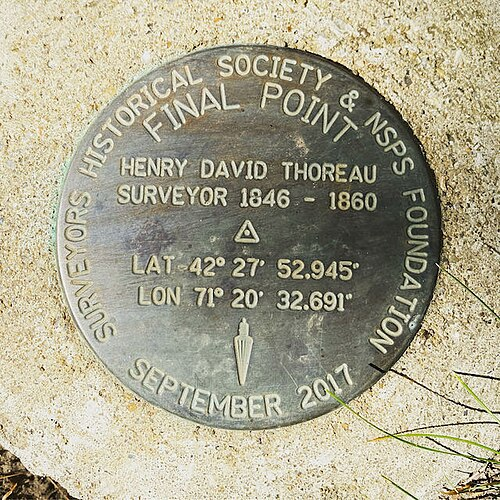
 Geodetic Marker at Thoreau's gravesite
Aware he was dying, Thoreau's last words were "Now comes good sailing", followed by two lone words, "moose" and "Indian".[78]
He died on May 6, 1862, at age 44. Amos Bronson Alcott planned the service and read selections from Thoreau's works, and Channing presented a hymn.[79]
Emerson wrote the eulogy spoken at the funeral.[80] Thoreau was buried in the Dunbar family plot; his remains and those of members of his immediate family were eventually moved to Sleepy Hollow Cemetery in Concord, Massachusetts.
downloaded:
Wednesday, September 10, 2025 10:11AM