Olive Leaf Studies
Traditional Uses, Phytochemistry, and Pharmacology of *Olea europaea* (Olive)
The total phenolic content and antioxidant activities of olive leaf extracts were determined.
Chemical analysis, biological and therapeutic activities of Olea europaea L. extracts.
Phenolic compounds and antimicrobial activity of olive (Olea europaea L. Cv. Cobrançosa) leaves.
Olive leaf has a wide range of therapeutic applications.
Insights into the antiviral activity of standardized olive leaves extract against SARS-CoV-2.
Human absorption and metabolism of oleuropein and hydroxytyrosol ingested as olive (Olea europaea L.) leaf extract OLE effectively delivers oleuropein and hydroxytrosol metabolites to plasma in humans.
Early Research Suggests:
- Enhance pathogen defense via these pathways:
- Stimulation of phagocytosis of bacteria of all types
- Enhance penetration of bacterial wall
- Interference with amino acids that are necessary for bacterial and viral growth and replication
- In one of the studies, there was an attack on surface glycol-protein subunit of the virus, preventing replication. Roxas M, & Jurenka, 2007
OLE hypothesis of action:
- Inhibition of gram-negative and positive bacteria, yeast, parasites
- Via inactivation of cellular enzymes inhibiting replication
- Direct attack on cell membrane causing leakage of intracellular chemicals, potassium phosphorus and glutamate (Alt. med rev, 2009)
- The polysaccharides and sugars in OLE have an antimicrobial effect.
- Stimulates macrophage activation Khan Y, Panchal S, Vyas N, et al, 2007
OLE Bioactives and metabolism – animal trials on Oleuropein and hydroxytyrosol
Animal trials polyphenols and their metabolites were absorbed, and excreted in plasma, the heart, kidney, testicles and blood brain barrier. Mohagheghi F, Bigdeli MR, Rasoulian B, 2011
De Bock M, Thorstensen EB, Derraik JGB 2013 suggests the phenolic compounds from OLE may be synergistic when in the same proportion as found in the natural leaf.
OLE bioactives and metabolism – Human trial
De Bock M, Thorstensen EB, Derraik JGB 2013
- Oleuropein and hydroxytyrosol was given in capsulate or liquid form
- Study of nine volunteers, 5 males, 4 females; ages between 42-50; they were randomized to receive either encapsulated or liquid OLE
- Plasma and urine samples taken at fixed intervals post-ingestion.
- Peak oleuropein concentrations higher and more rapid after liquid preparation than capsule
- Males demonstrated faster hydroxytryrosol absorption than women
- Both sexes displayed metabolites of both compounds to plasma
- It appears to demonstrate systemic bacterial effects because it spreads everywhere in plasma.
Phytoanticipin Effects of OLE
- Oleuropein and ligstroside phytoanticipin action . Phytoanticipin is a chemical that anticipates when to bind together, in this case, when oleuropein and ligstroside should bind together to resist disease. This only happens after exposure to a microbial, to make chemical that’s more effective as an antimicrobial.
- Phytoanticipins may serve as the basis of a resistance mechanism
- “phytoanticipins are low molecular weight, antimicrobial compounds that are present in plants before challenge by microorganisms or are produced after infection solely from pre-existing constituents.” Two Classes of Plant Antibiotics: Phytoalexins versus "Phytoanticipins"
AGEs
Evaluation of an olive leaf extract as a natural source of antiglycative compounds.
Aging
Alzheimer’s
- An oleuropein rich-olive (Olea europaea L.) leaf extract reduces β-amyloid and tau proteotoxicity.
- Oleuropein-rich olive leaf extract attenuates neuroinflammation in the Alzheimer's disease model.
Antifungal
In vitro antifungal activity of olive leaf extracts loaded in chitosan nanoparticles.
Antimicrobial
Summary of anti-microbial studies from 1980 to present
- Reasonable amount of scientific evidence of anti-microbial, antiviral in vitro effects of OLE
- Paucity of evidence of anti-microbial, viral activity in vivo
- Some evidence of in vivo animal studies
- Small sample size in human in vivo – one controlled study
- Varying methodology in literature reviews
- Inconsistence of dose/standardization of OLE utilized
In Vitro Studies, Specificity
- Mycobacterium tuberculosis
- Salmonella typhi
- Vibrio parahaemolyticus
- Staphylococcus aureus (even penicillin-resistant strains)
- Klebsiella pneumonia
- Plasmodium falciparum
- Escherichia coli
- This study suggests the ability of olive leaf extract to reduce the biofilm formation and virulence factor production of P. aeruginosa.
- Olive leaf extract demonstrates antimicrobial activity against Campylobacter jejuni, Helicobacter pylori and Staphylococcus aureus[including meticillin-resistant S. aureus (MRSA).
- In vitro antimicrobial activity of olive leaves.
- Antimicrobial activity of Olea europaea Linné extracts and their applicability as natural food preservative agents.
- Olive leaf has broad spectrum antimicrobial activity
- Olive leaf extract demonstrates antimicrobial activity against Campylobacter jejuni, Helicobacter pylori and Staphylococcus aureus [including meticillin-resistant S. aureus (MRSA)].
Antiviral
In Vitro Viral Specificity:
- Epstein-Barr mononucleosis
- Hepatitis virus
- Rotavirus
- Respiratory syncytial virus
- Para-influenza type 3 virus
- Theoretical HIV
Summary of Hypothesis of Mechanism of action – antiviral
- May interfere with food chain of amino acids for viruses.
- The polyphenols down regulate cytokine storms and protect the mucosal tissue of the lungs.
- Contains virus by inactivating and preventing budding, shedding and assembly
- Penetrates the viral shell and prevents replication
- In some viruses (retro) neutralizes reverse transcriptase and protease
- Induces phagocytosis
- Anti-HIV activity of olive leaf extract (OLE) and modulation of host cell gene expression by HIV-1 infection and OLE treatment.
- Elderberry, Chondroitin, Glucosamine Sulfate and Olive Leaf have been found to block HIV replication.
- Olive Leaf contains compounds with anti-HIV activity
- Treatment with olive leaf extract reverses many of these HIV-1 infection-associated changes.
- Olive leaf extract exhibits antiviral activity against viral haemorrhagic septicaemia rhabdovirus (VHSV).
- Anti-influenza virus activity of the elenolic acid rich olive leaf ( Olea europaea L.) extract.
Cancer
- Pro-apoptotic and anti-angiogenesis effects of olive leaf extract on spontaneous mouse mammary tumor model.
- Cancer glycolytic dependence as a new target of olive leaf extract.
- An olive leaf extract rich in polyphenols promotes apoptosis in cervical cancer cells.
- The results of this study indicate that dry olive leaf extract possesses strong antimelanoma potential.
- Multiple antimelanoma potential of dry olive leaf extract
- Induction of growth inhibition and differentiation of human leukemia HL-60 cells by a Tunisian gerboui olive leaf extract.
- A water extract of olea europaea, corregiola variety had the highest cytotoxicity of the leaf extracts against the MiaPaCa-2 pancreatic cancer cells.
- Olive leaf extract caused a significant reduction in tumour weight, vascularisation, invasiveness and migration.
- Tunisian gerboui olive leaf extract was effective in growth inhibition and differentiation of human leukemia HL-60 cells
- Proliferation of hepatic and colon cancer cells, HepG2 and Caco-2, were shown to be sensitive to olive leaf extract.
- Olive leaf extract inhibits growth and differentiation of human promyelocytic leukemia cells.
- Olive leaf extract could improve the treatment response of patients with glioblastoma multiforme tumors by modulating miRNA expression.
- Oleuropein-enriched fraction from olive leaf extract could have pharmacological application in malignant mesothelioma anticancer therapy.
- Leaf extract from european olive post-transcriptionally suppresses the epithelial-mesenchymal transition and sensitizes gastric cancer cells to chemotherapy.
Cardiovascular Effects
- Protective Effects of Olive Leaf Extract on Acrolein-Exacerbated Myocardial Infarction via an Endoplasmic Reticulum Stress Pathway
- Polyphenols from olive exhibit anti-platelet activity which is associated with the cardiovascular benefits of the Mediterranean diet.
- Olive leaf extract attenuates inflammatory activation and DNA damage in human arterial endothelial cells.
- Olive (Olea europaea) leaf extract, at the dosage regimen of 500 mg twice daily, was similarly effective in lowering systolic and diastolic blood pressures in subjects with stage-1 hypertension as Captopril, given at its effective dose of 12.5-25 mg twice
- Olive leaf extract has calcium channel blocking activity consistent with its traditional role in the treatment of cardiovascular disease.
- Ethanol extract of olive leaf extract induced its genopAn oleuropein-enriched olive leaf extract exerted antihypertensive effects on genetic hypertension related to the improvement of vascular function.
- OEE and HSE exerted negative inotropic and vasorelaxant effects without any chronotropic property with higher cytoprotective effects and antioxidant activities.
- Olive leaf extract suppresses atherosclerosis through the inhibition of inflammation.
- Antihypertensive, antiatherosclerotic and antioxidant activity of triterpenoids isolated from Olea europaea, subspecies africana leaves
- Vasodilator effect of olive leaf.
- Food supplementation with an olive (Olea europaea L.) leaf extract reduces blood pressure in borderline hypertensive monozygotic twins.
- Olive (Olea europaea) leaf extract effective in patients with stage-1 hypertension: comparison with Captopril
- The effects of polyphenols in olive leaves on platelet function
- The effects of olive leaf extract on cardiovascular risk factors in the general adult population.
- Olive leaf extract effect on cardiometabolic risk factors.
- Olea europaea leaf extract mitigates oxidative and histological damage in rat heart tissue exposed to combined noise and toluene.
Cellular Effects
- Dry olive leaf extract was efficient in reducing DNA damage induced by thyroxine at all tested concentrations used
- A pilot study on the DNA-protective, cytotoxic, and apoptosis-inducing properties of olive-leaf extracts.
COVID-19
Diabetes
- Olive leaf tea is beneficial for lipid metabolism in adults with prediabetes.
- Antidiabetic effect of olive leaf extract on streptozotocin-induced diabetes mellitus.
- Dried leaf extract of Olea europaea ameliorates islet-directed autoimmunity in mice.
- Olive leaf attenuates early diabetic neuropathic pain through prevention of high glucose-induced cell damage.
- Olive leaf extract is superior to the drug glibenclamide in significantly reversing the symptoms of diabetes in type 2 diabetic rats.
- Olive (Olea europaea L.) leaf extract attenuates early diabetic neuropathic pain through prevention of high glucose-induced apoptosis: in vitro and in vivo studies
- Antioxidant and anti-inflammatory effect of olive leaf extract treatment in diabetic rat brain.
- Olea europaea leaf extract ameliorates learning and memory deficits in streptozotocin-induced diabetic rats.
- Antidiabetic potential and antioxidant activity of Olea europaea extracts.
- Cardiac hypertrophy and fibrosis were attenuated by olive leaf extract treatment in a rat model of diabetes.
Gastrointestinal Effects
- Immunomodulatory properties of Olea europaea leaf extract in intestinal inflammation.
- Olive (Olea europaea) leaf methanolic extract prevents HCl/ethanol-induced gastritis in rats by attenuating inflammation and augmenting antioxidant enzyme activities.
Hepatoprotective
- Olive leaf extract modulates glycerol-induced kidney and liver damage.
- Olive leaf extract influences liver microsomal detoxifying enzymes in rats orally exposed to 2-amino-l-methyI-6-phenyI-imidazo pyridine.
- An aqueous olive leaf extract (OLE) ameliorates parameters of oxidative stress associated with lipid accumulation and induces lipophagy in human hepatic cells.
Immune System Effects
Regulatory Immune Function of Polyphenols in Plants
- Phytoanticipin and phytoalexin effects
- Reduction of proinflammatory cytokines
- Immune cell regulation and gene expression
- Tissue stabilization via immune and non immune pathways (Regulation of Immune Function by Polyphenols)
- Oleuropein polyphenol can inhibit mast cell degranulation (study was in peritoneal mast cells, not human)
- Some human immune cells express a higher polyphenol receptor. That allows them to uptake the polyphenols from olive leaf extract a little more quickly and also to regulate tissue damage. The action of uptake initiates signaling pathways to commence and may also initiate epigenetic changes.
- Polyphenols can regulate mucosal immune response in the gastrointestinal tract , allergic disease, and have an antitumor effect.
Diagram shows what could happen in immune modulation: it increased interferon production. Interferon induces higher levels of cytotoxic T cells. and natural killer cells. It balanced IL-10 from T-reg cells. Therefore balancing IL-17 which can be harmful. That’s paramount to prevent autoimmune allergic disease. IL-17 is mostly found in the mucosal cells which may explain why OLE is more effective in the gastrointestinal and respiratory tract. OLE also reduced COX-2 in human immune cells. It increases Nitric Oxide - Endothelium Derived Relaxing Factor in macrophages. It is suggested that OLE is a regulator of T-cell subsets.
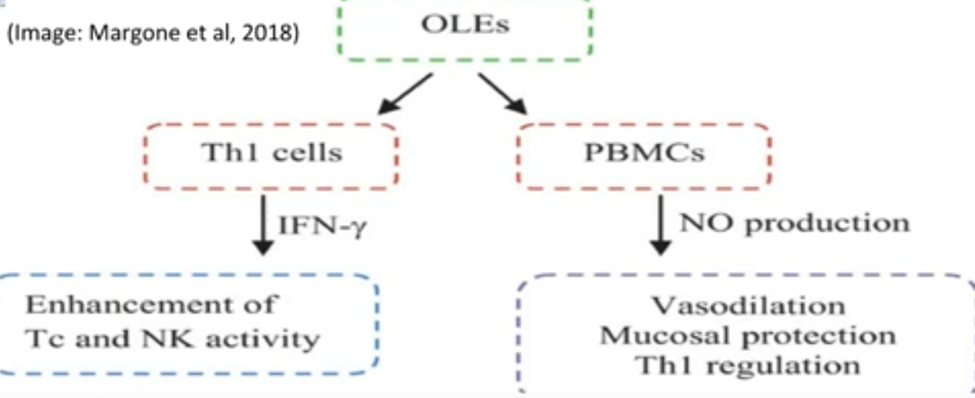
Immune Boosting;
- The high antioxidant phenolic compounds present free radicals scavengers (3 hydroxyl groups)
- Diminishes tissue damage in rat kidney and liver.
- OLE has the potential to downregulate Nrf2 signaling attenuating inflammation
- Nrf2 regulation is a critical component of innate immune response on the early onset to antimicrobial attack.
- Olive Leaf Extracts Act as Modulators of the Human Immune Response.
- Oleuropein Is Responsible for the Major Anti-Inflammatory Effects of Olive Leaf Extract.
- Olive leaf Extract suppresses inflammatory cytokine production and NLRP3 inflammasomes in human placenta.
- In vitro anti-complementary activity of flavonoids from olive (Olea europaea L.) leaves.
Kidneys & Urinary Tract
- Olive leaf extract may serve as a potential adjuvant against cadmium-induced nephrotoxicity.
- Olive leaf extract ameliorates gentamicin nephrotoxicity via antioxidant activity, increase of renal glutathione content, and increase of renal antioxidant enzymes activity, except for glutathione peroxidase.
- Olive leaf extract modulates glycerol-induced kidney and liver damage.
Liver Effects
- Standardized Olea europaea L. leaf extract exhibits protective activity in carbon tetrachloride-induced acute liver injury.
- Olive leaf extract prevents spontaneous occurrence of non-alcoholic fatty liver in rats.
- The present study demonstrates the hepato-protective and reno-protective effects of oleuropein and hydroxytyrosol olive leaves extracts from BPA and its derivates toxicity.
Metabolic Effects
- OLE may promote the brown remodelling of white adipose tissue inducing thermogenesis and improving metabolic homeostasis.
- Olive (Olea europaea L.) leaf polyphenols improve insulin sensitivity in middle-aged overweight men.
Neuroprotective
Obesity
Oral Health
It can treat biofilm related oral diseases. It was able to inhibit and reduce the amount of pathogenic bacteria/yeast.
In vitro – oral micro-organisms
Powdered leaf 60% Oleuropein, Hydroxytyrosol 15%
Inhibitory effect on:
- Candida albicans
- Escherichia coli
- Porphyromonas gingivalis
- Fusobacterium necrophorum
- Parvimonas micra
Neurological Effects
- Different effects of olive leaf extract on antioxidant enzyme activities in midbrain and dopaminergic neurons of Substantia Nigra in young and old rats
- The neuroprotective effects of hydro-alcoholic extract of olive (Olea europaea L.) leaf on rotenone-induced Parkinson's disease in rat
- Olive leaf extract and glutamine significantly increase GLP-1 up-regulation.
- Olive leaf extract can inhibit lead-induced brain injury by increasing antioxidant capacity and reducing apoptosis.
- Treatment with olive leaf extract increases antioxidant enzyme activity and protects the neurons in Substantia Nigra against oxidative stress.
- Olive leaves and hibiscus flowers extracts-based preparation protect brain from oxidative stress-induced injury.
Radiation Protection
- This study supports the use of olive leaves extract for photoprotection.
- Olive leaf contains phenolics with radioprotective properties.
- Olive leaf extract prevents chronic ultraviolet B radiation-induced skin damage and carcinogenesis in hairless mice.
- Olive leaf extract and its main component oleuroepin prevents acute ultraviolet B irradiation-induced skin changes.
Respiratory Illness
- Olive leaf extract has a beneficial effects on upper respiratory illness in high school athletes.
- Cochrane randomized control trial, 2019
- Athletes in high school report higher illness rates of upper respirator illness
- Impacts training
- OLE given at standardized 100mgs Oleuropein
- Nine weeks during competitive season
- 28% significant reduction in sick days in supplemented group
- Did not reduce incidence, but decreased duration of disease
Suggested mechanism:
- Oleuropein acts as a dose-dependent antioxidant of copper-sulphate- induced oxidation of low density lipoproteins
- Increases nitric oxide production of macrophages
- Increases functionality of macrophages
Other Effects:
- Oral administration of olive leaf extract could be helpful in ameliorating busulfan induced toxicity.
- Olive leaf extract treatment may be effective in decreasing DOX-induced cardiac, hepatic and renal oxidative stress and injury.
- Olive (Olea europaea L.) leaf extract elicits antinociceptive activity, potentiates morphine analgesia and suppresses morphine hyperalgesia in rats.
- Olive leaf extract has a potential antitolerant property against the chronic usage of morphine and that its main component, oleuropein, is responsible for such effect.
- Olive leaf extract has xanthine-oxidase inhibiting activity which confirms its traditional use for gout.
- Olive leaf extract protects against the genetic and oxidative damage by permethrin in vivo.
- Olive leaf extract treatment may be effective in decreasing DOX-induced cardiac, hepatic and renal oxidative stress and injury.
- Research confirms the use of olive leaf extract by traditional medicine to counter Pb neurotoxicity. (lead poisoning)
- Dry olive leaf extract was efficient in reducing DNA damage induced by thyroxine at all tested concentrations used