6.1 Native Bees
Long before honeybees become active, native bees are out pollinating the first wildflowers, serviceberry, redbud, and fruit trees. These three groups — mining bees, bumblebees, and Mason bees — are perfectly timed to the Ozarks’ early spring bloom (late February–April). They are far more efficient pollinators than honeybees for many native plants and are essential to forest, glade, and riparian ecosystems.
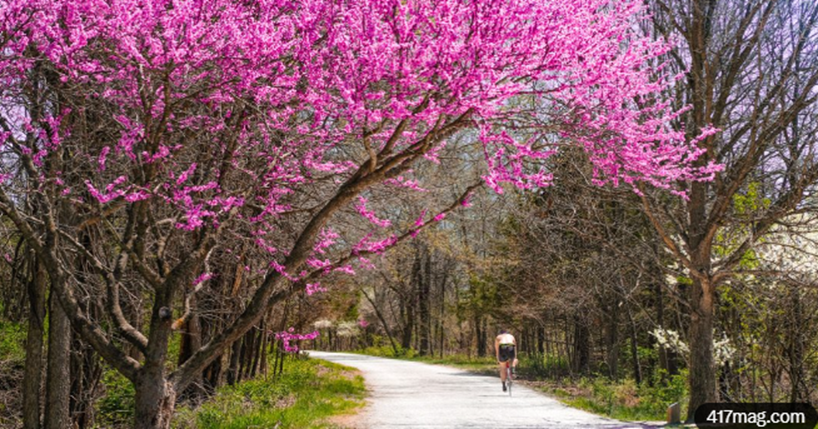
Redbud-lined trail in the Ozarks in early spring — prime foraging habitat for native bees emerging from winter dormancy.
Learning Objectives
By the end of this lesson, you will be able to:
- Identify mining bees, bumblebees, and Mason bees by appearance, behavior, and nesting style.
- Describe their life cycles and why they are active so early in the season.
- Explain their critical role as pollinators in Ozark plant communities.
- Suggest simple ways to support these bees on your property or in local conservation areas.
Estimated time: 40–50 minutes (plus optional field observation).
WHY EARLY-SPRING NATIVE BEES ARE VITAL IN THE OZARKS
- Many Ozark wildflowers (spring beauties, trillium, bloodroot, toothwort) and woody plants (serviceberry, redbud, wild plum, willow) bloom before trees leaf out.
- Honeybees are not yet flying in large numbers; native bees fill the gap.
- These bees are specialists — many visit only certain flowers, ensuring effective pollination.
- Threats: habitat loss, pesticides, and lack of early-season nectar/pollen sources.
Mining Bees (Andrena spp.) – Solitary Ground Nesters
Identification
Small to medium (¼–½ inch), often dark with pale hair bands on abdomen. Females carry pollen on hind legs (not in “baskets” like honeybees). Many species have fuzzy faces.
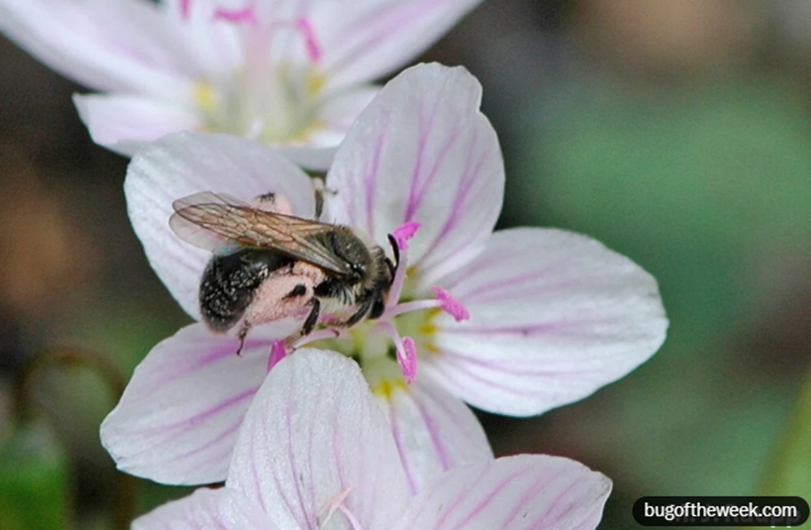
Life Cycle & Ecology
- Queens emerge as early as late February on warm days.
- Solitary: each female digs her own tunnel in bare or lightly vegetated soil (often south-facing banks or woodland edges).
- Provision each cell with pollen + nectar “loaf,” lay one egg, seal it.
- One generation per year; most active March–April.
- Excellent pollinators of spring ephemerals and apple/cherry orchards.
Ozark Habitat
Open woodland floors, trailsides, and sunny slopes with well-drained soil.
Bumblebees (Bombus spp.) – Social Queens First
Identification
Large, fuzzy, black-and-yellow (or orange) bees. Queens are noticeably bigger than workers.
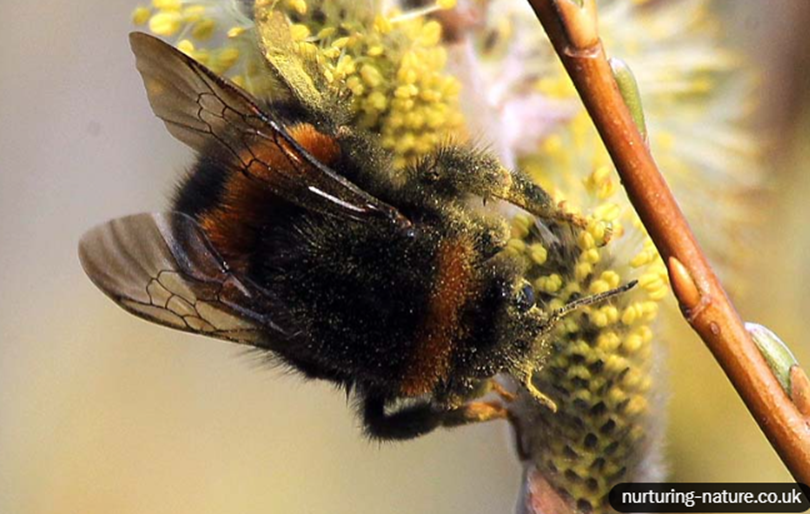
Life Cycle & Ecology
- Only mated queens overwinter (in leaf litter or soil).
- Queens emerge February–March, forage on willow, redbud, and serviceberry to build energy.
- Find a nest site (abandoned rodent burrow, hollow log, or grass clump), lay first eggs, and raise the first workers alone.
- Colony grows through summer; new queens and males produced in late summer.
- Excellent “buzz pollinators” — they vibrate flowers to release pollen (great for blueberries and tomatoes).
Ozark Habitat
Forest edges, glades, meadows, and riparian corridors with early blooms.
Mason Bees (Osmia spp.) – Solitary Cavity Nesters
Identification
Often metallic blue-black or green (blue orchard bee is most common). Stocky, with large heads and powerful jaws for carrying mud or leaves.
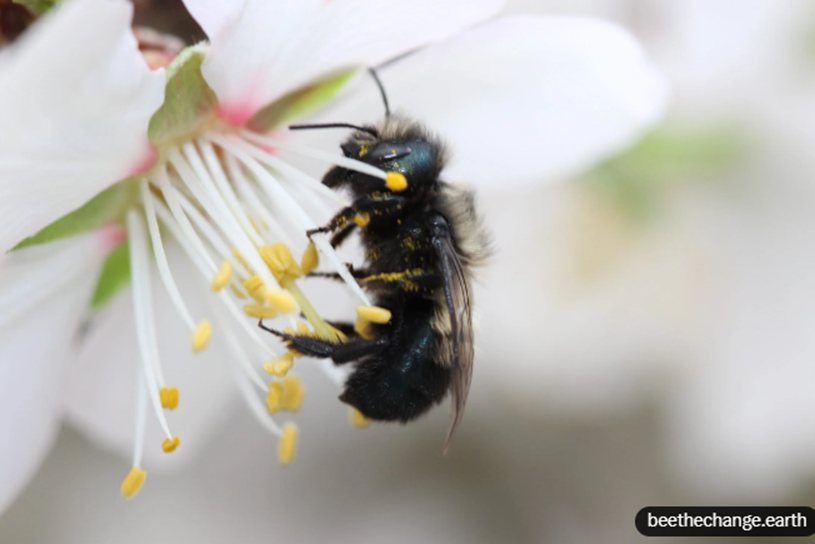
Life Cycle & Ecology
- Emerge March–April; males first, then females.
- Solitary but gregarious — many females nest near each other.
- Use existing cavities (beetle holes in dead wood, hollow stems, or bee hotels).
- Females collect mud (or chewed leaves) to build cell partitions; stock with pollen/nectar, lay egg, seal.
- One generation per year; larvae develop over summer and overwinter as adults inside the nest.
- Extremely efficient pollinators — one female can do the work of 100 honeybees for fruit trees.
Ozark Habitat
Woodlands with snags, downed logs, and sunny edges.
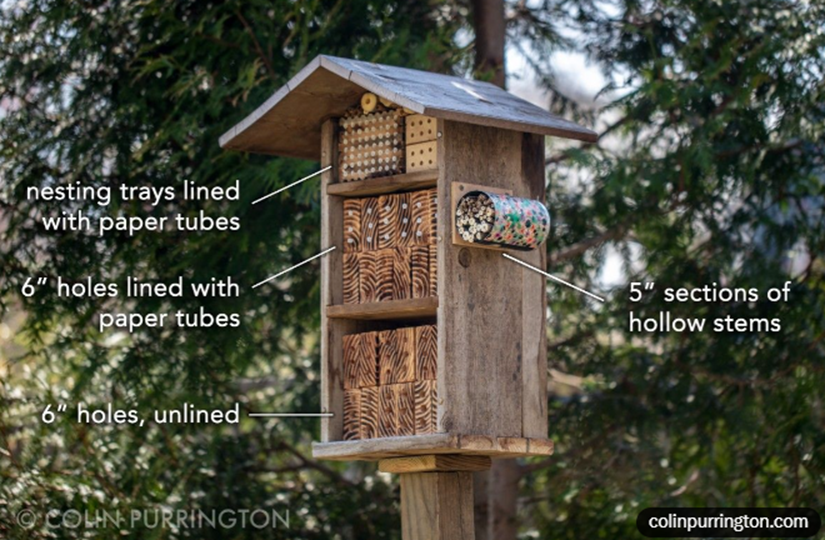
Example of a simple Mason bee hotel — easy to build or buy to support Osmia in your yard.
ASSESSMENT QUIZ (ANSWER BEFORE CHECKING BELOW)
- Which group of Ozark bees nests in the ground and is completely solitary?
- True or False: Bumblebee queens are the only ones that survive winter and start new colonies each spring.
- Which bee group uses mud or leaves to build partitions inside wood cavities?
- Why are these bees active earlier than honeybees?
- Name one simple way to support Mason bees at home.
Answers
- Mining bees (Andrena)
- True
- Mason bees (Osmia)
- They overwinter as adults or queens and are timed to early native blooms before trees leaf out
- Install a bee hotel with 5–8 mm holes or leave dead wood/snags standing
Scoring: 5 = Bee expert! 4 = Great — review nesting types. <4 = Revisit the sections.
SUGGESTED ACTIVITIES FOR DEEPER LEARNING
- Early-Spring Bee Walk — On a warm day >55 °F in March–April, visit an Ozark woodland edge or glade. Look for bees on redbud, serviceberry, or willow. Use a phone camera or Merlin Insect ID app.
- Build a Mason Bee Hotel — Drill 5–8 mm holes 4–6 inches deep in untreated wood blocks. Hang in a sunny, south-facing spot protected from rain.
- Plant for Early Bees — Add native early bloomers: serviceberry, redbud, wild plum, pussy willow, or spring beauties.
- Citizen Science — Submit bee sightings to iNaturalist or the Missouri Bee Atlas. Monitor your bee hotel for activity.
FURTHER RESOURCES
- Missouri Department of Conservation – Native Pollinators page
- Xerces Society – “Attracting Native Pollinators” (excellent Ozark section)
- “The Bees in Your Backyard” by Joseph S. Wilson & Olivia Messinger Carril
- BugGuide.net or iNaturalist.org – photo identification
- Crown Bees or local native plant nurseries for Mason bee cocoons (optional, for education)