Tempeh


How to make Tempe
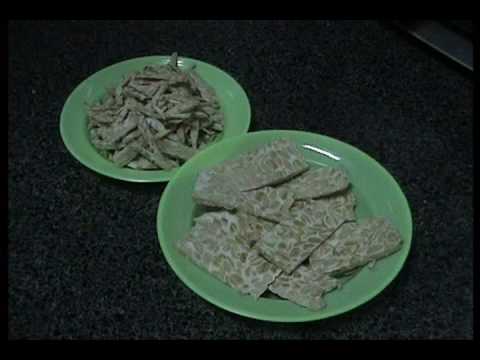
Tempeh, is a traditional soy product originally from Indonesia.
It is made by a natural culturing and controlled fermentation process with tempeh starter, that binds soybeans into a cake form, similar to a very firm vegetarian burger patty.
Tempeh is unique among major traditional soy foods in that it is the only one that did not originate from another cuisine.
It originated in today's Indonesia, and is especially popular on the island of Java, where it is a staple source of protein. Like tofu, tempeh is made from soybeans, but it is a whole soybean product with different nutritional characteristics and textural qualities. Tempeh's fermentation process and its retention of the whole bean give it a higher content of protein, dietary fiber, and vitamins. It has a firm white texture and an earthy flavor which becomes more pronounced as it ages. Because of its nutritional value, tempeh is used worldwide in vegetarian cuisine, where it is used as a meat analogue, and contains the needed vitamin B-12 which is produced natural due the fermentation process.
Tempeh begins with whole soybeans, which are softened by soaking, and dehulled, then partly cooked. Specialty tempehs may be made from other types of beans, wheat, or may include a mixture of beans and whole grains.
A mild acidulent, usually vinegar, may be added to lower the pH and create a selective environment that favors the growth of the tempeh starter mold over competitors. A fermentation tempeh starter containing the spores of fungus Rhizopus oligosporus is mixed in. The beans are spread into a thin layer and are allowed to ferment for 24 to 36 hours at a temperature around 30 C (86 F). In good tempeh, the beans are knitted together by a mat of white mycelia.
Under conditions of lower temperature, or higher ventilation, gray or black patches of spores may form on the surface-this is not harmful, and should not affect the flavor or quality of the tempeh. This sporulation is normal on fully mature tempeh. A mild ammonia smell may accompany good tempeh as it ferments, but it should not be overpowering. In Indonesia, ripe tempeh (two or more days old) is considered a delicacy.
Our tempeh starter is design to process less black spores, in order to give it a nice appearance. ..
Typically you buy TEMPEH ready-made, even in Indonesia. And if you live there, buying it is like hunting for a loaf of bread; it is widely available, cheap, and most importantly, freshly produced. And since it has a savory taste and dense texture, it easily replaces meat which is typically very expensive.