Dandelion Root
See also: Common Dandelion
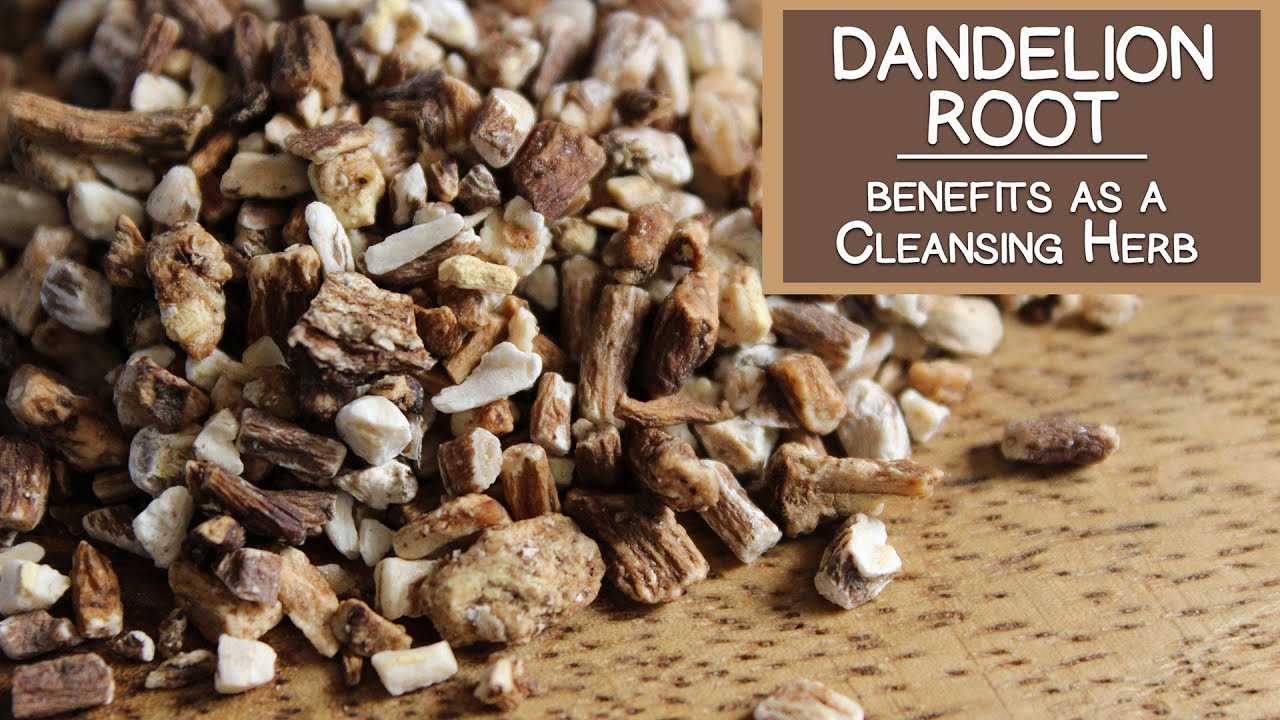
The root is used primarily for problems related to the liver (the spring harvested root is best for this purpose) and is used to treat alcoholism, allergies, anorexia, appetite loss, candida, depression, dizziness, fatigue, hangover, headache, hypertension, hypochondria, hypoglycemia, obesity, osteoarthritis, ovarian cysts, and premenstrual syndrome. The fall harvested root is better for issues in the digestive system due to inulin content.
Constituents
The characteristic constituents are sesquiterpenes, including the bitter eudesmanolides tetrahydroridentin B and taraxacolide β-d-glucopyranoside; and the germacranolides, taraxinic acid β-d-glucopyranoside and 11,13-dihydrotaraxic acid β-d-glucopyranoside. Also present are the phydroxyphenylacetic acid derivative, taraxacoside; the triterpenes, taraxasterol, ψ-taraxasterol and taraxerol; and inulin (2–40%)
DANDELION ROOT: COOLING + DOWNWARD + DRYING + OUTWARD
Dandelion root shares Chicory’s bitter family but expresses a different balance.
Physiological pattern
- Downward: strong liver–gut elimination; moves stagnation down and out.
- Cooling: clears heat from liver, skin, and upper digestion.
- Drying: reduces damp heat, puffiness, and congestion.
- Outward: vents heat through bile, stool, and sometimes urine.
Somatic feel
- A “deep clean” sensation in the liver/gut axis.
- Heat leaves the skin and eyes.
- Mood irritability (liver heat) drops.
Signature
“The Deep Bitter Descent” — a cleansing, clarifying downward movement.
ARTICLES/STUDIES
A new subtilisin-like proteinase from roots of the dandelion Taraxacum officinale Webb S. L
Study of the lipid fraction of freezedried dandelion root
Further sesquiterpenoids and phenolics from Taraxacumofficinale.Five germacrane- and guaiane-type sesquiterpene lactones, including two previously described taraxinic acid derivatives, were isolated from the roots of Taraxacum officinale, together with benzyl glucoside, dihydroconiferin, syringin and dihydrosyringin. The other three lactones were identified as 11beta, 13-dihydrolactucin, ixerin D and ainslioside. Moreover, the stereochemistry at C-11 in dihydrotaraxinic acid was assigned.
Study: The infusion of dandelion root (Taraxacum officinale) stimulated in vitro the growth of 14 strains of bifidobacteria. The utilization of oligofructans, glucose, fructose and total saccharides was determined by enzymatic and phenol-sulfuric methods. Dandelion oligofructans were important source of carbon and energy for bifidobacteria tested.
Antidepressant
Antidepressant effects of the water extract from Taraxacum officinale leaves and roots in mice.
Anti-Inflammatory
ANTIMICROBIAL
- The antimicrobial efficacy of dandelion root extracts in this study support the use of dandelion root as a source of natural antimicrobial compounds.
- Characterisation of antimicrobial extracts from dandelion root (Taraxacum officinale) using LC-SPE-NMR.
- The antimicrobial efficacy of dandelion root extracts in this study support the use of dandelion root as a source of natural antimicrobial compounds.
Cancer
Dandelion extract shows potential anticancer activity and is expected to be a new type of natural anti-cancer drug.
- Evaluation of aqueous extracts of Taraxacum officinale on growth and invasion of breast and prostate cancer cells.
- Revealing the metabolic mechanism of dandelion extract against A549 cells using UPLC-QTOF MS.
- This study comprehensively demonstrates the multi-target mechanisms of dandelion against triple-negative breast cancer.
Colon Cancer
- Dandelion root extract affects colorectal cancer proliferation and survival through the activation of multiple death signalling pathways.
- Oral administration of dandelion root extract inhibited the growth of human colon xenograft models by more than 90%.
LEUKEMIA
- Efficient Induction of Extrinsic Cell Death by Dandelion Root Extract in Human Chronic Myelomonocytic Leukemia (CMML) Cells-
- Selective induction of apoptosis through activation of caspase-8 in human **leukemia** cells (Jurkat) by **dandelion** **root** extract.
MELANOMA
- Dandelion root has a potent action against chemoresistant melanoma without toxicity to healthy cells.
- Differentiation-inducing activity of lupeol, a lupane-type triterpene from Chinese **dandelion** **root** (Hokouei-kon), on a mouse melanoma cell line.
Pancreatic Cancer
Cardiovascular
Colitis
- Dandelion root extract protects NCM460 colonic cells and relieves experimental mouse colitis
- Dandelion root extracts abolish MAPK pathways to ameliorate experimental mouse ulcerative colitis.
Diabetes
Antidiabetic properties of the root extracts of dandelion and burdock.
Liver
- Hepatocurative potential of sesquiterpene lactones of Taraxacum officinale on carbon tetrachloride induced liver toxicity in mice.
- Antifibrotic activity of Taraxacum officinale root in carbon tetrachloride-induced liver damage in mice.
Obesity
- Obesity
- dandelion extracts used in this study may play a significant role during adipogenesis and lipid metabolism, and thus, supporting their therapeutic interest as potential candidates for the treatment of obesity.
Experimental pharmacology
Anti-inflammatory and analgesic activity
External applications of 2.0 mg/ear of a methanol extract of the dried leaves to mice reduced ear inflammation induced by 12-O-tetradecanoylphorbol-13-acetate. Intragastric administration of 1.0 g/kg body weight (bw) of a 95% ethanol extract of the whole plant to mice inhibited benzoquinone-induced writhing . Intraperitoneal administration
of 100.0 mg/kg bw of a 95% ethanol extract of the whole plant to mice inhibited carrageenan-induced footpad edema by 42%, and reduced pain as measured by the hot-plate test and benzoquinone-induced writhing. Intragastric administration of 100.0 mg/kg bw of an 80% ethanol extract of the dried roots to rats inhibited carrageenan-induced
footpad oedema by 25%, compared with 45% inhibition resulting from administration of 5.0 mg/kg bw of indometacin.
Antimicrobial activity
A 95% ethanol extract of the dried aerial parts, 1.0 mg/ml, did not inhibit the growth of Bacillus globifer, B. mycoides, B. subtilis, Escherichia coli, Fusarium solani, Klebsiella pneumoniae, Penicillium notatum, Proteus morganii, Pseudomonas aeruginosa, Salmonella gallinarum, Serratia marcescens, Staphylococcus aureus, Mycobacterium smegmatis or Candida albicans in vitro. No antibacterial effects were observed using a 50% ethanol extract of the whole plant, 50 μl/plate, against Escherichia coli, Salmonella enteritidis, Salmonella typhosa, Shigella dysenteriae or Shigella flexneri.
Antiulcer activity
Intragastric administration of 2.0 g/kg bw of an aqueous extract of the whole plant to rats protected the animals against ethanol-induced gastric ulceration. A methanol extract, however, was not active.
Choleretic activity
Intragastric administration of an aqueous or 95% ethanol extract of the whole plant (dose not specified) to rats increased bile secretion by 40%.
Diuretic activity
Intragastric administration of 8.0–50.0 ml/kg bw of a 95% ethanol extract of the whole plant to rats induced diuresis and reduced body weight. Intragastric administration of 0.1 ml/kg bw of a 30% ethanol extract of the whole plant to mice induced diuresis. However, intragastric administration of 50.0 mg/kg bw of a chloroform, methanol or petroleum
ether extract of the roots to mice did not consistently increase urine output.
Hypoglycemic activity
Intragastric administration of a 50% ethanol extract of the whole plant to rats, 250.0 mg/kg bw, or rabbits, 1.0 g/kg bw, reduced blood glucose concentrations. However, intragastric administration of 2.0 g/kg bw of the powdered whole plant to rabbits did not reduce blood sugar concentrations in alloxan-induced hyperglycemia. Intragastric administration of 25.0 mg/kg bw of an aqueous extract of the dried root to mice reduced glucose-induced hyperglycemia. However, a decoction or 80% ethanol extract of the dried roots had no effect.
Immunological effects
Intragastric administration of 3.3 g/kg bw of an aqueous extract of the whole plant to mice daily for 20 days significantly (P < 0.01) decreased cyclophosphamide-induced immune damage. Treatment of scalded mice with suppressed immune functions with an aqueous extract of the whole plant (dose and route not specified) stimulated the immune response. Nitric oxide synthesis inhibition induced by cadmium in mouse peritoneal macrophages stimulated with recombinant interferon-γ and lipopolysaccharide was counteracted by treatment of the cells with an aqueous extract of the whole plant, 100 μg/ml. The results were mainly dependent on the induction of tumor necrosis factor-α (TNF-α) secretion stimulated by the aqueous extract. Treatment of primary cultures of rat astrocytes with an aqueous extract of the whole plant, 100.0 μg/ ml, inhibited TNF-α production induced by lipopolysaccharide and substance P. The treatment also decreased the production of interleukin-1 in astrocytes stimulated with lipopolysaccharide and substance P. The study indicated that Radix cum Herba Taraxaci may inhibit TNF-α production
by inhibiting interleukin-1 production, thereby producing anti-inflammatory effects. Treatment of mouse peritoneal macrophages with an aqueous extract of the whole plant, 100 μg/ml, after treatment of the cells with recombinant interferon-γ, resulted in increased nitric oxide synthesis owing to an increase in the concentration of inducible nitric oxide synthase. The results were dependent on the induction of TNF-α secretion by Dandelion root and herb.
Toxicology
The intraperitoneal median lethal dose (LD50) of a 95% ethanol extract of the whole plant in rats was 28.8 mg/kg bw. In rats, the maximum tolerated dose of a 50% ethanol extract of the whole plant administered by the intraperitoneal route was 500.0 mg/kg bw. No visible signs of toxicity were observed in rabbits after intragastric administration of
the powdered whole plant at doses of 3–6 g/kg bw per day for up to 7 days.
(WHO-VOL3 pg 340-342)