Bladderwrack
See also: Fucus (genus)
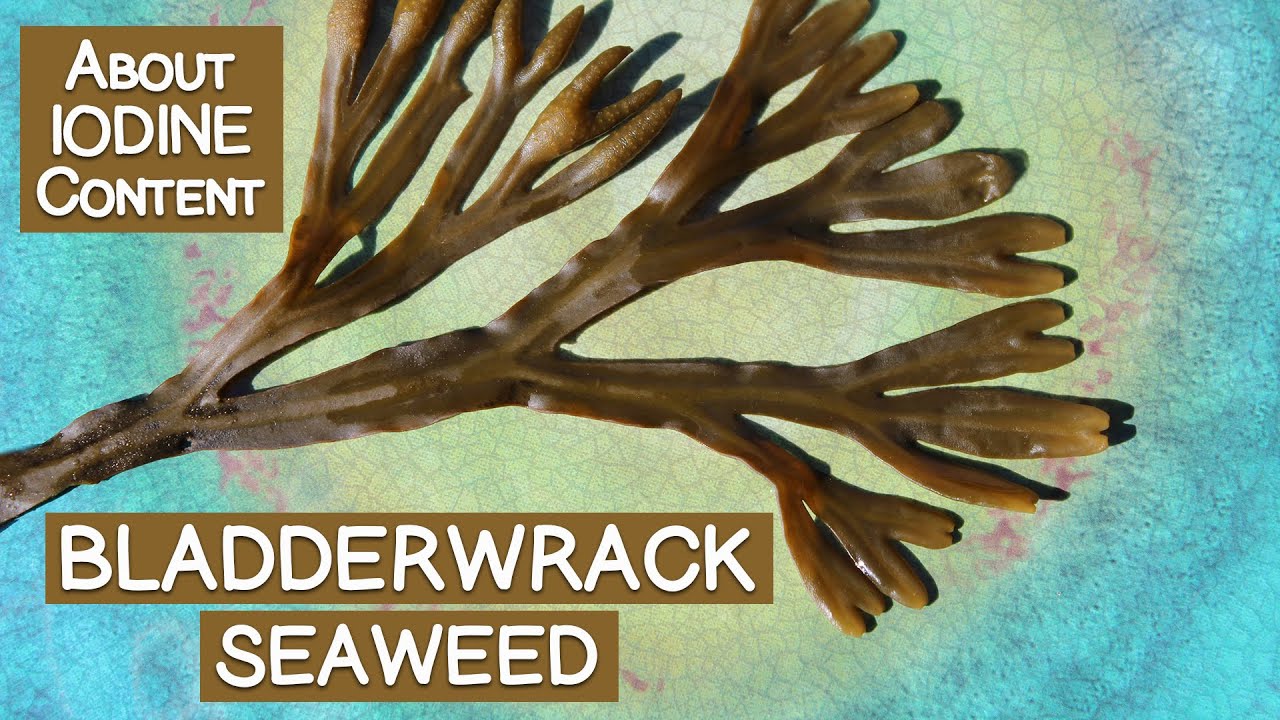
Parts Used:Thallus (plant body)
Active Constituents: Iodine, Polysaccharides, Polyphenols, Lipids, Sterols, alginic acid and fucoidan.
On the nitrogenous constituents of Fucus vesiculosus.
Qualities: Cold in 1st degree, moist
Actions:
- Thyroid stimulant
- Weight reducing
- Demulcent
Indications:
- Obesity associated with iodine deficiency
- Thyroid conditions from iodine deficiency
- Rheumatic conditions including arthritis
- Traditionally used for obesity associated with hypothyroidism
Bladder wrack is a seaweed prevalent on the Atlantic and Pacific coasts from Europe to Asia. It is often referred to as brown kelp but it should not be confused with “kelp,” another species of seaweed. Bladder wrack is consumed as food and medicine and is a rich source of iodine. It is used in traditional medicine to treat hypothyroidism due to iodine deficiency and has been proposed as a weight loss supplement. No clinical studies have verified this effect. Bladder wrack is believed to be responsible for the reduced risk of estrogen-related cancers in Asian populations and may improve menstrual symptoms . Further studies are needed to clarify such effects.
Bladder wrack extract also demonstrated chemopreventive, anti-collagenase and antioxidant properties; topical application of bladder wrack extract may help improve skin.
However, bladder wrack should be used with caution in patients with hormonal-sensitive cancers.
Mechanism of Action
Bladder wrack extract is rich in iodine and has been used as a natural supplement for thyroid disorder and for obesity. It has been shown to lower plasma cholesterol levels by competitive inhibition via fucosterols. As cholesterol is a precursor for the biosynthesis of steroid hormones, a reduction in cholesterol bioavailability may lower circulating estradiol levels thereby altering menstrual cycling patterns. An extract of bladder wrack reduced 17,beta-estradiol levels and also acted as a competitive inhibitor of estradiol binding to alpha- and beta- estrogen receptors in vitro. In rats, treatment with bladder wrack lengthened overall estrous cycles and reduced circulating 17,beta-estradiol levels.
Bladder wrack and related seaweed species have been shown to exhibit anti-hypertensive effects via angiotensin-I-converting enzyme inhibition. The antibacterial and antioxidant properties are thought to be due to its polyphenolic contents. Topical bladder wrack extract reduced skin thickness and improved the mechanical/elastic properties.
A bladder wrack extract inhibited the cell cyle of proliferating pancreatic cancer cells due to the up-regulation of cell cycle inhibitors, independent of caspases. Also, it showed low cytotoxic activity against non-malignant resting T cells and erythrocytes. Accelerated killing was observed in combination with inhibitors of autophagy.
Physio-Medical Therapeutics, Materia Medica and Pharmacy BY T. J. LYLE, A.M.M. 1897
This plant has a reputation as an antifat, claiming that it diminishes the fat without in any respect injuring the health. It influences the mucous membrane, the serous membrane and the lymphatics. It is a gently stimulating and toning alterant. It is one of those slow, persistent agents that require time to accomplish the desired results. It is stimulating to the absorbents and especially influences the fatty globules. Its best action is observed in individuals having a cold, torpid, clammy skin and loose flabby rolls of fat. It is an agent that gives better results in cases of morbid obesity than in those cases of a healthy character. When using it as an anti-fat it is best to exclude farinaceous foods and beer and prescribe an active life. It is best to begin with small doses and gradually increase to larger doses. Soon the urine becomes more abundant and the stomach is invigorated by its use.
By its influence on the serous membrane it is valuable in cases of gout, rheumatism and dropsy especially for those of plethoric habit. This agent seems to influence the starches and prevents their being formed into fats. It may be used in form of pill, fluid extract or infusion.
Where there is a tendency to constipation in cases of obesity the following will be found best adapted:
Fucus Ves.
Juniperus; Fruct.
Juglans Cin. a,a.
in equal parts in infusion
Dosage
Tincture: Dried seaweed (1:3, 45% alcohol); 1-3 ml (0.2-0.6 tsp) up to 4 times daily
Capsule or Powder: 1,000 to 2,000 mg, 2 times daily
4.5 – 8.5ml of 1:1 per day or 30-60ml per week (Bone)
Because it is resistant to breakdown by gut flora, eating the whole plant can serve as a bulk laxative.