Calendula
See also: Calendula (genus)
Qualities: a bit bitter & sweet & salty & pungent; neutral with cooling potential, dry; decongesting, astringing, stimulating, softening, dissolving
Energetic Properties:
- Cooling, drying, moving
- Solar (follows the sun—opens at dawn, closes at dusk)
- Bitter, slightly pungent
- Works on hot, damp, stagnant conditions
: Calendula is a cooling herb that still promotes tissue growth. That's rare.
Most cooling herbs are astringent and contracting—they cool by tightening, pulling in, reducing. Think witch hazel, oak bark.
But calendula COOLS while simultaneously BUILDING. It reduces heat and inflammation while promoting healthy granulation tissue. It's both yin (cooling, moistening tissue repair) and yang (moving, clearing stagnation) at the same time.
Primary Actions:
- Vulnerary (wound healing)
- Anti-inflammatory
- Antimicrobial (especially against staph and strep)
- Lymphagogue (moves lymph, reduces swelling)
- Hemostatic (stops bleeding)
- Epithelializing (promotes skin cell regeneration)
Tropism: liver, heart, uterus, skin, veins, lymphatic system, blood
Ground; Sanguine krasis



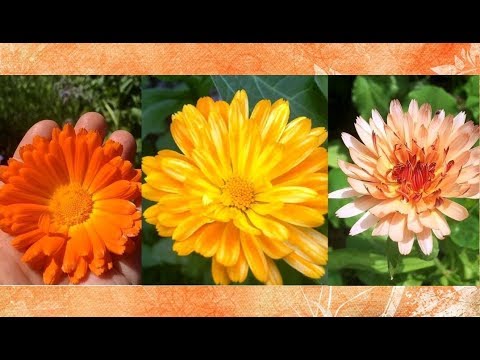
Medicinal Parts: the ray florets of the completely unfolded, collected and dried capitula of Calendula officinalis. Harvest begins in July. Drying takes place in the shade at a maximum of 45degrees C. Calendula herb consists of the fresh or dried above ground parts harvested during the flowering season.
Calendula is commonly used topically to speed tissue healing after injuries, burns, and bruises. It’s a useful remedy for dry skin, eczema, and hemorrhoids and can ease pain n minor injuries when applied topically. It’s a wonderful remedy for gastrointestinal inflammation and is almost a specific for Crohn’s disease, colic, and gastritis.
Specific Indications: Rolla Thomas: In enfeebled conditions of the capillary blood vessels. An excellent application to ulcers and wounds.
Hot-damp conditions = calendula shines
Deep, cold, deficient conditions = calendula isn't the answer
Constituents
**Listing at Duke's Database**
FLOWERS:
The medicinal qualities are in the resin concentrated in the underside of the flower heads, less so on the petals, leaves and stems
Triterpene saponins (2 to 10%); glycosides A to F (mono- or bisdemosidic oleanolic acid glycosides)
Triterpene alcohols; triterpene monooles (0.8%), triterpene dioles (4%) and triterpene trioles, including lupeol, taraxasterol, psi-taraxasterol, faradiol, arnidiol, their mono- and diesters (chiefly acetic acid, lauric, myristic and palmitic acid as acid components)
Flavonoids; (0.3-0.8%) including isorhamnetin and quercetin glycosides
Hydroxycoumarins; including scopoletin, umbelliferone, esculetin
Carotinoids; chief components lutein, zeaxanthine
Analysis of Carotenoid Composition in Petals of Calendula (*Calendula officinalisL.*)
Volatile oil; (0.2%) chief components alpha-cadinol, T-cadinol, fatty acids
Water soluble saccharides; (15%) rhamnoarabinogalactans, arabinogalactans
Polyynes
Trace minerals, malic/salicylic acid, potassium chloride & sulphate, calcium sulphate
HERB (LEAVES)
Triterpene saponins, Flavonoids, Carotinoids, Volatile oil
Effects
HERB: The astringent and granulation=promoting effect may be attributable to the volatile oil, saponins and the amaroid Ioliolid.
FLOWERS: Studies conducted in vitro and in animal models have elicited many potentially useful effects related to compounds present in Calendula officinalis and Calendula arvensis. Among these are anti-inflammatory, antimicrobial, antiviral, and antilipid effects. The flowers are antimicrobial due to the terpene alkaloids, lactone and flavones contained in the volatile oil. Flavonoids isolated from flowers of Calendula officinalis demonstrated positive antimicrobial activity against Staphylococcus aureus (at a concentration of 1 mg/mL. Other studies have demonstrated the flavones to be effective against Klebsiella pneumoniae, Sarcina lutea, and Candida monosa.
Antihypotensive Effects: An infusion made from marigold plants (flowers, leaves, stems) is used to treat hypotension according to Russian and Ukrainian folk medicine.
Anti-Inflammatory Effects; The faradiol monoester was proved to be the most relevant anti-inflammatory principle due to its quantitative prevalence in the flowers. The unesterified faradiol was found to be the most active of all tested compounds, equal to indomethacin in effect (Della Loggia et al., 1994)
Antilipid Effects; Saponins from C. officinalis showed antihyperlipidemic effects in ex vivo studies (human serum, rat liver homogenate); the lipid balance was not affect when these saponosides were indroduce in normolipidemic serum. Animal studies (rat model) showed calendulosides to have antihyperlipidemic activity.
Antiviral Effects; Organic extracts of the dried flowers exhibited potent anti-HIV activity in an in-vitro MTT/tetrazolium-based assay. It was also found that the organic extract caused a significant dose- and time- dependent reduction of HIV-1 reverse transcription activity (Kalvatchev et al, 1997). Antiviral tests performed using the oleanolic acid glycosides from the aerial parts of the plant demonstrated an inhibitory effect against Vesicular stomatitis virus (VSV). Only one compound (3.MH) significantly affected replication in Rhinovirus cultures.
Gastrointestinal Effects; Calendula is thought to ease gastrointestinal problems by reducing spasms (spasmolytic action) and stimulating production of bile.
Wound Healing Effect: Calendula promotes the formation of granulation tissue, an important step in re-epithelization and healing of wounds. It is thought to increase glycoprotein, nucleoprotein, and collagen metabolism at wound sites. An aqueous extract was shown to induce new blood vessel formation in vitro, suggesting this as a mechanism of action in promoting granulation.
The Herb Research Foundation: Herb Information Greenpaper
It grows to a height of 60cm (2 ft), has light green leaves, and daisy-like flowers which vary in color from bright orange to yellow, and can bloom from May until the first frosts. The Latin name is derived from the fact that it blooms on the calends, or the first, of most months. The name marigold is a corruption of the Anglo-Saxon merso-meargealla, or marsh marigold. The flower was also later associated with the Virgin Mary and then with Queen Mary in the seventeenth century.
There is a considerable amount of folklore pertaining to calendula: if cut when the sun is at its highest calendula flowers are said to act as a heart tonic and fortifier. Old French sources claim that by merely looking at the flowers for a few minutes each day, this will strengthen weak eyes. Garlands of calendula were once attached to door handles to keep evil, particularly contagion, out of the house.
The therapeutic values of the flowers in treating skin problems have long been known. Marigold poultices were used to heal and obliterate the scars of smallpox, for instance. Marigold skin remedies are very highly regarded in today’s homoeopathy and herbal or holistic medicine.
Uses
These 3 uses: as (1) a wound medicine, (2) a remedy for affections of the lymphatic glands and (2) a general immune tonic are interlocking and bring out the true genius of the plant - (Wood, 1997). Rather than being antiseptic (killing bacteria), it restrains bacteria keeping the wound clean so the immune system can more easily finish them off and commence with healing, hence, its "bacteriostatic"
Phagocytosis the water extract has been shown to increase phagocytosis, whereas the hydroethanol extract does not. (WHO-VOL2)
When you put calendula on a wound, it doesn't MAKE the wound close. It:
- Clears infection (removing obstacle)
- Reduces excessive inflammation (removing obstacle)
- Moves stagnant lymph (removing obstacle)
- Provides building blocks for tissue repair (supporting the process)
And then it gets out of the way.
- CREATES ASTRICTION, ENLIVENS THE BLOOD AND LYMPH AND REMOVES CONGESTION; MODERATES THE MENSES AND STAUNCHES BLEEDING; DRIED MUCOUS DAMP, ARRESTS DISCHARGE AND PROMOTES TISSUE REPAIR
Calendula is the remedy for "places where the sun doesn't shine". The lymphatic structures. Its for lymphatic glands which become swollen and stagnant, where the immunity is compromised and there are lingering remnants of infection. Used as an herbal deoderant. Unpleasant perspiration under the arms may indicate incomplete cleansing in the adjacent lymphatic structures. Its also used for vaginal discharge where the inguinal glands are swollen. The presence of dampness is a pathological sign calling for calendula. The timely use of calendula can prevent scar formation.
It is suited to people who have had swollen glands for some time, without signs of active inflammation, but with some dulling of immunity.
uterus blood congestion; early or copious menses with pelvic weight and dull pain
MENORRHAGIA, CONGESTIVE DYSMENORRHEA
VARICOSE VEINS, phlebitis, hemorrhoids
LYMPH CONGESTION with hard or inflamed swollen glands
LEUCORRHEA with both white or red & purulent
HEMORRHAGE, esp. uterine & hemorrhoidal
WOUNDS, esp. if squashed, torn, or mangled; cuts, sprains, bites, ulcers, frostbite
SKIN DEFORMITIES & blemishes, warts
GASTRIC ULCER, gastritis, colitis, mouth ulcers
- RESTRAINS INFECTION, REDUCES INFLAMMATION AND CLEARS TOXINS DISSIPATES TUMORS
BACTERIAL & FUNGAL infections, incl. hepatitis, lymphatic infection
LOCAL INFECTIONS of gums, mouth, throat; otitis media; toothache, earache
FEMALE REPRODUCTIVE & PELVIC INFECTIONS
SKIN INFECTIONS, incl. eczema, acne, herpes, staphylococcus
skin damp heat; boils, carbuncles, scrofula
EYE & GUM INFLAMMATIONS, BURNS
TUMORS, CANCER, cysts, esp. of female reproductive organs, breasts, digestive tract
Antimicrobial activity
The essential oil of the flowers inhibited the growth in vitro of Bacillus subtilis, Escherichia coli, Staphylococcus aureus, Pseudomonas aeruginosa and Candida albicans. *A flavonoid fraction isolated from the flowers inhibited the growth in vitro of S. aureus, Sarcina lutea, E. coli, Klebsiella pneumoniaeand Candidamonosa. However, chloroform, ethanol, methanol or water extracts of the flowers did not inhibit bacterial growth in vitro. Acetone, ethanol or water extracts inhibited the growth in vitro of the fungus Neurospora crassa. Extracts of the flowers inhibited the growth in vitro of Trichomonas vaginalis.
Oxygenated terpenes appear to be responsible for the antimicrobial activity
Antiviral activity
A tincture of the flowers suppressed the replication of herpes simplex, influenza A2 and influenza APR-8 viruses in vitro. However, an aqueous extract of the flowers was not active. A chloroform extract of the flowers inhibited the replication of HIV-1 in acutely infected lymphocytic MOLT-4 cells in vitro (IC50 0.4 mg/ml) . A chloroform extract also inhibited HIV-1 reverse transcriptase activity in a dose-dependent manner (ED50 51.0mg/ml). A 5% hot aqueous extract of the flowers (2 ml) inhibited the replication of encephalitis virus after intraperitoneal administration to mice.
Wound-healing activity
External application of a hydroalcoholic extract accelerated the rate of contraction and epithelialization of excision wounds in rats. A 3% freeze-dried aqueous extract of the flowers induced vascularization in the chick chorioallantoic membrane assay. Histological sections of the treated chorioallantoic membranes also indicated the presence of hyaluronan, a tissue glycosaminoglycan associated with neovascularization.
3.. STIMULATES THE LIVER AND GALL BLADDER AND PROMOTES BILE FLOW, STIMULATES THE UTERUS AND PROMOTES THE MENSES; PROMOTES CONTRACTIONS AND EXPELS THE AFTERBIRTH
liver Qi stagnation: painful digestion, tender swollen flank, headache, jaundice, constipation
uterus Qi stagnation; irregular or delayed menses with clots, fibroids, ovarian cysts
ESTROGEN INSUFFICIENCY with delayed or absent menses
MENOPAUSAL SYNDROME
PROPHYLACTIC in LABOR
- CAUSES SWEATING, RELEASES THE EXTERIOR AND SCATTERS WIND HEAT PUSHES OUT ERUPTIONS AND RESOLVES FEVER
external wind heat; onset of infections with aches and pains, feverishness, anxiety
ERUPTIVE FEVERS: measles, scarlet fever, smallpox
REMITTENT & LOW TIDAL FEVERS in Shao Yang and Shao Yin stages
- TONIFIES THE YIN AND SUPPORTS THE HEART
heart Yin deficiency; palpitations, night sweats, anxiety
The Physiomedical Dispensatory by William Cook, M.D., 1869
Properties and Uses: The flowers and also the leaves, have been used medicinally from very remote times, especially as a family remedy. They are a mild and diffusive stimulant, with some relaxing properties, expending their power chiefly upon the nerves, and moderately upon the capillary circulation. Like all other articles of such qualities, they are nervine and antispasmodic; and have been used in hysteria and general nervousness, and to promote moisture at the surface.
They are reputed to act upon the uterus beneficially in painful menstruation, slightly promoting the catamenia; and also upon the gall-ducts. Their action is mild, and they are best fitted to light cases. As a local application, they are said to promote granulation, to advance the healing of contused wounds, and to prevent mortification. The last repute would not do to depend on. An ounce of the flowers to a quart of water, is the ordinary infusion.
Per Sloan-Kettering:
Clinical Summary:
Derived from the flower of the marigold plant, calendula is used topically for wound healing. Major constituents of the leaves and stems include lutein and beta-carotene . Calendula extracts demonstrated anti-inflammatory properties that may improve wound healing; and antibacterial, anti-parasitic , anti-HIV , cytotoxic and anti-tumor effects both in vitro and in vivo. Studies in murine models reported hepato-, reno-, photo-, and cardioprotective properties.
An herbal formulation containing calendula was found effective in reducing earache in children with acute otitis media ; and a topical application of a calendula cream was found to be safe and effective in infants for treating diaper dermatitis . Preliminary data also support the use of topical calendula for prophylaxis of acute dermatitis during radiation therapy; for the treatment of diabetic foot and venous leg ulcers; and for treating vaginal candidiasis . A mouthwash containing calendula was shown useful for reducing dental plaque and gingivitis adjunctive to scaling , for reducing chemotherapy-induced stomatitis , but was ineffective in preventing mucositis associated with chemo-radiotherapy . Larger studies are needed to confirm these observations.
Mechanism of Action:
Triterpenoids present in calendula have anti-inflammatory and anti-HIV effects, and a calendula extract suppressed cell fusion, which may inhibit early events in the HIV replication cycle . Calendula also has hepato- and reno-protective properties, that are likely due to its antioxidant activity . The photoprotective effect of topical gel formulations is thought to be associated with an improvement in collagen synthesis in the sub-epidermal connective tissue . In addition, calendula affords cardioprotection that involves modulating the antioxidant and anti-inflammatory pathways by activation of Akt (a serine/threonine protein kinase) and Bcl2 (a protein that regulates apoptosis), and down regulation of tumor necrosis factor (TNF alpha).
Calendula was also shown to inhibit human gingival fibroblast-mediated degradation of collagen and matrix metalloprotease (MMP-2) activity . Essential oil derived from its flowers showed sun-protective activity , and prevented UVB-induced alterations in the skin . In addition, calendula accelerated healing of experimentally-induced thermal burns by increasing collagen-hydroxyproline and hexosamine, two bio-indicators of wound healing. It may also help reduce inflammatory bone resorption in experimental periodontitis, likely mediated via its anti-inflammatory property.