Hops
See also Humulus (genus)
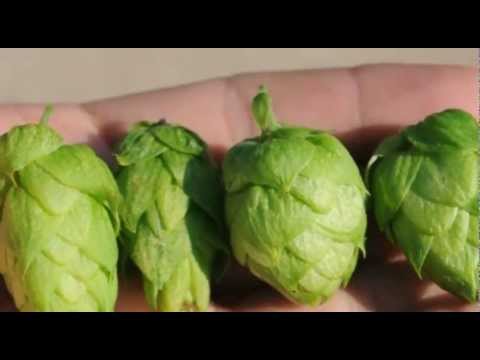
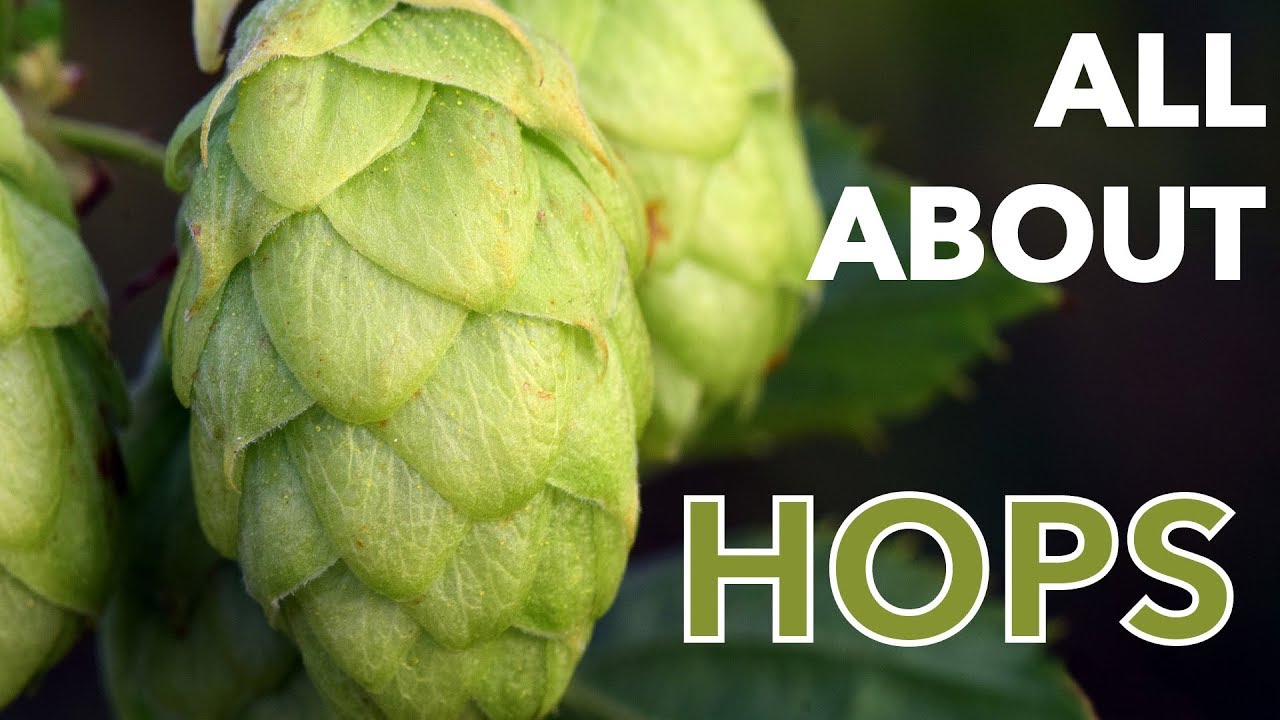
Native to Europe, Asia and North America, Hops are a herbaceous climbing perennial from the Hemp family. They quickly climb up to 20 feet and then die back to the ground in the winter months. Hops have simple leaves with 3-5 lobes and distinctive fruits that are produced in what many call cones—strobili. Numerous varieties exist and the most popular use is for preserving and flavoring beer. Hops are also sometimes enjoyed as ornamentals, as the female cones are attractive and also a good conversation piece. Other plants were also used for flavoring beer until the eighteenth century, when Hops became the most popular due to the fact that the preservative effect of the Hops makes the beer taste better for longer. Hops may also be consumed like a vegetable, by cooking the young leaves and shoots. The young leaves may also be eaten raw, and both leaves and fruits are enjoyed in herbal teas. Hops are also considered GRAS in the US as an oil, extract and oleoresin. The leaves and flowers have also been used to produce a brown dye, the stems to make a fiber for clothing and paper like Hemp, and the essential oil for use in aromatherapy, perfumes and personal care. (Source
Videos

All About Hops
Circumnutation Movement in Humulus lupulus (Hops)
Western Phytotherapy Using Hops, Skullcap and Passionflower
Chemistry & Pharmacology
Brewers Hops Plants Humulus Lupulus Galena Cascade Willamette
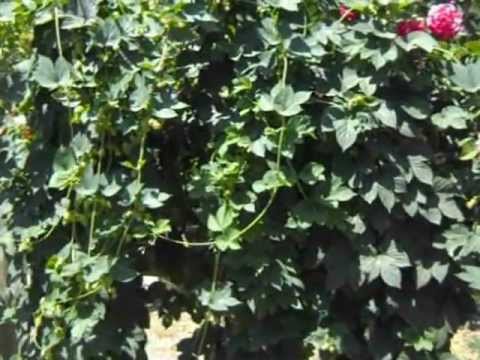
Part used: the strobile (female flower)
Qualities: bitter, astringent, pungent, cold, dry; calming, relaxing, restoring, dissolving, sinking movement
Properties Analgesic, anaphrodisiac, antacid, anthelminthic, antispasmodic, nervine, phytoestrogen, sedative, soporific
Tropism:heart, liver, stomach, intestines, kidneys, skin, central nervous system
Ground:Choleric & Sanguine krases; Tough/Shao Yang, Industrious/Tai Yang,Expresive/Jue Yin & Charming/Yang Ming Earth; Hematic/Sulphuric/Brown Iris & Lymphatic/Carbonic/Blue Iris.
Constituents;
Bitter lupulin 10% (formed from various ketones), lupulic acids (lupulone & humulone), bitter resin compound (incl. valerianic acid), essential oil 2%, cholin, asparagin, trimethalamine, alkaloids, resins, estrogenic substance.
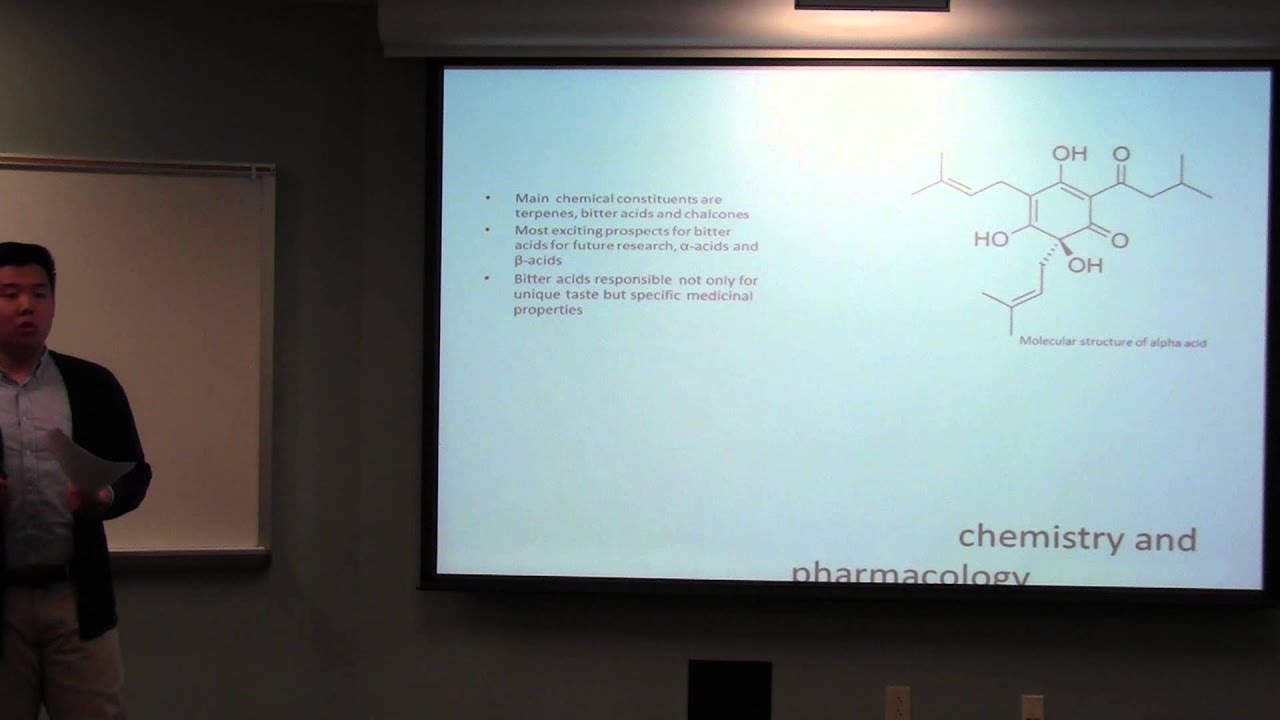
The major constituents are bitter substances (15–25%) in the resins. The resins are differentiated into hard (petroleum-ether insoluble) and soft resins. The lipophilic soft resins contain mainly α-acids (e.g. α-humulene (2,6,9-humulatriene) and related humulones) and β-acids (lupulones).
The major chemical constituents of the soft resins are humulone and lupulone and their related derivatives, 2–10% and 2–6%, respectively.
The hard resin contains a hydrophilic fraction, δ-resin, and a lipophilic fraction, γ-resin.
The essential oil (0.3–1.0%) contains mainly monoterpenes and sesquiterpenes such as β-caryophyllene, farnesene, humulene and β- myrcene (3, 5, 6, 11, 12). The essential oil also contains traces of 2- methylbut-3-ene-2-ol, which increases in amount to a maximum of 0.15% after storage of the strobiles for 2 years, owing to degradation of the humulones and lupulones. Other constituents include the chalcone xanthohumol, prenylfl avonoids and other flavonoids (e.g. kaempferol, rutin) and tannins.
- Prenylflavonoids from *Humulus lupulus*
- Estrogens and congeners from spent hops (Humulus lupulus).
- Listing on Duke's Phytochemical Database
Uses
Specific indications: Nervousness, irritability, brooding disposition, delirium, insomnia, cerebral hyperaemia, genital and mental irritability, obsession with sex, spermatorrhea, fermentative dyspepsia with acid eructations.
Comparison with other herbs:specifically useful for digestion related insomnia, different from valerian in that it does not work through a spicy, acrid principle but rather through a bitter. Combines bitter tonic with nervine, sedative properties. (source) If you don't respond well to valerian, hops can be a good alternative for sleep. Hops contains lupulin, which is considered a strong but safe, reliable sedative.
Approved by Commission E:
- Mood disturbances such as agitation, anxiety, nervousness, restlessness
- Sleep disturbances such as insomnia
1. CLEARS HEAT AND CALMS THE SPIRIT; FOSTERS THE YIN, STABILIZES THE HEART AND RIDS IRRITABILITY
Kidney Yin deficiency; low afternoon fever, lumbar pain, irregular periods
heart & Kidney Yin deficiency; insomnia, palpitations, ringing in the ears, unrest
REMITTENT FEVERS in Shao Yang stage
SEXUAL ERETHISM or neurosis in all conditions, incl. premature ejaculation, satyriasis, nymphomania, esp. with deficient Yin
ESTROGEN INSUFFICIENCY with resultant delayed or scanty menses
INSUFFICIENT BREAST MILK
2. CIRCULATES THE QI AND LOOSENS CONSTRAINT; RELAXES THE NERVE AND FREES SPASMS; RELIEVES PAIN AND INDUCES REST
Qi constraint with nerve excess; nervous tension and unrest due to anxiety, worry, etc.
kidney Qi constraint; nervous restlessness, tension, abdominal, kidney or lumbar pain
Liver Yang rising; insomnia, hot flushes, blurred vision
INTERNAL WIND with spasms, tremors, etc.
lung Qi constraint; nervous dry irritable cough
SPASMODIC ASTHMA
heart Qi constraint; anxiety, anguish, cardiac pains, palpitations
heart fire;agitation, incessant talking
uterus Qi constraint; scanty, delayed, painful menses
bladder Qi constraint; scanty or suppressed urination, frequent irritable urination, bedwetting
PAIN in all conditions
INSOMNIA in all conditions
3. RESTORES THE LIVER AND STOMACH, MOVES STAGNANCY AND AWAKENS THE APPETITE
Liver & stomach Qi deficiency; poor appetite, fatigue
ANOREXIA, ANEMIA
liver Qi stagnation; slow, painful digestion, nausea, constipation
4. DREDGES THE KIDNEYS, PROMOTES CLEANSING AND RESOLVES TOXEMIA; PROMOTES URINATION AND SOFTENS STONES
kidney Qi stagnation with general toxemia; dry skin, skin rashes, painful urination
RHEUMATISM, gout
URINARY STONES
5. RESTRAINS INFECTION, REDUCES INFLAMMATION, CLEARS TOXINS AND BENEFITS THE SKIN
skin damp heat & fire toxin; boils, furuncles, abscesses, surface inflammation
SKIN ERUPTIONS; dermatitis, eczema, herpes, ringworm, scurvy, scrofula, acne
SKIN BLEMISHES or deformities
TUBERCULOSIS, venereal infections
NOTES -- HOLMES
In Hops two very different properties are combined to create a unique plant remedy with unique applications. These are contained in its two main pharmacological emblems, the bitter and the pungent taste qualities.
On the one hand, Hops contains bitter resin compounds and a bitter substance, lupulin, making for a very bitter taste; this elects it for use in restoring mode as a classic bitter digestive tonic through upper gastric stimulation. When applied to excess heat conditions, its bitter taste qualifies Hops for a cooling and detoxifying herb in draining mode with uses in suppurative fire toxic conditions such as skin inflammations and infections, and tuberculosis infection especially (lupulone effect); for a strong diuretic with renal and therefore global cleansing results in states of general toxemia, thanks to assistance from resins and asparagin; and, finally, for allaying feverishness due to hot conditions in general and deficient Yin conditions specifically. In this respect Hops comes well up to par with a Chinese medicinal such as Huang qin, radix Scutllariae.
Given the complexity of the above picture we might be forgiven for thinking that Hops was thereby well "wrapped up". Not so. Like several other cold relaxant herbs, Hops has an application in calming sexual erethism while restoring the urogenital system. This effectively means that Hops can be used in that typically Chinese syndrome described as the heart & Kidneys failing to communicate. Then again, in treating the asterisk problem insomnia, among others due to the condition, Hops comes into service. Once more the bitterness supports the heart and pacifies the spirit, while abating the empty heat flaring all around it.
Clinical Summary
Hops are the female inflorescences of the plant Humulus lupulus L. They are used primarily in beer brewing to add bitterness and flavor. Hops is also used as an herbal medicine for mood disturbance and insomnia and to treat menopausal symptoms. In vitro studies have shown that hops has antibacterial , chemopreventive , antitumor , antiangiogenic , anti-inflammatory , phytoestrogenic and antidiabetic properties. In murine models, hops reduced hyperlipidemia , obesity , protected against bone loss following estrogen depletion , and reduced development of acute alcohol-induced damage.
In clinical studies, a hops-valerian combination product was reported to improve sleep quality , and insulin sensitivity in patients with type-2 diabetes . Hops extracts were also shown to alleviate mild depression, anxiety and stress symptoms in healthy adults ; and to decrease body fat in healthy overweight subjects . Data from an observational study suggest benefits of a combination of hops, rosemary extract and oleanolic acid in reducing arthritic pain . However, it is not clear whether hops alone would exert similar effects.
In addition, hops extracts were shown to alleviate menopausal symptoms , and may improve bone health in postmenopausal women. Some studies also indicate that derivates of hops have phytoestrogenic effects . Patients with hormone-sensitive cancers should consult their physicians before using products containing hops.
Mechanism of Action
Isomerized hops extracts (IHEs) increase plasma HDL levels and decrease atherosclerosis index (AI) in mice on high fat, high cholesterol diet via PPARalpha activation . These extracts also reduced plasma triglyceride levels and induced hepatomegaly . A product containing hops extract reduces levels of C-reactive protein in patients with inflammatory diseases .
Prenyl flavonoids from hops, xanthohumol, isoxanthohumol, and 8-prenylnaringen (8-PN) inhibit aromatase activity and breast cancer cell proliferation, increase apoptosis , and inhibit prostate cancer cell proliferation . 8-PN has also been reported to be among the potent estrogen receptor alpha (ERα) phytoestrogens, which is likely responsible for relief of menopausal symptoms . In addition, xanthohumol exhibits antiangiogenic effect by inhibiting the NF-kB and Akt pathway ; isoadhumulone, isocohumulone and isohumulone derived from hops were shown to selectively inhibit aldo-keto-reductase 1B10 (AKR1B10), which is upregulated in various cancers promoting carcinogenesis.
The isoxanthohumols are converted in the distal human gut into 8-PN via the action of intestinal microflora . This process also occurs in the liver and is regulated by the cytochrome P450 enzymes.
Physio-Medical Therapeutics, Materia Medica and Pharmacy BY T. J. LYLE, A.M.M. 1897
The flower and pollen is a stimulating and relaxing nervine of much power. It mildly influences the secernents and relieves the secernents somewhat as a gentle but thorough alterant. In insomnia the hop pillow is no myth. It quiets the nerves and soothes the whole system without any shade of narcotism. As a poultice or fomentation it is superior to most other agents for the relief of inflammatory and irritable conditions, whether they be internal or external.
It makes a good addition to cough syrups for irritable coughs and restlessness.
It is a superior agent in rheumatism and neuralgia. A hot fomentation may be applied to the parts affected, and with other agents taken internally with the best of success.
In hysteria and dysmenorrhoea it will be found of great advantage whether used by itself or in combination with other agents.
In combination with hepatic tonics it will give good results in nervous depression. It is gently laxative to the bowels and holds a relaxing influence over the liver and gall ducts. The Fluid Extract and Lupulin both moderately represent the drug.