Thyroid Hormones
Return to Endocrine System Menu
See: Statin Drugs/Statins for how mitochondria power thyroid hormones
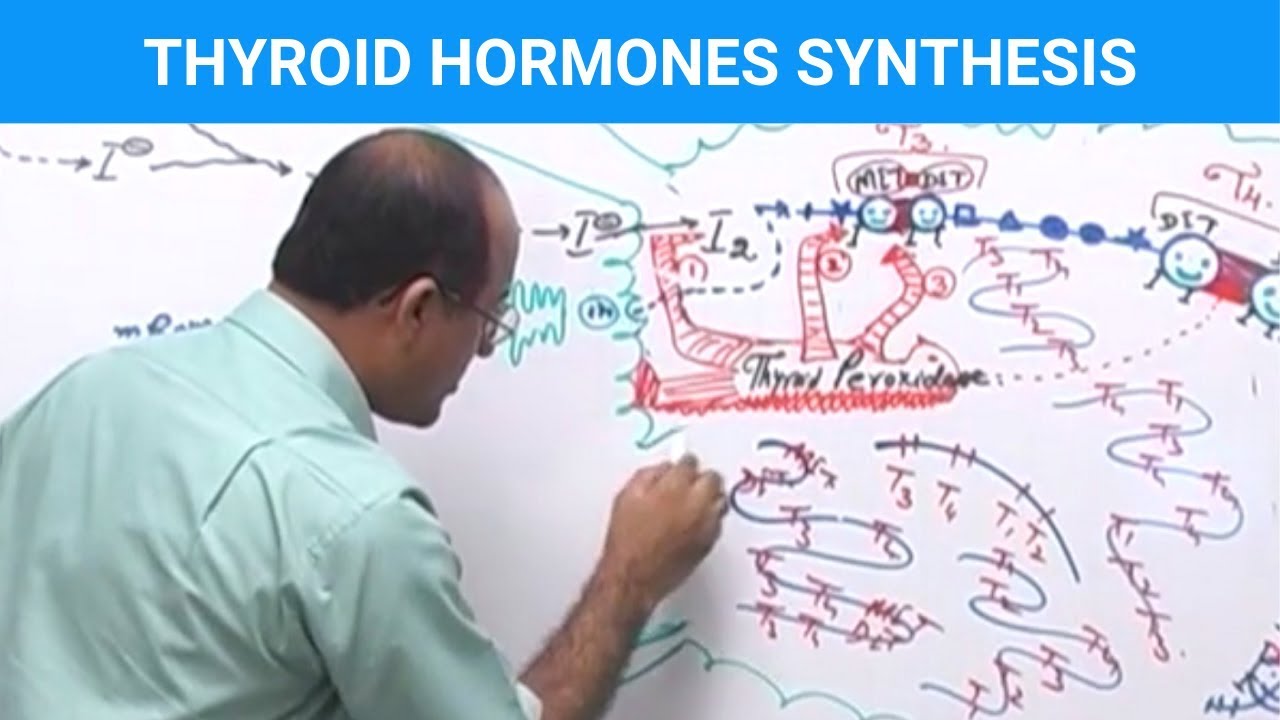
The thyroid gland’s goal is to take hydrogen peroxide and oxidize iodide to iodine. Iodide is the ionic form of iodine, ionic means it has a negative charge and each iodide ion is floating around individually. During its oxidation it becomes diatonic iodine, this is the molecule made of 2 iodide atoms joined together, and that’s used as the precursor to thyroid hormone. The way this happens is with the enzyme, Thyroid Peroxidase. The oxidant used for that purpose is hydrogen peroxide.
In different parts of the body Thyroid Hormone plays some important roles:
Liver:
- Thyroid hormone converts glycogen into glucose by production of proteins that do the conversion, this is called glycogenolysis .
- It activates another pathway for converting non-glucose molecules, glycerol, lactic acids and amino acids, into glucose, this is called gluconeogenesis.
- It increases receptors for LDL which will pull LDL out of the blood, into the liver.
Heart:
Thyroid hormone goes to the myocardium of the muscle cells and exerts its effects on the nucleus which stimulate a pathway to form a beta1- adrenergic receptor. Epinephrine and norepinephrine bind on to those receptors and cause an increase in contractility, stroke volume goes up, cardiac output goes up, blood pressure goes up. Thyroid hormone does the same thing on specialized non-contractile heart muscle cells which will stimulate an increase in action potentials causing an increase in heart rate/blood pressure.
- Heart Rate & myocardial strength
- Cardiac output
- Peripheral vascular resistance
- Oxygen consumption
- Arterial pressure
CNS:
Thyroid hormone works on the neurons to:
- Make more dendrites.
- Helps to increase myelination
- Increases the number of synapses
Bone:
- Regulates the balance between osteoblasts and osteoclasts & bone remodeling.
- It acts on the epiphyseal plates, causing them to grow in length (interstitial growth)
- In babies, thyroid helps with bone growth (turning cartilage into bone) by stimulating and regulating endochondral ossification.
Hair
Adipose Tissue:
Triglycerides are the main component of adipose tissue and thyroid hormone is good at stimulating the breakdown of triglycerides. When thyroid hormone enters fat cells it stimulates enzymes that cut the triglycerides into their constituents, glycerol and fatty acids. This is called lipolysis. The glycerol in the liver is coming from the adipose tissue.
Muscles
They’re still trying to figure out the mechanism by which thyroid hormone is working, specifically, with proteins. When proteins are broken down into their amino acids it’s called catabolism. When we go from amino acids to proteins it’s called anabolism. Thyroid hormone is regulating the activity of both of these to keep them in a nice balance. If someone becomes hyperthyroid it shifts to catabolism.
Skin
There are blood vessels running in the dermis. When it gets hot these blood vessels dilate. We see a reddish skin color, we feel heat coming off the skin, we sweat. Thyroid hormone increases sensitivity of catecholamines like epinephrine and norepinephrine which will act on the sweat glands with the result that the increased sweat will settle over the skin to increase evaporative cooling.
GI Tract
If there are problems:
The thyroid needs adequate zinc, selenium, iodine. Check levels if there are thyroid hormone problems. Get a thyroid ultrasound to see if there are nodules.
There are energetic components as well, for example, inability to express yourself, to "have a voice". Think about toxins you may be putting on your skin and hair because those enter lymph and affect the thyroid.
ARTICLES/STUDIES
Effects of carnitine on thyroid hormone action.
The positive effect of black seed (Nigella sativa L.) essential oil on thyroid hormones.
Thyroid hormones and their effects: a new perspective
Cancer
Thyroid Hormones and Cancer: A Comprehensive Review of Preclinical and Clinical Studies
Digestive System
Energy Balance / Metabolism
- Effects of thyroid hormones on thermogenesis and energy partitioning.
- Hypothalamic Thyroid Hormone in Energy Balance Regulation
- Thyroid hormone metabolism : regulation and clinical implications
- Plasma protein regulation by thyroid hormone.
- Immediate effects of heavy exercise on the circulating thyroid hormones.
- Thyroid Hormones and their Thermogenic Properties
Growth
Thyroid hormone and growth: relationships with growth hormone effects and regulation.
Mental Health
Revisiting Thyroid Hormones in Schizophrenia
Mitochondria
- Direct Regulation of Mitochondrial RNA Synthesis by Thyroid Hormone
- Thyroid hormone regulation of nuclear-encoded mitochondrial inner membrane polypeptides of the liver.
Neurological
- Thyroid Hormone Effects on Sensory Perception, Mental Speed, Neuronal Excitability and Ion Channel Regulation
- Glioendocrine System: Effects of Thyroid Hormones in Glia and their Functions in the Central Nervous System
Obesity
Effect of Thyroid Hormones on Adipose Tissue Flexibility
Pregnancy
Study of thyroid hormones in pregnancy
Regulation of Gene Expression
Regulation of gene expression by thyroid hormone.
Risk Factors
- Bisphenol S dysregulates thyroid hormone homeostasis; Testicular survival, redox and metabolic status: Ameliorative actions of melatonin.
- The Effect of Electromagnetic Radiation due to Mobile Phone Use on Thyroid Function in Medical Students Studying in a Medical College in South India
- The complex action of DEHP/BPA mixture may disturb the thyroid hormone homeostasis.
- Bisphenol A influences oestrogen and thyroid hormone-regulated thyroid hormone receptor expression.
- Fluoride has impacts on TSH, T3 hormones even in the standard concentration of less than 0.5 mg/L.
- A meta-analysis of studies investigating the effects of occupational lead exposure on thyroid hormones.