Terpenoids
Videos
Part 1 terpenoids 1
Part 2

The terpenoids (terpenes) take their name from compounds first identified in turpentine (distilled Pine oleoresin). Formerly called isoprenoids, these diverse molecules were once considered to have been constructed from various numbers of 5-carbon iosprene units. In reality, they are biosynthesized from similar 5-carbon phosphorylated precursors called dimethylallyl pyrophosphate (DMAPP) and isopentenyl pyrophosphate (IPP): we now know that isoprene is a breakdown product of terpenoids discovered in early organic chemistry labs. Nonetheless, use of the term persists in the literature to some degree.
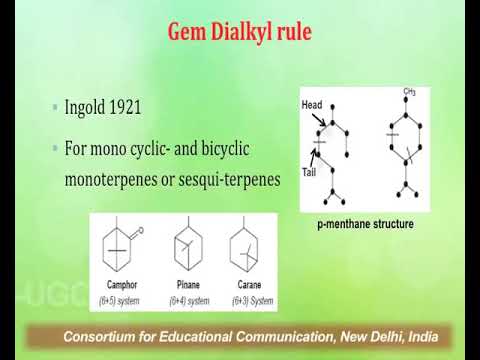
Terpene volatile oils can be irritating to the skin. They are sub-grouped according to the number of carbon atoms they contain. Monoterpenes, including menthol, camphor, and thujone, contain 10 carbon atoms. Sesquiterpenes such as azulenes and bisabolol contain 15 carbon atoms. Terpenes with 20,30, and 40 molecules are rare in plants. the 30 and 40 molecule terpenes are plant steroids and hormones. the suffix -ene generally indicates a member of this group.
The major subcategories of the terpenoids:
- Monoterpenes
- Iridoids and Monoterpene lactones
- Sesquiterpenes
- Sesquiterpene lactones
- Essential Oils & Oleoresins
- Diterpenes
- Triterpenes
- Saponins
- Triterpenoid saponins
- steroidal saponins
- Botanical steroids
- phytosterols
- cardiac glycosides
- misc. steroids
- Tetraterpenes (carotenoids)
- carotenes
- xanthophylls
- apocarotenoids
There are four subgroups of the terpenoids, named after the total number of carbon atoms in their basic structures. In the smallest subgroup, the monoterpenes, the compounds contain one set of 10 carbon atoms (two 5-carbon units); the mid-sized sesquiterpenes have 15 carbons (1 ½ sets of ten ~ sesqui means 1 ½ ; the larger diterpenes have 20 carbons (di = 2 sets of ten); the larger triterpenes have 30 carbons (tri= 3 sets of 10); and the largest terpenoids, the tetraterpenes (synonym, carotenoids), have 40 carbons – four sets of 10. There are also two therapeutically important sub-subgroups, the iridoids and the sesquiterpene lactones.(-Ganora)
terpenoids tend to be oil- and high-percentage EtOH soluble. Triterpene and steroidal saponins are water-soluble because of their sugar groups. The smaller terpenoids (in essential oils) have very limited solubility in water, and are soluble in fixed oils and EtOH. Small terpenes include:
- Hemiterpenes
- Monoterpenes
- Sesquiterpenes
The larger terpenes are not volatile and tend to be oily or resinous substances. In general, they are soluble in fixed oils or high-percentage EtOH. Many resinous materials are composed of larger terpenes (and/or polyphenolic aglycones):
- Diterpenes
- Triterpenes
- Tetraterpenes (carotenoids)
The aglycones of triterpenoid saponins (sapogenins) are practically insoluble in water or EtOH, while their glycosidic forms are highly water-soluble and amphiphilic (soapy/foamy).
Medically Useful Plant Terpenoids: Biosynthesis, Occurrence, and Mechanism of Action.