Tumors: Difference between Species
Tumors: Difference between Species
Clinical observations of PEGylated liposomes have revealed challenges in correlating circulation times between animal models and humans. Variations in organ morphology, physiology, total blood volume, and tissue perfusion rates across species contribute to interspecies differences in blood circulation kinetics. In Table Organ Comparison, comparative data on organ weight, blood flow, and blood pool filtration times in different species are presented. The quicker filtration times of the total blood pool in small rodents can result in accelerated clearance of nanoparticles.
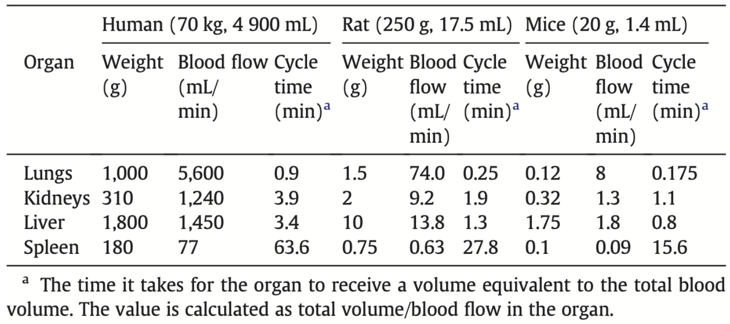
Figure Organ Comparison: Comparative values of organ weight, blood flow and cycle time in different species. The total animal weight and total blood volume are given in parentheses. Table from 2012 Bertrand.
Tumor-to-body Ratio
When comparing mice to human patients, it's important to note that mice often have a higher tumor-to-body weight ratio. This difference can have a big impact on how drug carriers behave in the body. In humans, tumors vary in size, but those suitable for treatment with nano-sized drug carriers are usually quite small, making up only a small fraction of the patient's total body weight.
On the other hand, in mice, tumors can be much larger, sometimes reaching up to 10% of the mouse's body weight. These sizable tumors can filter out a significant amount of a drug when it's injected, acting as a storage site for the drug. This can enhance the drug's effectiveness while reducing its toxicity.