Medication Adherence
Medication Adherence
Nonadherence to long term drug delivery is 50%. When patients don't stick to their prescribed medication schedules, it can have a big impact on public health. This affects how well treatments work and how much money is spent on healthcare (refer to Figure Medication Adherence) [2014 Iuga]. Patient nonadherence to medications can lead to worse health results, disease progression, and billions of dollars in avoidable healthcare costs each year. By making sure patients take their medications as directed, we can improve health outcomes and save a lot of money. To boost adherence, we can focus on providing better education, using insurance plans that encourage good choices, and offering incentives to patients. What we are doing right now, is strictly controlling the development of a drug, its distribution, and its use by physicians and pharmacists. As soon as the drug is in the hands of the patients, we completely lose control over the therapy schedule, the drug administration, and the adherence to protocols.

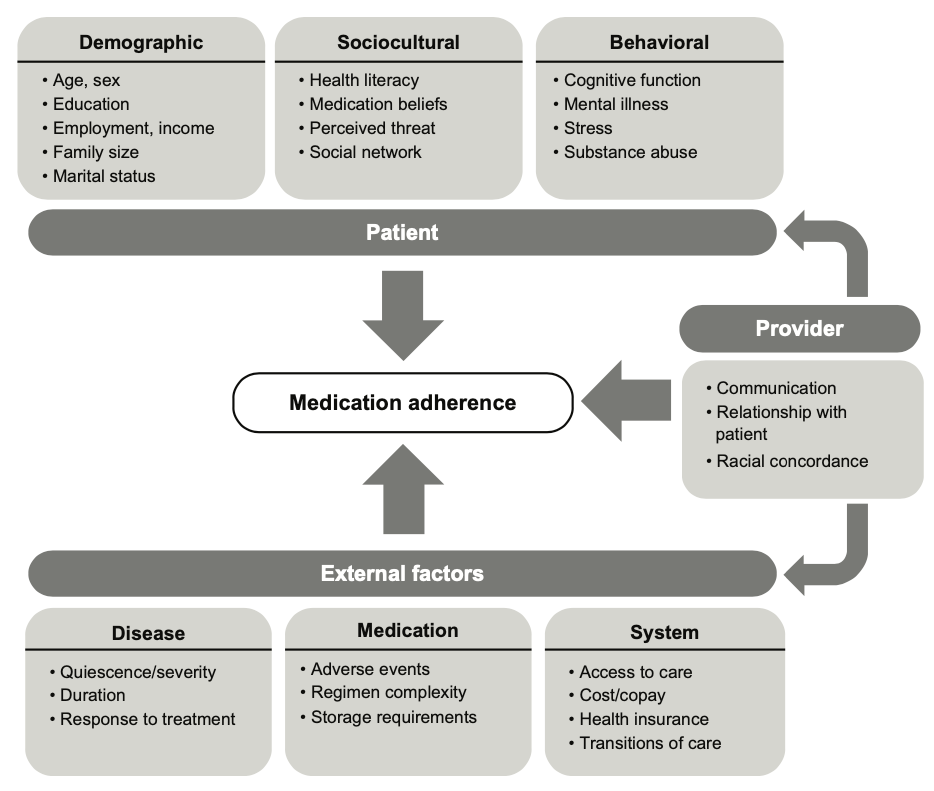
Figure Medication Adherence: Selected determinants of medication adherence. Figure from 2014 Iuga.