Opsonisation
Opsonisation
Opsonins, derived from the Greek word meaning "to prepare for eating," are vital molecules that play a crucial role in enhancing phagocytosis. Phagocytosis is the process by which immune cells engulf and eliminate antigens or dead cells.
Opsonisation, a molecular mechanism, involves the binding of pathogenic molecules, microbes, or apoptotic cells (known as antigenic substances) to antibodies, complement proteins, or other proteins. This binding allows them to attach to specific receptors present on the surface of phagocytes and natural killer cells (refer to Figure Opsonins). The presence of opsonins significantly enhances the binding of antigens to immune cells. Moreover, opsonisation triggers signal cascades originating from cell surface receptors, thereby facilitating phagocytosis.
Opsonins serve several essential functions within the immune system. In a healthy individual, they mark dead and dying self cells, enabling their clearance by macrophages and neutrophils. Additionally, opsonins activate complement proteins and direct the destruction of targeted cells through the action of natural killer cells.
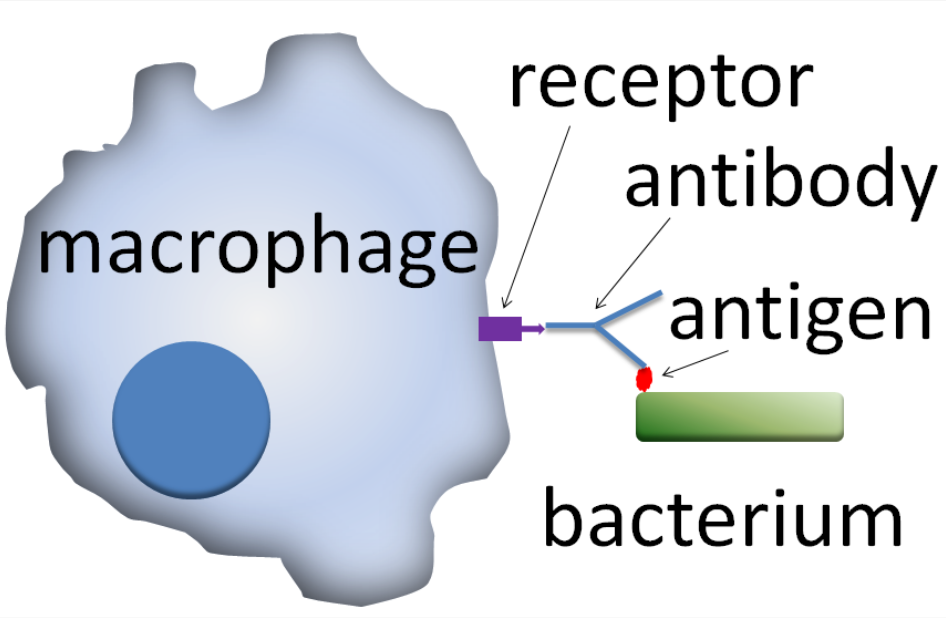
Figure Opsonins: A phagocytic cell recognizes the opsonin on the surface of a bacterium. Picture from Wikipedia.