Albumin
Albumin
Human album (see Figure Albumin) is a 67 kDa protein, which exhibits the highest abundance in plasma, constituting approximately 50% of all proteins (30-45 g/L). This multifunctional protein plays a pivotal role in regulating osmotic pressure and serves as a versatile carrier for various molecules. It demonstrates an affinity for water, cations (such as Ca2+, Na+, and K+), fatty acids, hormones, bilirubin, thyroxine, and pharmaceutical compounds.
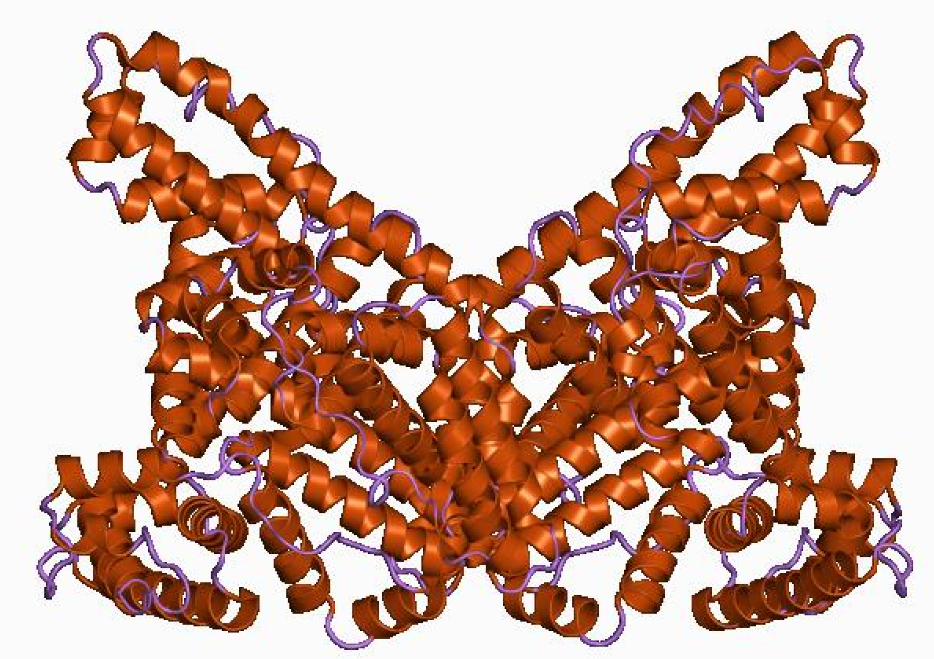
Figure Albumin: Structure of the globular protein serum albumin. Picture from Wikipedia.
Upon nanoparticle injection, rapid and non-specific interactions with albumin occur through ionic and hydrophobic interactions, a process known as opsonisation. Although early deposition of albumin on the surface of nanoparticles can protect them from further opsonisation with other proteins, these contacts are transient, and albumin can be easily displaced by other less-abundant proteins with higher affinities. This phenomenon is referred to as the Vroman effect.
| Question | Answer |
|---|---|
| What is the immediate effect of the interaction between a nanoparticle and albumin? | The albumin-coated nanoparticles are transported to the liver for destruction. |