RNA structure in cells
PMID: 35236847 2022
double stranded regions in the genome
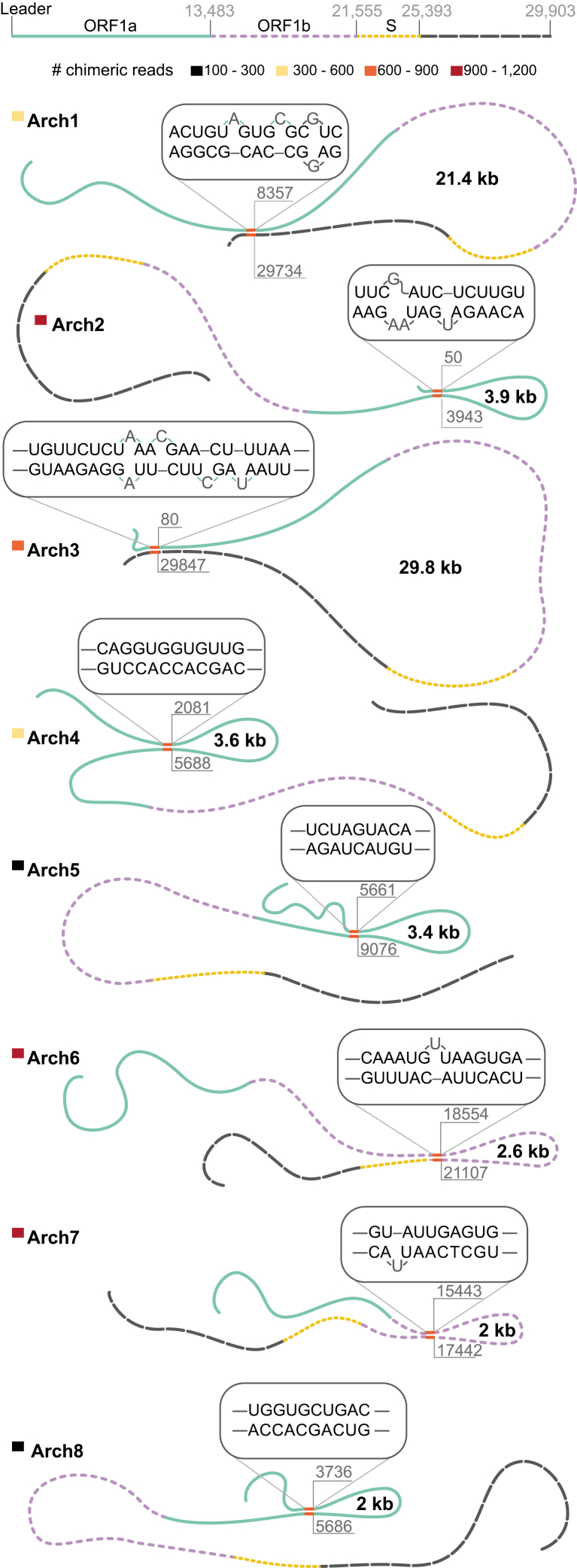
(PMID: 34168138 2021) psoralen-based method called cross-linking of matched RNAs and deep sequencing (COMRADES) recently identified many long-range RNA duplexes of SARS-CoV-2 inside cells, further highlighting the importance of RNA duplexes in maintaining SARS-CoV-2 fitness 28,29
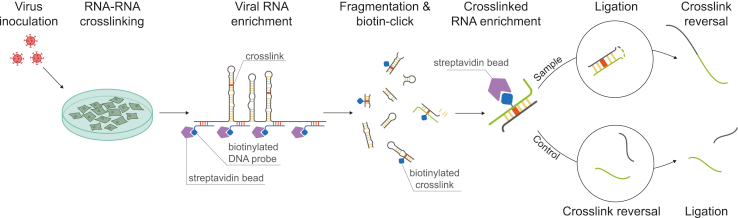
PMID: 33259809 - COMRADES - psoralen crosslinking of base-paired RNA and deep sequencing (Aw et al., 2016; Lu et al., 2016; Sharma et al., 2016). COMRADES uses a clickable psoralen derivative to specifically crosslink paired nucleotides and high-throughput sequencing to retrieve their positions (Figure 1). Following in vivo crosslinking, the viral RNA is selectively captured, fragmented, and subjected to a click-chemistry reaction to add a biotin tag to crosslinked fragments. Crosslinked RNA duplexes are then selectively captured using streptavidin affinity purification. Half of the resulting RNA is proximity ligated, following reversal of the crosslink to create chimeric RNA templates for high-throughput sequencing. The other half is used as a control, in which reversal of the crosslink precedes the proximity ligation and accurately represents the background level of non-specific ligation. The coupling of two biotin-streptavidin-mediated enrichment steps, first of viral RNA and second of crosslinked RNA duplexes, provides high structural depth for identification of both long- and short-lived conformations. COMRADES can therefore measure (1) the structural diversity of alternative RNA conformations that co-exist inside cells; (2) short-distance, as well as long-distance (over tens of thousands of nucleotides), base-pairing within the same RNA molecule; and (3) base-pairing between different RNA molecules, such as those of host and viral origin
single stranded regions in the genome
(PMID: 34168138 2021) in vivo click selective 2′-hydroxyl acylation and profiling experiment (icSHAPE) and dimethyl sulfate mutational profiling with sequencing (DMS-MaPseq), have been recently applied to probe single-stranded regions of SARS-CoV-2 in infected cells or in vitro21–24. The mapped single-stranded information could be further used as restraints to predict the base-paired regions within 500 nt25.
long range interactions
PMID: 33259809 - COMRADES