RNA delivery mechanisms
2022
pmid: 34983972
To overcome the barriers to safe and effective RNA delivery, scientists have developed both viral- vector-based and non- viral delivery systems that protect the RNA from degradation, maximize delivery to on- target cells and minimize exposure to off- target cells. Viral gene therapies3 have generated success-ful clinical readouts4–9, but the effectiveness of these approaches can be limited by pre- existing immunity10, viral- induced immunogenicity11, unwanted genomicintegration12, payload size constraints13, the inabi-lity to re- dose, complications involved in upscaling14, and expensive vector production.
non-viral delivery methods
N-acetylgalactosamine (GalNAc)–siRNA conjugates that target hepatocytes16–18, intravenously administered LNP- based siRNA drugs that target hepatocytes19, and emergency use authorization (EUA) and FDA approval20for intramuscularly administered LNP- based mRNA COVID vaccines
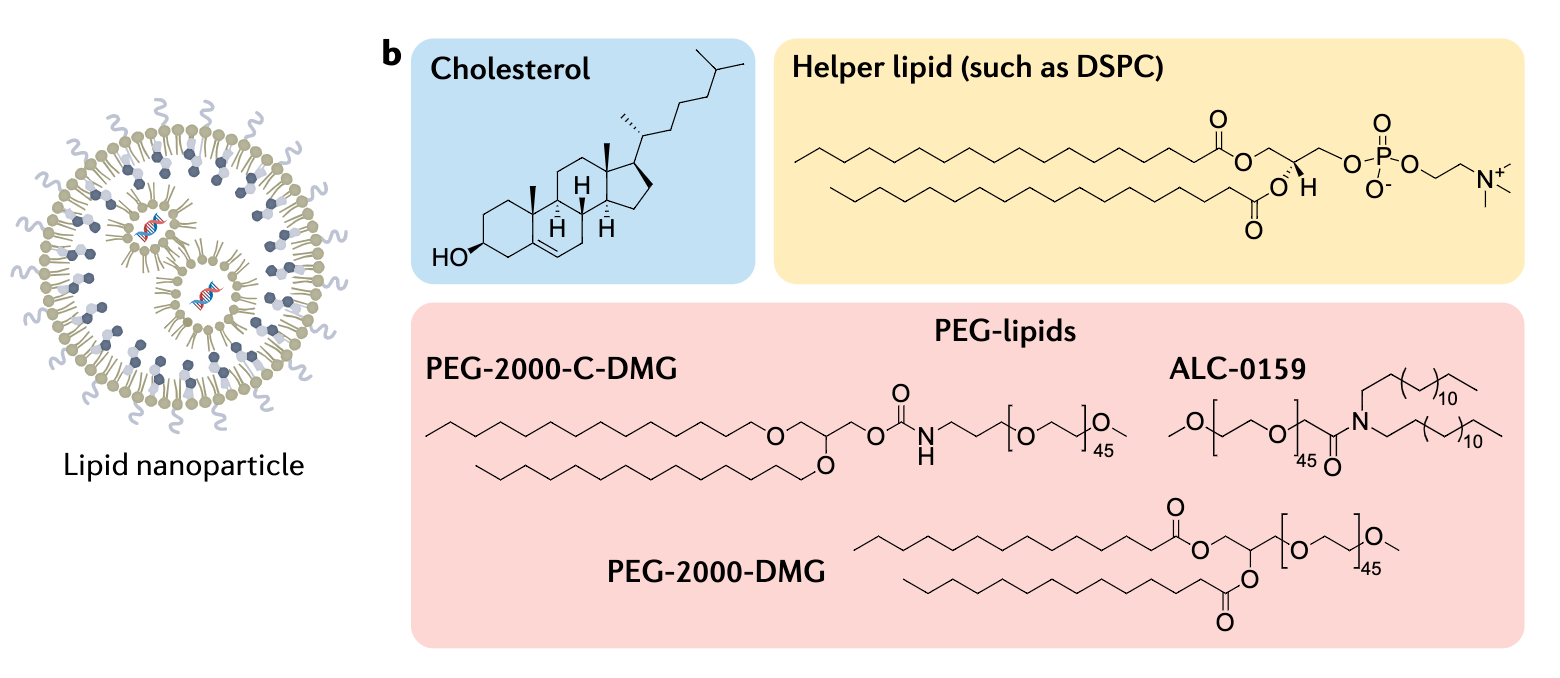
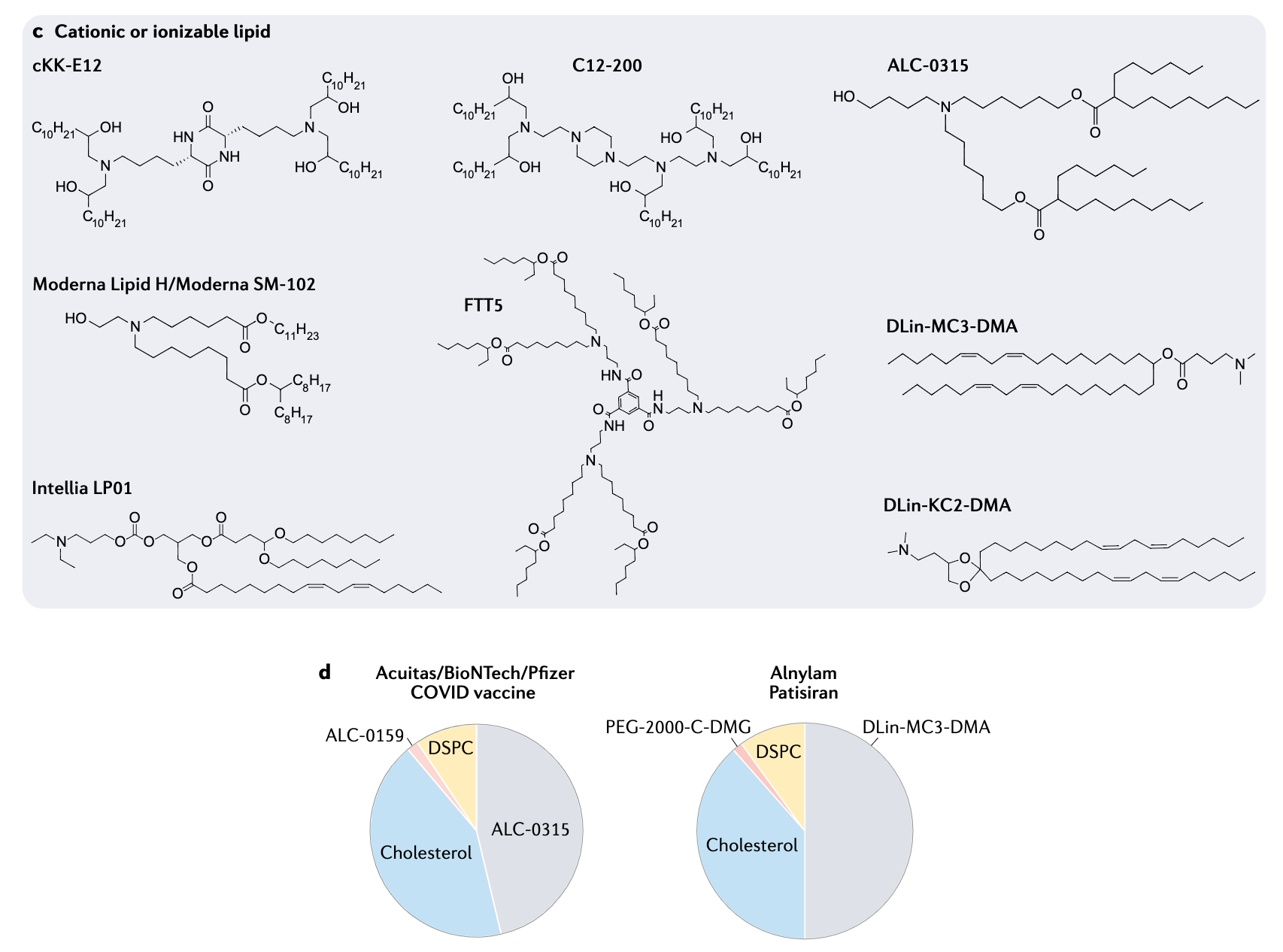
delivery of high amounts
For example, givosiran16 is administered subcutaneously at 2.5 mg/kg monthly, and lumasiran18 is administered subcutaneously at 3.0 mg/kg monthly for 3 months, then 3 mg/kg once every 3 months.
specifically targeting the liver
GalNAc is a carbohydrate-derived trivalent ligand that binds the asialoglycoprotein receptor (ASGPR) (Fig. 4b). ASGPR is an ideal receptor for active targeting: it is highly expressed on target cells (in this case hepatocytes), not expressed on other cell types, leads to rapid endocytosis upon GalNAc binding, and is rapidly recycled to the cell surface following endo-cytosis. GalNAc also exhibits several traits that make it an ideal targeting ligand. First, it has a molecular weight of <2 kDa, which is many times less than the molecular weight of the ASO or siRNA it delivers185.
XXX modification of N-protein to target the liver XXXX
efficiency of delivery
As over 95% of RNA can be retained in endosomes235,