Genome features - SARS-CoV-2
CoV Genome - overview
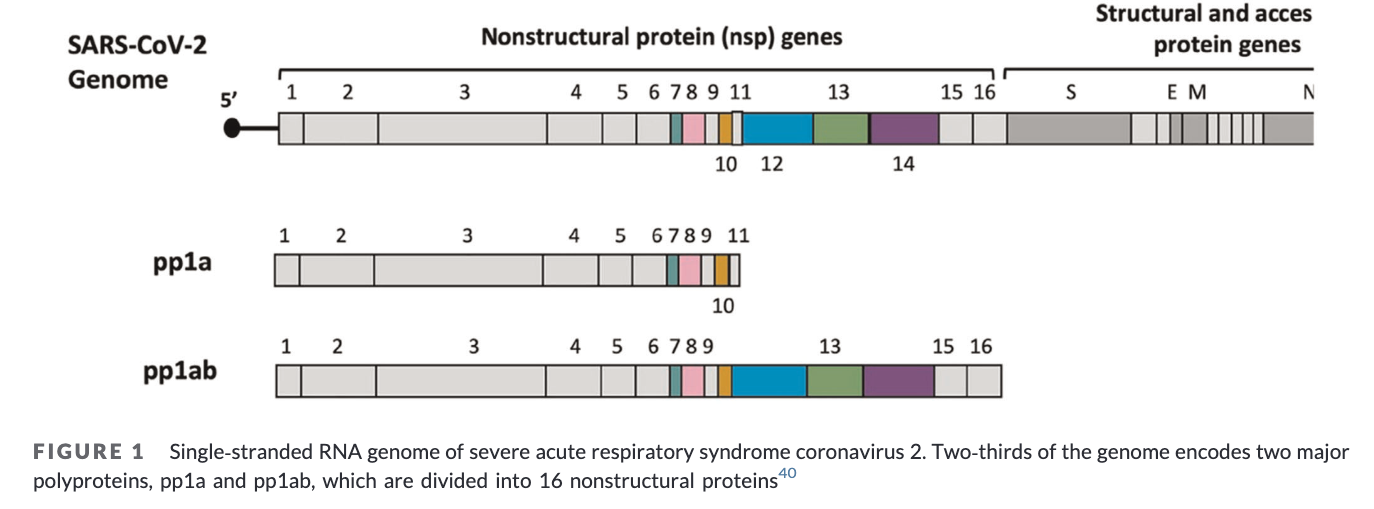
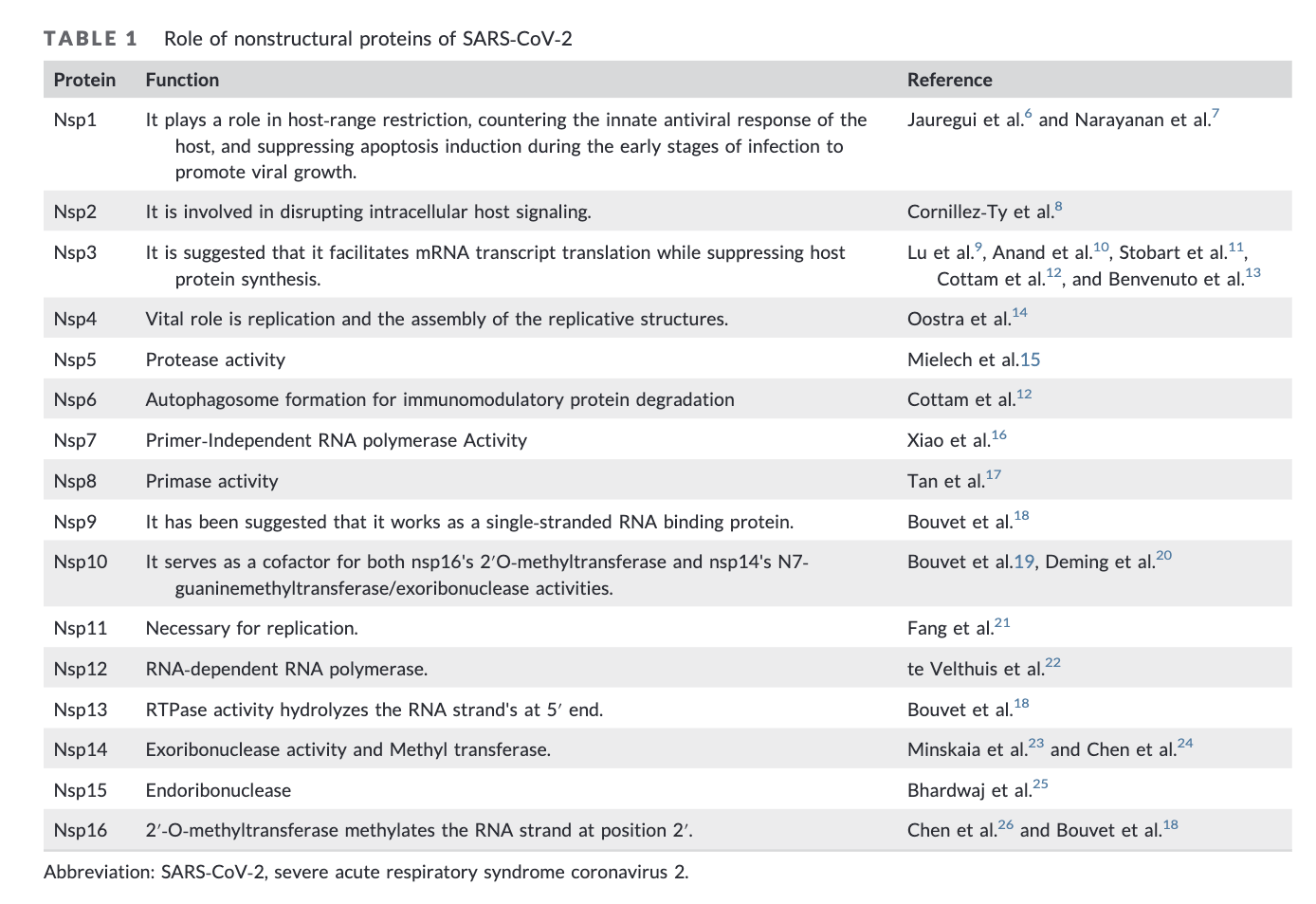
(2017 pmid: 28720894) The proteins encoded by the CoV genomic RNA (gRNA) can be divided into two major categories. The first entails the 15 or 16 nonstructural proteins (nsp1 to nsp15/16)1, 2, 7, which are synthesized in the host cell and assemble into the replicase-transcriptase complexes (RTCs). RTCs are associated with and/or are embedded into double-membrane vesicles (DMVs) and convoluted membranes, which are generated during CoV infection and very likely act as replication platforms8. The second category contains the structural and accessory proteins. A minimal set of 4 structural proteins is critically required for the efficient formation of infectious virions1, 2, 7. Those include the envelope (E), the membrane (M), the spike (S) and the nucleocapsid (N) proteins.
pmid: 33837972
Transcriptional Regulatory Sequence - TRS
sequence bound by NP - NP dissolves dsRNA afer transcription at TRS.
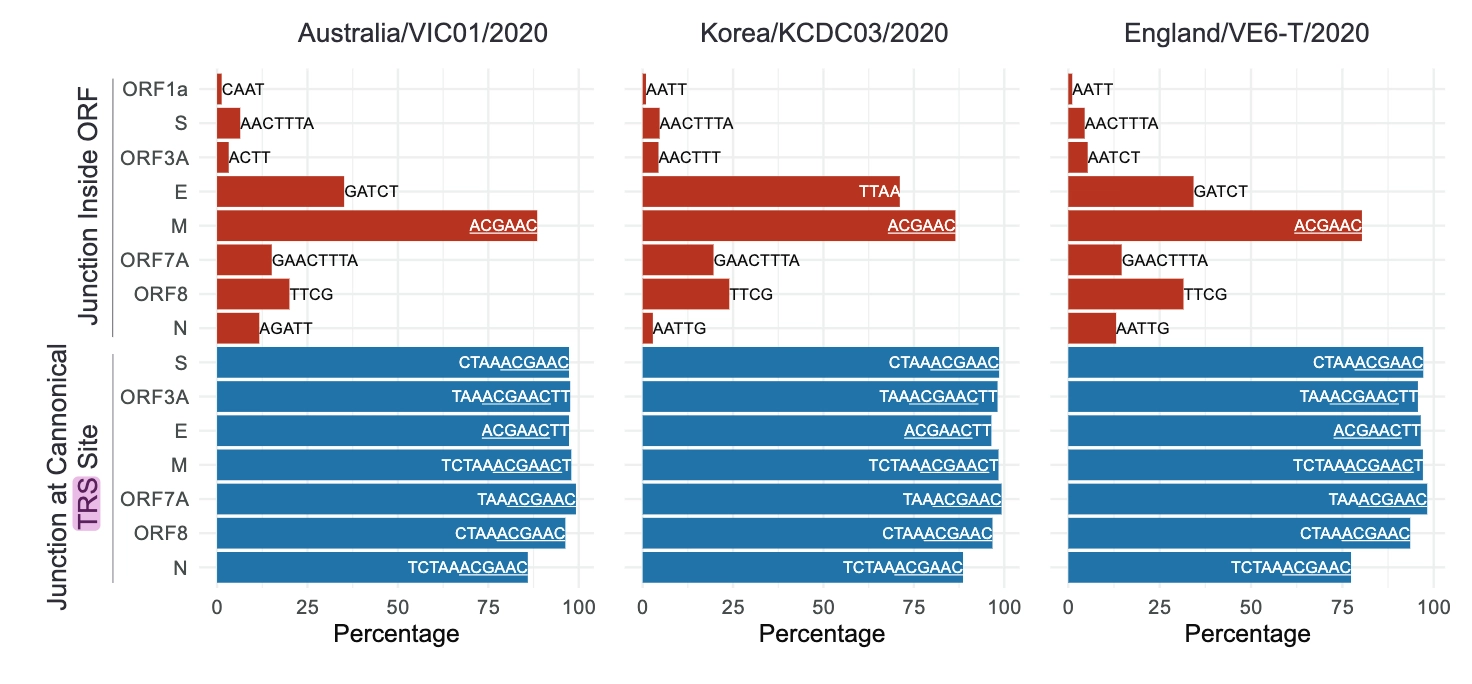
(Nomburg 2020 BioRxiv doi: 10.1101/2020.04.28.066951) To generate these subgenomic RNAs, - CoV undergoesa process of discontinuous extension during synthesisof negative-stranded RNA templates. As the virus-encoded RNA-dependent RNA polymerase progresses from the 3’ end towards the 5’ end of the genome, it encounters transcriptional regulatory sequences (TRS) upstream of each major ORF(TRS body sites). Here, the polymerase can skip to a similar TRS just upstream of a shared leader sequence at the 5’ end of the CoV genome(TRS leader). These antisense subgenomic RNAs are then transcribed, resulting in a series of tiered subgenomic RNAs all containing the same 5’ leader sequence [6].
- core TRS sequence: ACGAAC