OLLACHEA PROJECT
We acquired an option for the Ollachea project and began exploration fieldwork in 2008. The project is located in Peru‘s southern Puno district about 250 kilometers north of Lake Titicaca, on the eastern escarpment of the Andes.
Studies demonstrate the feasibility of a low-cost underground mining operation and we are advancing with engineering studies. A large reserve base has been delineated and on-going drilling continues to produce promising results.
Logistically, the project benefits from easy access via the new Interoceanic Highway and it has a guaranteed electricity source from the nearby San Gaban hydroelectric station. There is abundant water. The Peruvian government has approved the project‘s environmental impact study and permits for construction.
The project has strong support from local communities, in both the direct and indirect areas of influence. The Ollachea mine project is expected to become an important source of employment in the area.
The Company also signed an unprecedented 30-year surface rights agreement in 2012 and as part of that long-term agreement, the Community of Ollachea will earn a 5% participation interest in the mine once it begins commercial production.
Geology and Exploration Upside
Geologically, Ollachea is an orogenic style gold system. These types of gold systems are known for their large size and continuation to depth, and therefore, are a major source of the world’s gold production.
The Ollachea gold deposit is hosted in Devonian-aged carbonaceous metamorphosed sediments on the eastern escarpment of the Cordillera Oriental of the Andes Mountains. Ollachea is also located on the northern extremity of a northwest-trending sedimentary belt that extends northwards from Bolivia through southern Peru.
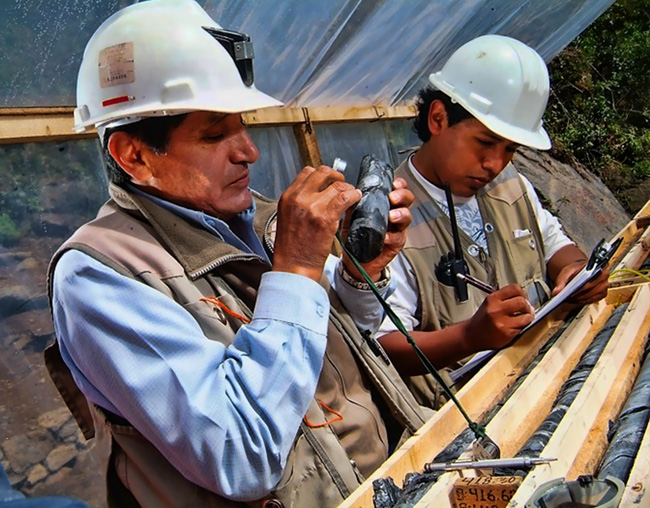
The local geological setting is bedded slates and sandstones that are structurally deformed and in close proximity to intrusive bodies. Gold mineralization occurs within a well-defined shear zone and is contained within seven discrete west-striking, north-dipping structures. Gold mineralization is associated with a sulphide assemblage that consists of pyrrhotite with minor pyrite, arsenopyrite, and chalcopyrite. Free gold is frequently observed in drill core.
The cumulative, drill-indicated strike of the mineralized trend at Ollachea is several kilometres long and remains open ended in both directions. _View more…_