HUGHES SILVER GOLD PROPERTY
Hughes Property
The Tonopah District
Discovered in 1900, Tonopah quickly became known as the Queen of the Silver Camps. Over the next months and years, people from all over the country rushed to Nevada in hopes of making their fortunes. Over the next half century, the Tonopah district produced 175 million ounces of silver and 1.86 million ounces of gold from 8.8 million tons of rock.

Tonopah Railroad, 1908

Quartz-adularia-argentite vein from the Belmont Mine
Geology
The Tonopah mining district is an intermediate sulfidation epithermal vein system. Productive veins in the district are hosted in volcanic rocks which range in composition from andesite to rhyolite. High-grade mineralization in the veins consists of argentite, polybasite, electrum, sphalerite, galena and chalcopyrite. The host volcanic rocks adjacent to the veins are altered to quartz, sericite and adularia. This zone of potassium-silica alteration grades outwards into an argillic zone of alteration consisting of kaolinite, halloysite, sericite, and montmorillonite, which in turn grades outwards into propylitic alteration.
The Belmont Mine
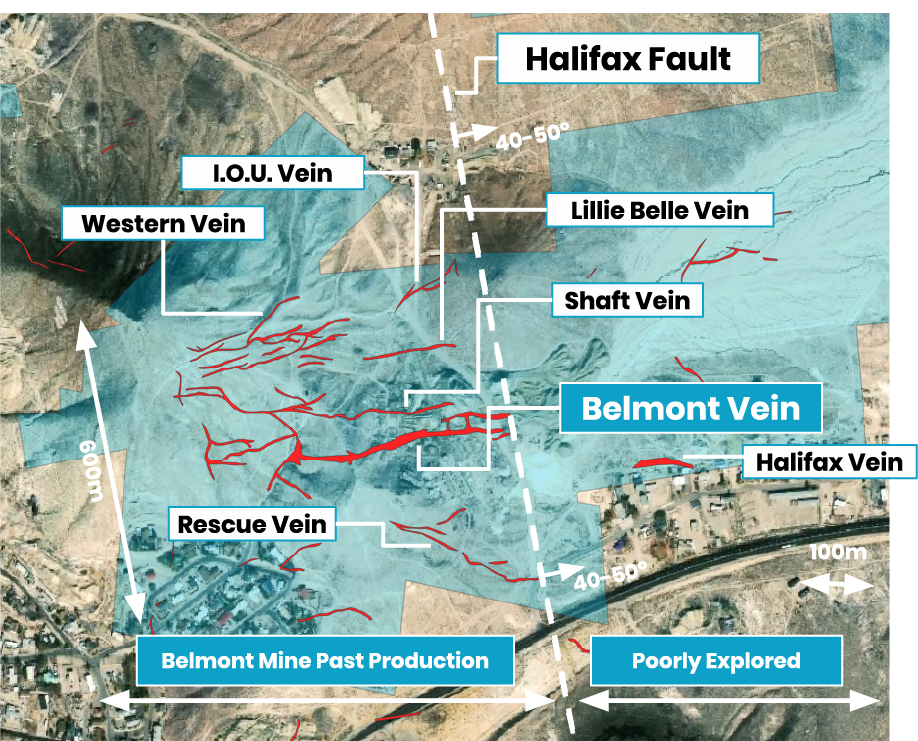
Tonopah Veins – 5100-5200’ Elevation, Approx 325m below surface
Sources: Assmus, 1979 and Nevada Bureau of Mines Report 48400131
- One of the largest producers in America in the 1910’s
- 460 m shaft, tens of miles of underground development
- Not commercially operational since 1929
- Belmont vein up to 15m wide
- No modern assessment of remaining potential
- Veins offset by fault zone and lost
Land Position, Access,
and Infrastucture
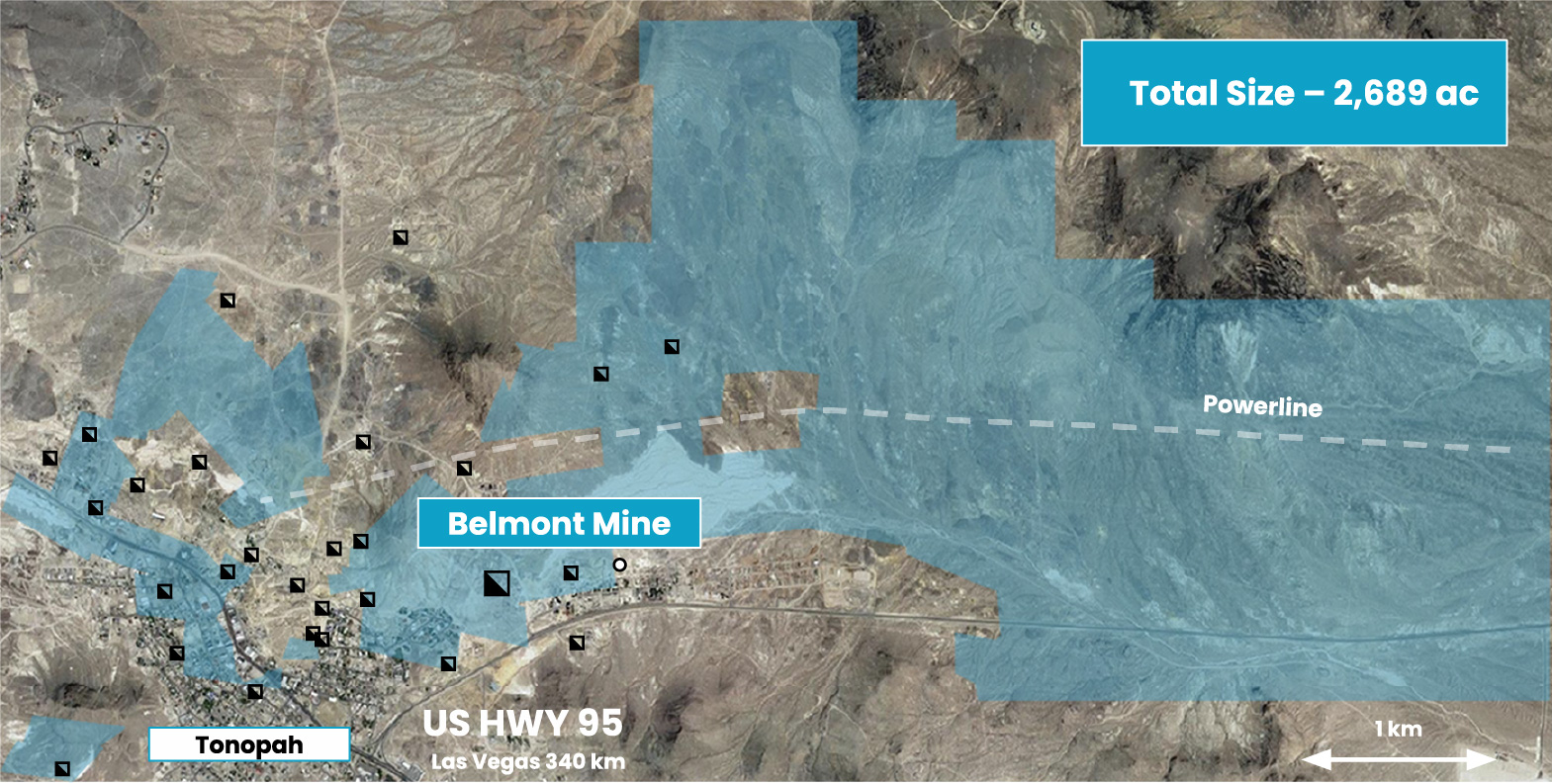

Road Access
with multiple dirt roads and trails

U.S. Highway 6
crosses the property

Typical Property Terrain
plus, powerline crossings