BATOPILAS PROJECT
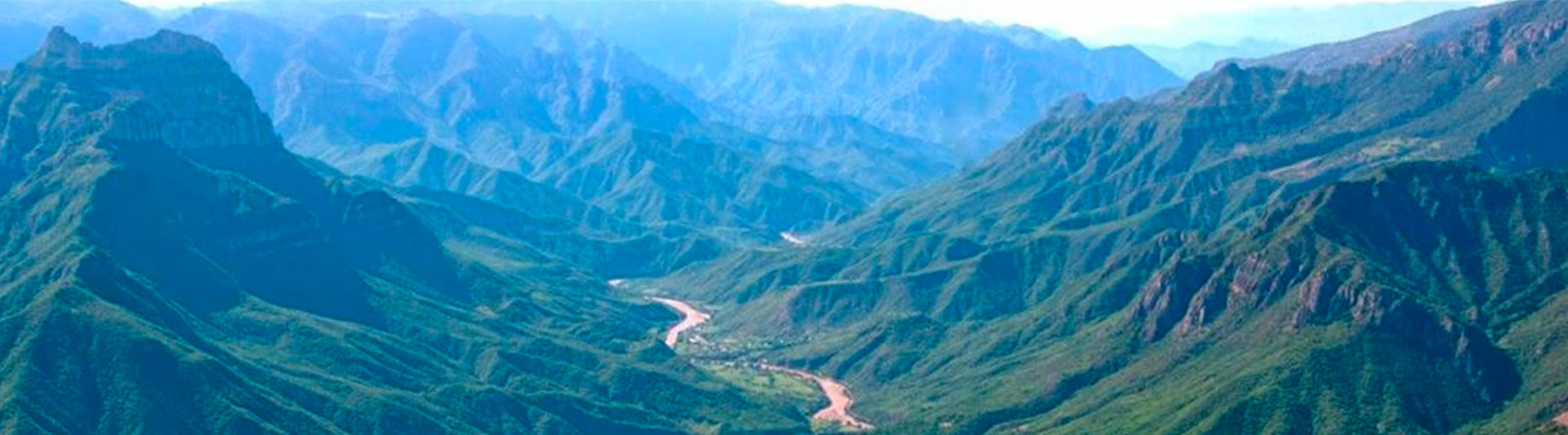 Panoramic view of the Batopilas Canyon looking SE
Prime Location.
Located in SW Chihuahua, Mexico covering 1,183 hectares of land and 94% of the historic Batopilas Native Silver District.
Exceptional Mining District.
The Batopilas Mining District is one of the few mining districts where the major mineral is native silver. The purity level of this occurrence can be up to 75% Ag.
Well-studied Area.
Many studies of the district already characterized the occurrence and geometry of the ore, and its relationship to surrounding deposits in the area.
Encouraging Drill Result.
Drilling in 2005 intercepted 20 cm of brecciated vein con- taining 19 Kg/t (614 oz/t) of Ag. High grade samples obtained by Reyna Silver ranging from 305 to 42,302 g/t silver and 1.03 to 21.4 g/t gold.
MINERALIZATION
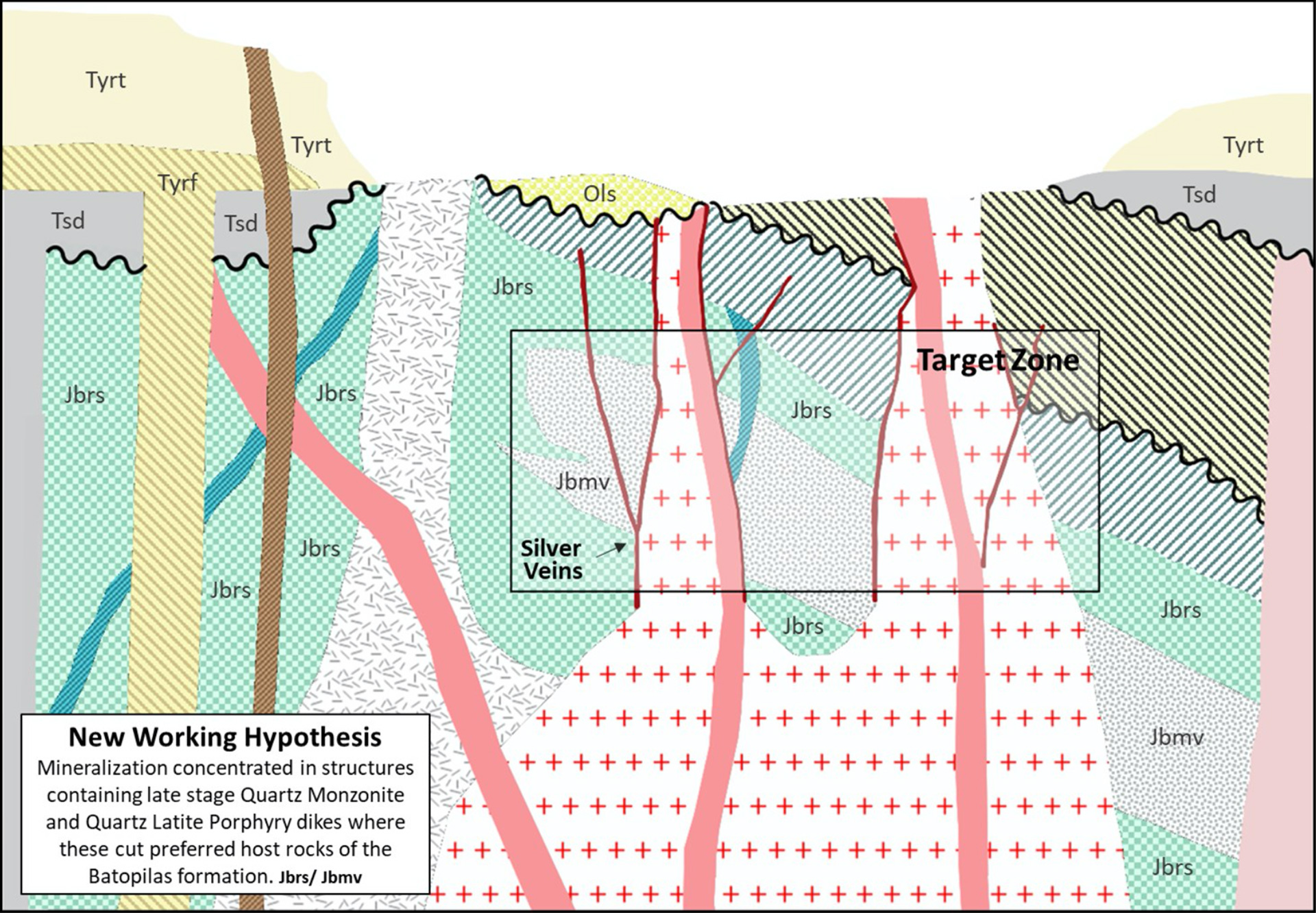 Illustration of the target zone and the subsurface at the Batopilas Project
Silver mineralization in the Batopilas Mining District dominantly occurs in the Pastrana Dacite, but veins are also hosted in the metamorphosed Mesozoic basement rocks, Tahonas Granodiorite and Dolores Microdiorite. Min- eralization throughout the silver zone overwhelmingly consists of crystallized native silver in calcite gangue.
The silver ores were high grade: ranging from the Batopilas Mining Company's 1990-1913 average direct smelting grade of 8,000 g/t to extremely high-grade pods carrying up to 75% Ag. Based on historical descriptions, ore shoots typically were 15-18 m long, 0.5-4.6 m wide (with 1m average) and up to 350 m down plunge.
Over the period 1880-1914, The Batopilas Mining Company produced an average of 100 tpd of ore: approxi- mately 10 tpd of smelting grade and 90 tpd of milling grade. These figures are averaged over 30 years and it must be remembered that between bonanzas, the mines were in development for months at a time without extracting any significant amounts of ore.