Understand Calculus in 35 Minutes
1.92M subscribers
SUBSCRIBE
This video makes an attempt to teach the fundamentals of calculus 1 such as limits, derivatives, and integration. It explains how to evaluate a function using limits, how to find the slope of the tangent line using derivatives and the limit definition of a derivative as well as to perform basic integration techniques to calculate the area under the curve. My Website: https://www.video-tutor.netPatreon Donations: https://www.patreon.com/MathScienceTutorAmazon Store: https://www.amazon.com/shop/theorgani...Here are some other videos of interest: Intro to Limits
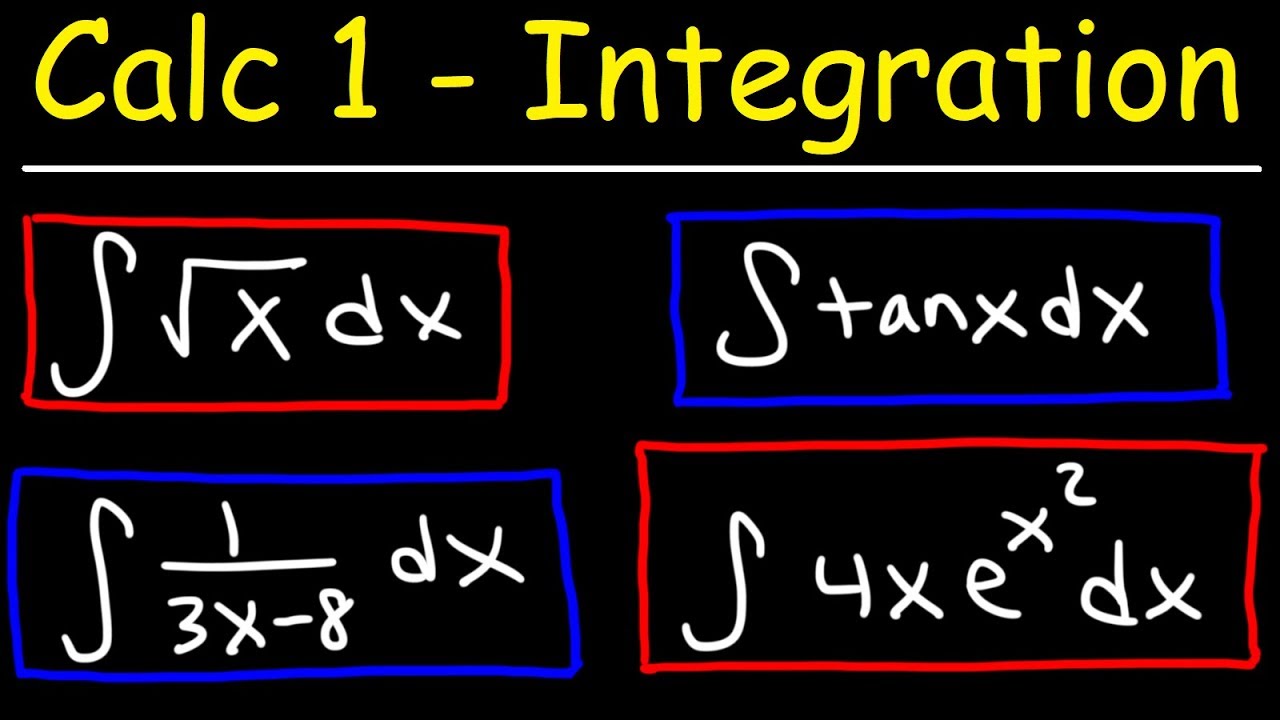 New Calculus Video Playlist

00:00
in this video I'm going to attempt to
00:03
teach the fundamentals of calculus in a
00:06
very short time so there's three areas
00:09
of calculus that you want to be familiar
00:11
with the first one is limits now limits
00:17
help you to evaluate a function let's
00:21
say if we want to evaluate F when X is
00:26
equal to 2 but for some reason a
00:27
function is undefined or we just can't
00:29
do it
00:30
well a limit will allow you to see what
00:34
happens as X approaches 2 and so limits
00:39
are very useful to find out what happens
00:41
to a function as we approach a certain
00:43
value now the second area of calculus
00:46
that you want to know is derivatives so
00:51
what are derivatives
00:52
well basically derivatives are functions
00:55
that give you the slope of an original
00:59
function at some value so let's say if I
01:03
have some function f of X the derivative
01:06
of f of X is known as F prime of X now
01:09
this function here will tell me the
01:13
slope of this function at some x value
01:16
it will give me the slope of the tangent
01:18
line so derivatives are very useful for
01:22
calculating rates of change now the
01:25
third area is integration integration is
01:30
basically the opposite of derivatives
01:34
with integration you're basically
01:36
finding the area under the curve
01:40
integration is very useful for
01:42
calculating how much something
01:45
accumulates over time and what you need
01:48
to know is that derivatives and
01:49
integration they're opposites of each
01:51
other
01:52
for instance we said that the derivative
01:55
of the function f of X is equal to F
01:58
prime of X so this is the derivative of
02:03
the original function f the integral of
02:08
f prime of X is f of X
02:13
so this is the antiderivative or the
02:18
integral of F Prime so you can think of
02:23
integration as finding the
02:25
antiderivative now let's begin our
02:29
discussion with limits so let's say that
02:33
f of X is x squared minus so what that
02:39
is a terrible looking - let me do that
02:40
again so let's say it's x squared minus
02:43
4 over X minus 2 what is f of 2 can we
02:52
evaluate the function at x equals 2 well
02:55
let's find out so if we plug in 2 2
02:59
squared is 4 4 minus 4 is 0 and 0 over 0
03:03
what is that well we can't figure this
03:06
thing out so that's indeterminate
03:07
therefore we can't evaluate the function
03:11
at x equals 2 and so this is when limits
03:14
become important so if we can't find out
03:17
the value of the function when X is 2
03:19
can we find out what the function will
03:22
do as X approaches 2 so what happens
03:30
when X is let's say 2.1
03:40
so if we were to plug in to point one
03:41
into the function you should get for
03:52
point one now what if we plug in a
03:55
number that's even closer to two let's
03:58
say two point zero one well if we do
04:04
that this will give us a four point zero
04:07
one so notice that as X gets closer and
04:11
closer to two the value of the function
04:15
gets closer and closer to four so thus
04:20
we can use a limit expression so we
04:26
could say that the limit as X approaches
04:29
2 of X square minus four over X minus
04:32
two we know it's equal to four but to
04:35
show you work what you need to do is
04:37
factor x squared minus four and when you
04:41
factor it using the difference of
04:42
squares method it's X plus two minus I
04:45
mean times X minus two and so we could
04:48
cancel this factor and so we're left
04:52
with the limit as X approaches 2 of X
04:56
plus two so now we can use direct
04:57
substitution so we can replace X with 2
05:01
so this becomes 2 plus 2 and this gives
05:05
us the limit which is 4 so this tells us
05:08
that as X gets closer and closer to 2
05:12
the Y value or f of X will approach a
05:16
value of 4 so even though F of 2 does
05:21
not exist the limit as X approaches 2 of
05:26
the function f of X that exists and
05:28
that's equal to 4 and so make sure you
05:31
understand that limits help you to see
05:35
what happens or what happens to a
05:37
function as X approaches a certain value
05:41
now let's move on to number 2
05:44
derivatives so how can we find the
05:48
derivative of a function the most basic
05:51
really need to know is the power rule
05:53
the derivative of a variable raised to a
05:57
constant such as X raised to the N power
06:00
is n X raised to the N minus 1 so how do
06:03
we apply that well let's say if we want
06:07
to find the derivative of x squared so
06:10
in this case n is 2 so it's going to be
06:14
2 times X raised to the 2 minus 1 or
06:17
just 1 so we get 2x if we want to find
06:21
the derivative of let's say X cube and
06:23
it's 3 so it's gonna be 3 X to the 3
06:27
minus 1 which is 3 x squared now if we
06:34
want to find the derivative of X to the
06:36
fourth power it's gonna be 4x raised to
06:40
the 4 minus 1 which is 4 X cube and so
06:45
that's a simple process in which you
06:47
could find the derivative of a function
06:51
but now what does it mean so we said
06:53
that the derivative is a function that
06:56
gives us the slope of the tangent line
06:58
of some original function so you might
07:02
be wondering what is a tangent line so
07:06
let's talk about that let's say if we
07:07
have some curve and a tangent line is a
07:11
line that touches a curve at one point
07:15
now you need to be familiar with a
07:17
secant line a secant line is a line that
07:21
touches a curve two points so the slope
07:27
of a tangent line is equal to the
07:30
derivative of a function at some value
07:33
to calculate the slope of a secant line
07:36
you've done this before in algebra using
07:38
this expression its rise over run y2
07:42
minus y1 over x2 minus x1 now let's say
07:49
that f of X is X cube using the power
07:54
rule the first derivative is 3x squared
07:57
so let's say if we wanted to calculate
08:00
the slope of this tangent line and when
08:02
X is equal to 2
08:06
so the slope of the tangent line is
08:08
going to be F prime of 2 which is 3
08:12
times 2 squared so it's 12 so this means
08:16
that at x equals 2
08:17
the slope is 12 so what does that mean
08:21
that means that as you travel one unit
08:23
to the right the curve will increase by
08:27
a value of 12 so every time you travel
08:30
or every time the x value increases by 1
08:33
the Y value will increase by 12 so
08:36
that's what a slope of 12 mean now let's
08:45
draw a rough sketch of the original
08:49
function X cube now the graph doesn't
08:51
have to be perfect but just get enough
08:55
for instructional purposes and just to
08:59
keep things simple let's say at this
09:01
point X is equal to 2 now granted the
09:04
graph is not drawn to scale so keep that
09:06
in mind now what we're going to do is
09:09
we're going to estimate the slope of the
09:12
tangent line using the slope of the
09:16
secant line now to calculate the slope
09:20
of the secant line you need to choose
09:22
two points a point that's to the left of
09:26
where you want to evaluate the slope of
09:29
the tangent line and one that's to the
09:31
right so this point is 2 we need to
09:36
choose two points such that the midpoint
09:39
of those two points is equal to 2 so we
09:42
can use 1 and 3 for an example we can
09:46
use one point not in two point one or we
09:50
could use one point 99 and two point
09:52
zero one in each of those cases 2 as the
09:56
midpoint but we're gonna see what
09:58
happens to the slope of the secant line
10:00
as the two points as they get closer and
10:04
closer to the slope of the tangent line
10:17
so first let's calculate the slope on
10:20
the interval from 1 to 3 so we're going
10:27
to use this formula y2 minus y1 over x2
10:30
minus x1 so Y is the same as f of X by
10:37
the way this is x1 and this is x2 so X 2
10:40
is 3 X 1 is 1 y2 is going to be equal to
10:44
the function when X is 3 y 1 is equal to
10:49
the function when X is 1 so basically to
10:54
evaluate F of 3 we need to plug in 3
10:57
into that expression so this is going to
10:59
be 3 to the third power and F of 1 is 1
11:02
to the third power
11:03
3 to the third is 27 1 cubed is 1 3
11:08
minus 1 is 2 so we get 26 over 2 which
11:11
is 13 so this is not a bad approximation
11:15
for the slope of the tangent line as you
11:18
can see 12 and 13 they're not too far
11:21
apart
11:28
so I'm just gonna write this down on the
11:31
bottom for reference so now let's choose
11:36
numbers that are closer to two like one
11:39
point nine and two point one so two is
11:42
the midpoint so it's going to be F of
11:50
two point one minus F of 1 point nine
11:55
over two point one minus one point nine
11:59
so let's plug in two point one into that
12:02
expression so that's going to be 2 point
12:04
1 to the third power minus 1 point 9 to
12:07
the third power two point one minus one
12:09
point nine that's points u so if you
12:18
plug this in you should get 12 point
12:22
zero one and notice that this is a very
12:26
good approximation to the slope of the
12:30
tangent line so notice that the slope of
12:33
the secant line approximates the slope
12:35
of this tangent line as these values get
12:40
closer and closer to two now what was
12:43
that something that helped us to
12:47
evaluate a function as X gets closer and
12:51
closer to some value if you remember its
12:55
limits so we need to incorporate a limit
12:58
expression with some sort of rate of
13:02
change that looks like this so let's use
13:06
limits to evaluate the slope of this
13:08
tangent line so X is going to approach 2
13:14
and it's going to be f of X minus f of 2
13:20
over X minus 2 now f of X and we know
13:27
it's X cube F of 2 if you plug in 2 into
13:32
that expression 2 to the third is 8 and
13:35
you get this now we need to factor X
13:39
cubed minus 8
13:42
two-factor differences of perfect cubes
13:44
you could use this formula it's a minus
13:46
B times a squared plus a B plus B
13:51
squared so to factor X cubed minus 8x is
13:56
a B is the cube root of 8 which is 2 a
14:00
squared is x squared a B is 2 X B
14:04
squared is 4 so this is how you can
14:07
factor X cubed minus 8 so now we have
14:15
this the limit as X goes to 2 of X minus
14:21
2 times x squared plus 2x plus 4 over X
14:27
minus 2 so now these two factors will
14:31
cancel and now we can substitute 2 of X
14:40
so we have the limit as X approaches 2
14:43
of x squared plus 2x plus 4 and so it
14:48
becomes 2 squared plus 2 times 2 plus 4
14:55
2 squared is 4 2 times 2 is 4
14:58
and if you add 4 3 times is the same as
15:01
taken 4 and multiplying it by 3 which
15:04
gives you 12 and so we could use a limit
15:09
process to find the slope of the tangent
15:12
line as well as just finding the
15:16
derivative then plug in this in so as
15:19
you can see the derivative is a function
15:24
that gives us the slope of the tangent
15:27
line at some x value and there's
15:30
multiple ways in which you can calculate
15:32
the slope of the tangent line you can
15:35
estimate it using the slope of the
15:37
secant line or you can calculate it
15:39
using a limit process so I wanted to
15:42
connect two limits with derivatives in
15:44
one video now the next area is
15:49
integration which is equivalent to
15:54
anti-differentiation
15:55
as we said before it's the process of
15:57
finding the antiderivative now if you
16:01
recall we said that the derivative of X
16:04
to the fourth is 4x cubed using the
16:07
power rule well the integral of 4x cubed
16:12
should give us X to the fourth and
16:16
here's the formula for finding the
16:18
antiderivative or the integral so you're
16:21
going to add 1 to n and then divide by
16:25
that result and you're gonna add some
16:29
constant of integration the derivative
16:31
of any constant is 0 so when you
16:33
integrate you always have to add a
16:34
constant to your expression so this is
16:41
going to be 4x to the 3 plus 1/3 plus 1
16:47
so that's 4x to the 4th over 4 and let's
16:52
not forget to add plus C and so as you
16:55
can see we get X to the fourth plus some
16:59
constant so integration is the opposite
17:03
process of differentiation so you can
17:06
call the anti differentiation now I want
17:10
to take a minute to compare derivatives
17:12
and anti derivatives or integration side
17:18
by side just so you could see a summary
17:24
of the key differences between the two
17:27
so when dealing with derivatives you're
17:30
looking for a function that will tell
17:36
you the slope of the tangent line which
17:40
touches the curve at one point at some x
17:44
value so derivatives are useful for
17:47
calculating the instantaneous rate of
17:51
change now when dealing with integration
17:58
this will help you to determine how much
18:02
something accumulates over a period of
18:05
time whereas derivatives will tell you
18:08
how fast
18:09
something changes per unit of time so
18:14
integration is very useful for
18:15
calculating in the area under the curve
18:21
so when dealing with derivatives it will
18:24
give you the slope of the tangent line
18:26
which you can calculate it by dividing Y
18:30
by X to calculate the area you need to
18:34
multiply Y by X so notice the difference
18:39
so in its simplest form when you're
18:43
differentiating you're dividing the Y
18:45
values by the X values whereas when
18:49
you're integrating you're multiplying
18:51
the Y values by the X values a
18:53
multiplication and division they're
18:55
opposite processes and that's
18:57
essentially what you're doing when
18:59
you're differentiating and integrating
19:00
now of course is a little bit more
19:02
complicated than that but that is the
19:04
gist of it let's consider this problem
19:08
so we have a function a of T which is
19:12
point zero one T squared plus 0.5 T plus
19:15
100 and this function represents the
19:19
amount of water in gallons that is
19:21
inside a tank at any time T and T is in
19:25
minutes so what we need to do is
19:27
calculate the amount of water add the
19:29
following times so when T is zero when
19:35
it's nine ten eleven and twenty so go
19:41
ahead and do that when you get a chance
19:43
so feel free to pause the video and so
19:49
here is our original function it's point
19:52
zero one T squared plus 0.5 T plus 100
19:57
so let's go ahead and plug in zero if we
20:00
plug in zero it's going to give us this
20:02
value which is a hundred now if we plug
20:06
in nine
20:12
it's going to give us a hundred and five
20:15
point three one now let's plug in ten so
20:24
it's going to be 106 and if we plug in
20:27
11 we're going to get 106.7 1 now let's
20:40
plug in 20 so you should get 114 now
20:50
keep in mind T is in minutes and a of T
20:53
is in gallons so let's focus on Part B
20:58
how fast is the amount of what a change
21:01
in in the tank when T is equal to 10 so
21:08
do we need to find the derivative or do
21:11
we need to integrate how fast is the
21:14
amount of water changing while we're
21:16
dealing with rates of change or
21:19
accumulation so because we're dealing
21:22
with race of change we're dealing with
21:25
derivatives so let's begin by finding
21:29
the first derivative a prime of T so
21:34
what is the derivative of T squared so
21:37
using the power rule it's going to be 2
21:39
T to the 2 minus 1 which is 2 T to the
21:43
first power or simply 2 T now what is
21:47
the derivative of T or T to the first
21:49
power it's going to be 1 T raised to the
21:53
1 minus 1 which is 1 T to the 0 anything
21:57
raised to the 0 power is 1 so this is
22:00
going to be 0.5 times 1 now what about
22:03
the derivative of a constant like 100
22:06
the derivative of any constant is 0 if
22:09
you were to use the power rule this
22:11
would be a hundred and then x is 0
22:15
because you need to bring this to the
22:17
front and then it's gonna be T to the 0
22:20
minus 1 100 times 0 the whole thing is 0
22:24
so therefore the derivative function is
22:30
going to be a prime of T which is point
22:34
zero one times two that's point zero to
22:36
T plus 0.5 so this is the derivative
22:41
it's going to tell us how fast the
22:45
amount of water is changing in a tank at
22:47
any time T so we want to find out how
22:51
fast is changing when T is 10 so that's
22:54
point zero two times 10 plus 0.5 0.2
22:59
times 10 that's point two and point two
23:03
plus 0.5 it's point seven so this tells
23:08
us that the amount of water is changing
23:14
by point seven and gallons every minute
23:19
when T is 10 now if we were to graph the
23:27
original function this value will
23:30
represent the slope of the tangent line
23:32
but how do we know if our answer is
23:35
correct well one way to determine that
23:37
is to calculate the slope of the tangent
23:40
line by approximating it using the slope
23:43
of the secant line
23:44
now it's important to understand that
23:46
the slope of the tangent line represents
23:48
the instantaneous rate of change it's
23:51
the rate of change exactly when T is 10
23:54
that's at one point the slope of the
23:58
secant line represents the average rate
24:02
of change which you can calculate it
24:04
using two points so to calculate the
24:09
slope of the secant line or the average
24:10
rate of change our two points will be 9
24:14
and 11 because 10 is the midpoint of 9
24:18
and 11 so remember to calculate the
24:23
slope which is associated with
24:25
derivatives you need to divide the Y
24:30
values by the X values so T would be
24:33
along the x axis a of T would be along
24:35
the y axis
24:38
so a 11 is a y-value and the same is
24:41
true for a of 911 and nine those are X
24:46
values or T values so at eleven its
24:52
106.7 one and at nine its 105.3 one
24:57
eleven minus nine is two so if we were
25:01
to plug this in to the calculator this
25:08
will give us point seven and so in this
25:13
case the slope of the secant line is the
25:15
same as the slope of the tangent line
25:20
now another way in which you could see
25:23
the answer is by looking at the table so
25:29
remember this is the amount of water
25:32
that changes every minute so point seven
25:34
gallons per minute tells us that every
25:37
minute the amount of water in the tank
25:39
is increasing by 0.7 gallons and so
25:43
looking at the table going from nine
25:45
minutes to 10 minutes in one minute the
25:48
increase in the amount of water was
25:50
point six nine and gallons and going
25:53
from ten to eleven or the next minute
25:56
the increase in the amount of water is
26:00
0.71 gallons so if we were to average
26:06
the changes from nine to ten and ten to
26:09
eleven it will give us a point seven
26:11
gallons per minute and so hopefully this
26:14
example illustrates how derivatives can
26:18
be used to calculate an instantaneous
26:22
rate of change it can tell you how fast
26:24
something is changing per unit of time
26:27
now let's work on this problem the rate
26:31
of water flowing in a tank can be
26:33
represented by the function R of T which
26:36
is equal to 0.5 T plus 20 where R of T
26:41
represents the number of gallons of
26:43
water flow and permanent and T is the
26:46
time in minutes so here's the question
26:49
how much water will accumulate in the
26:54
tank from T equals 20 to T equals 100
26:56
minutes so should we use integration or
27:01
differentiation remember derivatives
27:04
will help you to find the rate at which
27:07
something is changing but integration is
27:10
the process by which you can determine
27:12
how much something accumulates over time
27:15
and so this is an integration problem
27:19
now we can calculate the net change in
27:23
the volume of water using a definite
27:27
integral from A to B of the function R
27:31
of T DT the difference between a
27:35
definite integral and an indefinite
27:37
integral is that a definite integral
27:41
have the lower limit and the upper limit
27:43
and it gives you a number whereas the
27:47
indefinite integral which is on the
27:49
bottom this gives you a function it
27:52
doesn't give you a number so make sure
27:55
you understand that key difference
27:56
between definite integrals and
27:58
indefinite integrals so going back to
28:02
this problem to calculate how much water
28:05
will accumulate in a tank in those
28:08
eighty minutes we can see that a is 20
28:11
that's the lower limit B is a hundred R
28:16
of T is 0.5 T plus 20 so let's go ahead
28:24
and find the antiderivative of 0.5 T and
28:27
20 so the antiderivative of T to the
28:30
first power is going to be T to the
28:32
second power divided by 2
28:34
just add 1 to the exponent and then
28:37
divide by that result now for 20 you can
28:42
imagine 20 as being 20 teeth dessert so
28:45
if you add 1 to 0 you'll get 1 and then
28:48
divide by that number and then we're
28:51
gonna evaluate the result from 20 to 100
29:00
so the first thing we're going to do is
29:02
plug in a hundred so it's point five
29:07
times 100 squared divided by 2 plus 20
29:12
or 20 times 100 and then we're going to
29:17
plug in 20 into this expression so it's
29:21
minus 0.5 times 20 squared divided by 2
29:26
plus 20 times 20 so now let's work out
29:33
the math 100 squared is 10,000 and
29:38
10,000 divided by 2 is 5,000 half of
29:42
5,000 is 2500 and then 20 times 100 is
29:47
2,000 here we have 20 squared so 20
29:54
times 20 is 400 divided by 2 that's 200
29:57
and then half of 200 that's 100 and here
30:01
we have 20 times 20 which is 400 so now
30:07
we have 4500 - 500 so then that change
30:13
should be 4000 so from T equals 20 to T
30:20
equals 80 the tank will gain 4,000
30:24
gallons of water earlier in his video we
30:30
said that integration is associated with
30:32
finding the area under the curve so what
30:36
we're going to do is we're going to
30:38
graph this function so the y axis
30:41
corresponds to R of T the x-axis is T
30:46
now when T is 0
30:48
the Y value will be 20 this is the
30:51
y-intercept now the points of interests
30:54
are 20 and 100 so when T is 20 if you
30:59
plug it into this expression 0.5 times
31:02
20 is 10 plus money that's dirty so we
31:08
have this point so R of 20 is
31:11
and our of zero let me use a different
31:13
color is 20 now what about our of 100 so
31:20
0.5 times 100 is 50 plus 20 that's going
31:23
to give us 70 so R of 100 is 70 and that
31:29
we can draw a straight line so our goal
31:33
is to calculate the area under the curve
31:36
from 20 to 100 this area let me shade it
31:45
represents the increase in the volume of
31:50
water that's already in the tank it
31:53
doesn't represent the total amount of
31:55
water that's in a tank at a hundred it
31:58
simply represents the change in the
32:02
volume of water in those eighty minutes
32:05
so let's calculate the area under the
32:08
curve now using geometry it's helpful to
32:11
break this region into a rectangle and a
32:14
triangle and so to find the area we'll
32:18
need to multiply the X values by the Y
32:20
values the area of a rectangle is length
32:22
times width so the length is the
32:26
difference between 120 which is 80 the
32:32
unit for this is 80 minutes and the
32:35
height of the rectangle is 30 and the
32:39
unit for that is gallons per minute so
32:43
if you multiply minutes by gallons per
32:46
minute the unit minutes will cancel
32:48
giving you the unit gallons so 80 times
32:53
38 times 3 is 24 and then if we add the
32:56
two zeros that will give us 2400 now
33:01
let's focus on the triangle the area of
33:04
a triangle is one half base times height
33:06
in this case we could say the base is
33:09
associated with the x-axis the height is
33:11
associative the y-axis so whenever you
33:15
deal with integration you're going to be
33:17
multiplying the X by Y when you're
33:19
dealing with differentiation you would
33:21
divide in Y by X
33:24
now the base of the triangle is still 80
33:27
and still the difference between a
33:28
hundred and twenty but the height of the
33:30
triangle is the difference between 70
33:33
and 30 so it's 40 now eighty times forty
33:39
eight times four is thirty-two and if
33:41
you add the two zeros that's thirty-two
33:43
hundred but we need to take half of it
33:45
because we no longer have a rectangle we
33:49
have a triangle and a triangle is half
33:51
of a rectangle so that's why it's a 1/2
33:54
base times height so half of 3,200 is
33:57
1600 thus if we add 1600 and 2400 that's
34:06
going to give us our answer of 4,000 and
34:08
so that's how much water was accumulated
34:11
in a tank in those eighty minutes it's
34:14
4,000 gallons of water it doesn't
34:17
represent the total amount of water in a
34:18
tank but it represents the change in the
34:23
volume of the water in the last 80
34:26
minutes so that's basically it for this
34:29
video so to review just remember limits
34:33
allow you to evaluate a function when X
34:37
approaches a certain value derivatives
34:42
are functions that allow you to
34:46
calculate the instantaneous rate of
34:49
change of a function at any instant of
34:52
time and remember the instantaneous rate
34:54
of change is equivalent to the slope of
34:57
the tangent line at any instant of time
35:00
that you can approximate the slope of
35:03
the tangent line using a slope of the
35:06
secant line which is equivalent to an
35:09
average rate of change between two
35:11
points finally we have integration which
35:17
is a process that allows us to determine
35:20
how much something accumulates over time
35:23
and we can find that value by evaluating
35:27
the definite integral or by calculating
35:30
the area under the curve so these are
35:34
the three fundamental concepts
35:36
taught in a typical calculus course so
35:40
make sure you understand the basic idea
35:42
behind limits derivatives and
35:43
integration and that's basically it for
35:46
this video so for those of you who
35:48
haven't done so already feel free to
35:50
subscribe to this channel and don't
35:54
forget to click on that notification bow
35:56
now I'm gonna post some links in the
35:59
description section of this video with
36:03
more problems on limits derivatives and
36:06
integration so you can get more practice
36:09
with that and also check out my new
36:10
calculus video playlist because it has
36:13
specific topics in calc that can help
36:16
you if you're taking that course so
36:18
that's all I got for this video thanks
36:20
again for watching