Why is pi here? And why is it squared? A geometric answer to the Basel problem
3.14M subscribers
SUBSCRIBED
A most beautiful proof of the Basel problem, using light. Home page: https://www.3blue1brown.com/Brought to you by Brilliant: https://brilliant.org/3b1bAnd by you: http://3b1b.co/basel-thanksBrilliant's principles list that I referenced:https://brilliant.org/principles/Get early access and more through Patreon:https://www.patreon.com/3blue1brownThe content here was based on a paper by Johan Wästlundhttp://www.math.chalmers.se/~wastlund...Check out Mathologer's video on the many cousins of the Pythagorean theorem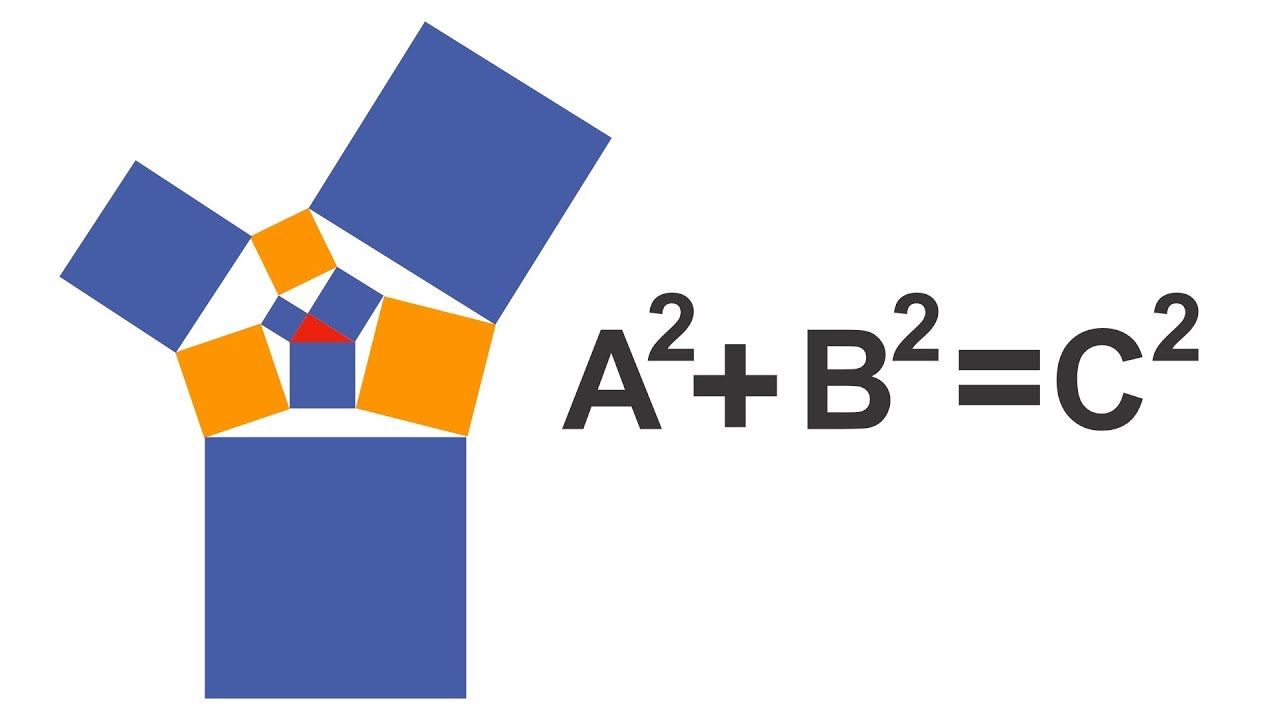 On the topic of Mathologer, he also has a nice video about the Basel problem
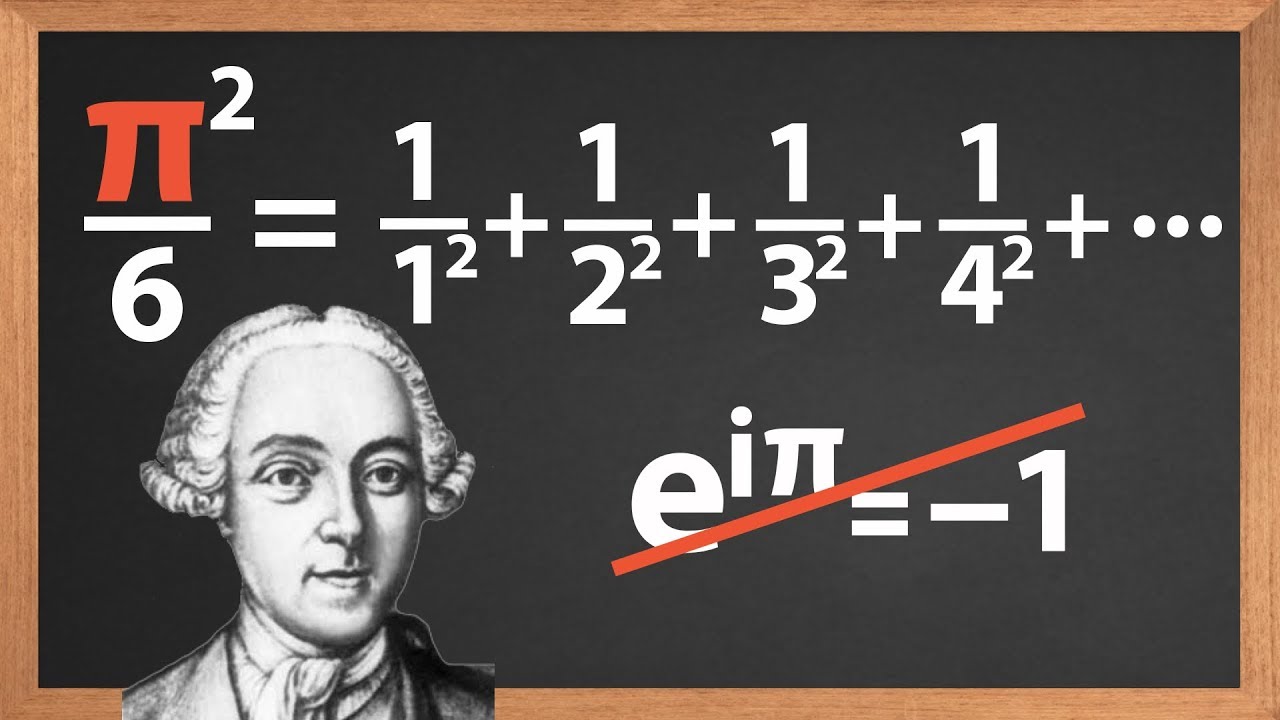 A simple Geogebra to play around with the Inverse Pythagorean Theorem argument shown here.https://ggbm.at/yPExUf7bSome of you may be concerned about the final step here where we said the circle approaches a line. What about all the lighthouses on the far end? Well, a more careful calculation will show that the contributions from those lights become more negligible. In fact, the contributions from almost all lights become negligible. For the ambitious among you, see this paper for full details. If you want to contribute translated subtitles or to help review those that have already been made by others and need approval, you can click the gear icon in the video and go to subtitles/cc, then "add subtitles/cc". I really appreciate those who do this, as it helps make the lessons accessible to more people. Music by Vincent Rubinetti: https://vincerubinetti.bandcamp.com/a...------------------ 3blue1brown is a channel about animating math, in all senses of the word animate. And you know the drill with YouTube, if you want to stay posted on new videos, subscribe, and click the bell to receive notifications (if you're into that). If you are new to this channel and want to see more, a good place to start is this playlist: http://3b1b.co/recommendedVarious social media stuffs: Website: https://www.3blue1brown.comTwitter: https://twitter.com/3Blue1BrownPatreon: https://patreon.com/3blue1brownFacebook: https://www.facebook.com/3blue1brownReddit: https://www.reddit.com/r/3Blue1Brown
Caption author (German)
Caption author (Portuguese (Brazil))
Caption authors (Russian)
Антон ВалерьевичМихаил Диденко
Caption authors (Vietnamese)
Mộng KỳLạnh Lùng Long LanhXuanDat Trinh
Caption author (English)
Caption authors (Greek)
Elias AlhanatisΠαναγιώτης Πετρίδης
Caption author (Bangla)
Caption author (French)
Caption authors (Polish)
Fundacja Edukacja PrzyszłościSzymon AntoniakKhanAcademyPoPolsku
Caption authors (Arabic)
Caption authors (Korean)
SHOW LESS
00:14
Well if you feel anything like I do about math, that is gonna change by the end of this video
00:19
Take 1 plus 1/4 plus 1/9 plus 1/16...
00:23
(and so on) where you're adding the inverses of the next square number.
00:30
What does this sum approach as you keep adding on more and more terms?
00:35
Now this is a challenge that remained unsolved for ninety years after it was initially posed,
00:40
until finally it was Euler who found the answer, super surprisingly, to be pi squared divided by 6.
00:47
I mean isn't that crazy, what is pi doing here and why is it squared?
00:50
We don't usually see it squared.
00:52
In honor of Euler, whose hometown was Basel, this infinite sum is often referred to as the Basel problem.
00:58
But the proof that I'd like to show you is very different from the one that Euler had.
01:03
I've said in a previous video that whenever you see pi show up, there will be some connection to circles.
01:09
And there are those who like to say that pi is *not* fundamentally about circles
01:13
and insisting on connecting equations like these ones with a geometric intuition
01:17
stems from a stubborn insistence on only understanding pi
01:20
in the context where we first discovered it.
01:23
And that's all well and good but whatever your own perspective holds as fundamental,
01:28
the fact is, pi is very much tied to circles.
01:31
So if you see it show up, there will be a path somewhere in the massive interconnected web of mathematics ,
01:37
leading you back to circles in geometry
01:40
The question is just
01:41
how long and convoluted that path might be.
01:44
And in the case of the Basel problem it's a lot shorter than you might first think.
01:48
And it all starts with light.
01:52
Here's the basic idea:
01:53
imagine standing at the origin of a positive number line,
01:56
and putting a little lighthouse on all of the positive integers: 1, 2, 3, 4, and so on.
02:03
That first lighthouse has some
02:05
Apparent brightness from your point of view,
02:07
some amount of energy that your eye is receiving from the light per unit time.
02:12
And let's just call that a brightness of one.
02:15
for reasons i'll explain shortly the apparent brightness of the second lighthouse
02:19
is 1/4 as much as the first, and the apparent brightness of the third
02:24
is 1/9 as much as the first and then 1/16 and so on,
02:29
and you can probably see why this is useful for the Basel problem
02:32
it gives us a physical representation of what's being asked
02:36
Since the brightness received from the whole infinite line of lighthouses is going to be
02:41
1, plus 1/4, plus 1/9, plus 1/16 and so on.
02:45
So the result that, we are aiming to show
02:48
Is that this total brightness is equal to pi squared divided by 6, times the brightness of that first lighthouse
02:55
An at first that might seem useless.
02:57
I mean we're just reacting the same original question,
03:00
but the progress comes from a new
03:02
question that this framing raises: Are there, ways, that, we can rearrange
03:06
These lighthouses that don't change the total brightness for the observer and if so can you show
03:13
This to be equivalent to a setup that somehow easier to compute
03:18
To, start let's be clear, about, what, we mean when, we reference "apparent brightness" to an observer?
03:24
Imagine a little screen, which maybe represents the retina of your eye or a digital camera sensor or something like that
03:30
You could, ask, what proportion of the rays coming out of the source hit that screen or phrase differently
03:37
What is the angle between the ray hitting the bottom of that screen, and the ray hitting the top or?
03:43
Rather since we should be thinking of these lights as being in three dimensions it might be more accurate to ask
03:48
What is the angle the light covers in both directions perpendicular to the source in spherical
03:54
Geometry, you sometimes talk, about the solid angle of a shape
03:57
Which is the proportion of a sphere it covers as viewed from a given point you
04:01
See the first of two places this story we're thinking of screens is going to be useful is in understanding the inverse square law
04:08
Which is a distinctly three-dimensional phenomenon think of all of the rays of light hitting a screen one unit, away
04:14
From the source as you double the distance those rays will now cover an area with, twice the width
04:20
and twice the height
04:21
So it would take 4 copies of that original screen to received the same raise at that distance and so each
04:29
Individual one receives one-fourth as much light
04:31
This, is the sense in which I mean a light, would appear 1/4 as bright two times the distance away
04:37
Likewise when you're three times farther, away?
04:39
You, would need nine copies of that original screen to receive the same rays so each individual screen only receives 1/9 as much light and
04:47
This pattern continues because the area hit, by a light increases
04:51
by the square of the distance the brightness of that light decreases, by the inverse square of that distance and
04:59
As I'm sure many of you know, this inverse square law
05:02
Is not at all special to light it pops up whenever you have
05:05
some kind of quantity that spreads out evenly from a point source whether that's sound or heat or radio signal things like that.
05:13
And remember it's because of this inverse square law, that an infinite array of evenly spaced lighthouses
05:19
physically implements the Basel problem.
05:23
But again, what we need, if we're gonna make any progress here, is to understand how, we can manipulate setups with
05:30
light sources like this without, changing the total brightness for the observer.
05:34
And the key building block is an especially nice way to transform a single lighthouse into to
05:42
Think of an observer at the origin of the x-y plane and a single lighthouse sitting out somewhere on that plane
05:49
Now draw a line from that lighthouse to the observer and then another line, perpendicular to that one at the lighthouse
05:56
now place two lighthouses where this, new, line intersects the coordinate axes
06:01
Which i'll go ahead and call lighthouse a over here on the left and lighthouse b on the upper side
06:07
It turns out and you'll see why this
06:09
is true in just a minute the brightness that the observer experiences from that first lighthouse is
06:14
Equal to the combined brightness experienced from lighthouses a and b together and i should say
06:20
By the way that the standing assumption throughout
06:23
This video, is that all lighthouses are equivalent they're
06:25
Using the same light bulb emanating the same power all of that
06:29
So in other words assigning variables to things here if we call the distance from the observer to lighthouse a
06:35
little a and the distance from the observer to lighthouse b little b and the distance to the first, lighthouse h
06:44
We have the relation 1 over a squared plus 1 over b squared equals 1 over h squared
06:51
This, is the much less, well known
06:53
Inverse pythagorean theorem, which some of you?
06:56
May, recognize from mythologies most recent and also most excellent video on the many cousins of the pythagorean theorem
07:04
pretty cool, relation don't you think and
07:06
If you're, a mathematician at heart you might be asking right now. How
07:09
You, prove it and there are some straightforward, ways, where you express the triangles area in two separate ways?
07:15
and apply the usual pythagorean theorem
07:18
But there is another quite pretty method that i'd like to briefly outline here that falls much more nicely into our storyline because
07:25
Again it uses intuitions of light and screens
07:29
Imagine scaling down the whole right triangle into a tinier version
07:32
and think of this miniature hypotenuse as a screen receiving light from the first lighthouse if
07:39
You, reshape that screen, to be the combination of the two legs of the miniature triangle, like this
07:45
Well it still receives the same amount of light right i mean the rays of light hitting one of those two legs are
07:52
precisely the same as the rays that hit the hypotenuse
07:55
then the key
07:56
Is that the amount of light from the first lighthouse that hits this left side
08:01
the limited angle of rays that end up hitting that screen is
08:05
Exactly the same as the amount of light over here coming from lighthouse a, which hits that side it'll be the same angle of rays
08:14
and
08:17
symmetrically the amount of light from the first house hitting the bottom portion of our screen is
08:23
the same as the amount of light hitting that portion from lighthouse b
08:28
Why, you might ask
08:30
Well it's a matter of similar triangles?
08:32
This animation already, gives you a strong hint for how it works and we've also left a, link in the description to a
08:37
Simple geogebra applet for those of you, who?
08:39
Want to think this through in a slightly more interactive environment and in playing with that one important fact here that
08:45
You'll be able to see is that these, similar triangles only apply in the limiting case for a very tiny screen
08:55
All right buckle up, now cuz, here's where things get good we've got this inverse pythagorean theorem right
09:01
And that's going to let us transform a single lighthouse into two others without
09:05
Changing the brightness experienced by the observer with that in hand and no small amount of cleverness, we can
09:11
Use this to build up the infinite array that we need?
09:15
Picture yourself at the edge of a. Circular, lake, directly opposite a lighthouse
09:20
We're going to want it to be the case that the distance between you and the lighthouse
09:24
Along, the border of the lake is one so, we'll say the lake has a circumference of two
09:30
Now the apparent brightness is 1 divided by the diameter squared and in this case the diameter is that circumference 2
09:38
divided, by pi so the apparent brightness works out to be
09:43
Pi squared divided by 4
09:45
Now for our first transformation draw
09:47
A, new, circle twice as big so circumference 4 and draw a tangent line to the top of the small circle
09:54
Then replace the original lighthouse with, two, new, ones, where this tangent line intersects the larger circle an
10:01
Important fact from geometry that, we'll be using over and over here
10:04
Is that if you take the diameter of a circle and form a triangle with, any point on the circle the angle at that
10:11
New, point will always be 90 degrees
10:14
The significance of that in our diagram here, is that it means the inverse pythagorean theorem applies and the brightness from those two, new
10:22
Lighthouses equals the brightness from the first one namely pi squared divided by 4 as
10:28
The next, step draw. A, new, circle twice as big as the last with a, circumference 8
10:33
now for each lighthouse take, a, line from that lighthouse, through the top of the smaller circle
10:39
Which is the center of the larger circle and consider the two points, where that intersects with the larger circle
10:46
Again, since this line is a diameter of that large circle then the lines from those two
10:51
New, points to the observer are going to form a right angle
10:56
Likewise by looking at this right triangle here whose hypotenuse is the diameter of the smaller circle you can
11:03
See that the line from the observer to
11:05
Original lighthouse is at a right angle with a, new, long line that, we drew
11:10
Good news right because that, means we can, apply the inverse pythagorean theorem and that
11:14
means that the apparent brightness from the original lighthouse
11:17
Is the same as the combined brightness from the two newer ones and of course you can
11:23
Do that same thing over on the other side drawing a line
11:26
through, the top of the smaller circle and getting two new lighthouses on the larger circle and
11:31
Even nicer these four lighthouses are all going to be evenly spaced around the lake
11:37
Why, well the lines from those lighthouses to the center are at 90-degree angles with, each other
11:44
So since things are symmetric left to right that, means that the distances, along the circumference are one two two two and one?
11:54
All right you might see where this is going but, i want to walk through this for just one more step you
11:59
Draw a circle twice as big so circumference of 16. Now, and for each lighthouse you draw
12:06
A line from that lighthouse through the top of the smaller circle which is the center of the bigger circle and then create two
12:12
New, lighthouses, where that line intersects with the larger circle
12:18
Just as before because the long line is a diameter of the big circle
12:22
those two new lighthouses make a right angle with the observer right and
12:27
just as before the line, from the observer to the original lighthouse is
12:32
Perpendicular to the long line and those are the two facts
12:35
That justify us in using the inverse pythagorean theorem but, what might not be as clear
12:41
Is that when you do this for all of the lighthouses to get eight, new ones on the big lake, those eight, new
12:47
Lighthouses are going to be evenly spaced
12:50
This, is the final bit of geometry poofiness before the final thrust to see this remember that if you draw, lines from two, adjacent
12:58
Lighthouses on the small lake to the center they, make a 90-degree angle
13:02
if instead you draw lines to a point anywhere on the circumference of the circle
13:07
That's not between, them the very useful inscribed angle theorem from geometry
13:13
Tells us that this will be exactly half of the angle that they, make with the center
13:18
This, case 45 degrees but
13:20
When we position that new, point at the top of the lake, these are the two lines, which define the position of the new
13:27
lighthouses on the larger lake
13:29
What that means then, is that when? You draw, lines from those eight new, lighthouses
13:35
Into the center they, divide the circle evenly into
13:39
45-degree angle pieces and that
13:41
means the eight lighthouses are evenly spaced around the circumference with a distance of two between, each one of them and
13:48
Now just imagine this thing playing on at every
13:52
Step doubling the size of each circle and transforming each lighthouse into two, new ones along a line drawn
13:58
Through, the center of the larger circle at
14:01
Every step the apparent brightness to the observer remains the same pi squared over four and
14:05
At every step the lighthouses remain evenly spaced with. A distance to between each one of them on the circumference and
14:14
In the limit what we're getting here is a flat horizontal line
14:18
With an infinite number of lighthouses evenly spaced in both directions and
14:23
Because the apparent brightness, was pi squared over four the entire way, that will, also be true in this limiting case
14:31
and
14:32
This, gives us a pretty
14:34
Awesome infinite series the sum of the inverse squares 1 over n squared where n covers all of the odd?
14:40
Integers 1 3 5 and so on but, also negative 1 negative 3 negative 5 off in the leftward direction
14:47
Adding all of those up is going to give us pi squared over 4
14:50
That's amazing, and it's the core of what i want to show. You and just take a, step back and think about how
14:56
Unreal this seems the sum of simple fractions that at first sight have nothing to do with, geometry nothing to
15:02
Do with circles at all apparently
15:04
Gives us this result that's related to pi
15:07
Except now you can actually see what it has to do with geometry
15:10
The number line, is kind of like a limit of ever growing circles and as you sum across that number line
15:17
Making sure to sum all the way to infinity on either side
15:21
It's sort of like you're adding up, along the boundary of an infinitely large circle and a very loose but very fun way of speaking
15:30
But wait you might say this is not the some that you promised us at the start of the video
15:36
And, well you're right we do have a little bit of thinking left first things first let's just restrict
15:42
This, um to only being the positive odd numbers, which gets us pi squared divided by 8
15:47
Now the only difference between this and the sum that we're looking for that goes over all the positive integers odd and even is?
15:54
That it's missing the sum of the reciprocals of even numbers what i'm coloring in red up here
16:00
Now you can think of that missing series as a scaled copy of the total series that
16:05
We want where each lighthouse moves to being twice as far away?
16:09
From the origin one gets shifted to 2 2 gets shifted to 4 3 gets shifted to 6 and so on and?
16:16
Because that involves doubling the distance for every lighthouse it, means that the apparent brightness would be decreased by a factor of 4 and?
16:24
That's also relatively straightforward algebra going
16:26
From the sum over all the integers to the sum over the even integers involves multiplying by 1/4. And what that means?
16:33
Is that going from all the integers to the odd ones?
16:36
Would be multiplying by 3/4 since the evens plus the odds have to give us the whole thing
16:42
So if we just flip that around that
16:45
means going, from the sum over the odd numbers to the sum over all positive integers requires multiplying by 4/3
16:53
So taking that pi squared over 8. Multiplying, by 4/3 but a, boom, bada, bing we've got ourselves a solution to the basel problem
17:03
Stick around i've got a little preview animation for the next project at the end here now
17:07
This, video that you just watched was primarily written and animated by one of the new
17:11
Three blue one brown team members ben hum bricked an edition made possible thanks to you, guys, through patreon, you'll meet him
17:18
Along, with the other, new
17:19
Addition when the next video is published but in the meantime you can read a little bit about
17:23
My thoughts on introducing more contributors over at the patreon page let me close
17:27
By sharing a set of principles about effective learning
17:30
There are eight that i have pulled up here but i just want to highlight two of them
17:34
Effective learning is active not passive watching a video is not enough and
17:39
It must allow for failure as hard as, we work over here to distill a beautiful solution like
17:45
This one to the basil problem right down to its core
17:48
There is a risk of hiding the fact that finding a solution like
17:52
That requires hitting, many many dead ends and these principles come from brilliant org
17:58
Today's sponsor, and let, me just share with you a comment from a recent video
18:02
Brilliant org is amazing even if you, don't pay for it you
18:06
Still get to solve problems every week i recommend it for the people, who might be put off by the constant advertising
18:11
here i couldn't
18:12
Agree more they're just a legitimately great place to learn through active problem-solving and i really do believe they
18:18
Live up to these principles i mean just look at the messaging here when you get a
18:21
Question wrong it's okay getting stumped as part of learning how's that for growth mindset
18:27
Now if you, want to supplement videos like, these, with, more active learning, like bears go to brilliant org/3b1b, which lets, them know that you came, from here and it gives the first
18:38
321 people to follow that link twenty percent off their premium annual subscription
English