Plains Indians
"Indigenous peoples of the Plains" redirects here. Not to be confused with Plains Indigenous peoples of Taiwan.
"Buffalo culture" redirects here. For the culture of Buffalo, New York, see Buffalo, New York § Culture.
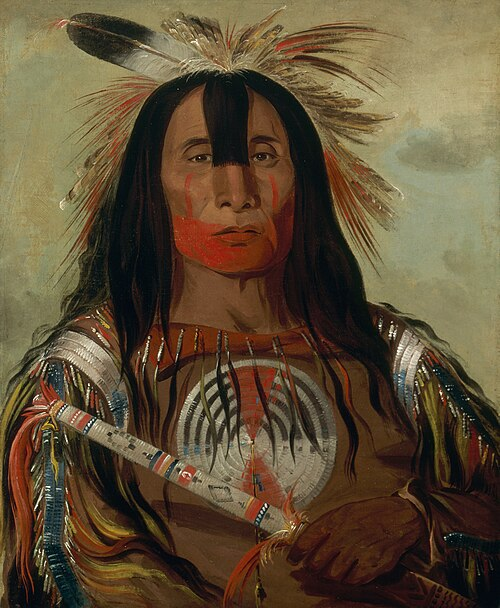
Stumickosúcks of the Kainai.
George Catlin, 1832
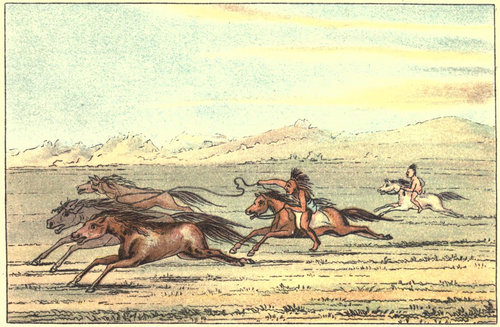
Comanches capturing wild horses with lassos, approximately July 16, 1834
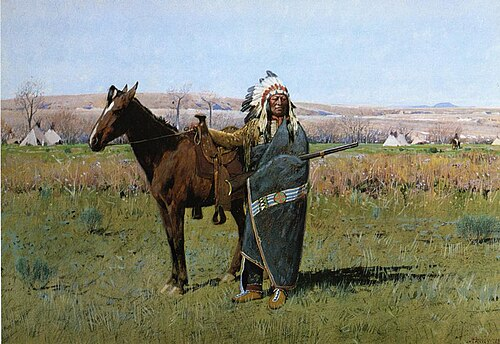
Spotted Tail of the Lakota Sioux
Plains Indians or Indigenous peoples of the Great Plains are the Native American tribes and First Nations peoples who have historically lived on the Interior Plains (the Great Plains) of North America.[1][2]
While hunting-farming cultures have lived on the Great Plains for centuries prior to European contact, the region is known for the horse cultures that flourished from the 17th century through the late 19th century.
Their historic nomadism and armed resistance to domination by the government and military forces of Canada and the United States have made the Plains Indian culture groups an archetype in literature and art for Native Americans everywhere.
The Plains tribes are usually divided into two broad classifications which overlap to some degree. The first group became a fully nomadic horse culture during the 18th and 19th centuries, following the vast herds of American bison, although some tribes occasionally engaged in agriculture.
- These include the Arapaho, Assiniboine, Blackfoot, Cheyenne, Comanche, Crow, Gros Ventre, Kiowa, Lakota, Lipan, Plains Apache (or Kiowa Apache), Plains Cree, Plains Ojibwe, Sarsi, Nakoda (Stoney), and Tonkawa.
- The second group were sedentary and semi-sedentary, and, in addition to hunting bison, they lived in villages, raised crops, and actively traded with other tribes. These include the Arikara, Hidatsa, Iowa, Kaw (or Kansa), Kitsai, Mandan, Missouria, Omaha, Osage, Otoe, Pawnee, Ponca, Quapaw, Wichita, and the Santee Dakota, Yanktonai and Yankton Dakota.[3]
See PDF (which may be SLANTED BY EVIL) for complete article, downloaded:
Wednesday, May 13, 2026 10:43AM
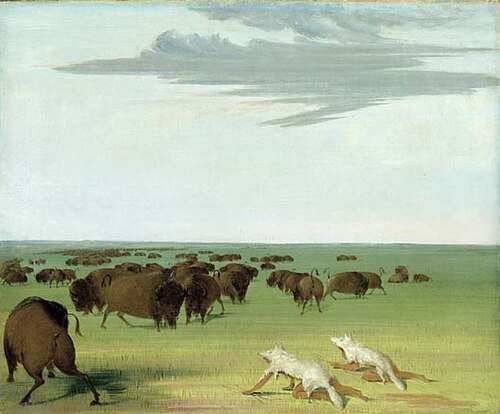
Bison hunt under the wolf-skin mask, George Catlin, c. 1832
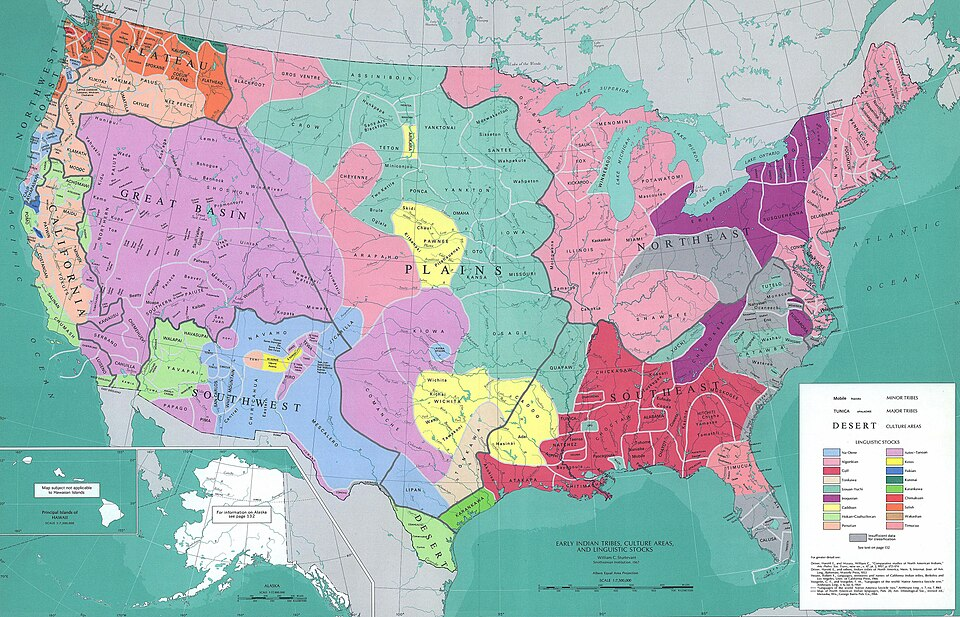
Early Native American tribal territories color-coded by linguistic group
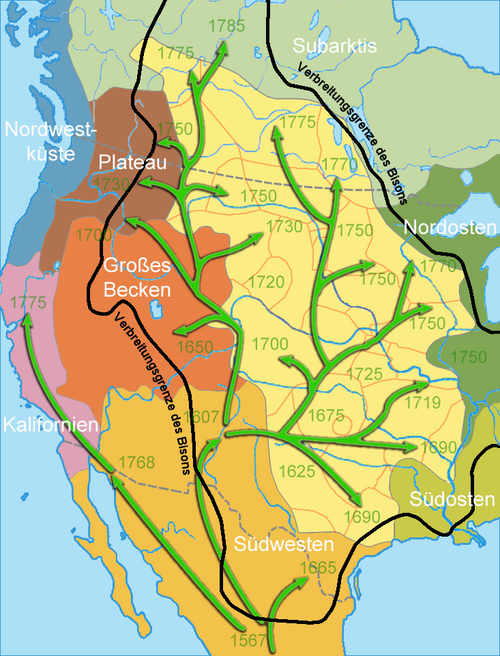
Spread of the horse. The black line defines the distribution of the bison.
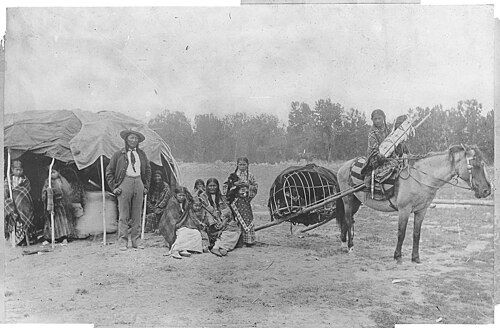
Stump Horn of the Cheyenne and his family with a horse and travois, c. 1871–1907
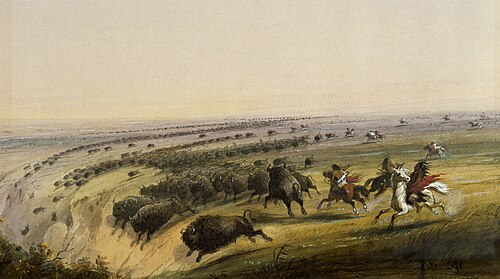
This painting by Alfred Jacob Miller portrays Plains Indians chasing buffalo over a small cliff.[14] The Walters Art Museum.
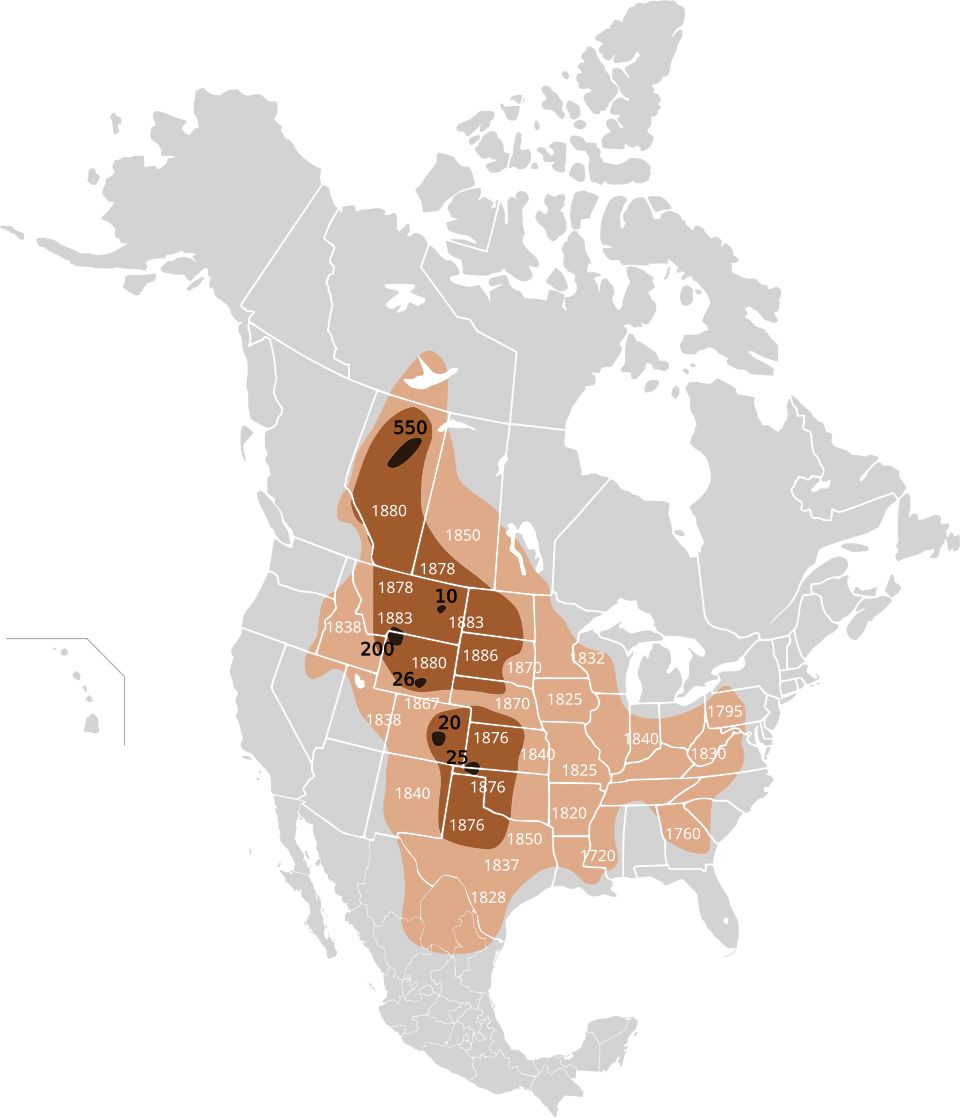
This map of the extermination of bison to 1889 is based on William Temple Hornaday's late-nineteenth-century research.
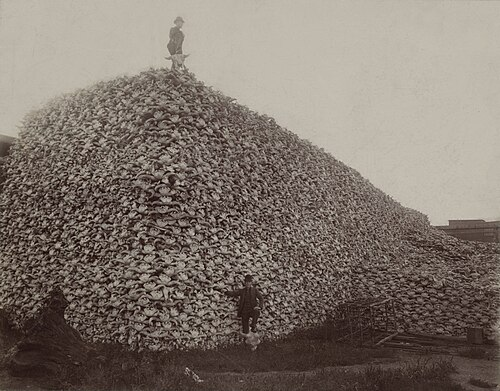
A pile of bison skulls in the 1870s.
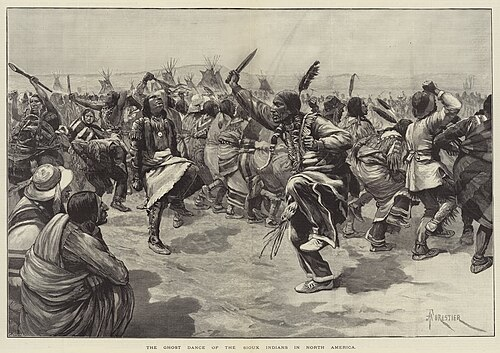
The Ghost Dance ritual, which the Lakota believed would reunite the living with spirits of the dead, cause the white invaders to vanish, and bring peace, prosperity, and unity to Indian peoples throughout the region
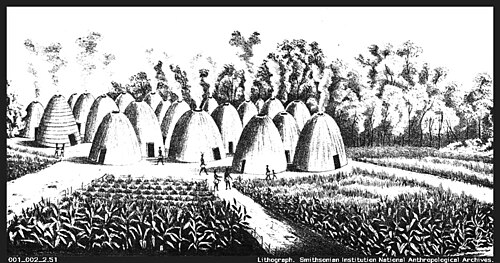
The Wichita were an agrarian Southern Plains tribe, who historically lived in beehive-shaped houses thatched with grass surrounded by extensive maize fields. They were skilled farmers who traded agricultural products with the nomadic tribes in exchange for meat and hides.
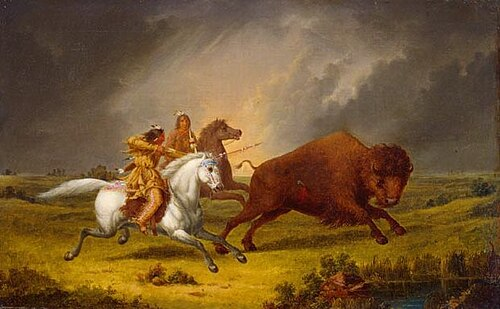
"Assiniboine hunting buffalo", painting by Paul Kane
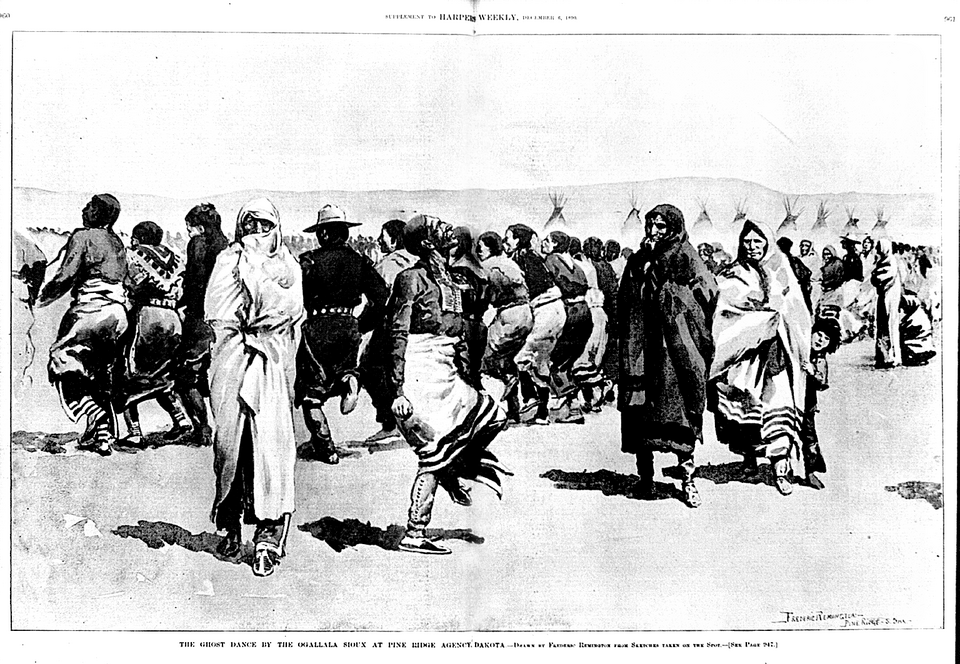
An Oglala Lakota Ghost Dance at Pine Ridge. Illustration by Frederic Remington
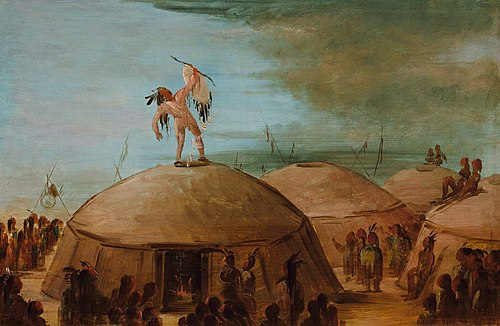
Rainmaking among the Mandan, by George Catlin, 1830s
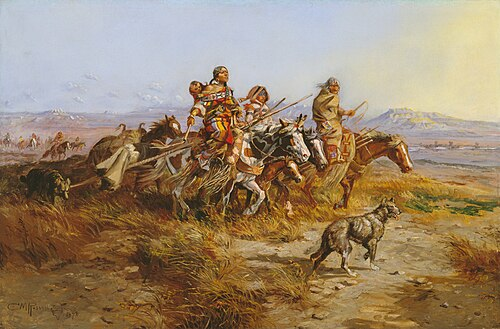
"Indian women moving", painting by Charles Marion Russell
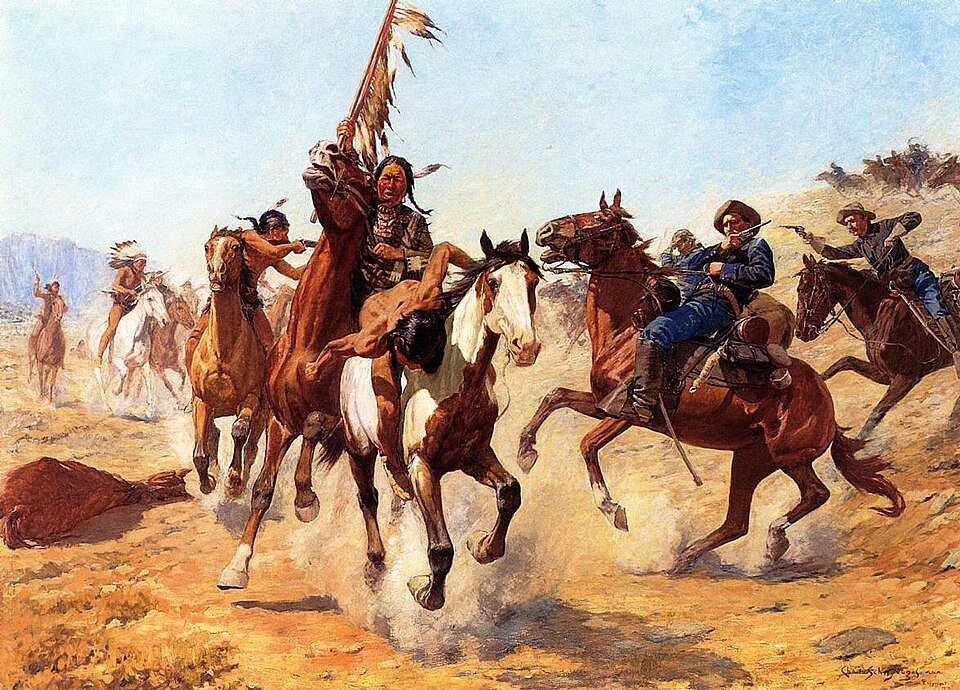
This painting depicts the speed and violence of an encounter between the U.S. cavalry and Plains Indians.
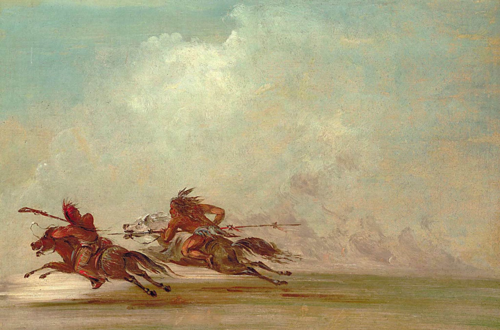
War on the Plains: Comanche (right) trying to lance an Osage warrior, painting by George Catlin, 1834
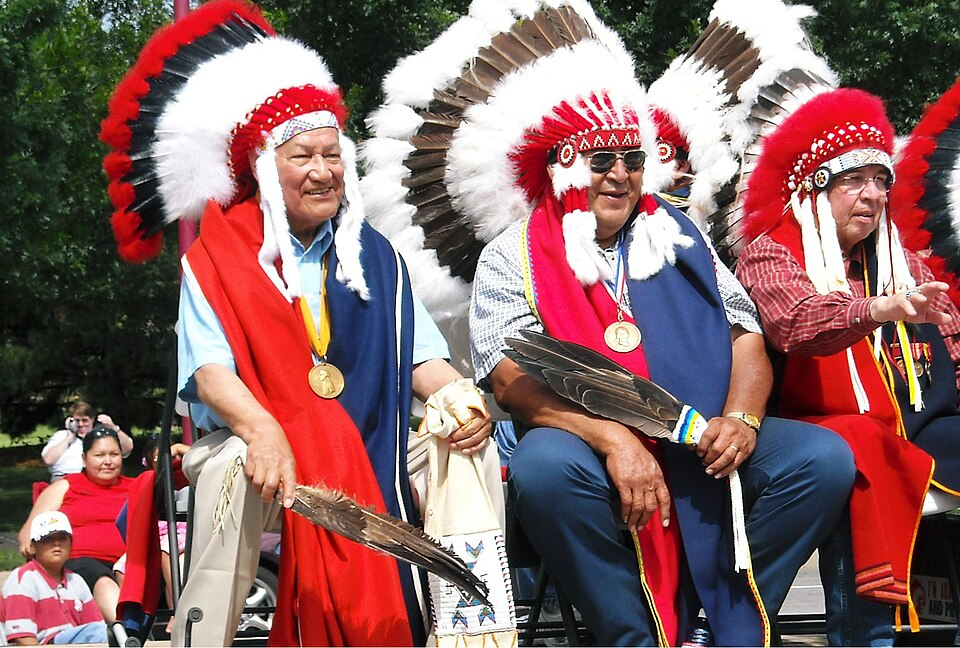
Southern Cheyenne Chiefs Lawrence Hart, Darryl Flyingman and Harvey Pratt in Oklahoma City, 2008
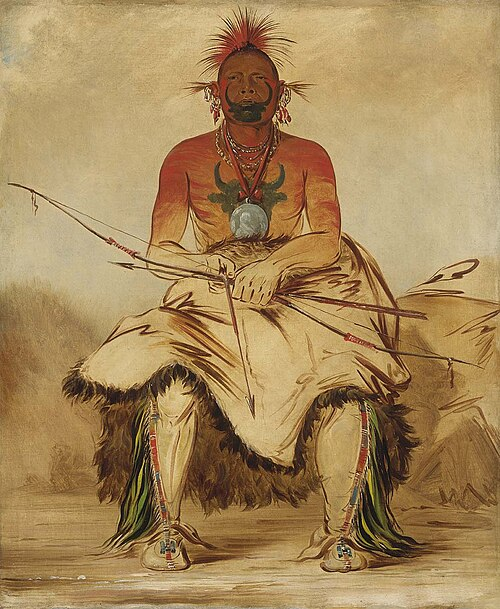
Pawnee warrior, by George Catlin, 1832
See also
Comanche-Mexico Wars
Plains Standard Sign Language
Plains hide painting
Hair drop, Plains men's adornment
Native American tribes in Nebraska
Buffalo jump
Southern Plains villagers
Spanish peace treaties with the Comanche