Phenylketonuria
Phenylketonuria (commonly known as PKU) is an inherited disorder that increases the levels of a substance called phenylalanine in the blood. Phenylalanine is a protein building block (an amino acid ) that is obtained from eating certain foods (such as meat, eggs, nuts, and milk) and in some artificial sweeteners.Apr 25, 2023
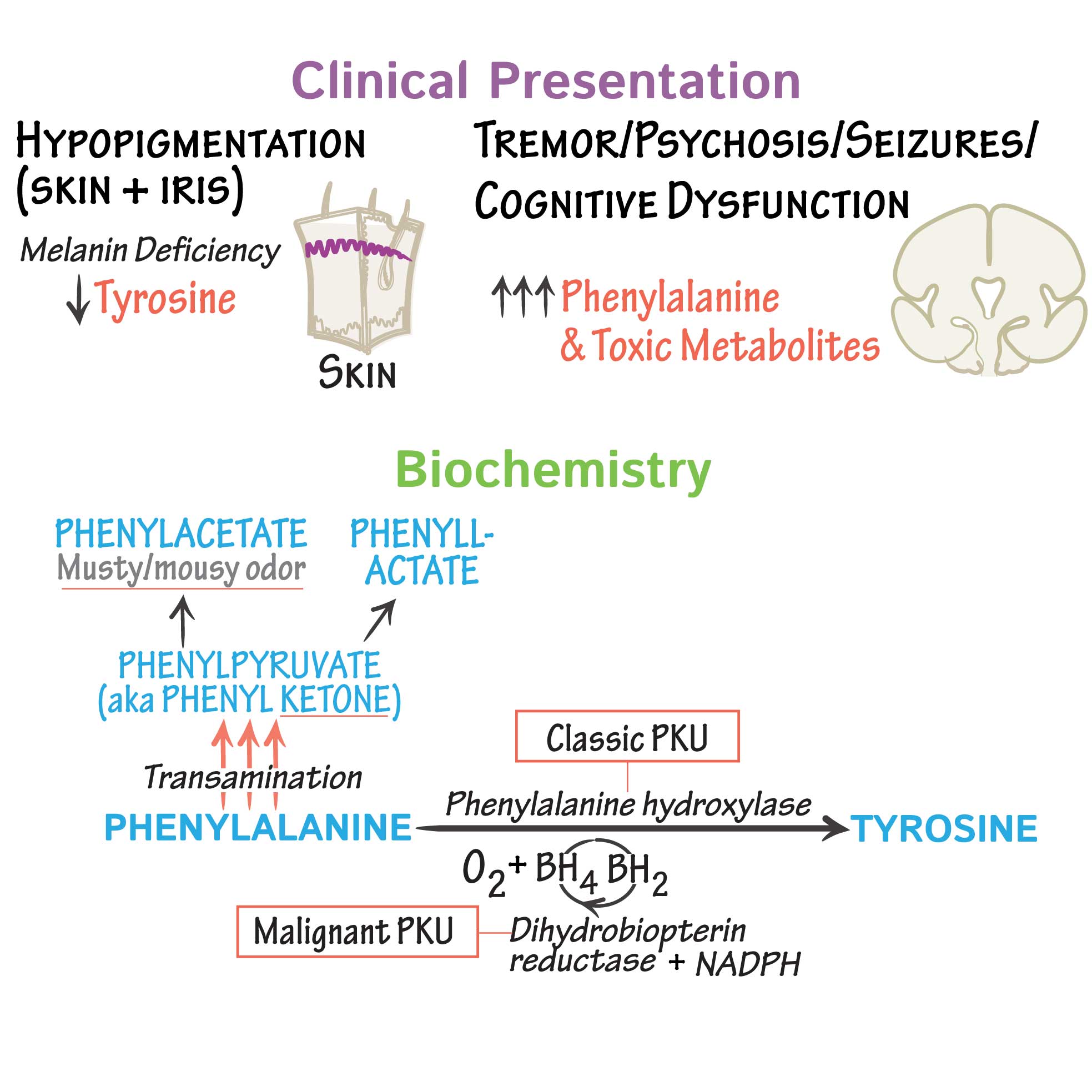
Phenylketonuria (PKU) is an autosomal recessive inborn error of metabolism resulting from a deficiency of phenylalanine hydroxylase (PAH; 612349), an enzyme that catalyzes the hydroxylation of phenylalanine to tyrosine, the rate-limiting step in phenylalanine catabolism. If undiagnosed and untreated, phenylketonuria can result in impaired postnatal cognitive development resulting from a neurotoxic effect of hyperphenylalaninemia (Zurfluh et al., 2008).
Recent phenylketonuria (PKU) news includes
Health Canada approving Sephience (sepiapterin) for broader use, Relief Therapeutics showing positive results for a more convenient sapropterin (RLF-OD032) treatment, and the FDA reviewing pegvaliase (Palynziq) for adolescents, alongside growing focus on long-term adult PKU health and better monitoring tools.
Genetic Basis
- Gene: Mutations in the PAH gene on chromosome 12.
- Enzyme: The PAH gene provides instructions for making phenylalanine hydroxylase, the enzyme needed to convert phenylalanine to tyrosine.
- Inheritance: Autosomal recessive; both parents must carry a mutated gene copy, and there's a 25% chance with each pregnancy for two carrier parents to have a child with PKU.
How it Works
- Without functional PAH, phenylalanine builds up in the blood and brain.
- This excess phenylalanine disrupts neurotransmitter (like dopamine, serotonin) and myelin production, causing severe neurological problems.